
What Are China Top Stainless Welding Manufacturers?
FLUID HANDLING EXPERTS

Blog, all our news

What Are China Top Stainless Welding Manufacturers?

China has become a major source of stainless steel fabrication, process equipment, and precision welding services. Yet, identifying the country’s top Stainless Welding manufacturers requires more than comparing factory size or website claims. Buyers should examine welding qualifications, material traceability, inspection records, and experience with demanding industries. Food processing, chemical plants, medical equipment, and architectural projects all require different controls.

John C. Lippold, a recognized authority in welding metallurgy, explains that stainless steel welding depends on managing heat input, alloy chemistry, and corrosion performance together. That principle should guide every manufacturer comparison. A polished factory floor means little without qualified welders, documented procedures, and consistent production data. Look for ISO 3834 systems, relevant ASME or AWS capabilities, certified welding procedures, and non-destructive testing options. Ask how the supplier prevents discoloration, distortion, porosity, and cross-contamination from carbon steel tools.

The strongest manufacturers usually provide clear drawings, sample welds, inspection reports, and realistic delivery schedules. They also explain limitations instead of promising everything. That matters. Some suppliers may offer excellent TIG welding but lack large-vessel experience. Others may handle high-volume production but struggle with tight cosmetic requirements. Neither is automatically the best choice.

This guide evaluates China’s leading Stainless Welding manufacturers through practical criteria. It considers technical capability, quality assurance, customization, communication, and after-sales support. Rankings can still be imperfect. Supplier performance changes by project, factory team, and material grade. Buyers should verify current certifications, visit facilities when possible, and request traceable samples before signing a major contract.
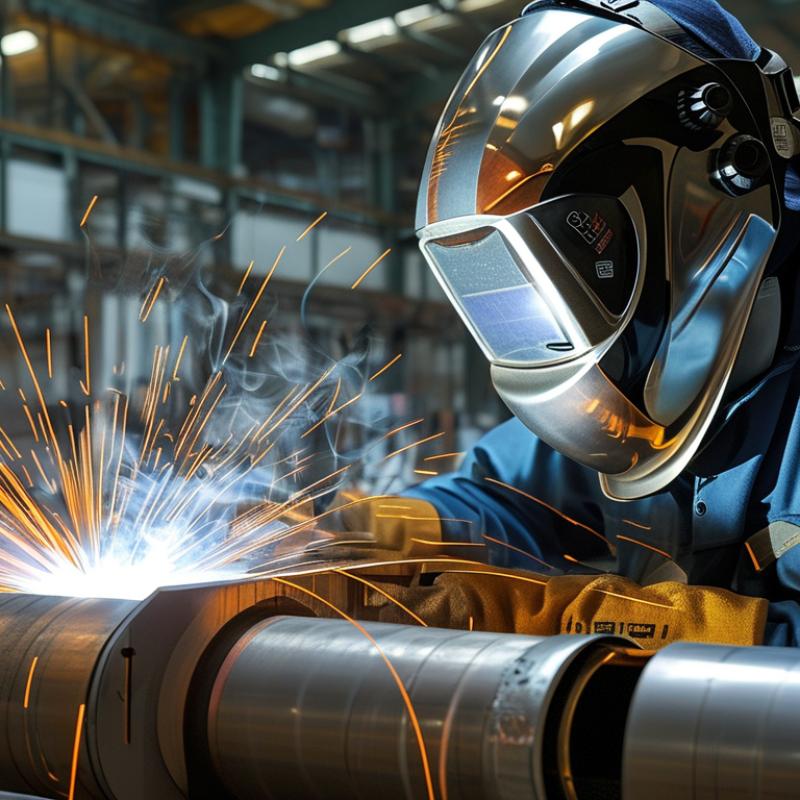
What Are China Top Stainless Welding Manufacturers?

China’s Stainless-Welding Market: 36.7 Mt of Crude Steel in 2023

China’s stainless-steel industry produced 36.7 million tonnes of crude steel in 2023. This scale supports a deep supply base for welded pipes, tanks, frames, and process equipment. Yet crude-steel volume does not automatically prove welding competence. Buyers still need factory-level evidence.

Reliable manufacturers usually control chemistry, plate preparation, welding parameters, and final inspection in one system. During a plant visit, inspectors should check heat-number traceability, filler-wire storage, and weld-bead consistency. A clean bead is useful evidence, but it is not enough. Qualified welding procedures, welder records, and documented non-destructive testing matter more.

Practical checks include PMI testing, dimensional inspection, radiography, and corrosion-related surface review. Pickling and passivation should remove heat tint without damaging the stainless surface. Certifications such as ISO 3834 can support confidence, while project-specific records reveal actual performance. Ask for EN 10204 3.1 material documents when applicable.

The market has impressive capacity. It also has uneven execution. Some suppliers present polished facilities but provide weak traceability after production. That gap deserves attention. A careful buyer should compare sample welds, inspection plans, delivery history, and response quality before selecting a partner. The 36.7 Mt figure shows industrial strength, not guaranteed consistency. End-use conditions, alloy selection, joint design, and service temperature still require engineering review.

How to Rank Manufacturers: Capacity, ISO 3834, and Weld-Test Results

Ranking China’s top stainless welding manufacturers requires more than counting factory floor space. The International Stainless Steel Forum’s Stainless Steel in Figures 2024 reported about 58.4 million tonnes of global stainless crude steel production in 2023. That scale creates pressure for repeatable welding, not just fast output. Ask for monthly fabrication capacity, active welding stations, qualified operators, and actual delivery records. Capacity without process control can hide delays, rework, and unstable quality.

ISO 3834 matters because it evaluates welding quality requirements, personnel competence, procedure control, inspection, and records. Certification alone is not enough. Check the certificate scope, audit date, and whether it covers stainless assemblies similar to yours. Request welding procedure qualification records under ISO 15614-1, welder qualifications, and inspection plans linked to ISO 5817 acceptance levels. Then review weld-test results, including visual inspection, dye penetrant testing, radiography, tensile tests, or bend tests where applicable. The International Institute of Welding identifies procedure qualification and traceability as practical foundations for reliable welded production. Look closely at heat tint, undercut, porosity, distortion, and passivation evidence. Small details matter.

I would also compare first-pass yield and nonconformance rates. Suppliers may hesitate to disclose them. That hesitation deserves attention. A factory can present polished samples while routine batches perform differently. Request recent batch records, anonymized if necessary, and witness a live weld test using your material grade and thickness. Test results are stronger evidence than photographs, though even tests can miss long-term corrosion risks. Ask difficult questions.

Leading Chinese Stainless-Welding Manufacturers by Product Category

China’s leading stainless-welding manufacturers are better assessed by product category than by general market claims. TIG welding equipment suits thin stainless sheets, sanitary tubes, and visible joints. MIG systems support faster production on frames, tanks, and heavier components. Laser welding manufacturers focus on narrow heat zones, low distortion, and clean surfaces. Orbital welding specialists serve pharmaceutical piping, food-processing lines, and precision tube assemblies.

Consumable manufacturers supply stainless wire, tungsten electrodes, shielding accessories, and replacement parts. Fixture and automation producers build turning tables, positioners, seam trackers, and robotic cells. Their value depends on repeatability, not only machine speed. Check test welds, penetration depth, surface color, and post-weld cleaning requirements. Technical documents should state power range, material grades, tolerance limits, and service response times. Vague specifications deserve caution.

Tips: Match the category to your joint design and production volume. Request samples using your actual stainless grade and thickness. Ask how operators control shielding gas around corners and open roots. Inspect weld consistency under magnification. A polished sample may hide weak documentation. That matters later. Also review factory quality records, calibration practices, export experience, and spare-part availability. Some suppliers describe laser systems as universal, yet reflective surfaces and tight tolerances can challenge performance. A second technical review is sensible. The cheapest quotation may become expensive after training, rework, and delayed maintenance.

Comparing TIG, MIG, and Orbital Welding Systems by Duty Cycle

What Are China Top Stainless Welding Manufacturers?

When comparing China’s leading stainless welding manufacturers, duty cycle deserves more attention than peak amperage. TIG systems often deliver precise, clean welds on thin stainless tubing and food-grade components. A 60% duty cycle at 200 amps means six minutes of welding within a ten-minute period. The remaining time allows cooling. This suits careful fabrication, but production teams may find repeated pauses frustrating.

MIG systems generally support faster deposition on frames, tanks, and thicker stainless sections. Their duty cycles can remain stable during long production runs, especially with suitable wire feeding and cooling. However, heat input may increase distortion or discoloration. Operators still need accurate gas flow and shielding technique.

Orbital welding systems offer consistent results around stainless tubes, using programmed current, travel speed, and arc timing. They are valuable for pharmaceutical, semiconductor, and hygienic piping work. Yet orbital equipment needs precise joint preparation and skilled setup. Automation does not remove human error.

A reliable manufacturer should provide verified duty-cycle charts, load-test records, service procedures, and operator training. Factory audits can reveal more than polished product photographs. Ask whether ratings were measured at 40°C, with which torch, and under what input voltage. Small details matter.

In practical trials, compare weld appearance after continuous cycling, not only the first pass. I have seen impressive specifications fail under dusty workshop conditions. That should encourage careful verification. The best choice depends on material thickness, shift length, cooling capacity, and repair support, rather than one impressive number.

Quality and Export Benchmarks: ISO 9001, CE, and Global Shipments

What separates China’s top stainless welding manufacturers is not a polished catalog. It is repeatable evidence. The ISO Survey 2023 recorded more than one million ISO 9001 certificates worldwide, showing how common quality systems have become. Certification alone proves little, however. Buyers should inspect the certificate scope, audit date, corrective-action records, and production traceability. A reliable factory can link each welded assembly to material heat numbers, welding procedures, operator qualifications, and inspection results. Small details matter.

CE marking also needs careful reading. The European Commission’s Blue Guide explains that CE marking confirms applicable European Union conformity requirements, not superior workmanship. For welding equipment or machinery, manufacturers should identify relevant directives, harmonized standards, risk assessments, and technical files. Do not accept a logo as proof. Ask for the Declaration of Conformity and verify its product coverage. That step is often missed.

Global demand adds another test. The World Stainless Association reported about 58.4 million tonnes of stainless crude steel production in 2023. Such scale creates pressure for stable exports, consistent packaging, and predictable lead times. Shipment records, export documentation, container protection, and after-sales response reveal practical capability. A factory may have excellent certificates but weak port coordination. That gap can delay a project. The honest audit question is simple: can the manufacturer reproduce the same weld quality during a busy export month? Sometimes, the answer needs more evidence.

What Are China Top Stainless Welding Manufacturers? - Quality and Export Benchmarks: ISO 9001, CE, and Global Shipments

Benchmark Dimension International Requirement or Reference Relevant Data Point Recommended Evidence for Buyers
Quality management system ISO 9001:2015 A certified system should control customer requirements, purchasing, production, inspection, nonconformities, corrective actions, and continual improvement. Valid certificate, certification scope, issuing body, certificate number, and expiry date.
Common stainless steel grades ASTM A240, EN 10088, JIS G4304/G4305 Typical grades include 304/304L, 316/316L, 321, and 310S, selected according to corrosion, temperature, and fabrication requirements. Material test certificate showing grade, heat number, chemical composition, mechanical properties, and dimensions.
Welding procedure qualification ISO 15614-1 or an applicable national equivalent A qualified welding procedure defines essential variables such as base material, filler metal, thickness range, welding position, shielding gas, and heat input. Approved WPS and supporting PQR/WPQR records for the required product and material combination.
Welder qualification ISO 9606-1 for fusion welding of steels Qualification should correspond to the welding process, material group, product thickness, joint type, and welding position. Current welder qualification records and traceability between welder, work order, and weld location.
Inspection and non-destructive testing ISO 17635 and project-specific inspection specifications Visual inspection is commonly supplemented by dye penetrant, radiographic, ultrasonic, or dimensional inspection when required by design risk. Inspection and test plan, acceptance criteria, calibrated equipment records, and signed inspection reports.
CE marking and European compliance Applicable EU legislation, such as the Pressure Equipment Directive 2014/68/EU or Construction Products Regulation where relevant CE marking is not a universal quality certificate; it applies only when the product is covered by applicable EU legislation and conformity requirements. Declaration of Conformity, technical documentation, risk assessment, applicable harmonized standards, and notified-body documentation when required.
Material traceability EN 10204 inspection documents A 3.1 inspection certificate is commonly used for manufacturer-issued material results; a 3.2 document adds independent or purchaser-appointed inspection involvement. Heat-number continuity from raw material through cutting, welding, finishing, inspection, and final packing.
Surface finish and fabrication control Customer drawing, EN 10088 finish designations, and project specifications Common finishes include 2B, BA, brushed, polished, pickled, and passivated surfaces; finish requirements should be defined by measurable criteria. Approved samples, surface roughness readings where specified, dimensional reports, and photographs before shipment.
Export documentation Commercial, customs, and destination-market requirements A complete export file normally includes a commercial invoice, packing list, transport document, certificate of origin when required, inspection records, and product certificates. Document checklist agreed before production and consistency of product descriptions, quantities, weights, and HS classifications.
Global shipment capability Destination-specific import and logistics requirements Reliable suppliers should demonstrate experience with containerized, break-bulk, or project cargo shipments and provide documented delivery performance rather than unsupported shipment claims. Redacted bills of lading, shipment references, delivery-performance records, export-market list, and packaging specifications.
Packaging and corrosion protection Contract packaging specification and international transport practice Stainless welded products should be protected from scratching, carbon-steel contamination, moisture, salt exposure, and deformation during handling and ocean transport. Packaging drawings, photographs, moisture-control measures, lifting points, marking requirements, and pre-shipment inspection records.
Buyer qualification scorecard Evidence-based supplier assessment A practical evaluation should combine technical compliance, traceability, inspection capability, documentation accuracy, delivery history, and after-sales responsiveness. Use a weighted scorecard and require documentary evidence for every claimed certification, standard, and shipment capability.
Copyright 2025 Fluidra S.A. | Created by BCM Marketing Agencia Privacy Policy Legal note | Cookie policy |

Technical cookies are strictly necessary for our website to work and you can navigate through it. These types of cookies are those that, for example, allow us to identify you, give you access to certain restricted parts of the page if necessary, or remember different options or services already selected by you, such as your privacy preferences. Therefore, they are activated by default, your authorization not being necessary in this regard. Through the configuration of your browser, you can block or alert the presence of this type of cookies, although such blocking will affect the proper functioning of the different functionalities of our website.


The analysis cookies allow us to study the navigation of the users of our website in general (for example, which sections of the page are the most visited, which services are used most and if they work correctly, etc.). From the statistical information on navigation on our website, we can improve both the operation of the page itself and the different services it offers. Therefore, these cookies do not have an advertising purpose, but only serve to make our website work better, adapting to our users in general. By activating them you will contribute to this continuous improvement. You can enable or disable these cookies by checking the corresponding box, being disabled by default.


Functionality cookies allow us to remember your preferences, to personalize certain characteristics and general options of our website, every time you access it (for example, the language in which the information is presented to you, the sections marked as favorites, your browser type, etc.) Therefore, this type of cookies does not have an advertising purpose, but by activating them you will improve the functionality of the website (for example, adapting to your type of browser) and the customization of it based on your preferences (for example, by presenting the information in the language that you have chosen in previous occasions), which will contribute to the ease, usability and comfort of our page during your navigation. You can enable or disable these cookies by checking the corresponding box, being disabled by default.


Advertising cookies allow us to manage the advertising spaces included in our website based on criteria such as the content shown or the frequency in which the ads are displayed. For example, if you have been shown the same ad several times on our website, and you have not shown a personal interest by clicking on it, it will not appear again. In summary, by activating this type of cookies, the advertising shown on our website will be more useful and diverse, and less repetitive. You can enable or disable these cookies by checking the corresponding box, being disabled by default.


Behavioral advertising cookies allow us to obtain information based on the observation of your browsing habits and behaviors on the web, in order to show you advertising content that best suits your personal tastes and interests. To understand it in a very simple way, we will give you a fictitious example: if your last searches on the web were related to suspense literature, we would show you advertising about suspense books. Therefore, activating this type of cookies, the advertising that we show you on our website will not be generic, but will be oriented to your searches, tastes and interests, therefore adjusting exclusively to you. You can enable or disable these cookies by checking the corresponding box, being disabled by default.
To understand it in a very simple way, we will give you a fictitious example: if your last searches on the web were related to suspense literature, we would show you advertising about suspense books. Therefore, activating this type of cookies, the advertising that we show you on our website will not be generic, but will be oriented to your searches, tastes and interests, therefore adjusting exclusively to you. You can enable or disable these cookies by checking the corresponding box, being disabled by default.

SAVE

We use our own and third-party cookies to ensure the proper functioning of the website and to analyse our services, improve your experience on our website and show you advertisements related to your interests according to profiling based on your browsing habits (e.g. websites visited). You can accept all cookies by clicking "ACCEPT" or set or reject them by clicking here. If you would like to know more about the use of cookies, please see our COOKIE POLICY.


ACCEPT ALL
Reject no essentials


