
What Are the Top Spare Tire Sizes for Global Buyers?
FLUID HANDLING EXPERTS

Blog, all our news

What Are the Top Spare Tire Sizes for Global Buyers?

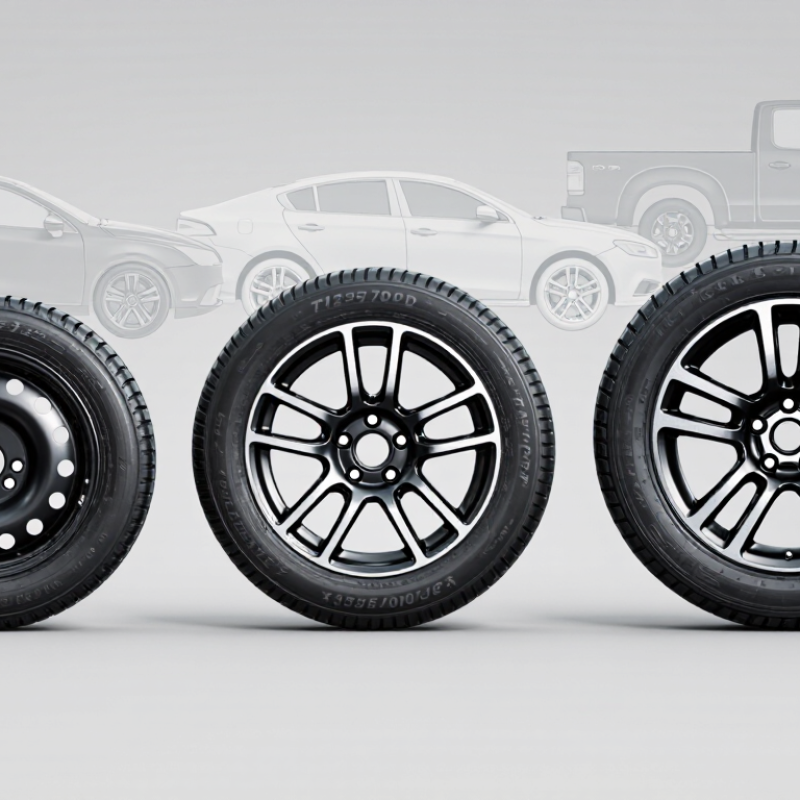
Choosing the right Spare Tire size is more complicated than matching a number on the sidewall. Global buyers often compare compact temporary tires, full-size replacements, and vehicle-specific emergency wheels. Common examples include T125/70D16, T135/80D17, and full-size 205/55R16 tires. However, the correct choice depends on more than diameter.

Fitment matters most.

A reliable evaluation should check the tire’s overall diameter, width, load index, speed rating, bolt pattern, center bore, and wheel offset. These details affect clearance, handling, braking, and storage space. A tire may fit the hub but still touch the suspension or fail inside the trunk compartment. Buyers should also confirm TPMS compatibility, valve-stem position, and the vehicle manufacturer’s recommended pressure. Practical inspection helps. Measure the original wheel, test the mounting area, and verify the jack and wrench before purchase.

Regional vehicle designs create further differences. A compact European hatchback may use a narrow T125 spare, while a pickup in North America may require a full-size tire with a higher load rating. Japanese and Asian-market vehicles can also use unusual bolt patterns or smaller temporary wheels. Export buyers should request clear photos, production markings, and fitment data from experienced suppliers. Never rely on a catalog image alone.

There is no universal best size.

My own view is simple: the smallest compatible tire is not always the safest option. Temporary spares can reduce grip and handling precision, especially on wet roads. Full-size spares offer better consistency but consume more cargo space. Buyers should balance emergency mobility, vehicle specifications, driving conditions, and long-term storage. Some assumptions may fail. Careful verification remains the dependable path.
What Are the Top Spare Tire Sizes for Global Buyers?

Understanding Spare Tire Sizes and Their Global Standards

What Are the Top Spare Tire Sizes for Global Buyers?

Understanding spare tire sizes requires more than reading a diameter. A marking such as 125/70R16 indicates width, aspect ratio, construction, and rim diameter. Temporary spares often use narrower profiles to save trunk space. Full-size spares usually match the vehicle’s original tire size, but they need more storage room.

125/70R16
135/80R17
145/90R16

Availability varies by vehicle and market.

Global standards are not completely uniform. Regional systems may differ in load ratings, speed symbols, labeling, and approved dimensions. The bolt pattern, center bore, wheel offset, and brake clearance must also match. A tire can fit the rim but still create handling problems.

In practical fitment checks, the vehicle handbook remains the most reliable reference. Online size charts help, but they can contain outdated or incomplete data. That is an uncomfortable detail.

Tips:

Check the full marking, not only the rim diameter. Confirm the load index and temporary-use speed limit. Measure the storage well before buying. Inspect the spare for cracks, pressure loss, and aging. A compact spare may look suitable, yet its overall diameter can differ enough to affect traction or electronic systems. Keep the correct jack and wheel tools nearby. Some buyers overlook them.

Comparing the Most Common Spare Tire Sizes by Vehicle Type

Spare tire sizes change sharply by vehicle type. For compact cars, 175/65R14 and 185/65R15 remain practical reference sizes. Many family sedans use 205/55R16 or 215/60R17. Small crossovers often move to 225/65R17. These figures align with fitment patterns documented in the 2024 Tire and Rim Association Year Book and the ETRTO Standards Manual. Still, a size match alone is not enough.

For midsize SUVs, 235/65R17 and 245/60R18 are common choices. Pickup applications frequently require 265/70R17 or 275/65R18, with higher load ratings. Temporary spares use narrower dimensions, such as T125/70D16, T135/80D16, or T145/90D16. They save trunk space, but they are not universal substitutes. Wheel offset, bolt pattern, brake clearance, and load index must also match. A useful warning: the sidewall label may look correct while the wheel fails clearance testing. That mistake is easy to make.

S&P Global Mobility reported an average U.S. vehicle age of 12.6 years in 2024, indicating continued demand for replacement and emergency wheels. Older vehicles may also have mixed tire sizes after previous repairs. Buyers should check the door-jamb label, owner’s manual, and current wheel markings together. Sometimes, the “most common” size is still wrong. Practical fitment beats a convenient chart.

Choosing the Right Spare Tire Size for Different Road Conditions

What Are the Top Spare Tire Sizes for Global Buyers?

Choosing the right spare tire size depends on road conditions, vehicle weight, and driving distance. A 125/70R16 or 135/80R17 temporary spare can save space in compact cars. However, these narrow tires are designed for short, controlled trips. They may feel unstable on wet roads, gravel, or steep mountain routes. Always match the spare’s load index and speed rating with the vehicle manual.

A full-size spare is often better for highways, rural roads, and regions with long distances between repair services. It should match the vehicle’s normal tire size, such as 215/60R16 or 235/65R17. On snow, mud, and rough tracks, tread pattern matters as much as diameter. A temporary spare can sink easily on loose ground. I have seen drivers check only the wheel diameter and miss the load rating. That mistake can create real handling problems.

Tips: Check the owner’s manual, sidewall markings, and inflation pressure before every long trip. Keep the spare securely fastened, especially on uneven roads. Test the fit over brake components before an emergency. Remember, a temporary spare may have a strict speed limit. Drive slowly. If the road is flooded, icy, or badly damaged, replacing the tire may not be enough; professional inspection is safer.

Top Spare Tire Sizes for Global Buyers

The chart compares nominal overall diameters calculated from widely used passenger-car, sedan, crossover, and SUV tire sizes. Larger sidewalls generally provide more cushioning on uneven roads, while lower-profile tires are more common on smooth urban highways.

Road-condition guidance: 175/65R14 and 185/65R15 suit compact urban vehicles; 195/65R15 and 205/55R16 are common balanced choices for sedans; 215/60R16 is suitable for mixed urban and highway travel; 225/65R17 and 235/65R17 offer greater sidewall height for crossovers, SUVs, and rougher roads. Always match the spare tire’s diameter, load rating, speed rating, and wheel fitment to the vehicle manufacturer’s specifications.

Checking Compatibility, Load Ratings, and Wheel Specifications

What Are the Top Spare Tire Sizes for Global Buyers?

Checking Compatibility, Load Ratings, and Wheel Specifications

Popular spare tire sizes include 185/65 R15, 205/55 R16, and 225/65 R17. These sizes appear on many passenger vehicles worldwide. However, popularity does not guarantee compatibility. A spare must match the vehicle’s recommended diameter, width, and construction. A compact temporary spare may use a different size, but its rolling diameter should remain close to the original tire.

Load ratings deserve careful attention. A spare carrying less weight than the vehicle requires can become unsafe during braking or cornering. Check the load index printed on the sidewall and compare it with the vehicle placard or handbook. Speed ratings also matter, even for short journeys. Temporary spares usually require reduced speeds. That detail is easy to overlook.

Wheel specifications can create hidden problems. Confirm the bolt pattern, center bore, rim diameter, rim width, and offset. Brake calipers may block a wheel that appears correct on paper. I have seen buyers measure only the tire and miss the wheel clearance. A full-size spare should also match the other axle closely, especially on vehicles with sensitive drivetrains. Measure twice. Test fit carefully. The final choice should reflect actual clearance, legal requirements, road conditions, and the vehicle’s loaded weight.

Buying and Storing Spare Tires for International Use

What Are the Top Spare Tire Sizes for Global Buyers?

Buying a spare tire for international use requires more than matching diameter. Common temporary sizes include 125/70R16, 135/80R17, and 145/90R16. However, availability differs between regions and vehicle classes. Check the vehicle manual, door label, and current tire markings before ordering. A correct spare must also match the bolt pattern, center bore, load rating, and brake clearance. Width alone is not enough.

Full-size spare tires offer better handling and longer driving range. They also need more storage space. Temporary spares save room but usually have strict speed and distance limits. Confirm those limits before shipment. A tire stored overseas may face heat, humidity, or long periods without inspection. Keep it away from direct sunlight, fuel, cleaning chemicals, and standing water. Store it upright when possible, with its valve cap fitted.

Storage changes tire condition. Rubber can age even when the tread looks untouched. Inspect the production date, sidewall cracks, pressure, and valve condition before installation. I used to assume a nearly new spare was automatically reliable. That assumption was weak. A warehouse inspection may reveal flat spots or hidden damage. Inflate the tire to the vehicle maker’s specified pressure, not the pressure used by another market. Regional vehicles can appear identical while using different wheel offsets or load requirements. Fresh measurements prevent expensive mistakes.

Article Source:

Copyright 2025 Fluidra S.A. | Created by BCM Marketing Agencia Privacy Policy Legal note | Cookie policy |

Technical cookies are strictly necessary for our website to work and you can navigate through it. These types of cookies are those that, for example, allow us to identify you, give you access to certain restricted parts of the page if necessary, or remember different options or services already selected by you, such as your privacy preferences. Therefore, they are activated by default, your authorization not being necessary in this regard. Through the configuration of your browser, you can block or alert the presence of this type of cookies, although such blocking will affect the proper functioning of the different functionalities of our website.


The analysis cookies allow us to study the navigation of the users of our website in general (for example, which sections of the page are the most visited, which services are used most and if they work correctly, etc.). From the statistical information on navigation on our website, we can improve both the operation of the page itself and the different services it offers. Therefore, these cookies do not have an advertising purpose, but only serve to make our website work better, adapting to our users in general. By activating them you will contribute to this continuous improvement. You can enable or disable these cookies by checking the corresponding box, being disabled by default.


Functionality cookies allow us to remember your preferences, to personalize certain characteristics and general options of our website, every time you access it (for example, the language in which the information is presented to you, the sections marked as favorites, your browser type, etc.) Therefore, this type of cookies does not have an advertising purpose, but by activating them you will improve the functionality of the website (for example, adapting to your type of browser) and the customization of it based on your preferences (for example, by presenting the information in the language that you have chosen in previous occasions), which will contribute to the ease, usability and comfort of our page during your navigation. You can enable or disable these cookies by checking the corresponding box, being disabled by default.


Advertising cookies allow us to manage the advertising spaces included in our website based on criteria such as the content shown or the frequency in which the ads are displayed. For example, if you have been shown the same ad several times on our website, and you have not shown a personal interest by clicking on it, it will not appear again. In summary, by activating this type of cookies, the advertising shown on our website will be more useful and diverse, and less repetitive. You can enable or disable these cookies by checking the corresponding box, being disabled by default.


Behavioral advertising cookies allow us to obtain information based on the observation of your browsing habits and behaviors on the web, in order to show you advertising content that best suits your personal tastes and interests. To understand it in a very simple way, we will give you a fictitious example: if your last searches on the web were related to suspense literature, we would show you advertising about suspense books. Therefore, activating this type of cookies, the advertising that we show you on our website will not be generic, but will be oriented to your searches, tastes and interests, therefore adjusting exclusively to you. You can enable or disable these cookies by checking the corresponding box, being disabled by default.
To understand it in a very simple way, we will give you a fictitious example: if your last searches on the web were related to suspense literature, we would show you advertising about suspense books. Therefore, activating this type of cookies, the advertising that we show you on our website will not be generic, but will be oriented to your searches, tastes and interests, therefore adjusting exclusively to you. You can enable or disable these cookies by checking the corresponding box, being disabled by default.

SAVE

We use our own and third-party cookies to ensure the proper functioning of the website and to analyse our services, improve your experience on our website and show you advertisements related to your interests according to profiling based on your browsing habits (e.g. websites visited). You can accept all cookies by clicking "ACCEPT" or set or reject them by clicking here. If you would like to know more about the use of cookies, please see our COOKIE POLICY.


ACCEPT ALL
Reject no essentials


