
Top Solids Control Agitator Manufacturers Worldwide?
FLUID HANDLING EXPERTS

Blog, all our news

Top Solids Control Agitator Manufacturers Worldwide?

Choosing among the top Solids Control Agitator manufacturers worldwide requires more than comparing catalog prices. It demands practical knowledge of drilling-fluid behavior, tank geometry, shear sensitivity, and operating conditions. An agitator that performs well in a clean-water test may struggle when weighted mud carries sand, cuttings, and fine solids. Small details matter. Impeller diameter, gearbox protection, shaft sealing, motor efficiency, and service access can influence uptime on a crowded rig floor.

Drilling-fluid specialist Dr. George E. King offers a useful operating principle: “Control the solids before they control the process.” This idea helps frame the manufacturers reviewed in this guide. Strong suppliers should provide more than stainless-steel equipment. They should explain mixing intensity, recommend suitable impeller configurations, and support field commissioning with measurable performance targets. Their documentation should also address electrical safety, material compatibility, maintenance intervals, and relevant regional certification requirements.

No universal ranking is perfect. Tank volume, mud density, ambient temperature, and local support can change the best choice. That limitation deserves attention. A recognized brand may still disappoint when spare parts travel slowly or technical advice remains vague. Conversely, a smaller manufacturer may deliver excellent engineering for a specific application. This article compares global suppliers through a practical lens, including product capability, customization, reliability, lifecycle cost, and after-sales response. Readers should verify current specifications directly with each manufacturer. Real equipment decisions require evidence, not confident marketing language.
Top Solids Control Agitator Manufacturers Worldwide?

What Are Solids Control Agitators and How Do They Work?

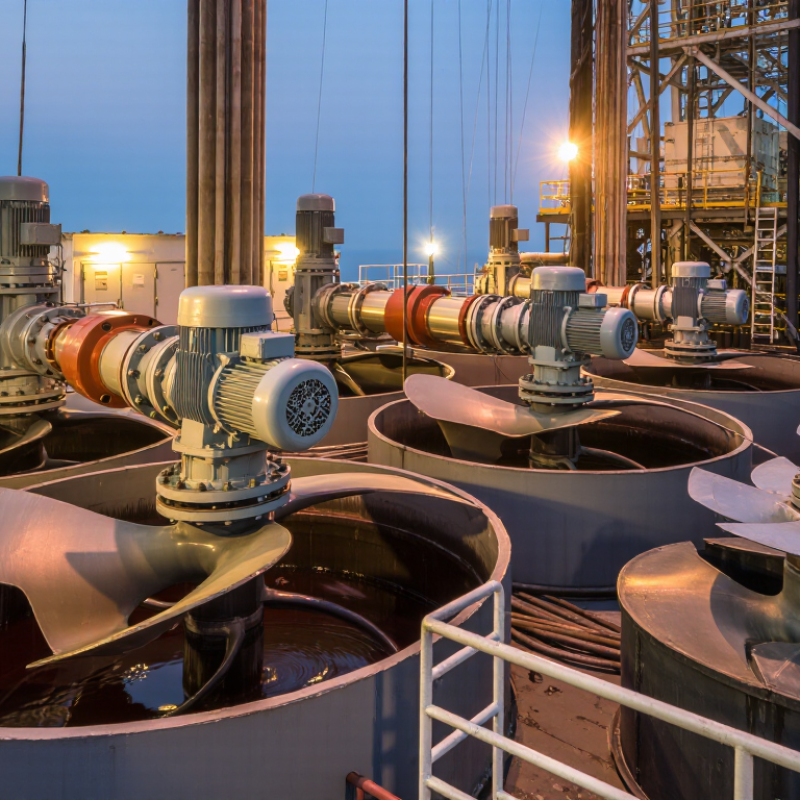
Solids control agitators are mechanical devices used in drilling-fluid tanks. They keep cuttings and weighting materials suspended during circulation and temporary storage. Without steady movement, dense particles settle on the tank bottom. This can reduce active volume and create difficult cleaning work. The equipment usually includes an electric motor, gearbox, shaft, and impeller. Simple components. Their reliability still depends on correct sizing and maintenance.

Inside the tank, the impeller creates controlled fluid movement. Axial-flow blades push mud downward and outward, while other designs create stronger radial circulation. This motion reduces stagnant zones and distributes solids more evenly. A properly positioned agitator supports desanders, desilters, and centrifuges by delivering more consistent fluid. Speed matters. Excessive speed may increase shear, heat, and power consumption without improving suspension. Low speed may leave settled material beneath the blade.

Practical selection should consider tank depth, mud density, viscosity, temperature, and expected solids loading. Operators should inspect seals, gearbox oil, shaft alignment, and unusual vibration. A small vibration can become a serious mechanical fault. Agitators are not a complete solids-control solution. Poor tank geometry, blocked suction lines, or incorrect impeller clearance can still undermine performance. In real installations, calculated settings often need adjustment after observing settling patterns. That adjustment is not a design failure, but ignoring the evidence would be. Regular inspection records also help maintenance teams compare power use, vibration, and suspension quality over time.

Top Solids Control Agitator Manufacturers Worldwide? What Are Solids Control Agitators and How Do They Work?

Solids control agitators keep drilling fluids homogeneous by rotating an impeller and transferring momentum into the tank. The chart shows the calculated impeller tip speed for a 0.9 m diameter impeller at different rotational speeds. Tip speed is calculated as v = π × D × N ÷ 60, where D is impeller diameter in metres and N is rotational speed in revolutions per minute. Actual operating speed depends on fluid viscosity, solids concentration, tank geometry, and required suspension performance.

Key Features Used to Compare Global Agitator Manufacturers

Top Solids Control Agitator Manufacturers Worldwide?

Comparing global solids control agitator manufacturers requires more than checking motor power. Buyers should examine torque, operating speed, impeller diameter, and tank volume together. A compact unit may suit a shallow mixing tank, while a heavy-duty model needs stronger gearbox support. Look closely at the start-up torque rating. Settled barite can resist movement more than fresh drilling fluid.

Material selection also reveals engineering quality. Stainless steel wetted parts can improve corrosion resistance, but coating performance matters in abrasive fluids. Reliable manufacturers provide shaft deflection data, seal specifications, and temperature limits. Ask for performance curves using realistic fluid density and viscosity. Generic water tests can mislead.

Maintenance design separates practical equipment from attractive brochures. Inspect access to bearings, coupling guards, drain points, and replacement seals. Variable-frequency control helps operators adjust shear and power consumption, though poor settings may create unnecessary turbulence. Noise, vibration, and gearbox temperature should be checked during factory and field testing. Documentation should include inspection records, spare-part availability, and response procedures.

No agitator fits every solids-control system. A stronger motor is not automatically better. Some published figures lack comparable test conditions, which deserves careful review. Request witnessed testing when the fluid is costly or highly weighted. Then compare lifecycle cost, not only the purchase price.

Leading Solids Control Agitator Manufacturers by Region

Top Solids Control Agitator Manufacturers Worldwide

Leading solids control agitator manufacturers differ by region, drilling conditions, and service expectations. North American producers often emphasize engineered systems for shale operations, automated tank controls, and rapid field support. MarketsandMarkets estimates the global oilfield equipment market will grow at roughly 4% annually through 2030. That expansion supports demand for dependable mixing equipment, especially where drilling fluids require stable density and uniform solids suspension.

China remains a major manufacturing base, offering broad production capacity and competitive pricing. Regional suppliers commonly produce mud agitators with explosion-protected motors, replaceable impellers, and carbon-steel or stainless-steel tank fittings. In Europe, manufacturers tend to focus on energy efficiency, noise reduction, and compliance-oriented documentation. The European Commission’s industrial energy data shows that motor efficiency remains a practical cost issue, not merely a technical preference.

Middle Eastern manufacturers and integrators often design equipment for high ambient temperatures, dusty sites, and continuous drilling schedules. Agitator selection should consider tank volume, impeller diameter, rotational speed, and fluid viscosity. A 7.5 kW unit may suit a smaller tank, but heavier weighted mud can demand more torque.

Manufacturer comparisons are difficult. Report definitions and regional sales data are not always consistent. Field experience still matters, particularly when seals fail, solids settle overnight, or maintenance crews lack specialist training.

Industry estimates should guide decisions, not replace site testing.

Industries and Drilling Systems Served by Major Manufacturers

Top Solids Control Agitator Manufacturers Worldwide?

Major solids control agitator manufacturers serve demanding drilling systems across oil and gas, geothermal energy, mining, construction, and environmental projects. Their equipment keeps drilling fluid moving inside active mud tanks, reserve pits, and chemical mixing compartments. This prevents barite, cuttings, and abrasive particles from settling too quickly.

In oil and gas operations, agitators commonly support shale shakers, vacuum degassers, desanders, desilters, and centrifuges. Geothermal drilling requires durable units that handle high temperatures and dense mineral solids. Mining systems often use heavier shafts, reinforced impellers, and corrosion-resistant materials for abrasive slurries. Horizontal directional drilling usually needs compact equipment for limited tank space and frequent fluid changes.

Practical selection depends on more than motor power. Tank geometry, fluid density, viscosity, temperature, and solids loading all affect performance. A side-entry unit may suit a narrow tank, while a top-entry design can simplify maintenance access. Operators should inspect shaft sealing, blade clearance, vibration levels, and spare-part availability before installation. Mud behavior changes. A mixer that performs well in laboratory fluid may struggle beside a busy shaker.

Field experience also exposes imperfect assumptions. Early power estimates can be wrong when cuttings concentration rises sharply. Regular checks help identify dead zones, worn blades, and uneven circulation before they affect drilling efficiency. Manufacturers serving international markets should provide tested designs, clear operating data, and installation guidance suited to each drilling system.

Top Solids Control Agitator Manufacturers Worldwide? - Industries and Drilling Systems Served by Major Manufacturers

Industry and drilling-system coverage overview based on common solids-control equipment configurations

Manufacturer Capability Category Primary Industries Served Drilling or Process Systems Typical Tank or Vessel Application Common Agitator Configuration Key Design Requirements Typical Compliance Focus
Integrated solids-control equipment manufacturers Oil and gas drilling, well servicing, and drilling-fluid recycling Land rigs, offshore rigs, workover units, and closed-loop mud systems Active mud tanks, suction tanks, reserve tanks, and chemical-mixing tanks Top-entry electric agitators with axial-flow or hydrofoil impellers Uniform solids suspension, low shear, continuous operation, and compatibility with weighted drilling mud Hazardous-area motor selection, machine guarding, electrical safety, and pressure-control system integration
Process-equipment agitator specialists Mining, mineral processing, chemical processing, and industrial slurry handling Slurry circuits, reagent systems, thickener feed systems, and process-water treatment Slurry tanks, reagent tanks, process-water tanks, and conditioning vessels High-torque top-entry or side-entry mixers selected for abrasive solids Abrasion resistance, high solids loading, corrosion protection, and reliable shaft sealing Material compatibility, guarding, electrical certification, and site-specific mining requirements
Drilling-fluid system integrators Directional drilling, trenchless construction, utility installation, and pipeline construction Horizontal directional drilling fluid plants and recycling units Bentonite mixing tanks, holding tanks, desanding tanks, and recycling tanks Compact electric agitators or hydraulic-drive mixers for mobile systems Transportability, fast installation, simple maintenance, and effective bentonite suspension Mobile-equipment safety, electrical protection, spill containment, and local lifting requirements
Offshore and marine equipment manufacturers Offshore exploration, marine construction, subsea drilling, and platform operations Jack-up rigs, semisubmersibles, drillships, and offshore mud-treatment packages Mud pits, trip tanks, active tanks, and cuttings-treatment vessels Compact top-entry agitators with sealed drives and marine-duty construction Low footprint, vibration control, corrosion resistance, remote monitoring, and high availability Offshore electrical classification, hazardous-area certification, marine coating systems, and lifting compliance
Mining and mineral-processing equipment manufacturers Coal, copper, gold, iron ore, aggregate, and industrial-mineral processing Exploration drilling, mine-water treatment, flotation, and tailings systems Settling tanks, flotation conditioning tanks, tailings tanks, and water-treatment basins Heavy-duty geared agitators with abrasion-resistant impellers High torque, long service life, protection against abrasive particles, and easy wear-part replacement Industrial machinery safety, dust protection, environmental controls, and regional electrical standards
Geothermal drilling equipment manufacturers Geothermal exploration, well construction, and high-temperature drilling-fluid management Geothermal land rigs, mud plants, solids-removal systems, and brine-handling equipment Active mud tanks, cooling tanks, brine tanks, and solids-settling vessels High-temperature electric agitators with corrosion-resistant wetted components Thermal stability, corrosion resistance, dependable sealing, and compatibility with treated water or brine Electrical safety, high-temperature material selection, pressure-system interfaces, and environmental protection
Environmental and waste-treatment equipment manufacturers Contaminated-soil treatment, wastewater treatment, dredging, and industrial waste management Dredging separation plants, dewatering systems, wastewater clarification, and remediation units Equalization tanks, flocculation tanks, sludge tanks, and contaminated-water holding tanks Low-speed, high-torque mixers with corrosion-resistant shafts and impellers Controlled mixing intensity, reduced settlement, chemical compatibility, and low energy consumption Environmental discharge requirements, chemical handling, guarding, and electrical protection
Custom engineering and skid-package fabricators Specialized drilling, industrial processing, pilot plants, and engineered fluid systems Containerized mud systems, modular treatment skids, pilot plants, and custom process packages Customer-specific tanks, mixing vessels, chemical-treatment tanks, and modular compartments Application-specific top-entry, side-entry, or hydraulic-drive agitators Customized power rating, tank geometry, impeller diameter, controls, and installation constraints Project specifications, local codes, hazardous-area requirements, factory testing, and documentation
Selection note: Agitator sizing normally depends on tank geometry, fluid density and viscosity, solids concentration, required suspension quality, operating temperature, corrosion conditions, available power, and the applicable electrical or hazardous-area classification.

How to Select the Right Solids Control Agitator Supplier

Top Solids Control Agitator Manufacturers Worldwide?

Selecting a solids control agitator supplier starts with process data, not catalog size. Measure tank volume, mud density, viscosity, solids loading, and operating temperature. The agitator must keep barite suspended without creating excessive shear.

The IEA’s Oil 2024 report forecasts global oil demand at about 105.4 million barrels per day by 2030. That pressure makes reliable drilling-fluid equipment increasingly important. Downtime is expensive.

Ask suppliers for torque curves, mixing calculations, material certificates, and factory acceptance test records. Check impeller diameter, shaft design, gearbox service factor, seal arrangement, and variable-frequency-drive compatibility. API 13C provides a useful reference for solids-control performance, but it does not replace application-specific engineering. A capable supplier should explain power consumption in kilowatts and expected suspension performance. Vague claims deserve caution.

Service quality matters equally. Request installation guidance, spare-parts availability, response times, and documented field references from similar mud systems. A low purchase price can hide weak seals or short gearbox life. I have seen specifications copied between projects, even when tank geometry changed significantly. That shortcut can produce dead zones near corners. It is also sensible to inspect welding quality, coating thickness, electrical certification, and noise data before approval. The right supplier shares limitations openly, because real operating conditions are rarely perfect.

Copyright 2025 Fluidra S.A. | Created by BCM Marketing Agencia Privacy Policy Legal note | Cookie policy |

Technical cookies are strictly necessary for our website to work and you can navigate through it. These types of cookies are those that, for example, allow us to identify you, give you access to certain restricted parts of the page if necessary, or remember different options or services already selected by you, such as your privacy preferences. Therefore, they are activated by default, your authorization not being necessary in this regard. Through the configuration of your browser, you can block or alert the presence of this type of cookies, although such blocking will affect the proper functioning of the different functionalities of our website.


The analysis cookies allow us to study the navigation of the users of our website in general (for example, which sections of the page are the most visited, which services are used most and if they work correctly, etc.). From the statistical information on navigation on our website, we can improve both the operation of the page itself and the different services it offers. Therefore, these cookies do not have an advertising purpose, but only serve to make our website work better, adapting to our users in general. By activating them you will contribute to this continuous improvement. You can enable or disable these cookies by checking the corresponding box, being disabled by default.


Functionality cookies allow us to remember your preferences, to personalize certain characteristics and general options of our website, every time you access it (for example, the language in which the information is presented to you, the sections marked as favorites, your browser type, etc.) Therefore, this type of cookies does not have an advertising purpose, but by activating them you will improve the functionality of the website (for example, adapting to your type of browser) and the customization of it based on your preferences (for example, by presenting the information in the language that you have chosen in previous occasions), which will contribute to the ease, usability and comfort of our page during your navigation. You can enable or disable these cookies by checking the corresponding box, being disabled by default.


Advertising cookies allow us to manage the advertising spaces included in our website based on criteria such as the content shown or the frequency in which the ads are displayed. For example, if you have been shown the same ad several times on our website, and you have not shown a personal interest by clicking on it, it will not appear again. In summary, by activating this type of cookies, the advertising shown on our website will be more useful and diverse, and less repetitive. You can enable or disable these cookies by checking the corresponding box, being disabled by default.


Behavioral advertising cookies allow us to obtain information based on the observation of your browsing habits and behaviors on the web, in order to show you advertising content that best suits your personal tastes and interests. To understand it in a very simple way, we will give you a fictitious example: if your last searches on the web were related to suspense literature, we would show you advertising about suspense books. Therefore, activating this type of cookies, the advertising that we show you on our website will not be generic, but will be oriented to your searches, tastes and interests, therefore adjusting exclusively to you. You can enable or disable these cookies by checking the corresponding box, being disabled by default.
To understand it in a very simple way, we will give you a fictitious example: if your last searches on the web were related to suspense literature, we would show you advertising about suspense books. Therefore, activating this type of cookies, the advertising that we show you on our website will not be generic, but will be oriented to your searches, tastes and interests, therefore adjusting exclusively to you. You can enable or disable these cookies by checking the corresponding box, being disabled by default.

SAVE

We use our own and third-party cookies to ensure the proper functioning of the website and to analyse our services, improve your experience on our website and show you advertisements related to your interests according to profiling based on your browsing habits (e.g. websites visited). You can accept all cookies by clicking "ACCEPT" or set or reject them by clicking here. If you would like to know more about the use of cookies, please see our COOKIE POLICY.


ACCEPT ALL
Reject no essentials


