
Top RFID Wristband Manufacturers for Global Buyers
FLUID HANDLING EXPERTS

Blog, all our news

Top RFID Wristband Manufacturers for Global Buyers

The Rfid Wristband market is moving from novelty to practical infrastructure. Hospitals, festivals, hotels, and universities now use wrist-worn RFID devices for identification, access, payments, and attendance tracking. A wristband may look simple, yet its performance depends on chip choice, antenna design, reader compatibility, and supplier quality control.

Industry forecasts support this shift. Grand View Research’s RFID market analysis estimates continued double-digit growth through 2030, driven by contactless identification and asset visibility. MarketsandMarkets also expects strong RFID expansion, although its market boundaries and forecasts differ. That difference matters. Buyers should compare methodologies, not repeat impressive figures without context.

Mark Roberti, founder of RFID Journal, has frequently emphasized, “RFID is not a technology; it’s a business solution.” His point remains highly relevant. The best Rfid Wristband is not necessarily the cheapest or most fashionable option. It must solve a defined operational problem under real conditions, including moisture, crowd pressure, long queues, and repeated scanning.

This guide examines leading RFID wristband manufacturers for global buyers. It considers frequency options, material durability, encoding services, customization, testing, minimum order quantities, and after-sales support. It also looks at compliance documentation and data-handling practices. These details can determine whether a wristband works reliably at a crowded entrance or fails beside a metal barrier.

No supplier fits every deployment. Some manufacturers excel at silicone event bands. Others focus on healthcare identification or secure access systems. The comparison may still contain gaps, because public supplier data is rarely uniform. Careful verification remains essential. Procurement teams should request samples, test readers, confirm certifications, and measure performance in the actual operating environment.
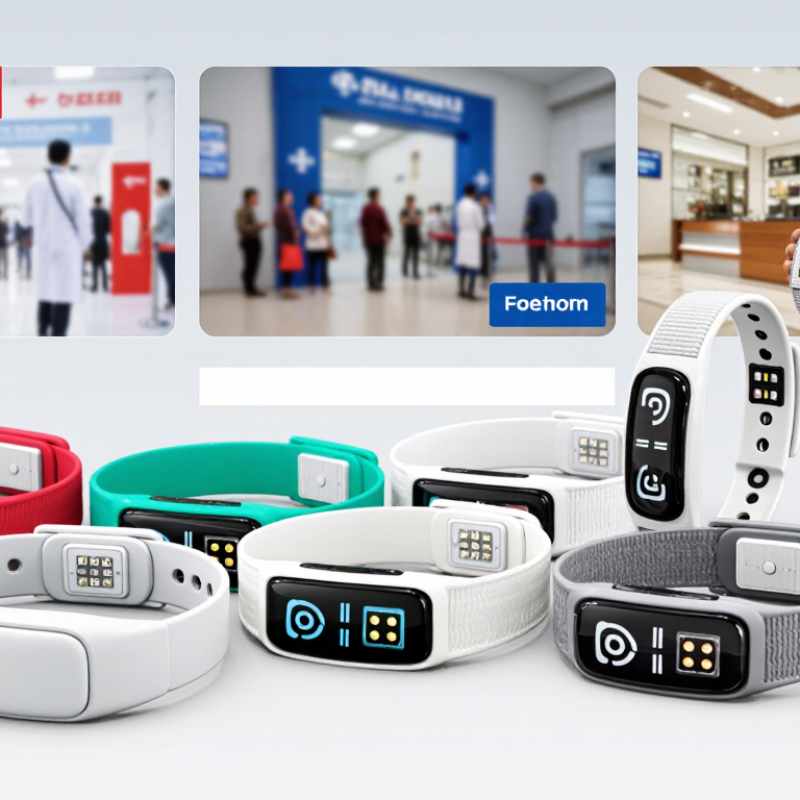
Top RFID Wristband Manufacturers for Global Buyers

RFID Wristbands: Definition, Components, and Core Technologies

An RFID wristband is a wearable identifier that exchanges data with a reader. It usually contains an RFID inlay, silicone or fabric body, printed artwork, and a secure closure. The inlay combines a microchip with a copper or aluminum antenna. The chip stores a unique identifier, while the reader links that identifier to approved event or service records. Passive wristbands use energy from the reader, so they need no battery. MarketsandMarkets projected the RFID market to grow from 14.5 billion dollars in 2022 to 31.2 billion dollars by 2027. Estimates differ because reports measure different RFID applications.

Core technology determines practical performance. HF and NFC wristbands commonly operate near 13.56 MHz, supporting short-range taps and controlled access. UHF systems offer longer reading distances, but body position and nearby metal can reduce reliability. Reader power, antenna design, encoding quality, and backend software matter equally. A stronger chip cannot fix poor placement. Field testing should include wet skin, crowded entrances, folded straps, and repeated bending. The weak point is often the closure, not the electronics. No design is perfect.

Tips: Ask for chip frequency, memory capacity, read distance, waterproof rating, and encoding procedure. Request sample testing before large production. Compare the technical method with the use case, not only the unit price. A 2024 RFID industry outlook also identified retail, logistics, and contactless services as major growth areas, but wristband results still depend on careful installation.

How RFID Wristband Manufacturers Serve Global Buyer Requirements

Global buyers expect RFID wristbands to work across venues, hospitals, hotels, and workforce sites. Manufacturers must convert requirements into measurable specifications, not attractive samples alone. Grand View Research valued the global RFID market at about $14.4 billion in 2022. IDTechEx forecasts continued expansion beyond $20 billion by 2034. That growth increases pressure on suppliers to deliver consistent performance across regions. Small details matter.

Reliable manufacturers offer suitable HF, UHF, or NFC constructions for different applications. One antenna design cannot serve every environment effectively. Wristbands must maintain stable reads during movement, perspiration, and brief water exposure. Buyers should request test results for read distance, orientation, reader compatibility, and material interference. They should also verify frequency compliance through applicable regional authorities. Certification documents should accompany every production batch.

Procurement teams need factory evidence, including incoming-material records, encoding checks, sample retention, and durability testing. A large market does not guarantee dependable wristbands. It may encourage rushed sourcing. I would question any supplier reporting only an average read rate. Results should identify reader models, distances, and testing conditions. No test plan is perfect. Still, transparent data supports fair comparison. Buyers can also ask about recycled polymers, skin-contact safety, and disposal guidance. Not every “eco” claim survives independent testing.

Key Criteria for Comparing RFID Wristband Manufacturers

When comparing RFID wristband manufacturers, start with performance, not catalog variety. Grand View Research estimated the global RFID market at USD 14.1 billion in 2022, with an 11.9% CAGR forecast through 2030. That growth raises the risk of rushed purchasing decisions.

Ask for verified read-range results under realistic conditions. Test wet skin, crowded entrances, metal barriers, and different reader angles. Check whether the manufacturer supports the required frequency, memory size, data format, and encoding process. MarketsandMarkets projected the RFID market to grow from USD 14.5 billion in 2023 to USD 24.5 billion by 2028. Scale matters.

Material safety also deserves careful review. Request compliance documents, skin-contact testing, waterproof ratings, and samples from the same production batch. A low unit price can hide weak closures, inconsistent chip placement, or high replacement rates. I would not trust a polished sample alone. Manufacturing capacity, quality-control records, delivery history, and traceable batch identification reveal more. Ask how rejected units are handled. Ask again. Some suppliers provide impressive technical sheets but vague field evidence. A practical comparison should include total cost, including encoding, freight, failures, and support. The cheapest offer may become expensive at a busy gate.

Manufacturing, Customization, and Quality Assurance Processes

Top RFID wristband manufacturers for global buyers should be assessed through production discipline, not catalog variety. MarketsandMarkets estimates that the RFID market could grow from about US$16.5 billion in 2023 to US$35.6 billion by 2030. This expansion increases pressure on suppliers to deliver stable inlays, accurate encoding, and repeatable assembly.

Manufacturing begins with material selection. Silicone suits multi-day wear, while laminated paper or PVC can reduce cost for short events. Skilled factories test antenna placement, chip bonding, strap strength, skin contact, and water resistance. They should also verify performance against EPC Gen2v2 or ISO/IEC 18000-63 requirements. Customization may include color matching, serial numbering, QR integration, variable printing, and tamper-evident closures. Small details matter. A poorly positioned inlay can create dead zones near metal readers or crowded entrances.

Quality assurance needs documented sampling plans, not verbal promises. Production teams should record read-rate tests, encoding accuracy, visual defects, tensile strength, and environmental exposure. ISO 2859-1 sampling methods can support consistent acceptance decisions. The RAIN Alliance has reported tens of billions of RAIN RFID products shipped annually, showing the scale of modern RFID production. Yet volume does not guarantee reliability. No factory is flawless. Even experienced suppliers can miss a weak weld or inconsistent adhesive batch. Global buyers should request pilot samples, batch reports, and independent verification before approving large orders.

Global Sourcing, Compliance, and Supplier Evaluation Steps

Top RFID Wristband Manufacturers for Global Buyers

Global Sourcing, Compliance, and Supplier Evaluation Steps

Global sourcing starts with performance evidence, not attractive catalogs. The RAIN Alliance 2024 industry report recorded 52.5 billion RAIN RFID tags sold in 2023. This scale increases buyer choice, but quality still varies sharply. Request read-range results, chip specifications, adhesive testing, and batch-level traceability from each manufacturer. Test wristbands on real skin, uniforms, and wet surfaces. Laboratory results alone can mislead.

Compliance requires a country-by-country checklist. Confirm radio approval for the destination market and request material declarations for REACH and RoHS requirements. For UHF products, check alignment with ISO/IEC 18000-63 and EPC Gen2v2 specifications. Privacy controls also matter when wristbands connect to personal records. The GS1 EPCIS standard can support event visibility, but suppliers should explain data retention and access controls. A supplier that avoids these questions deserves caution. So does one promising “global compliance” without documents.

Tips: Order samples from at least three factories. Compare ten read tests per wristband, including damp conditions. Ask for recent third-party test reports, corrective-action records, and a production sample before approval. Verify factory capacity, encoding accuracy, packaging controls, and replacement policies. A perfect scorecard is unrealistic. I would record every exception, because small failures become expensive during international deployment. Industry forecasts can guide demand, but your own field test should decide the purchase.

Top RFID Wristband Manufacturers for Global Buyers — Global Sourcing, Compliance, and Supplier Evaluation Steps

The chart shows representative operating frequencies used when evaluating RFID wristband suppliers: LF at 0.125 MHz, HF at 13.56 MHz, and UHF at 915 MHz. HF commonly aligns with ISO/IEC 14443 or ISO/IEC 15693 applications, while UHF systems are commonly evaluated against EPCglobal Class 1 Gen 2 / ISO/IEC 18000-63 requirements. Actual UHF frequencies vary by region, typically within the 860–960 MHz range, so buyers should confirm regulatory approval, material compliance, read performance, and customization capability before sourcing.

Copyright 2025 Fluidra S.A. | Created by BCM Marketing Agencia Privacy Policy Legal note | Cookie policy |

Technical cookies are strictly necessary for our website to work and you can navigate through it. These types of cookies are those that, for example, allow us to identify you, give you access to certain restricted parts of the page if necessary, or remember different options or services already selected by you, such as your privacy preferences. Therefore, they are activated by default, your authorization not being necessary in this regard. Through the configuration of your browser, you can block or alert the presence of this type of cookies, although such blocking will affect the proper functioning of the different functionalities of our website.


The analysis cookies allow us to study the navigation of the users of our website in general (for example, which sections of the page are the most visited, which services are used most and if they work correctly, etc.). From the statistical information on navigation on our website, we can improve both the operation of the page itself and the different services it offers. Therefore, these cookies do not have an advertising purpose, but only serve to make our website work better, adapting to our users in general. By activating them you will contribute to this continuous improvement. You can enable or disable these cookies by checking the corresponding box, being disabled by default.


Functionality cookies allow us to remember your preferences, to personalize certain characteristics and general options of our website, every time you access it (for example, the language in which the information is presented to you, the sections marked as favorites, your browser type, etc.) Therefore, this type of cookies does not have an advertising purpose, but by activating them you will improve the functionality of the website (for example, adapting to your type of browser) and the customization of it based on your preferences (for example, by presenting the information in the language that you have chosen in previous occasions), which will contribute to the ease, usability and comfort of our page during your navigation. You can enable or disable these cookies by checking the corresponding box, being disabled by default.


Advertising cookies allow us to manage the advertising spaces included in our website based on criteria such as the content shown or the frequency in which the ads are displayed. For example, if you have been shown the same ad several times on our website, and you have not shown a personal interest by clicking on it, it will not appear again. In summary, by activating this type of cookies, the advertising shown on our website will be more useful and diverse, and less repetitive. You can enable or disable these cookies by checking the corresponding box, being disabled by default.


Behavioral advertising cookies allow us to obtain information based on the observation of your browsing habits and behaviors on the web, in order to show you advertising content that best suits your personal tastes and interests. To understand it in a very simple way, we will give you a fictitious example: if your last searches on the web were related to suspense literature, we would show you advertising about suspense books. Therefore, activating this type of cookies, the advertising that we show you on our website will not be generic, but will be oriented to your searches, tastes and interests, therefore adjusting exclusively to you. You can enable or disable these cookies by checking the corresponding box, being disabled by default.
To understand it in a very simple way, we will give you a fictitious example: if your last searches on the web were related to suspense literature, we would show you advertising about suspense books. Therefore, activating this type of cookies, the advertising that we show you on our website will not be generic, but will be oriented to your searches, tastes and interests, therefore adjusting exclusively to you. You can enable or disable these cookies by checking the corresponding box, being disabled by default.

SAVE

We use our own and third-party cookies to ensure the proper functioning of the website and to analyse our services, improve your experience on our website and show you advertisements related to your interests according to profiling based on your browsing habits (e.g. websites visited). You can accept all cookies by clicking "ACCEPT" or set or reject them by clicking here. If you would like to know more about the use of cookies, please see our COOKIE POLICY.


ACCEPT ALL
Reject no essentials


