
Top 5 Rail Clamping Tools for Efficient Track Maintenance?
FLUID HANDLING EXPERTS

Blog, all our news

Top 5 Rail Clamping Tools for Efficient Track Maintenance?

Maintaining rail tracks is crucial for safety and efficiency. The right tools make a significant difference in this process. Among these, Rail Clamping Tools are essential for ensuring stability during repairs. Their design allows for secure placement of tracks, which helps prevent misalignments.

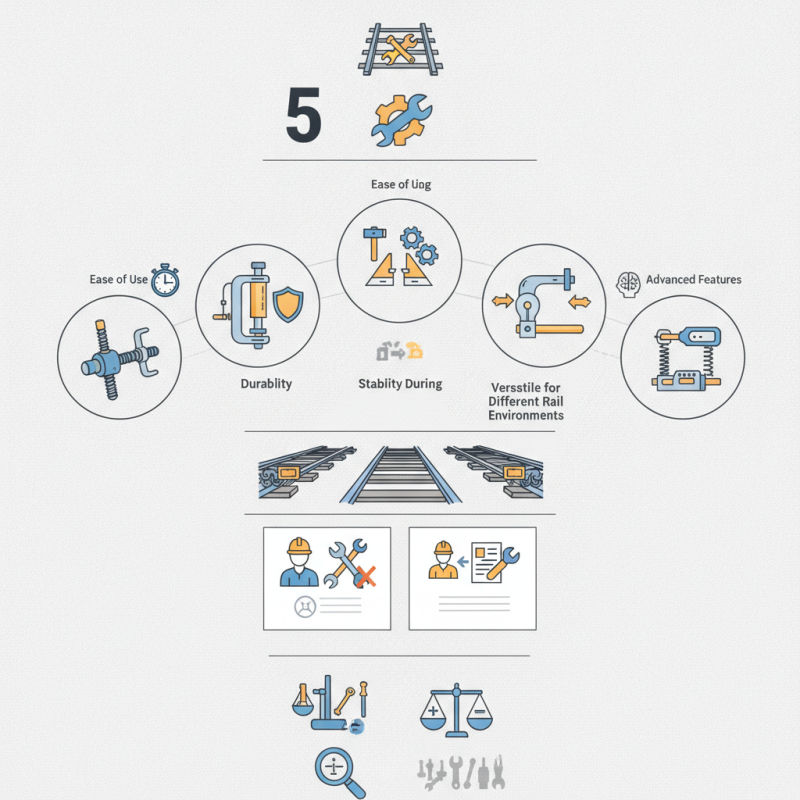
Rail clamping tools come in various types, each serving a specific purpose. Some offer ease of use, while others focus on durability. Choosing the right one can be overwhelming. Users often experience frustration when selecting tools that do not meet their needs. Despite advancements, challenges remain in perfecting these tools for different rail environments.

It's critical to understand that not all rail clamping tools are created equal. Proper training and usage significantly impact their effectiveness. Familiarity with the best practices can enhance maintenance outcomes. As we explore the top five tools, we consider their features and limitations. Each tool presents unique strengths and weaknesses, highlighting the need for careful selection.
Top 5 Rail Clamping Tools for Efficient Track Maintenance?

Overview of Rail Clamping Tools and Their Importance in Maintenance

Rail clamping tools play a crucial role in maintaining track integrity. These devices secure rail sections and prevent movement during maintenance activities. Their effective use ensures that trains run smoothly and safely. Maintenance teams often face challenges when clamping tracks. Improper clamping can lead to rail misalignment, resulting in potential hazards.

Each rail clamping tool offers unique advantages. Some provide quick adjustments, while others are designed for heavy-duty applications. Maintenance workers appreciate tools that enhance efficiency and safety. They also face the need for constant training on proper tool use. This ensures that they can adapt to varying track conditions effectively.

Preventive measures are key in rail maintenance. Regular inspections of clamping tools are essential to avoid breakdowns during critical tasks. This reflection highlights the importance of integrated training and tool maintenance in ensuring longevity and effectiveness. Investing in rail clamping tools is not just about efficiency; it's about safety and reliability in daily operations.

Key Features to Look for in Effective Rail Clamping Tools

When selecting rail clamping tools, several key features enhance their effectiveness. First, consider the material quality. A durable tool should withstand harsh conditions and heavy loads. Research indicates that tools made from high-strength steel can last longer and perform better under stress. This characteristic significantly reduces replacement frequency, leading to lower maintenance costs.

Next, the clamping force is critical. Tools must apply sufficient pressure to secure the rail without causing damage. Too much force can warp the track, while too little leads to instability. According to industry reports, achieving optimal clamping pressure can improve track stability by up to 30%. This finding emphasizes the importance of choosing the right tool, as improper clamps can compromise overall safety.

Ergonomics should not be overlooked. Operators use these tools frequently, so comfort and ease of use matter. A design that minimizes strain can enhance productivity and reduce fatigue. Features like adjustable handles and lightweight construction assist in achieving these goals. In fact, a report highlighted that ergonomic improvements can boost operational efficiency by 15% or more. Therefore, investing in easy-to-use rail clamping tools is vital for long-term success in track maintenance.

Top 5 Rail Clamping Tools for Optimal Track Maintenance

Rail clamping tools play a crucial role in track maintenance. They ensure stability and safety during repairs. Effective clamping enhances the reliability of rail infrastructure. These tools secure the rail in place, preventing any movement that could lead to accidents. Proper alignment is essential for trains to operate safely.

When selecting rail clamping tools, consider their grip and ease of use. Certain designs lend themselves to quick adjustments. However, some users find complexity in these tools frustrating. It’s vital to choose equipment that balances efficiency with user-friendliness. Operators should be well-trained in the setup and operation. Mismanagement, even with top tools, can lead to safety risks.

Regular inspection of clamping tools is necessary. Wear and tear can compromise their performance. Some tools may need calibration to maintain optimal clamping force. Outdated equipment might not deliver the expected results. Regular assessments help identify items that need replacement or servicing. Engaging with experienced technicians can improve maintenance practices. Upgraded tools are not always better; sometimes, older tools are more reliable.

Top 5 Rail Clamping Tools for Efficient Track Maintenance

Tool Name Weight (kg) Material Max Clamping Force (kN) Price (USD)
Rail Clamping Device A 12 Steel 150 250
Rail Clamping Device B 10 Aluminum 180 300
Rail Clamping Device C 14 Composite 200 350
Rail Clamping Device D 13 Steel 175 275
Rail Clamping Device E 11 Aluminum 160 280

Comparing the Performance of Leading Rail Clamping Tools

Rail clamping tools play a crucial role in track maintenance. These tools ensure the stability and alignment of rails during repairs or inspections. By securely fastening the rails, they help prevent costly accidents and service interruptions. Different types of clamping tools are available, each with unique advantages.

Performance varies across these tools. Some offer quick adjustments, while others excel in grip strength. Factors like material durability and ease of use also matter. Maintenance professionals often face challenges in choosing the right tool. User experiences reveal that specific designs may perform better in unique conditions. Testing under different weather or load scenarios can highlight these differences.

Selecting the appropriate rail clamping tool is paramount. Each project may require different specifications. A tool that works well in one scenario might not perform effectively in another. It's essential to assess the environment before making a choice. Gathering feedback from fellow professionals can lead to better decisions. Consistent evaluation of tool performance ensures efficient maintenance practices.

Best Practices for Using Rail Clamping Tools Safely and Effectively

Rail clamping tools are essential for track maintenance. Safe usage is critical to avoid accidents. Always inspect your tools before each use. Check for any signs of wear or damage. A small crack can lead to failure. Use gloves for better grip and hand protection.

Proper placement of clamps is vital. Ensure they align with the rail profile accurately. Misalignment can cause instability. Tighten clamps evenly to distribute pressure. Over-tightening may cause rail distortion. Regular training on safety practices is important for all workers.

In any maintenance operation, stay alert to your surroundings. Clear debris from the work area to avoid tripping hazards. Communicate with your team effectively. Use hand signals if necessary. It’s easy to overlook small details, but they can have big consequences. Reflect on past experiences to improve your workflow. Learn from mistakes.

Top 5 Rail Clamping Tools for Efficient Track Maintenance

This chart displays the effectiveness of the top five rail clamping tools based on user feedback and maintenance efficiency ratings. The tools are evaluated on a scale of 1 to 10, representing their performance in track maintenance.

Copyright 2025 Fluidra S.A. | Created by BCM Marketing Agencia Privacy Policy Legal note | Cookie policy |

Technical cookies are strictly necessary for our website to work and you can navigate through it. These types of cookies are those that, for example, allow us to identify you, give you access to certain restricted parts of the page if necessary, or remember different options or services already selected by you, such as your privacy preferences. Therefore, they are activated by default, your authorization not being necessary in this regard. Through the configuration of your browser, you can block or alert the presence of this type of cookies, although such blocking will affect the proper functioning of the different functionalities of our website.


The analysis cookies allow us to study the navigation of the users of our website in general (for example, which sections of the page are the most visited, which services are used most and if they work correctly, etc.). From the statistical information on navigation on our website, we can improve both the operation of the page itself and the different services it offers. Therefore, these cookies do not have an advertising purpose, but only serve to make our website work better, adapting to our users in general. By activating them you will contribute to this continuous improvement. You can enable or disable these cookies by checking the corresponding box, being disabled by default.


Functionality cookies allow us to remember your preferences, to personalize certain characteristics and general options of our website, every time you access it (for example, the language in which the information is presented to you, the sections marked as favorites, your browser type, etc.) Therefore, this type of cookies does not have an advertising purpose, but by activating them you will improve the functionality of the website (for example, adapting to your type of browser) and the customization of it based on your preferences (for example, by presenting the information in the language that you have chosen in previous occasions), which will contribute to the ease, usability and comfort of our page during your navigation. You can enable or disable these cookies by checking the corresponding box, being disabled by default.


Advertising cookies allow us to manage the advertising spaces included in our website based on criteria such as the content shown or the frequency in which the ads are displayed. For example, if you have been shown the same ad several times on our website, and you have not shown a personal interest by clicking on it, it will not appear again. In summary, by activating this type of cookies, the advertising shown on our website will be more useful and diverse, and less repetitive. You can enable or disable these cookies by checking the corresponding box, being disabled by default.


Behavioral advertising cookies allow us to obtain information based on the observation of your browsing habits and behaviors on the web, in order to show you advertising content that best suits your personal tastes and interests. To understand it in a very simple way, we will give you a fictitious example: if your last searches on the web were related to suspense literature, we would show you advertising about suspense books. Therefore, activating this type of cookies, the advertising that we show you on our website will not be generic, but will be oriented to your searches, tastes and interests, therefore adjusting exclusively to you. You can enable or disable these cookies by checking the corresponding box, being disabled by default.
To understand it in a very simple way, we will give you a fictitious example: if your last searches on the web were related to suspense literature, we would show you advertising about suspense books. Therefore, activating this type of cookies, the advertising that we show you on our website will not be generic, but will be oriented to your searches, tastes and interests, therefore adjusting exclusively to you. You can enable or disable these cookies by checking the corresponding box, being disabled by default.

SAVE

We use our own and third-party cookies to ensure the proper functioning of the website and to analyse our services, improve your experience on our website and show you advertisements related to your interests according to profiling based on your browsing habits (e.g. websites visited). You can accept all cookies by clicking "ACCEPT" or set or reject them by clicking here. If you would like to know more about the use of cookies, please see our COOKIE POLICY.


ACCEPT ALL
Reject no essentials


