
Top 10 PT100 RTD Suppliers for Global Buyers
FLUID HANDLING EXPERTS

Blog, all our news

Top 10 PT100 RTD Suppliers for Global Buyers

Choosing a PT100 RTD supplier involves more than comparing prices. Buyers need sensors that deliver repeatable readings, suit the installation, and arrive with clear technical documentation. A probe used in a food-processing line may face washdowns, while one fitted to a laboratory bath may need a different sheath, tolerance, and connection. Small details matter.

This guide introduces ten suppliers serving global buyers and explains what to check before requesting a quote. It considers product range, published specifications, calibration options, customization, support, and international availability. Look for resistance-temperature data, wiring details, insertion length, process fitting, and relevant conformity information. Check whether stated accuracy follows IEC 60751 and whether the supplier can provide traceable calibration records when required. Ask how lead times, minimum order quantities, and replacement support work in practice.

A shortlist, not a verdict.

Supplier capabilities can change, and a polished website does not prove that a sensor fits your process. Confirm specifications directly, especially for harsh environments or critical measurement points. Compare like with like: a thin-film element and a wire-wound design may behave differently under vibration or repeated thermal cycling. Be cautious with broad claims that lack test conditions or supporting documents. Even experienced buyers sometimes discover a mismatch only after installation. That is worth remembering. The following overview offers a practical starting point for evaluating PT100 RTD suppliers, while leaving final qualification to your engineering and quality teams.
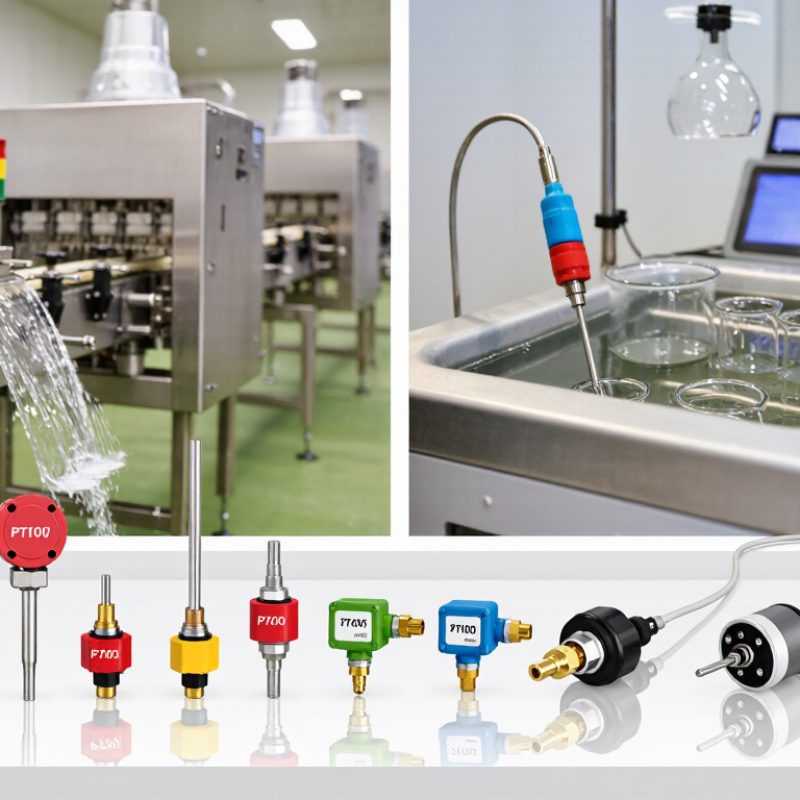
Top 10 PT100 RTD Suppliers for Global Buyers

PT100 RTDs: 100 Ω at 0°C and α = 0.00385 Ω/Ω/°C

A PT100 names a platinum resistance thermometer with 100 Ω resistance at 0°C. Its nominal temperature coefficient, α, is 0.00385 Ω/Ω/°C. IEC 60751 specifies the industrial platinum thermometer reference values and tolerance classes. Near 0°C, resistance changes by about 0.385 Ω per degree. At 100°C, the standard curve gives roughly 138.5 Ω.

Small signal. Big consequences.

A lead-wire resistance of 0.1 Ω can represent about 0.26°C near the ice point. Two-wire installations can therefore show a meaningful offset, even when the sensing element itself meets specification.

IEC 60751 gives Class A tolerance as ±(0.15 + 0.002|t|)°C and Class B as ±(0.30 + 0.005|t|)°C, with t in degrees Celsius. At 100°C, that means ±0.35°C for Class A and ±0.80°C for Class B.

These figures describe sensor tolerance, not total installed-system accuracy. Cable routing, connector quality, immersion depth, and calibration history all matter. Four-wire measurement can reduce lead-resistance error, but it cannot correct poor thermal contact. The nominal coefficient is useful. It is not a promise of perfect readings. A well-matched probe and instrument still need checking under actual operating conditions.

IEC 60751 Accuracy Classes: AA, A, and B Tolerance Formulas

IEC 60751 specifies temperature tolerances for platinum resistance thermometers. A Pt100 has a nominal resistance of 100 Ω at 0°C. Its class describes allowable deviation from the reference temperature, not guaranteed accuracy across the entire measurement system. The formulas use temperature t in degrees Celsius and give tolerance in degrees Celsius.

Class AA: ±(0.10 + 0.0017|t|)°C. Class A: ±(0.15 + 0.002|t|)°C. Class B: ±(0.30 + 0.005|t|)°C. At 200°C, these limits are respectively ±0.44°C, ±0.55°C, and ±1.30°C. The absolute value means the calculation also applies below 0°C. Check the element’s specified operating range before comparing classes; ranges can depend on construction.

A tighter class may suit a controlled process, but it cannot correct poor installation. Long leads, electrical noise, thermal gradients, and an unsuitable immersion depth can all affect the reading. This distinction is easy to overlook. When comparing suppliers, request the stated class, operating range, and calibration documentation for the exact sensor assembly. A certificate should identify its measured points and uncertainty. Class tolerance and calibration uncertainty are related, but they are not interchangeable. A neat specification can still leave practical questions unanswered.

PT100 RTD Tolerance by IEC 60751 Accuracy Class

The chart shows the maximum permissible temperature deviation (±°C) calculated from the IEC 60751 tolerance formulas. Class AA: ±(0.1 + 0.0017 × |t|) °C; Class A: ±(0.15 + 0.002 × |t|) °C; Class B: ±(0.3 + 0.005 × |t|) °C. Values are shown only within the commonly specified class ranges: AA, −50 to 250°C; A, −100 to 450°C; B, −196 to 600°C. Lower tolerance indicates tighter accuracy.

Top 10 PT100 RTD Suppliers: Products, Markets, and Global Reach

A useful comparison of the top 10 PT100 RTD suppliers starts with the sensor, not the sales pitch. A PT100 uses a platinum element rated at 100 ohms at 0°C, but probe construction varies widely. Buyers may need a thin-film element for compact equipment or a wire-wound design for a demanding measurement range. Check the stated tolerance, temperature limits, sheath material, and response time. Fit matters.

Product options often include bare probes, threaded assemblies, mineral-insulated cables, and transmitters with standard output signals. Two-wire connections can suit short, cost-sensitive runs, while three- or four-wire designs help reduce lead-wire error. Ask whether a quoted accuracy applies to the element alone or the complete assembly. That detail is easy to miss.

Markets shape supplier strengths. A producer serving food processing may offer hygienic fittings, while one focused on industrial plants may provide tougher metal sheaths and custom lengths. Global reach means more than shipping to many countries; it also involves clear drawings, consistent calibration records, useful technical support, and reliable replacement parts. A polished catalog is not proof of dependable field performance. Request sample documentation and confirm how the supplier handles custom orders. Small inconsistencies can still occur, so verify critical specifications before installation.

Comparing Suppliers: Temperature Range, Calibration, and Traceability

Top 10 PT100 RTD Suppliers for Global Buyers

When comparing PT100 RTD suppliers, look beyond the temperature range printed on a product sheet. A sensor rated from –50°C to 250°C may suit a chilled process, but its sheath, cable, and installation can affect response and stability. Ask for the usable range of the complete assembly, not just the sensing element. Details matter.

Calibration records should identify the instrument, test points, results, and measurement uncertainty. For a probe used near 100°C, check whether calibration points bracket that operating temperature. A certificate with only a room-temperature check may offer limited evidence for higher-temperature work. Confirm how often recalibration is recommended, and whether the supplier can provide a report for the specific serial number.

Traceability means calibration results link through documented standards to recognized references; it does not guarantee that every probe performs identically in service. Request the certificate format and clarify whether calibration is included or charged separately. Compare tolerances, too, because a narrow tolerance can matter more than an impressive maximum range. I would still question neat claims without supporting records. Real installations are messier than tables, and that deserves attention.

Top 10 PT100 RTD Suppliers for Global Buyers — Comparing Suppliers: Temperature Range, Calibration, and Traceability
Rank Anonymous supplier profile Indicative PT100 assembly range Calibration options to check Traceability evidence to request Best suited for
1 Industrial probe manufacturer Common probe designs: approximately −50°C to +250°C; wider ranges depend on construction. Ask whether calibration is available at multiple points across the operating range and whether results are supplied with the probe. Request a serial-numbered certificate identifying the calibration method, results, uncertainty, and traceability chain. General process monitoring and equipment OEMs.
2 Mineral-insulated RTD assembly specialist Design-dependent; mineral-insulated assemblies can be configured for high-temperature service, with the sensing element and sheath limiting the usable range. Confirm calibration points near both the normal operating temperature and the application limits. Check that the certificate covers the finished assembly, not only the sensing element. Vibration, compact installations, and demanding industrial environments.
3 Precision sensor and reference-probe supplier Some reference designs cover sub-zero to elevated temperatures; usable limits depend on the probe construction and calibration. Look for multi-point calibration, stated measurement uncertainty, and repeatability data. Request calibration documentation traceable to national measurement standards; verify any stated accreditation separately. Laboratories, validation work, and high-accuracy process checks.
4 Sanitary and hygienic sensor manufacturer Common hygienic assemblies are designed for moderate process temperatures; confirm the specific probe, seal, and connector limits. Ask for calibration at application-relevant points and confirmation that the certificate identifies the hygienic assembly. Request serial-number traceability and documentation for the complete sensor assembly. Food, beverage, pharmaceutical, and clean-process applications.
5 Surface and contact-temperature sensor supplier Range varies substantially with mounting method, contact pressure, and surface material; use the stated assembly limit rather than the bare-element limit. Ask how calibration or verification represents the installed surface measurement. Request a certificate or verification record tied to the sensor’s serial number and measurement configuration. Motors, pipes, plates, and other accessible surfaces.
6 Cryogenic and low-temperature RTD supplier Specialized designs may extend to approximately −200°C; confirm the lower limit and cable performance for the selected assembly. Ensure calibration points include the low-temperature operating region; room-temperature calibration alone may not establish performance there. Request low-temperature results, uncertainty, and traceability information for the actual probe type. Cold storage, gas handling, and cryogenic equipment.
7 Compact sensor and transmitter manufacturer Typically application-specific; the transmitter, sheath, and probe may have different temperature limits. Clarify whether calibration applies to the RTD element, the transmitter output, or the complete measurement loop. Request separate or combined records identifying the calibrated components and their serial numbers. Space-constrained installations and integrated measurement systems.
8 Custom-engineered temperature assembly supplier Can be configured for broad application ranges, but the achievable range is set by materials, insulation, wiring, and construction. Specify calibration points, tolerance, and acceptance criteria before ordering. Request as-built documentation and a traceable certificate for each serialized custom assembly. Non-standard thermowells, fittings, lengths, and connection requirements.
9 High-volume OEM sensor producer Usually offered in defined standard ranges; confirm the range and tolerance for the exact part number. Check whether calibration is available per unit, by batch, or only as a separate service. Confirm whether certificates are unit-specific and whether batch records identify the supplied lot. Repeat purchases, production equipment, and large-volume integration.
10 Calibration-focused supplier or laboratory partner Range depends on the RTD assembly selected; verify that the complete probe is suitable for the intended environment. Compare calibration points, uncertainty, turnaround time, and whether recalibration services are available. Request a certificate showing measured values, uncertainty, method, date, and traceability; accreditation scope should match the service requested. Buyers prioritizing measurement records and ongoing recalibration.

Selection note: These are anonymous supplier archetypes, not named or ranked companies. Temperature ranges are indicative application examples, not verified specifications for individual suppliers; confirm the exact model’s operating limits before purchase. IEC 60751 defines Pt100 resistance-temperature characteristics and tolerance classes, but the usable range and accuracy of a finished assembly depend on its construction. Calibration traceability does not by itself mean that a calibration service is accredited.

Choosing a Supplier: Match Accuracy and Design to Your Application

Top 10 PT100 RTD Suppliers for Global Buyers

Choosing a Supplier: Match Accuracy and Design to Your Application

A PT100 is only as useful as its fit to the measurement point. Check the required temperature range, tolerance, and response time before comparing suppliers. A sensor inside a small pipe may need a shorter, slimmer probe than one monitoring a large tank. Ask whether the quoted accuracy applies to the sensing element alone or the complete assembly. That difference can matter. A precise element cannot correct poor installation or unsuitable wiring.

Review the construction details: two-, three-, or four-wire configuration, sheath material, insertion length, and connection type. Three- and four-wire designs can reduce lead-wire errors, but your instrument must support the chosen arrangement. Request calibration records, stated uncertainty, and clear test conditions. Also check whether the supplier can maintain consistent specifications across repeat orders. A polished datasheet helps, though it does not answer every practical question. I would verify dimensions and process connections early; these are easy to overlook.

Tips: Share a drawing or installation photo, operating range, and cable length when requesting a quote. Ask about calibration options and replacement lead times. Then compare like with like, not just unit price.

Copyright 2025 Fluidra S.A. | Created by BCM Marketing Agencia Privacy Policy Legal note | Cookie policy |

Technical cookies are strictly necessary for our website to work and you can navigate through it. These types of cookies are those that, for example, allow us to identify you, give you access to certain restricted parts of the page if necessary, or remember different options or services already selected by you, such as your privacy preferences. Therefore, they are activated by default, your authorization not being necessary in this regard. Through the configuration of your browser, you can block or alert the presence of this type of cookies, although such blocking will affect the proper functioning of the different functionalities of our website.


The analysis cookies allow us to study the navigation of the users of our website in general (for example, which sections of the page are the most visited, which services are used most and if they work correctly, etc.). From the statistical information on navigation on our website, we can improve both the operation of the page itself and the different services it offers. Therefore, these cookies do not have an advertising purpose, but only serve to make our website work better, adapting to our users in general. By activating them you will contribute to this continuous improvement. You can enable or disable these cookies by checking the corresponding box, being disabled by default.


Functionality cookies allow us to remember your preferences, to personalize certain characteristics and general options of our website, every time you access it (for example, the language in which the information is presented to you, the sections marked as favorites, your browser type, etc.) Therefore, this type of cookies does not have an advertising purpose, but by activating them you will improve the functionality of the website (for example, adapting to your type of browser) and the customization of it based on your preferences (for example, by presenting the information in the language that you have chosen in previous occasions), which will contribute to the ease, usability and comfort of our page during your navigation. You can enable or disable these cookies by checking the corresponding box, being disabled by default.


Advertising cookies allow us to manage the advertising spaces included in our website based on criteria such as the content shown or the frequency in which the ads are displayed. For example, if you have been shown the same ad several times on our website, and you have not shown a personal interest by clicking on it, it will not appear again. In summary, by activating this type of cookies, the advertising shown on our website will be more useful and diverse, and less repetitive. You can enable or disable these cookies by checking the corresponding box, being disabled by default.


Behavioral advertising cookies allow us to obtain information based on the observation of your browsing habits and behaviors on the web, in order to show you advertising content that best suits your personal tastes and interests. To understand it in a very simple way, we will give you a fictitious example: if your last searches on the web were related to suspense literature, we would show you advertising about suspense books. Therefore, activating this type of cookies, the advertising that we show you on our website will not be generic, but will be oriented to your searches, tastes and interests, therefore adjusting exclusively to you. You can enable or disable these cookies by checking the corresponding box, being disabled by default.
To understand it in a very simple way, we will give you a fictitious example: if your last searches on the web were related to suspense literature, we would show you advertising about suspense books. Therefore, activating this type of cookies, the advertising that we show you on our website will not be generic, but will be oriented to your searches, tastes and interests, therefore adjusting exclusively to you. You can enable or disable these cookies by checking the corresponding box, being disabled by default.

SAVE

We use our own and third-party cookies to ensure the proper functioning of the website and to analyse our services, improve your experience on our website and show you advertisements related to your interests according to profiling based on your browsing habits (e.g. websites visited). You can accept all cookies by clicking "ACCEPT" or set or reject them by clicking here. If you would like to know more about the use of cookies, please see our COOKIE POLICY.


ACCEPT ALL
Reject no essentials


