
Top Peel Tensile Testing Machines for Global Buyers
FLUID HANDLING EXPERTS

Blog, all our news

Top Peel Tensile Testing Machines for Global Buyers

Global packaging, labeling, electronics, and medical-device manufacturers increasingly depend on controlled adhesion data. MarketsandMarkets identifies packaging testing as a growing sector, driven by flexible formats, automation, and stricter quality expectations. Smithers also reports continued investment in packaging performance, especially for lightweight films and recyclable structures. These trends make a reliable Peel Tensile Testing Machine more than a laboratory purchase. It becomes a safeguard against weak seals, inconsistent laminates, and costly product returns.

A suitable machine applies steady peel force while recording load, distance, and failure behavior. ASTM D3330, ASTM F88, and ISO 8510-2 provide useful reference methods, depending on the material and test purpose. Results still depend on specimen width, peel angle, speed, conditioning, and operator technique. Small differences matter. A film may separate cleanly at 23°C, then tear irregularly after humidity exposure. That detail can change a purchasing decision.

Adhesion specialist Dr. George Wypych offers a practical principle: “Adhesion must be evaluated under conditions that represent its intended use.” Buyers should treat that warning seriously. A high peak value alone does not prove dependable performance. Repeatability, calibration records, software traceability, and fixture quality deserve equal attention. In practice, some procurement teams overvalue maximum force and overlook failure mode. That is an avoidable weakness. The best Peel Tensile Testing Machine supports comparable data across laboratories, suppliers, and production shifts. Yet no instrument removes judgment entirely. Test methods must be reviewed, challenged, and improved as materials change.
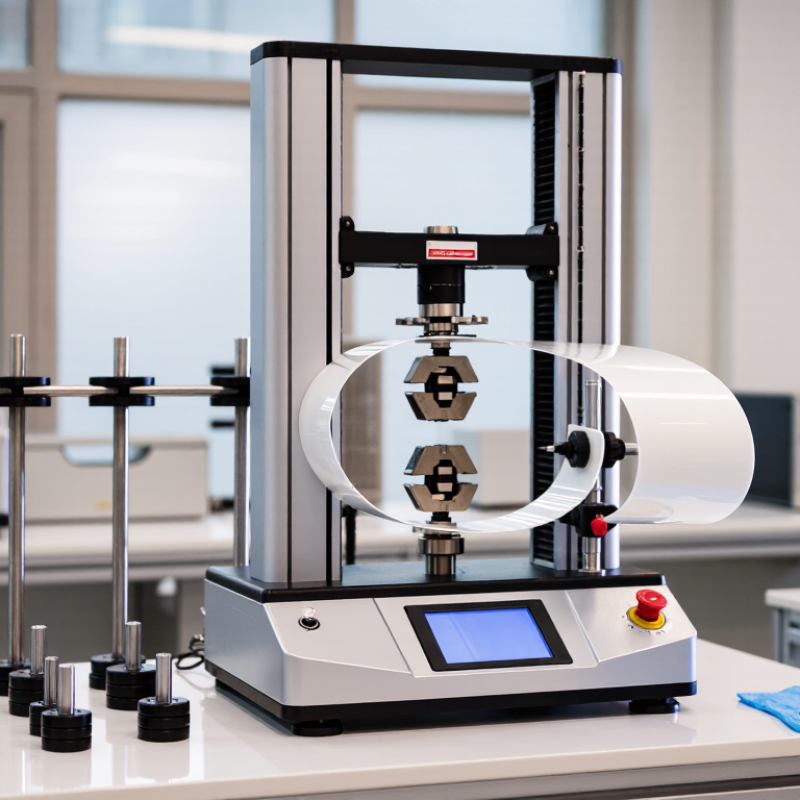
Top Peel Tensile Testing Machines for Global Buyers

What Is Peel Tensile Testing and Why Does It Matter?

Peel tensile testing measures the force required to separate two bonded materials. In packaging, the test often uses a controlled 90° or 180° peel angle. Results are reported in newtons per 15 millimetres or a similar unit. ASTM D1876 and ISO 8510-1 provide widely used methods for evaluating flexible bonded materials.

The test reveals whether a seal opens smoothly, tears unpredictably, or fails inside the adhesive layer. This matters for pouches, medical packaging, labels, and laminated films. Eurostat reported 186.5 kilograms of packaging waste per person in the European Union during 2022. Reliable seals can reduce leakage, rejected batches, and unnecessary material loss. Small force changes can expose coating variation, weak curing, or uneven pressure during production.

A strong result is not automatically a safe result. Excessive peel strength may make opening difficult for users. A low result may still be acceptable for a deliberately easy-open package.

Testing should match the real product, including temperature, humidity, sealing speed, and storage time. ASTM committee guidance also stresses conditioning because environmental exposure can alter adhesive performance. Laboratory strips are clean; factory materials are not. That gap deserves attention. Global buyers should request test speed, specimen width, conditioning details, failure mode, and repeatability data before comparing machines. A precise instrument cannot repair a poorly designed test.

How Peel Tensile Testing Machines Work

Peel tensile testing machines measure the force needed to separate two bonded layers at a controlled angle and speed. The test commonly follows ASTM D1876 or ISO 11339. A motor pulls one specimen arm while a load cell records force continuously. The result appears as a force-distance curve, not just one number.

The operator first cuts equal-width strips and conditions them under stable temperature and humidity. Small details matter. Misaligned jaws can create uneven peeling and false peaks. Flexible packaging studies from Smithers report continued global demand growth, with annual expansion near 4% in several market segments. That growth increases the need for repeatable seal and adhesive testing.

During a test, the machine should maintain a steady crosshead speed, often 300 millimeters per minute under common peel methods. The software calculates average peel strength, peak force, and variation. ASTM F88 is also widely used for heat-seal strength evaluation. Experienced technicians inspect the failure surface afterward. Adhesive failure, film tearing, and cohesive failure tell different stories. A clean curve is useful, but it can be misleading. Humidity, jaw pressure, and sample width may change the outcome. I would not treat one reading as production truth; repeated tests and documented conditioning provide stronger evidence.

Top Peel Tensile Testing Machines for Global Buyers - How Peel Tensile Testing Machines Work

Machine Configuration Typical Force Capacity Typical Speed Range Common Peel Angles Suitable Test Materials Relevant Standards Key Selection Considerations
Low-force single-column tester Up to approximately 1 kN About 1–500 mm/min, depending on the test method 90° and 180° Pressure-sensitive tape, labels, films, flexible laminates, medical dressings ASTM D3330, ASTM F88/F88M, ISO 8510-1, ISO 8510-2 Good resolution at low loads, stable low-speed movement, interchangeable peel fixtures
Universal electromechanical tester Approximately 1–10 kN About 0.1–1,000 mm/min, subject to configuration 90°, 180°, T-peel, and custom angles Adhesive bonds, coated fabrics, rubber, plastics, packaging films, composites ASTM D903, ASTM D1876, ASTM D3330, ISO 8510 series Load-cell interchangeability, travel length, software control, data export, fixture capacity
High-capacity floor-standing tester Approximately 10–100 kN About 0.1–500 mm/min 90°, 180°, T-peel, and fixture-defined angles Structural adhesives, thick laminates, reinforced materials, industrial seals ASTM D903, ASTM D1876, ISO 8510-1, ISO 8510-2 Rigid frame, high-capacity grips, adequate test clearance, overload protection, machine stiffness
Packaging seal-strength tester Commonly 100 N–1 kN Often around 100–300 mm/min for seal testing Typically 180° or a method-specific configuration Flexible packaging, pouches, sachets, trays, lidding films, heat seals ASTM F88/F88M, ASTM F904, ISO 527-3 where applicable Consistent jaw alignment, seal-width compatibility, controlled speed, peak and average force reporting
90° peel tester Typically 100 N–1 kN Method-dependent; commonly 100–300 mm/min Fixed 90° Tapes, labels, coatings, films, protective liners, bonded flexible materials ISO 8510-1 and other product-specific procedures Accurate 90° fixture geometry, low-friction support, specimen-width control, repeatable clamping
180° peel tester Typically 100 N–1 kN Method-dependent; commonly 100–300 mm/min Fixed 180° Pressure-sensitive adhesives, tapes, labels, flexible laminates, packaging seals ASTM D3330, ASTM F88/F88M, ISO 8510-2 Correct roller or return path, appropriate grip width, stable peel front, average-force calculation
T-peel fixture system Typically 1–10 kN Commonly 100–300 mm/min, depending on the procedure T-peel configuration Flexible adhesive joints, films, coated fabrics, elastomeric laminates ASTM D1876 Self-aligning grips, flexible-arm clearance, specimen thickness range, force averaging method
How a peel tensile testing machine works: A prepared specimen is clamped between a stationary grip and a moving grip or peel fixture. The motor moves the crosshead at a controlled speed while a calibrated load cell measures the force required to separate the bonded layers. The software records force versus displacement and commonly reports peak force, average peel force, failure mode, and test distance. Actual capacity, speed, accuracy, and fixture design should be selected according to the applicable standard and product specification.

Note: The capacity and speed ranges shown are representative configurations for equipment selection. Exact operating limits vary by load cell, frame, fixture, specimen geometry, and the test method being followed.

Key Features to Compare Across Global Suppliers

Top Peel Tensile Testing Machines for Global Buyers

Key Features to Compare Across Global Suppliers

When comparing peel tensile testing machines, start with the test method, not the sales brochure. Check the supported peel angles, load ranges, crosshead speeds, and fixture dimensions. A machine rated for light films may struggle with coated fabrics or rigid laminates. The load cell should match the expected force closely. Oversized sensors can reduce measurement sensitivity.

Ask suppliers for calibration certificates, repeatability data, and sample test reports. Reliable systems should record force, displacement, peel distance, and failure points clearly. Software should export common file formats without complicated steps. Inspect the grips carefully. Smooth jaws may slip, while rough jaws can damage delicate samples. Small details matter.

Global buyers should also compare power requirements, language options, training, spare parts, and response times. Confirm whether remote support covers installation and software issues. Packaging deserves attention too. A damaged frame can ruin accuracy before testing begins. I have seen specifications appear complete, yet fixture choices remained unclear. That creates avoidable delays. No supplier gets every detail right. Request drawings and written confirmation before purchase. Local service may cost more, but it can reduce downtime when calibration or repairs become necessary.

How to Select the Right Machine for Your Materials

Selecting a peel tensile testing machine starts with the material, not the machine’s appearance. Films, labels, laminates, and flexible packaging can require different peel angles, speeds, and fixtures. A 90-degree test may suit one construction, while a 180-degree test exposes another failure pattern. Confirm the method required by your internal procedure or applicable international standard.

Match the load cell to the expected force range. Oversizing it can reduce measurement sensitivity, while choosing too small a capacity risks overload. Check grip design, travel length, speed control, and software records. The machine should capture peak force, average force, and separation distance clearly. Small details matter. A narrow sample may wrinkle before peeling, creating misleading results.

Global buyers should also examine calibration support, electrical compatibility, language options, and technical documentation. A dependable machine needs traceable calibration and repeatable alignment. Ask how fixtures are replaced and how service is handled in your region. In practical testing work, operators sometimes focus on force capacity and overlook sample conditioning. That is a mistake worth reconsidering. Temperature and humidity can change adhesive behavior significantly. An environmental chamber may be necessary for sensitive materials. No machine removes every testing uncertainty. Good preparation still matters.

Testing Standards, Accuracy, and Worldwide Compliance

A reliable peel tensile testing machine must do more than display a force value. It should support recognized methods, such as ASTM D1876, ISO 8510-1, or relevant packaging procedures. Each method defines specimen size, peel angle, speed, and reporting requirements. Global buyers should confirm the required standard before comparing equipment. Requirements vary by product and market.

Accuracy begins with controlled movement and stable force measurement. A practical machine should offer a calibrated load cell, adjustable test speed, and secure specimen grips. Calibration records should connect to national or international measurement references. Traceable evidence matters. I have seen testing programs weakened by poorly aligned samples, not faulty sensors. The operator still matters.

Temperature and humidity can change adhesive behavior, especially during long testing cycles. Choose equipment that records test conditions and protects results from unnoticed variation. Software should calculate average peel force, peak force, and force curves without hiding raw data. Small details matter. Worldwide compliance also requires clear reports, durable documentation, and service support across regions. No machine is perfect. Buyers should question claimed accuracy, review uncertainty data, and test representative materials before purchase. A machine that performs well with film may behave differently with foil, paper, or laminated structures. That practical check is often missed.

Top Peel Tensile Testing Machines for Global Buyers

Testing standards, accuracy, and worldwide compliance

Standardized crosshead speeds vary by test method: ASTM D1876 specifies 254 mm/min for T-peel testing, ISO 11339 commonly uses 100 mm/min for T-peel evaluation, ASTM F88/F88M uses 300 mm/min for flexible package seal strength, and ISO 8510-2 uses 100 mm/min for 180° peel testing. Buyers should confirm the latest standard edition, load-cell accuracy, speed control, and calibration traceability before selecting equipment.

Copyright 2025 Fluidra S.A. | Created by BCM Marketing Agencia Privacy Policy Legal note | Cookie policy |

Technical cookies are strictly necessary for our website to work and you can navigate through it. These types of cookies are those that, for example, allow us to identify you, give you access to certain restricted parts of the page if necessary, or remember different options or services already selected by you, such as your privacy preferences. Therefore, they are activated by default, your authorization not being necessary in this regard. Through the configuration of your browser, you can block or alert the presence of this type of cookies, although such blocking will affect the proper functioning of the different functionalities of our website.


The analysis cookies allow us to study the navigation of the users of our website in general (for example, which sections of the page are the most visited, which services are used most and if they work correctly, etc.). From the statistical information on navigation on our website, we can improve both the operation of the page itself and the different services it offers. Therefore, these cookies do not have an advertising purpose, but only serve to make our website work better, adapting to our users in general. By activating them you will contribute to this continuous improvement. You can enable or disable these cookies by checking the corresponding box, being disabled by default.


Functionality cookies allow us to remember your preferences, to personalize certain characteristics and general options of our website, every time you access it (for example, the language in which the information is presented to you, the sections marked as favorites, your browser type, etc.) Therefore, this type of cookies does not have an advertising purpose, but by activating them you will improve the functionality of the website (for example, adapting to your type of browser) and the customization of it based on your preferences (for example, by presenting the information in the language that you have chosen in previous occasions), which will contribute to the ease, usability and comfort of our page during your navigation. You can enable or disable these cookies by checking the corresponding box, being disabled by default.


Advertising cookies allow us to manage the advertising spaces included in our website based on criteria such as the content shown or the frequency in which the ads are displayed. For example, if you have been shown the same ad several times on our website, and you have not shown a personal interest by clicking on it, it will not appear again. In summary, by activating this type of cookies, the advertising shown on our website will be more useful and diverse, and less repetitive. You can enable or disable these cookies by checking the corresponding box, being disabled by default.


Behavioral advertising cookies allow us to obtain information based on the observation of your browsing habits and behaviors on the web, in order to show you advertising content that best suits your personal tastes and interests. To understand it in a very simple way, we will give you a fictitious example: if your last searches on the web were related to suspense literature, we would show you advertising about suspense books. Therefore, activating this type of cookies, the advertising that we show you on our website will not be generic, but will be oriented to your searches, tastes and interests, therefore adjusting exclusively to you. You can enable or disable these cookies by checking the corresponding box, being disabled by default.
To understand it in a very simple way, we will give you a fictitious example: if your last searches on the web were related to suspense literature, we would show you advertising about suspense books. Therefore, activating this type of cookies, the advertising that we show you on our website will not be generic, but will be oriented to your searches, tastes and interests, therefore adjusting exclusively to you. You can enable or disable these cookies by checking the corresponding box, being disabled by default.

SAVE

We use our own and third-party cookies to ensure the proper functioning of the website and to analyse our services, improve your experience on our website and show you advertisements related to your interests according to profiling based on your browsing habits (e.g. websites visited). You can accept all cookies by clicking "ACCEPT" or set or reject them by clicking here. If you would like to know more about the use of cookies, please see our COOKIE POLICY.


ACCEPT ALL
Reject no essentials


