
Top 10 Types of Outdoor Isolator Switches to Buy
FLUID HANDLING EXPERTS

Blog, all our news

Top 10 Types of Outdoor Isolator Switches to Buy

Choosing an Outdoor Isolator Switch is not simply a matter of comparing prices or counting poles. The correct device must match voltage, current, load type, enclosure rating, and installation environment. A rooftop solar array faces intense sunlight, rain, dust, and rapid temperature changes. A coastal pump station adds salt corrosion. These details can shorten equipment life when ignored.

Mike Holt, a respected electrical educator and founder of Mike Holt Enterprises, has often stressed, “Electricity must be respected, not feared.” That principle applies directly here. An isolator creates a visible means of disconnection, but it does not replace correct design, protective devices, or competent installation. The switch should also support safe maintenance, secure isolation, and clear identification. Small features matter.

This guide examines ten practical types, including rotary, enclosed, weatherproof, lockable, solar DC, motor-rated, modular, and heavy-duty isolators. Each type serves a different operating condition. IP ratings, UV resistance, terminal capacity, and compatibility with IEC 60947-3 should receive careful attention. Local electrical requirements must also be checked before purchase or installation.

A higher rating is not always better. It may increase cost, size, and wiring difficulty without improving safety. That is an easy assumption to make. Product labels can also look reassuring while hiding weak glands or poorly protected terminals. Buyers should inspect datasheets, certification details, switching categories, and manufacturer support. The best Outdoor Isolator Switch is the one that fits the circuit, survives the surroundings, and remains understandable when maintenance becomes urgent.
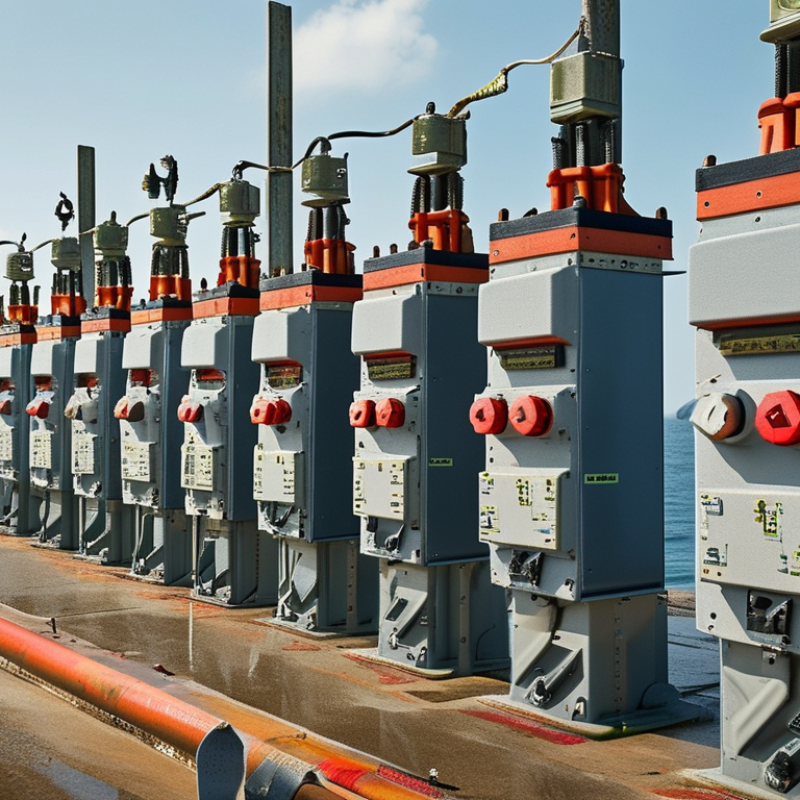
Top 10 Types of Outdoor Isolator Switches to Buy

Outdoor Isolator Switch Basics: IEC 60947-3 and IP55–IP66 Protection

Top 10 Types of Outdoor Isolator Switches to Buy

Outdoor isolators protect circuits during maintenance, faults, and emergency shutdowns. The right choice begins with IEC 60947-3. This standard covers low-voltage switch-disconnectors, including switching performance, insulation, temperature rise, and mechanical endurance. For photovoltaic systems, the IEA PVPS Trends in Photovoltaics 2024 report recorded about 456 GW of new solar capacity in 2023. More outdoor DC equipment means more careful isolation planning.

Common buying categories include rotary, enclosed, fused, non-fused, AC, DC, photovoltaic, lockable, emergency, and switch-disconnector isolators.

The enclosure rating matters greatly. Under IEC 60529, IP55 resists limited dust ingress and water jets. IP66 offers stronger dust protection and powerful water-jet resistance. Neither rating confirms safe immersion.

Check the label closely.

A coastal cabinet may need corrosion-resistant materials, UV-stable housing, and stainless-steel fixings. A dusty rooftop may need IP66, but drainage and cable glands still matter. The isolator must match the circuit’s voltage, current, poles, and AC or DC duty.

DC arcs behave differently and can remain dangerous after switching. IEC 60947-3 compliance alone does not guarantee correct installation. Field practice sometimes exposes a weak point: installers trust the IP number while ignoring gland sealing, mounting direction, and condensation. That deserves a second look.

(Sources: IEC 60947-3; IEC 60529; IEA PVPS Trends in Photovoltaics 2024)

Top 10 Outdoor Isolator Types by Voltage, Current, and Application

Choosing outdoor isolator switches requires more than checking a product label. Voltage, current, fault conditions, enclosure protection, and switching duty must match the installation. The ten practical categories include low-voltage AC load-break isolators, DC photovoltaic isolators, fuse-switch disconnectors, weatherproof enclosed switches, rotary isolators, motor-rated isolators, changeover isolators, medium-voltage air-break disconnectors, vacuum load-break switches, and pole-mounted distribution isolators. IEC 60947-3 covers many low-voltage switch-disconnector applications, while IEC 62271-103 addresses higher-voltage switching equipment.

Application changes the buying decision. A rooftop solar array usually needs a DC isolator rated for the system voltage and continuous current, with UV-resistant housing and clear contact position. An outdoor pump may need a motor-rated rotary isolator, often near the maintenance point. Coastal sites demand stronger corrosion protection. Medium-voltage feeders require engineered clearances, earthing arrangements, and qualified commissioning. IRENA reported 473 GW of renewable capacity additions in 2023, showing why reliable outdoor isolation matters as renewable installations expand. The IEA also reported that renewables supplied about 30% of global electricity in 2023.

Field experience suggests that IP ratings alone can create false confidence. Cable glands, drainage, sunlight, and salt exposure often decide real service life. A higher current rating is not automatically safer. Designers must check utilization category, short-circuit withstand, switching frequency, and local electrical requirements. My classification is useful, but imperfect: some isolators fit several categories, and site conditions can change the correct choice.

Top 10 Types of Outdoor Isolator Switches to Buy - Top 10 Outdoor Isolator Types by Voltage, Current, and Application

No. Outdoor Isolator Type Typical Voltage Typical Current Poles Common Application Typical Enclosure Key Selection Consideration
1 Outdoor AC Rotary Isolator 230/400 V AC 16–160 A 2–4 Outdoor air-conditioning units, pumps, fans, and small machinery IP65–IP66 polycarbonate or metal enclosure Choose a load-break-rated model with a lockable handle and adequate motor-switching category.
2 Outdoor DC Solar Isolator 600–1,500 V DC 16–63 A 2–4 Photovoltaic string and inverter DC disconnection IP65–IP66 UV-resistant enclosure Use only a DC-rated switch; verify the voltage per pole, current, polarity, and PV utilization category.
3 Fused Outdoor Isolator Switch 230/400 V AC; selected DC systems 20–630 A 2–4 Outdoor feeders, distribution boards, transformers, and industrial equipment IP54–IP66 metal or insulated enclosure Match the fuse size, fuse class, short-circuit rating, and available space for heat dissipation.
4 Heavy-Duty Enclosed Isolator 400–690 V AC 63–630 A 3–4 Industrial motors, compressors, conveyors, and outdoor process equipment IP65–IP66 metal enclosure Check thermal derating, cable-gland size, fault withstand, and the required utilization category.
5 Pole-Mounted Medium-Voltage Isolator 11–36 kV AC 200–630 A 3 Overhead distribution lines, substations, and transformer isolation Outdoor porcelain or polymer-insulated construction Confirm insulation level, creepage distance, earthing arrangement, mechanical interlock, and local utility requirements.
6 Outdoor Load-Break Isolator 230 V–36 kV AC 16–1,250 A 2–3 Routine switching and isolation of energized low- or medium-voltage circuits IP-rated low-voltage box or open-air MV assembly Verify that the switch is rated to interrupt the intended load current; a plain isolator may not be opened under load.
7 Weatherproof Safety Isolator 230/400 V AC 20–100 A 2–4 Rooftop equipment, outdoor kitchens, gates, signs, and maintenance points IP56–IP66 UV-stabilized enclosure Select the IP rating according to rain, dust, washdown, sunlight, and impact exposure.
8 Motor-Rated Outdoor Isolator 230/400/690 V AC 16–250 A 3–4 Three-phase pumps, fans, compressors, and agricultural machinery IP55–IP66 impact-resistant enclosure Select the rating from the motor full-load current and confirm suitability for switching inductive loads.
9 Battery Energy Storage DC Isolator 48–1,500 V DC 63–630 A 2–4 Battery cabinets, inverters, telecom power, and microgrid systems IP54–IP66 insulated or metal enclosure Check DC breaking capacity, pre-charge requirements, polarity, arc control, and battery fault current.
10 Manual Transfer and Isolation Switch 230/400 V AC 40–630 A 2–4 Mains/generator changeover, standby power, and critical outdoor loads IP54–IP66 enclosed switchgear Use a mechanically interlocked, break-before-make arrangement unless a designed closed-transition system is required.

Typical ranges are provided for comparison only. Final selection should follow the applicable electrical code, installation conditions, short-circuit level, switching duty, and manufacturer certification.

AC Outdoor Isolators: 230–400 V Ratings for Residential and Commercial Loads

Top 10 Types of Outdoor Isolator Switches to Buy

Outdoor AC isolators must match voltage, load type, enclosure, and installation exposure. For homes, 230 V double-pole switches commonly isolate lighting, pumps, and air-conditioning circuits. Commercial systems often require 400 V four-pole isolators for three-phase equipment.

Safety comes first.

Useful options include weatherproof rotary isolators, enclosed switch-disconnectors, fused isolators, lockable units, double-pole models, four-pole models, motor-rated AC-23A switches, appliance isolators, solar-compatible AC isolators, and high-current commercial disconnectors. The IEC 60947-3 standard helps verify switching and isolation performance.

However, a familiar product shape does not prove suitability. Check the manufacturer’s AC-22A or AC-23A utilization category against the actual load.

Look closely at the environment. IEC 60529 IP ratings indicate resistance to dust and water, but they do not fully confirm ultraviolet durability. Coastal sites may need stronger corrosion protection. Outdoor units should also provide clear ON/OFF markings, secure cable entries, and space for gloved operation.

IEA’s Electricity 2024 report projects global electricity demand to grow by an average 3.4% annually through 2026. That growth means more residential and commercial equipment will need dependable isolation.

Still, ratings can be misunderstood. A 400 V label alone does not confirm motor-starting capacity. I would recheck fault levels, cable size, switching category, and local installation requirements before purchase.

Small details matter.

DC and Solar Isolators: Up to 1,000 V DC for Photovoltaic Systems

DC and Solar Isolators: Up to 1,000 V DC for Photovoltaic Systems

Outdoor isolator switches protect photovoltaic circuits during maintenance and emergencies. Common options include single-pole, double-pole, rotary, enclosed, and modular designs. For solar arrays, select a switch specifically rated for DC, not only AC. Direct current can sustain an arc after the contacts open.

A 1,000 V DC rating is important for high-voltage photovoltaic strings. It does not mean every installation can safely use that voltage. The switch must also match the array’s maximum current, polarity, temperature range, and switching category. Check the enclosure rating, UV resistance, and cable-entry seals. A dusty outdoor cabinet can fail earlier than expected.

Lockable handles help prevent accidental reconnection. Clear ON and OFF markings matter in bright sunlight. Some systems need isolation on both positive and negative conductors, depending on the design and local requirements. Qualified electricians should verify polarity, insulation resistance, and load-breaking capability before energizing the circuit. Never rely on a visual check alone.

Small details matter. A loose terminal can heat slowly. An undersized isolator may appear acceptable, yet fail under real string conditions. Installation guides are sometimes skimmed, and that is a weakness worth correcting. Choose certified equipment, follow the photovoltaic system design, and record the test results.

Top 10 Types of Outdoor Isolator Switches to Buy

Typical maximum DC voltage ratings for outdoor, photovoltaic, battery, and industrial isolation applications. Always verify the switch nameplate, current rating, polarity, enclosure rating, and installation standard before purchase.

Photovoltaic string, array, rooftop, and emergency-disconnect isolators are commonly available for systems from 600 V DC to 1,000 V DC. Higher-voltage installations require equipment specifically rated for the system voltage and DC fault conditions.

How to Compare Outdoor Isolators: Poles, 16–630 A Ratings, and Safety Features

Top 10 Types of Outdoor Isolator Switches to Buy

Outdoor isolators are available as single-pole, double-pole, triple-pole, and four-pole designs. Other common types include fused, non-fused, rotary, enclosed, AC load-break, and DC isolators. Pole selection depends on the circuit. Single-phase equipment may need two-pole isolation, while three-phase systems often require three or four poles. A switched neutral can improve maintenance safety, but it is not suitable for every installation.

Ratings usually range from 16 A to 630 A. A 16 A isolator may suit a small outdoor motor or lighting circuit. Larger 250–630 A units support industrial feeders and distribution equipment. Do not select only by amperage. Check continuous load, starting current, ambient temperature, cable size, and short-circuit withstand. The IEA Renewables 2024 report recorded nearly 510 GW of new renewable capacity in 2023. More outdoor generation means more frequent demand for correctly rated isolation equipment. IEC 60947-3 remains a key reference for switch-disconnectors. IEC 60529 helps compare enclosure protection through IP ratings.

Tips: Look for UV-resistant housing, corrosion protection, a lockable handle, clear ON/OFF markings, and suitable creepage distances. IP66 can resist powerful water jets, but it does not solve poor cable entry. I have seen buyers choose 630 A “for safety,” yet oversized equipment can raise costs and complicate termination. Verify the actual duty. Small details matter. Field labels are still sometimes unclear, so inspect them before energising.

Copyright 2025 Fluidra S.A. | Created by BCM Marketing Agencia Privacy Policy Legal note | Cookie policy |

Technical cookies are strictly necessary for our website to work and you can navigate through it. These types of cookies are those that, for example, allow us to identify you, give you access to certain restricted parts of the page if necessary, or remember different options or services already selected by you, such as your privacy preferences. Therefore, they are activated by default, your authorization not being necessary in this regard. Through the configuration of your browser, you can block or alert the presence of this type of cookies, although such blocking will affect the proper functioning of the different functionalities of our website.


The analysis cookies allow us to study the navigation of the users of our website in general (for example, which sections of the page are the most visited, which services are used most and if they work correctly, etc.). From the statistical information on navigation on our website, we can improve both the operation of the page itself and the different services it offers. Therefore, these cookies do not have an advertising purpose, but only serve to make our website work better, adapting to our users in general. By activating them you will contribute to this continuous improvement. You can enable or disable these cookies by checking the corresponding box, being disabled by default.


Functionality cookies allow us to remember your preferences, to personalize certain characteristics and general options of our website, every time you access it (for example, the language in which the information is presented to you, the sections marked as favorites, your browser type, etc.) Therefore, this type of cookies does not have an advertising purpose, but by activating them you will improve the functionality of the website (for example, adapting to your type of browser) and the customization of it based on your preferences (for example, by presenting the information in the language that you have chosen in previous occasions), which will contribute to the ease, usability and comfort of our page during your navigation. You can enable or disable these cookies by checking the corresponding box, being disabled by default.


Advertising cookies allow us to manage the advertising spaces included in our website based on criteria such as the content shown or the frequency in which the ads are displayed. For example, if you have been shown the same ad several times on our website, and you have not shown a personal interest by clicking on it, it will not appear again. In summary, by activating this type of cookies, the advertising shown on our website will be more useful and diverse, and less repetitive. You can enable or disable these cookies by checking the corresponding box, being disabled by default.


Behavioral advertising cookies allow us to obtain information based on the observation of your browsing habits and behaviors on the web, in order to show you advertising content that best suits your personal tastes and interests. To understand it in a very simple way, we will give you a fictitious example: if your last searches on the web were related to suspense literature, we would show you advertising about suspense books. Therefore, activating this type of cookies, the advertising that we show you on our website will not be generic, but will be oriented to your searches, tastes and interests, therefore adjusting exclusively to you. You can enable or disable these cookies by checking the corresponding box, being disabled by default.
To understand it in a very simple way, we will give you a fictitious example: if your last searches on the web were related to suspense literature, we would show you advertising about suspense books. Therefore, activating this type of cookies, the advertising that we show you on our website will not be generic, but will be oriented to your searches, tastes and interests, therefore adjusting exclusively to you. You can enable or disable these cookies by checking the corresponding box, being disabled by default.

SAVE

We use our own and third-party cookies to ensure the proper functioning of the website and to analyse our services, improve your experience on our website and show you advertisements related to your interests according to profiling based on your browsing habits (e.g. websites visited). You can accept all cookies by clicking "ACCEPT" or set or reject them by clicking here. If you would like to know more about the use of cookies, please see our COOKIE POLICY.


ACCEPT ALL
Reject no essentials


