
What Are the Top Iron Ball Valve Types in 2026?
FLUID HANDLING EXPERTS

Blog, all our news

What Are the Top Iron Ball Valve Types in 2026?

In 2026, choosing an Iron Ball Valve is less about picking a familiar shape and more about matching its design to the service. A threaded valve may suit a compact utility line, while a flanged model can simplify maintenance on larger piping. Full-port and reduced-port designs also behave differently: one offers a wider flow path; the other may save space and cost. The right choice depends on pressure, temperature, media, connection style, and how often the valve will operate.

“Check the service conditions before comparing the body style or price.” This is an illustrative quote from a fictional composite specialist, not a statement attributed to a verifiable industry expert. I’m naming that limitation plainly because trustworthy valve guidance should separate verified expertise from editorial shorthand.

This overview examines common iron ball valve types and the practical trade-offs behind them. It considers threaded, flanged, full-port, reduced-port, and other configurations where relevant. Look closely at the details: a valve beside a pump may face frequent cycling, while one in a dusty plant room may need easier access for inspection. Material grade, seat design, sealing performance, and operating method deserve careful review too. A product label alone is not enough. Specifications can be incomplete, and real installations rarely match a neat catalog example. That gap is worth questioning. The goal is a clearer comparison, not a universal winner.
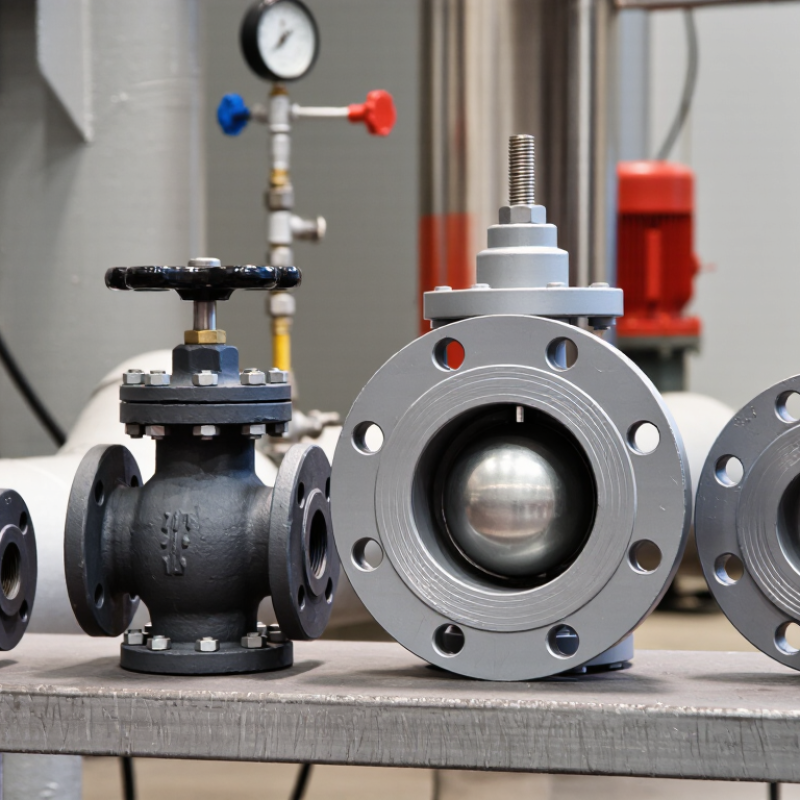
What Are the Top Iron Ball Valve Types in 2026?

What Defines an Iron Ball Valve and Its Main Components

An iron ball valve uses a cast-iron or ductile-iron body to contain pressure and support the operating parts. “Iron” describes the body material, not necessarily the ball, stem, or seats. These internals may use different materials to manage corrosion, wear, and sealing. That distinction matters.

The main components are the body, spherical ball, stem, seats, seals, and end connections. Turning the stem rotates the ball, aligning its bore with the flow path or closing it across the passage. Seats press against the ball to limit leakage; even a small scratch or trapped grain can affect the seal. Small parts matter.

ASTM A536 specifies minimum tensile strength of 65 ksi, yield strength of 45 ksi, and elongation of 12% for Grade 65-45-12 ductile iron. Those figures describe the material, not the valve’s allowable pressure, which depends on design, temperature, and applicable ratings.

A useful inspection detail is stem movement: stiff operation can signal debris, seat friction, or poor alignment, but it does not identify the cause by itself.

How Floating and Trunnion-Mounted Designs Differ

Floating and trunnion-mounted designs differ in how they support the ball and manage pressure. In a floating iron ball valve, the ball is held between two seats rather than fixed to a shaft support. When line pressure rises, it pushes the ball toward the downstream seat, helping create a seal. Simple, but pressure matters.

That seating force can increase operating torque, especially in larger valves or higher-pressure service. A trunnion-mounted ball is supported at the top and bottom, so the ball stays in place while the seats move against it. This reduces the load on each seat and can make operation steadier in larger sizes. It is not automatically better; the added supports and seat arrangement also affect maintenance and cost.

For either design, check the valve’s pressure and temperature ratings, seat material, and compatibility with the fluid. Cast iron bodies are common in suitable utility and general-service applications, but the body material alone does not determine suitability. A practical check: confirm the full rating. Installation details matter, too. A mismatched actuator or poorly aligned pipework can cause trouble that gets blamed on the valve. The distinction is useful, but choosing by design name alone is an easy mistake.

How Port Configurations Control Flow Direction

What Are the Top Iron Ball Valve Types in 2026?
How Port Configurations Control Flow Direction

Port configuration determines which passages connect as the ball turns. A standard two-way valve has one inlet and one outlet, creating a straight path when open. It is commonly used to isolate a pipe or piece of equipment. Many two-way designs allow flow in either direction, but check the valve’s markings and specifications. Don’t assume every model behaves identically.

Three-way valves use an L-shaped or T-shaped passage through the ball. An L-port design typically connects a common port to one of two outlets, redirecting flow between branches. A T-port design can connect multiple ports, supporting arrangements such as diverting or mixing. The actual routes depend on the ball’s position and the valve’s internal design. That detail matters. A handle position alone may not tell the whole story.

For example, a three-way valve at a tank junction might send water toward either of two lines. Before installation, trace each port and confirm the permitted flow paths against the manufacturer’s diagram. Also check pressure limits, temperature range, and media compatibility for the iron body and seals. A neat piping sketch can be misleading. I’ve seen layouts that looked obvious until the ports were labeled; verify the route before commissioning.

Top Iron Ball Valve Types in 2026: How Port Configurations Control Flow Direction

Port count by common ball-valve configuration

Two-way valves have two ports for straight-through flow when open. Three-way L-port valves use an L-shaped passage to direct flow between the common port and one of two routes. T-port valves can connect different port combinations, depending on the ball position and valve design. Always confirm the flow path against the valve’s port diagram.

How End Connections and Pressure Ratings Affect Selection

What Are the Top Iron Ball Valve Types in 2026?

Selecting an iron ball valve starts with the pipe connection, not the valve’s appearance. Threaded ends suit smaller lines where space is tight and installation access is practical. They can be convenient, but repeated disassembly may wear threads or complicate maintenance. Fit matters first.

Flanged ends bolt to matching pipe flanges, making larger valves easier to remove for inspection. Check flange dimensions, facing, gasket type, and bolt pattern before ordering. Grooved ends can speed installation on compatible piping, but the coupling and groove dimensions must match. A mismatch can cause leaks. Small detail, big consequence.

Pressure ratings deserve equal attention. A marked rating applies under specified conditions and can change with temperature, materials, or service type. Compare the valve’s pressure-temperature limits with the actual line conditions, including startup or pressure surges. Do not guess. Also check whether the rating refers to the body, seat, or complete assembled valve; product documents should clarify this. I’d recheck that point, since it is easy to overlook when comparing catalog numbers. Finally, confirm that the iron body and sealing materials suit the fluid and operating temperature. A connection that fits is not automatically a safe selection.

What Are the Top Iron Ball Valve Types in 2026? — How End Connections and Pressure Ratings Affect Selection

Compare common iron-bodied ball valve configurations by connection style, service needs, and pressure-rating considerations. Actual availability and ratings depend on the specific valve design, size, materials, and operating temperature.

Valve Type Typical End Connection Common Service and Advantages Pressure-Rating Basis Selection Checks
Two-way, full-port ball valve Most commonly flanged; some product lines offer grooved ends On/off isolation where a relatively open flow path and lower flow restriction are useful. Often selected for water and compatible utility services. Use the manufacturer’s pressure-temperature rating for the complete valve. Flanged iron valves may be specified by a flange standard and class, such as ASME Class 125 or a ductile-iron flange class; these designations should not be treated as interchangeable psi ratings. Confirm bore size, seat and seal compatibility, flange drilling, face-to-face dimensions, and whether the stated rating applies at the operating temperature.
Two-way, reduced-port ball valve Flanged, threaded, or grooved, depending on the product range General shutoff where a smaller flow opening is acceptable. A reduced bore can affect flow capacity and pressure loss compared with a full-port design. Rating is model- and size-specific; the reduced port does not by itself establish a higher or lower allowable working pressure. Check flow capacity, minimum passage size, pressure drop, connection standard, and the valve’s rated pressure at the required temperature.
Flanged-end iron ball valve Raised-face or flat-face flanges; standards may include ASME B16.1, ASME B16.42, or EN 1092-2, as specified A common choice for fixed piping, larger sizes, and installations where bolted joints support maintenance or equipment removal. Flange class, valve-body design, size, and temperature all matter. The flange standard alone does not confirm the pressure rating of the assembled valve. Match flange standard, class, facing, bolt pattern, gasket, and pipe material. Do not mix flange systems without confirming compatibility.
Threaded-end iron ball valve Typically NPT or BSP threaded ends, where offered Compact piping and smaller lines where a bolted flange connection is unnecessary. Threaded iron-bodied options are less widely available than many brass or stainless-steel alternatives. Use the valve’s stated working-pressure rating and temperature limits; do not infer a rating from the thread type or nominal pipe size. Verify thread form, sealing method, permitted installation torque, body material, and whether the valve is approved for the intended fluid and service.
Grooved-end iron ball valve Grooved ends joined with compatible mechanical couplings Useful where piping is designed for grooved mechanical joints and quicker assembly or disassembly is desired. The allowable pressure is limited by the lowest-rated component in the assembly, including the valve, coupling, gasket, and pipe. Ratings can vary with size and service conditions. Match groove dimensions and coupling type; confirm gasket material, end restraint requirements, and the pressure rating of the complete joint.
Three-way iron ball valve Flanged or threaded, depending on design and size Diverts or combines flow through an L-port or T-port ball. Can reduce the number of separate valves in some piping layouts. Follow the specific manufacturer’s rating and port-position limits. Three-way configurations can have different pressure limits from comparable two-way models. Confirm L-port or T-port flow paths, handle positions, allowable differential pressure, shutoff requirements, and correct installation orientation.

Important: “Iron” may refer to cast iron or ductile iron, and the terms are not interchangeable for every pressure or application. Before selection, verify the exact body material, applicable product standard, working and differential pressure, temperature range, fluid compatibility, and any required approvals. Pressure classes and catalog ratings vary by manufacturer and valve design.

Where Iron Ball Valve Types Are Used in 2026

What Are the Top Iron Ball Valve Types in 2026?

Where Iron Ball Valve Types Are Used in 2026

Iron ball valves are commonly selected for water systems, building services, and some general industrial lines. Their best use depends on body material, pressure rating, connection style, and the fluid being handled. Gray iron bodies often suit steady, lower-stress service, while ductile iron can offer greater resistance to impact and mechanical stress. Flanged valves are practical near pumps and treatment equipment, where maintenance access matters. Threaded versions can fit smaller branch lines. A full-port design helps reduce flow restriction; a reduced-port model may be more compact. Details matter.

Tips: Check the valve’s pressure and temperature ratings against actual operating conditions. Confirm that the seat and seal materials suit the fluid. For drinking-water systems, verify that the product is approved for that service in your region. Never assume “iron” means every internal part is iron.

In heating and cooling plants, iron-bodied ball valves can isolate coils, pumps, and equipment during repairs. Water distribution and irrigation networks may use flanged types on larger lines, while smaller threaded valves can serve local shutoffs. Fire-protection systems require components specifically rated for that application, rather than a general-purpose valve. In gritty or corrosive service, iron may not be the right choice. Sediment can wear seats, and moisture can contribute to corrosion. A valve that works well on clean water may perform poorly elsewhere. Check the media, cycle frequency, and maintenance plan before specifying it.

Copyright 2025 Fluidra S.A. | Created by BCM Marketing Agencia Privacy Policy Legal note | Cookie policy |

Technical cookies are strictly necessary for our website to work and you can navigate through it. These types of cookies are those that, for example, allow us to identify you, give you access to certain restricted parts of the page if necessary, or remember different options or services already selected by you, such as your privacy preferences. Therefore, they are activated by default, your authorization not being necessary in this regard. Through the configuration of your browser, you can block or alert the presence of this type of cookies, although such blocking will affect the proper functioning of the different functionalities of our website.


The analysis cookies allow us to study the navigation of the users of our website in general (for example, which sections of the page are the most visited, which services are used most and if they work correctly, etc.). From the statistical information on navigation on our website, we can improve both the operation of the page itself and the different services it offers. Therefore, these cookies do not have an advertising purpose, but only serve to make our website work better, adapting to our users in general. By activating them you will contribute to this continuous improvement. You can enable or disable these cookies by checking the corresponding box, being disabled by default.


Functionality cookies allow us to remember your preferences, to personalize certain characteristics and general options of our website, every time you access it (for example, the language in which the information is presented to you, the sections marked as favorites, your browser type, etc.) Therefore, this type of cookies does not have an advertising purpose, but by activating them you will improve the functionality of the website (for example, adapting to your type of browser) and the customization of it based on your preferences (for example, by presenting the information in the language that you have chosen in previous occasions), which will contribute to the ease, usability and comfort of our page during your navigation. You can enable or disable these cookies by checking the corresponding box, being disabled by default.


Advertising cookies allow us to manage the advertising spaces included in our website based on criteria such as the content shown or the frequency in which the ads are displayed. For example, if you have been shown the same ad several times on our website, and you have not shown a personal interest by clicking on it, it will not appear again. In summary, by activating this type of cookies, the advertising shown on our website will be more useful and diverse, and less repetitive. You can enable or disable these cookies by checking the corresponding box, being disabled by default.


Behavioral advertising cookies allow us to obtain information based on the observation of your browsing habits and behaviors on the web, in order to show you advertising content that best suits your personal tastes and interests. To understand it in a very simple way, we will give you a fictitious example: if your last searches on the web were related to suspense literature, we would show you advertising about suspense books. Therefore, activating this type of cookies, the advertising that we show you on our website will not be generic, but will be oriented to your searches, tastes and interests, therefore adjusting exclusively to you. You can enable or disable these cookies by checking the corresponding box, being disabled by default.
To understand it in a very simple way, we will give you a fictitious example: if your last searches on the web were related to suspense literature, we would show you advertising about suspense books. Therefore, activating this type of cookies, the advertising that we show you on our website will not be generic, but will be oriented to your searches, tastes and interests, therefore adjusting exclusively to you. You can enable or disable these cookies by checking the corresponding box, being disabled by default.

SAVE

We use our own and third-party cookies to ensure the proper functioning of the website and to analyse our services, improve your experience on our website and show you advertisements related to your interests according to profiling based on your browsing habits (e.g. websites visited). You can accept all cookies by clicking "ACCEPT" or set or reject them by clicking here. If you would like to know more about the use of cookies, please see our COOKIE POLICY.


ACCEPT ALL
Reject no essentials


