
Top Ion Tester Manufacturers for Global Buyers?
FLUID HANDLING EXPERTS

Blog, all our news

Top Ion Tester Manufacturers for Global Buyers?

Choosing among the top Ion Tester manufacturers requires more than comparing prices or attractive product pages. Global buyers need dependable measurements, clear specifications, and support that remains available after purchase. A reliable manufacturer should explain charge decay testing, offset voltage, accuracy, and operating conditions. These details matter in electronics assembly, cleanrooms, laboratories, and static-control programs.

Real-world use reveals important differences. An Ion Tester may be used beside a workbench, near an ionizing bar, or inside a controlled production area. Readings should remain stable across practical humidity and temperature changes. Buyers should also examine calibration certificates, traceable test methods, software functions, warranty terms, and replacement policies. Strong manufacturers provide readable manuals, responsive technical assistance, and evidence of quality management. Independent evaluations and user experience add useful context, but they should not replace documented specifications.

No shortlist is perfect. Product availability can change. Regional service may also vary. Some manufacturers communicate technical limits better than others, and that difference deserves attention. This guide compares leading suppliers through performance, build quality, calibration support, global accessibility, and long-term reliability. It also considers whether each brand serves professional users rather than simply offering a low purchase price. Careful comparison helps buyers select equipment that produces credible data, supports consistent workplace controls, and fits their actual testing environment. Small details matter. A missing probe, unclear calibration interval, or delayed service response can disrupt an otherwise well-managed program.
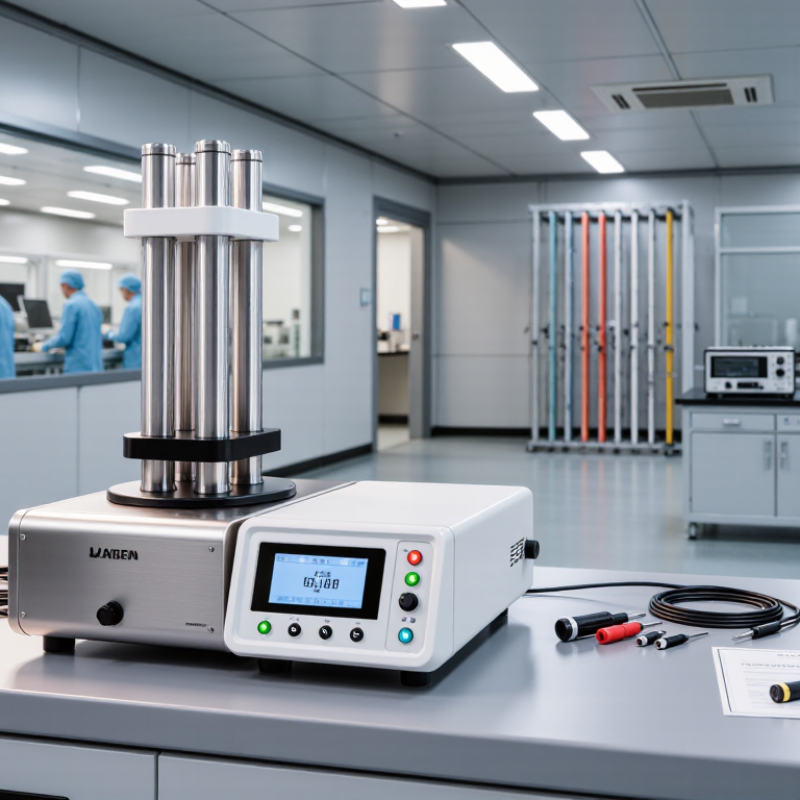
Top Ion Tester Manufacturers for Global Buyers?

What Are Ion Testers and How Do They Work?

Top Ion Tester Manufacturers for Global Buyers

What Are Ion Testers and How Do They Work?

Ion testers are instruments used to evaluate ionizers and static-control systems. They measure how quickly charged surfaces lose voltage and whether positive and negative ions remain balanced. This matters in electronics assembly, cleanrooms, laboratories, and other sensitive work areas.

A typical tester contains a charged metal plate, a voltage sensor, and an electronic timing circuit. The plate receives a controlled positive or negative charge. Airborne ions then neutralize that charge. The instrument records the decay time, often called discharge time. It also checks ion balance by measuring any remaining voltage after neutralization.

Small details affect the reading. Distance, airflow, humidity, grounding, and sensor position can change results. A tester may show excellent performance at 30 centimeters but weaker performance across a wider workbench. That difference is easy to miss.

Reliable manufacturers usually provide calibration records, traceable test methods, clear software, and replacement support. Buyers should examine measurement range, accuracy, repeatability, and compatibility with local electrical standards. A useful instrument should also explain its limits. Claims that sound too perfect deserve careful review.

In field inspections, technicians sometimes repeat measurements three times. The results may not match exactly. That is normal, but large variations require investigation. Poor grounding or an unstable ionizer may be the real problem, not the tester. Calibration intervals also deserve attention. Annual service is common, yet demanding environments may require more frequent checks.

Key Criteria for Evaluating Ion Tester Manufacturers

Top Ion Tester Manufacturers for Global Buyers

Choosing an ion tester manufacturer requires more than comparing prices. Start with measurement range, resolution, repeatability, and response time. Ask for test reports using your actual materials, not only standard samples. A reliable manufacturer should explain calibration intervals and provide traceable certificates from recognized laboratories. Clear technical evidence matters more than polished product pages.

Check how the tester performs in real workplaces. Dust, humidity, temperature, and operator distance can affect readings. Request data from conditions similar to your production floor. Review the probe design, display readability, battery life, and data export functions. Small details matter during long inspection shifts. They are easy to overlook.

Technical support also separates capable suppliers from weak ones. Look for detailed manuals, training, spare parts, and a written service process. Ask how quickly they handle faulty readings or calibration questions. Confirm warranty terms, software compatibility, and delivery capability in your region. Certifications can support trust, but they should match the instrument’s intended use. A certificate alone proves little.

Cost deserves careful review. Include calibration, replacement sensors, shipping, and downtime. The cheapest tester may become expensive after one year. Still, the most expensive option is not automatically better. I would compare three samples under identical conditions and record every result. My own evaluations have shown that convenient interfaces can hide measurement limitations. That is worth questioning.

Leading Ion Tester Manufacturers for Global Buyers

Leading Ion Tester Manufacturers for Global Buyers

Global buyers need more than a catalog and a low quoted price. Reliable manufacturers explain ion balance, discharge time, test range, and calibration procedures clearly. In my experience, a useful supplier provides sample reports and demonstrates testing with a charged work surface. Ask whether the instrument supports local voltage, familiar measurement units, and traceable calibration records. Small details often expose weak quality control.

A serious manufacturer should show how each tester is assembled, inspected, and maintained. Look for documented incoming-part checks, repeatability data, and a clear replacement policy. Technical support matters when readings drift after installation. A responsive engineer can review electrode distance, airflow, humidity, and grounding before blaming the instrument. Request a video demonstration using conditions close to your factory floor. Laboratory results may not match a dusty production line.

Global purchasing also involves packaging, language, training, and delivery consistency. Ask for a practical manual with wiring diagrams, operating limits, and troubleshooting steps. Confirm how calibration intervals are selected, not merely printed on a certificate. I would compare three test samples under identical conditions and record the differences. That habit can reveal variation between units. No supplier is perfect. Some specifications remain vague, so buyers should challenge them respectfully. Choose manufacturers willing to disclose limitations, correct errors, and improve documentation after field feedback.

Top Ion Tester Manufacturers for Global Buyers

Common ESD ionization test benchmarks used when comparing suppliers

Global buyers commonly review discharge time, offset voltage, and test distance when evaluating ion testers and ionization systems. The reference values shown are widely used ESD evaluation checkpoints: discharge time below 2 seconds, offset voltage within ±35 volts, and a 12-inch measurement distance, equivalent to 30.5 centimeters. Actual acceptance limits may vary by application, facility, and customer specification.

How to Compare Product Quality, Certifications, and Support

Top Ion Tester Manufacturers for Global Buyers: How to Compare Product Quality, Certifications, and Support

A reliable ion tester should prove its performance, not only display attractive specifications. During supplier evaluations, compare measurement range, resolution, response time, repeatability, and drift. Ask for test records using traceable reference solutions. NIST Technical Note 1297 explains that measurement uncertainty must include relevant error sources, not just the instrument’s displayed resolution. That distinction matters. A tester showing four decimal places may still produce unstable results in warm, humid laboratories.

Certifications require careful checking. ISO 9001 demonstrates a quality management system, but it does not guarantee every tester performs accurately. The ISO Survey 2023 reported more than one million ISO 9001 certificates worldwide, so certification alone cannot separate strong manufacturers from average ones.

Request the certificate number, issuing body, scope, and validity date. For calibration services, ISO/IEC 17025 accreditation offers stronger evidence of technical competence. Check whether the calibration covers your required ion range and method. Paperwork is useful, but it is not the whole answer.

Support often reveals the real manufacturing standard.

Compare calibration intervals, replacement sensor availability, software updates, training, and documented repair times. Ask how quickly technical staff respond across your region. A practical trial helps: test several units with the same solution, record repeatability, and inspect readings after continuous use.

I would also request one reference procedure from the supplier. Some manufacturers provide excellent manuals but slow assistance. That weakness is easy to miss before purchase.

Global buyers should score product evidence, certification validity, and support performance separately, rather than trusting one impressive claim.

Selecting the Right Ion Tester for Your Application

Top Ion Tester Manufacturers for Global Buyers?

Selecting the right ion tester starts with your process, not the supplier’s product list. For electronics assembly, measure ionizer balance, discharge time, and repeatability near the actual work surface. ESDA TR53 verification guidance commonly uses ±35 volts as an offset target and two seconds as a discharge-time benchmark. These figures are useful, but they are not universal limits. IEC 61340-5-1 also stresses controlled verification, documented methods, and suitable test conditions.

Choose a tester with a charge plate matched to your ionizer type. A compact plate suits bench work. Larger plates provide better coverage for automated lines. Check measurement range, sensor response, calibration traceability, and software export functions. A 2024 industry analysis from Grand View Research identifies electronics manufacturing as a major driver of electrostatic-control demand. That growth makes reliable data more valuable, especially across multiple production sites. Still, a higher-priced instrument may not improve your process. I have seen users buy advanced meters and ignore airflow, humidity, and operator position.

Tips: Test at the same height and distance every time. Record room temperature and relative humidity. Repeat each reading three times. Compare results against your internal control limits, ESDA methods, and IEC requirements. Do not trust one impressive reading. A failed ground connection can distort the result. Schedule calibration according to usage, risk, and your quality system. A practical checklist often prevents more errors than extra features.

Article Source:

Copyright 2025 Fluidra S.A. | Created by BCM Marketing Agencia Privacy Policy Legal note | Cookie policy |

Technical cookies are strictly necessary for our website to work and you can navigate through it. These types of cookies are those that, for example, allow us to identify you, give you access to certain restricted parts of the page if necessary, or remember different options or services already selected by you, such as your privacy preferences. Therefore, they are activated by default, your authorization not being necessary in this regard. Through the configuration of your browser, you can block or alert the presence of this type of cookies, although such blocking will affect the proper functioning of the different functionalities of our website.


The analysis cookies allow us to study the navigation of the users of our website in general (for example, which sections of the page are the most visited, which services are used most and if they work correctly, etc.). From the statistical information on navigation on our website, we can improve both the operation of the page itself and the different services it offers. Therefore, these cookies do not have an advertising purpose, but only serve to make our website work better, adapting to our users in general. By activating them you will contribute to this continuous improvement. You can enable or disable these cookies by checking the corresponding box, being disabled by default.


Functionality cookies allow us to remember your preferences, to personalize certain characteristics and general options of our website, every time you access it (for example, the language in which the information is presented to you, the sections marked as favorites, your browser type, etc.) Therefore, this type of cookies does not have an advertising purpose, but by activating them you will improve the functionality of the website (for example, adapting to your type of browser) and the customization of it based on your preferences (for example, by presenting the information in the language that you have chosen in previous occasions), which will contribute to the ease, usability and comfort of our page during your navigation. You can enable or disable these cookies by checking the corresponding box, being disabled by default.


Advertising cookies allow us to manage the advertising spaces included in our website based on criteria such as the content shown or the frequency in which the ads are displayed. For example, if you have been shown the same ad several times on our website, and you have not shown a personal interest by clicking on it, it will not appear again. In summary, by activating this type of cookies, the advertising shown on our website will be more useful and diverse, and less repetitive. You can enable or disable these cookies by checking the corresponding box, being disabled by default.


Behavioral advertising cookies allow us to obtain information based on the observation of your browsing habits and behaviors on the web, in order to show you advertising content that best suits your personal tastes and interests. To understand it in a very simple way, we will give you a fictitious example: if your last searches on the web were related to suspense literature, we would show you advertising about suspense books. Therefore, activating this type of cookies, the advertising that we show you on our website will not be generic, but will be oriented to your searches, tastes and interests, therefore adjusting exclusively to you. You can enable or disable these cookies by checking the corresponding box, being disabled by default.
To understand it in a very simple way, we will give you a fictitious example: if your last searches on the web were related to suspense literature, we would show you advertising about suspense books. Therefore, activating this type of cookies, the advertising that we show you on our website will not be generic, but will be oriented to your searches, tastes and interests, therefore adjusting exclusively to you. You can enable or disable these cookies by checking the corresponding box, being disabled by default.

SAVE

We use our own and third-party cookies to ensure the proper functioning of the website and to analyse our services, improve your experience on our website and show you advertisements related to your interests according to profiling based on your browsing habits (e.g. websites visited). You can accept all cookies by clicking "ACCEPT" or set or reject them by clicking here. If you would like to know more about the use of cookies, please see our COOKIE POLICY.


ACCEPT ALL
Reject no essentials


