
What Are the Top IGU Glass Storage Systems for Buyers?
FLUID HANDLING EXPERTS

Blog, all our news

What Are the Top IGU Glass Storage Systems for Buyers?

Choosing a storage system for insulating glass units is not just a warehouse decision. It affects edge protection, handling time, floor space, and the risk of damage between production and dispatch. An A-frame may suit a compact line with frequent loading. A powered rack can help where units are heavy, tall, or moved repeatedly. Still, the best fit depends on the glass dimensions, daily throughput, available aisle width, and the way operators load each batch.

As [verified IGU storage specialist’s name] puts it, “[Insert a quotation confirmed directly with the named expert before publication].” A real, attributable quotation matters; it should not be invented or assigned to an expert without confirmation. This guide compares the main Igu Glass Storage System options through practical buyer questions: Does the design support the unit safely? Can staff reach the load without awkward handling? Will the rack fit the actual floor plan, not just the catalogue drawing?

Look closely. A few centimetres can change aisle clearance. A small wheel or support detail can affect day-to-day movement. Buyers should also check load ratings, surface protection, maintenance needs, and compatibility with their handling equipment. These points are easy to overlook during a sales demonstration. They matter more on a busy shift.

There is no universal winner. A system that works well in one plant may slow another. This overview helps buyers compare trade-offs, spot missing specifications, and ask better questions before requesting a quote. Verify dimensions on site. That step is sometimes skipped.
What Are the Top IGU Glass Storage Systems for Buyers?

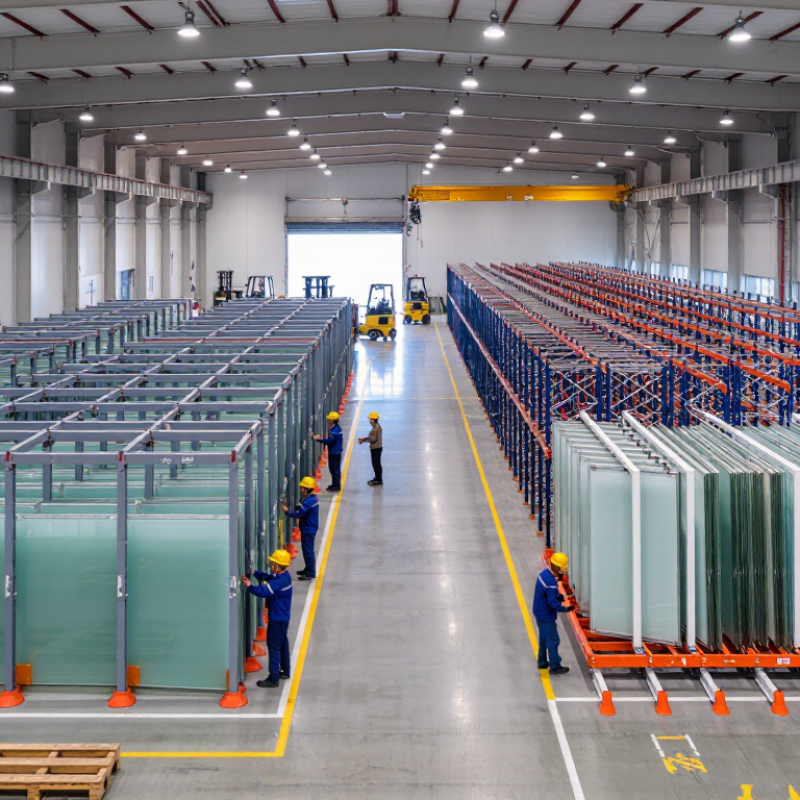
What Distinguishes A-Frame, L-Rack, Cantilever, and Automated IGU Storage Systems?

A-frames hold insulated glass units at an incline, often with packs stored on both sides. Their broad footprint suits staging areas with room for forklift access. Angled supports help distribute weight, but contact points need clean, resilient padding. Dust or a small chip can become a costly problem. Space matters. A-frames can feel forgiving during manual loading, though visibility behind a full rack may be limited.

L-racks support glass from one side and can sit along a wall, freeing floor space. They work well when workers need clear access from the front, but each rack must be secured and loaded within its rated capacity. Cantilever racks use projecting arms to support units at selected heights. This open design can accommodate varied sizes and simplify access, yet uneven loading or poor edge protection creates real risks. Not always obvious.

Automated systems use powered conveyors, lifts, or controlled transfer equipment to move units through storage and production areas. They can reduce repeated manual handling and improve tracking in high-throughput operations. They also require more planning: floor layout, compatible unit sizes, maintenance access, and operator training all matter. Automation is not automatically safer if the workflow is poorly designed. Buyers should compare rack capacity, handling method, available space, and the condition of their glass before choosing a system.

How Should Rack Design Match IGU Dimensions, Access, and Handling Methods?

A useful IGU rack starts with the glass, not the warehouse aisle. Measure each unit’s height, width, thickness, and weight, then allow clearance for protective pads and safe loading. Adjustable supports can handle mixed sizes, but loose adjustment points may shift under repeated use. Check that contact surfaces support the unit without pressing on edges or seals.

Handling method matters just as much. Forklift-loaded racks need visible entry points and enough base clearance; crane or vacuum-lifter workflows need unobstructed access above and beside the glass. Keep units upright at the angle specified by their supplier, with restraints that prevent movement without squeezing the frame. Leave space for hands and lifting tools. Small gaps matter. Also confirm floor capacity and rack load ratings before placing full loads. A rack that fits on paper may be awkward once operators turn a large unit through a narrow aisle. There is no perfect layout, and early mock-ups can reveal details a drawing misses. Sometimes the simplest rack is not the safest one.

How Are IGU Loads Estimated at 2.5 kg/m² per Millimeter of Glass?

When comparing IGU glass storage systems, estimate the glass load before selecting a rack or cart.

A practical rule: 2.5 kilograms per square meter for each millimeter of glass thickness. Add the thickness of every glass pane, not the airspace between them.

A unit with two 6 mm panes therefore weighs about 30 kg/m² from its glass alone. The spacer, sealants, and fittings add some weight.

For a 1.2 by 2 meter unit, the glass area is 2.4 m², giving an estimated glass load of 72 kg.

Check the product label or supplier data for the actual unit weight. Check the label. Rack capacity should account for the total load, its distribution, and the number of units stored.

Keep units upright and supported at their intended contact points; uneven support can create stress at the edges.

Do not treat the rule as an exact measurement. Glass composition, coatings, and added panes can change the result, and I would leave a sensible margin rather than size storage right to the estimate.

Which Rack Inspections Align with EN 15635 and OSHA 1910.178?

A dependable IGU storage system needs inspections that look beyond visible glass damage. Check uprights, bracing, base plates, anchors, and beam connections for bends, cracks, loosened fasteners, or impact marks. Pay close attention to the lower frame: forklift contact can leave a small dent that is easy to miss but may affect stability. Keep damaged bays unloaded until a competent person assesses them.

EN 15635 supports a structured approach to steel storage equipment: staff should report damage promptly, inspections should be documented, and a technically competent person should conduct a periodic expert inspection at least every 12 months. Increase checks after a collision, layout change, or unusual loading. Small details matter. A leaning rack is not a cosmetic issue.

OSHA 1910.178 focuses on powered industrial truck safety, not a dedicated rack-inspection schedule. Its inspection requirements cover trucks before use and at least daily, with additional checks for continuous operation. Connect those routines: ask operators to report rack strikes, damaged floor anchors, and unstable loads, while separately completing documented rack checks. Keep records. One practical limitation is that a checklist cannot judge every deformation; uncertain damage needs qualified assessment, not a quick visual guess.

How Do Indoor and Outdoor Systems Protect IGUs from Damage and Weather?

Indoor storage gives IGUs the steadiest protection. Use a dry, ventilated area and a rigid A-frame rack. Keep units upright, slightly tilted, and supported with clean, resilient blocks. Separate glass with dry spacers; never let edges knock together. Dust, trapped moisture, and small edge chips can become costly problems. The National Glass Association’s glass-handling guidance emphasizes stable support and protection from impact. U.S. Department of Energy guidance estimates that windows account for about 25–30% of residential heating and cooling energy use, underscoring why protecting insulating glass performance matters.

Outdoor storage needs more planning. Raise racks above standing water, anchor them against wind, and use a weather-resistant cover that still allows airflow. A sealed plastic wrap can trap condensation, so check for moisture after rain or temperature swings. Keep units away from construction traffic, sprinklers, and direct runoff. Outdoor storage is sometimes unavoidable, but it is not risk-free; inspect edges and seals before installation.

Tips: Keep labels visible, record delivery dates, and rotate stock. Photograph any damage on arrival. Dry, steady storage beats a perfect-looking cover.

Copyright 2025 Fluidra S.A. | Created by BCM Marketing Agencia Privacy Policy Legal note | Cookie policy |

Technical cookies are strictly necessary for our website to work and you can navigate through it. These types of cookies are those that, for example, allow us to identify you, give you access to certain restricted parts of the page if necessary, or remember different options or services already selected by you, such as your privacy preferences. Therefore, they are activated by default, your authorization not being necessary in this regard. Through the configuration of your browser, you can block or alert the presence of this type of cookies, although such blocking will affect the proper functioning of the different functionalities of our website.


The analysis cookies allow us to study the navigation of the users of our website in general (for example, which sections of the page are the most visited, which services are used most and if they work correctly, etc.). From the statistical information on navigation on our website, we can improve both the operation of the page itself and the different services it offers. Therefore, these cookies do not have an advertising purpose, but only serve to make our website work better, adapting to our users in general. By activating them you will contribute to this continuous improvement. You can enable or disable these cookies by checking the corresponding box, being disabled by default.


Functionality cookies allow us to remember your preferences, to personalize certain characteristics and general options of our website, every time you access it (for example, the language in which the information is presented to you, the sections marked as favorites, your browser type, etc.) Therefore, this type of cookies does not have an advertising purpose, but by activating them you will improve the functionality of the website (for example, adapting to your type of browser) and the customization of it based on your preferences (for example, by presenting the information in the language that you have chosen in previous occasions), which will contribute to the ease, usability and comfort of our page during your navigation. You can enable or disable these cookies by checking the corresponding box, being disabled by default.


Advertising cookies allow us to manage the advertising spaces included in our website based on criteria such as the content shown or the frequency in which the ads are displayed. For example, if you have been shown the same ad several times on our website, and you have not shown a personal interest by clicking on it, it will not appear again. In summary, by activating this type of cookies, the advertising shown on our website will be more useful and diverse, and less repetitive. You can enable or disable these cookies by checking the corresponding box, being disabled by default.


Behavioral advertising cookies allow us to obtain information based on the observation of your browsing habits and behaviors on the web, in order to show you advertising content that best suits your personal tastes and interests. To understand it in a very simple way, we will give you a fictitious example: if your last searches on the web were related to suspense literature, we would show you advertising about suspense books. Therefore, activating this type of cookies, the advertising that we show you on our website will not be generic, but will be oriented to your searches, tastes and interests, therefore adjusting exclusively to you. You can enable or disable these cookies by checking the corresponding box, being disabled by default.
To understand it in a very simple way, we will give you a fictitious example: if your last searches on the web were related to suspense literature, we would show you advertising about suspense books. Therefore, activating this type of cookies, the advertising that we show you on our website will not be generic, but will be oriented to your searches, tastes and interests, therefore adjusting exclusively to you. You can enable or disable these cookies by checking the corresponding box, being disabled by default.

SAVE

We use our own and third-party cookies to ensure the proper functioning of the website and to analyse our services, improve your experience on our website and show you advertisements related to your interests according to profiling based on your browsing habits (e.g. websites visited). You can accept all cookies by clicking "ACCEPT" or set or reject them by clicking here. If you would like to know more about the use of cookies, please see our COOKIE POLICY.


ACCEPT ALL
Reject no essentials


