
Top 10 Types of Fuse Holders for Global Buyers
FLUID HANDLING EXPERTS

Blog, all our news

Top 10 Types of Fuse Holders for Global Buyers

Choosing the right Fuse Holder can determine whether a protection system remains stable, serviceable, and safe under real operating conditions. Global buyers often compare price first, but field performance depends on much more. Current rating, voltage rating, fuse format, mounting method, environmental sealing, and terminal quality all deserve careful review.

Small details matter.

A holder installed inside a compact control cabinet may need a DIN rail design with clear labeling. A vehicle harness may require an inline or waterproof holder that resists vibration and moisture. PCB applications often demand low-profile parts, while industrial panels may favor panel-mount or cartridge fuse holders with simple replacement access. These choices affect heat management, maintenance time, and production reliability.

This guide examines the top 10 types of Fuse Holder used across automotive, consumer, renewable energy, and industrial applications. It considers common construction materials, installation methods, contact resistance, protection against dust and water, and compatibility with international purchasing requirements. Buyers should still verify supplier datasheets and relevant certification marks before placing an order. Standards and approval expectations can vary by market.

Experience shows that a visually similar holder may perform very differently after repeated cycling. A cheaper terminal can loosen. A plastic body can become brittle near heat sources. These risks are easy to overlook.

No single type fits every project.

The right decision balances electrical specifications, operating conditions, replacement convenience, supplier consistency, and total lifecycle cost. Some recommendations may change after testing, especially when temperature, vibration, or installation space is underestimated. This comparison aims to provide a practical starting point, not a substitute for engineering validation.
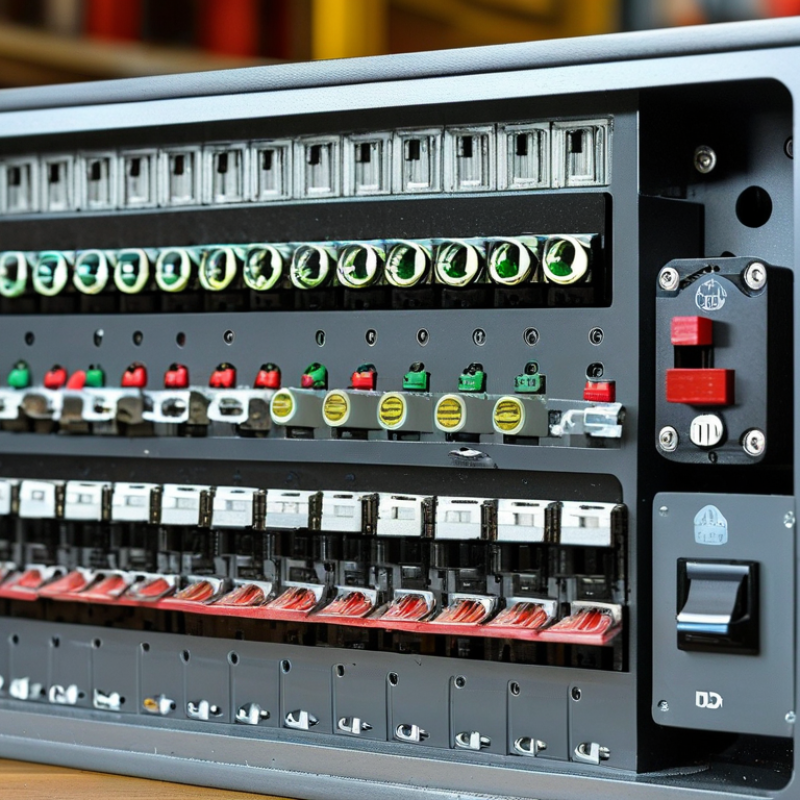
Top 10 Types of Fuse Holders for Global Buyers

Fuse Holder Basics: Functions, Components, and Essential Terminology

Fuse holders are not merely sockets for replaceable fuses. They maintain electrical contact, contain heat, and support safe inspection or replacement.

Common designs include PCB-mounted, panel-mounted, inline, DIN-rail, automotive blade, cartridge, and surface-mount holders. Each suits a different installation condition.

PCB-mounted, panel-mounted, inline, DIN-rail, automotive blade, cartridge, and surface-mount holders

Key components include terminals, clips, a body, a cover, and sometimes an indicator or touch-safe barrier.

The essential terms are rated current, rated voltage, dielectric strength, contact resistance, interrupting capability, and wire size.

Derating matters too. A holder rated at 10 A may not safely carry 10 A in a sealed enclosure at high temperature.

IEC 60127-6 covers miniature fuse holders, while relevant product evaluations may also reference UL 4248 requirements.

Market context explains their importance.

Fortune Business Insights reported that the global fuse market was valued at about USD 3.25 billion in 2023 and may reach USD 4.78 billion by 2032.

This growth reflects expanding electrical equipment and protection needs, not simply higher fuse sales.

During field inspections, loose clips and overheated terminals often reveal poor holder selection.

Small details matter.

Contact plating, mounting pressure, creepage distance, and replacement access deserve careful review.

One imperfect assumption remains common: “compatible” does not always mean electrically equivalent.

Always compare the fuse dimensions, holder category, environment, and certified ratings before approval.

Ten Major Fuse Holder Types and Their Distinctive Features

Top 10 Types of Fuse Holders for Global Buyers

Ten Major Fuse Holder Types and Their Distinctive Features

Panel-mount fuse holders suit control cabinets and instrument panels. They offer front access and a firm threaded cap. Inline fuse holders connect directly within a cable. They are compact and useful for lighting, alarms, and small equipment. PCB fuse holders solder onto circuit boards, saving space and simplifying replacement.

DIN-rail fuse holders clip onto standard rails. They support organized cabinet wiring and quick isolation. Surface-mount holders fit compact electronic assemblies. Their low profile helps designers manage crowded boards.

Cartridge fuse holders handle cylindrical fuses with spring clips or enclosed contacts. They provide stable contact under moderate vibration. Blade fuse holders accept automotive-style blade fuses and often include covers. Waterproof versions add sealing for outdoor cable runs, though the seal may weaken after repeated opening.

Battery fuse holders install close to power sources and help limit fault energy. Modular fuse blocks group several circuits in one housing. They improve maintenance visibility but require careful labeling. High-voltage fuse holders use stronger insulation and greater creepage distances. They demand stricter assembly checks.

A practical buyer should inspect current rating, voltage rating, terminal size, temperature rise, and material quality. Finger-safe covers matter in shared workspaces. Vibration tests reveal weaknesses that a catalog photograph cannot show. I have found that oversized holders can waste panel space, while undersized ones create heat. It is not always simple. Regional standards, fuse dimensions, and installation habits also vary, so sample testing remains wise before volume purchasing.

Fuse Holder Selection by Circuit Design, Fuse Format, and Application

Top 10 Types of Fuse Holders for Global Buyers

Fuse holder selection begins with circuit design, not appearance. Panel-mount holders suit equipment with front access and frequent servicing. PCB holders save wiring space and support compact control boards. Inline holders work well in cable assemblies, especially where protection sits near the power source. DIN-rail holders fit organized industrial panels. Modular blocks simplify multi-circuit maintenance. Surface-mount holders support small electronic fuses. Clip-style holders offer low cost, but exposed contacts need careful enclosure planning. Cartridge holders handle cylindrical glass or ceramic fuses. Blade-fuse holders suit vehicle and mobile equipment circuits. High-current holders require stronger terminals and better heat control.

Fuse format changes the mechanical and electrical requirements. Check the fuse length, diameter, blade profile, and retention method. A holder rated for a fuse shape may still fail under continuous load. The voltage rating must match the circuit, while the current rating should reflect real operating temperature. Measure terminal heating during testing. Small details matter.

Application conditions deserve equal attention. Vibration can loosen weak contacts. Moisture can accelerate corrosion. Frequent replacement favors tool-free access, but accidental contact becomes more likely. Touch-safe designs add protection in service areas. Confirm wire size, terminal torque, interrupt rating, creepage distance, and enclosure temperature. Field experience often exposes gaps in laboratory assumptions. I have seen a correctly sized holder overheat because airflow was ignored. Selection is rarely perfect on the first review. Recheck the full assembly.

Global Standards, Certifications, and Compatibility Requirements

Global buyers should evaluate fuse holders by standards, not appearance. The top ten types include inline, panel-mount, PCB, DIN-rail, cartridge, blade, resettable, battery, high-voltage, and modular holders. Each type must match fuse dimensions, current rating, voltage rating, and mounting method. A 2024 Grand View Research report estimated the global fuse market at about US$4.4 billion in 2023, showing why cross-border compatibility deserves careful attention.

IEC 60127 commonly supports miniature fuse applications, while IEC 60269 covers low-voltage power fuses. Buyers should also check applicable certification marks, such as UL, CSA, CE, or UKCA, based on the destination market. Certification alone is not enough. Verify creepage distance, insulation resistance, interrupting capacity, terminal temperature, and wire size. A holder rated for 250 volts may still fail in a high-inrush circuit. Small details matter. Some technical files also use different test conditions, creating avoidable comparison errors.

Tips: Request the datasheet, test report, and certificate number before sampling. Confirm whether the approval covers the complete holder or only selected configurations. Test samples with the intended fuse, wire, enclosure, and ambient temperature. Buyers sometimes overlook derating above 40°C, especially inside sealed panels. That mistake is easy to make, and harder to correct after shipment.

Installation, Maintenance, and Safety Considerations for Buyers

Fuse holders vary widely, including panel-mount, inline, PCB, DIN-rail, cartridge, blade, and surface-mount designs. Selecting the correct type starts with the fuse rating, circuit voltage, available fault current, and installation environment. A holder rated for 10 amperes should not automatically carry 10 amperes in a hot, enclosed cabinet.

Switch the circuit off.

During installation, qualified technicians should isolate the supply and verify zero voltage with a tested meter. Loose terminals create heat, discoloration, and eventual failure. Use the specified wire size, strip length, and tightening torque. For panel-mounted holders, check the cutout carefully. A poor fit may allow vibration or moisture inside. DIN-rail and PCB holders also need adequate clearance for cooling and safe servicing. Local electrical codes and certification requirements must be checked before shipment or installation.

Maintenance should include visual checks for cracked insulation, darkened terminals, corrosion, and loose clips. Replace damaged holders, not only blown fuses. The replacement fuse must match the required type, voltage, interrupting capacity, and time-current behavior. Never bridge a holder with wire or install a larger fuse to stop repeated trips. That hides the fault. In field inspections, clean-looking panels can still contain overheated contacts, so thermal scanning or torque verification may be worthwhile. Records should note the fuse rating, inspection date, measured temperature, and corrective action. I have found that rushed labeling causes more service errors than the holder itself. Clear labels deserve attention.

Copyright 2025 Fluidra S.A. | Created by BCM Marketing Agencia Privacy Policy Legal note | Cookie policy |

Technical cookies are strictly necessary for our website to work and you can navigate through it. These types of cookies are those that, for example, allow us to identify you, give you access to certain restricted parts of the page if necessary, or remember different options or services already selected by you, such as your privacy preferences. Therefore, they are activated by default, your authorization not being necessary in this regard. Through the configuration of your browser, you can block or alert the presence of this type of cookies, although such blocking will affect the proper functioning of the different functionalities of our website.


The analysis cookies allow us to study the navigation of the users of our website in general (for example, which sections of the page are the most visited, which services are used most and if they work correctly, etc.). From the statistical information on navigation on our website, we can improve both the operation of the page itself and the different services it offers. Therefore, these cookies do not have an advertising purpose, but only serve to make our website work better, adapting to our users in general. By activating them you will contribute to this continuous improvement. You can enable or disable these cookies by checking the corresponding box, being disabled by default.


Functionality cookies allow us to remember your preferences, to personalize certain characteristics and general options of our website, every time you access it (for example, the language in which the information is presented to you, the sections marked as favorites, your browser type, etc.) Therefore, this type of cookies does not have an advertising purpose, but by activating them you will improve the functionality of the website (for example, adapting to your type of browser) and the customization of it based on your preferences (for example, by presenting the information in the language that you have chosen in previous occasions), which will contribute to the ease, usability and comfort of our page during your navigation. You can enable or disable these cookies by checking the corresponding box, being disabled by default.


Advertising cookies allow us to manage the advertising spaces included in our website based on criteria such as the content shown or the frequency in which the ads are displayed. For example, if you have been shown the same ad several times on our website, and you have not shown a personal interest by clicking on it, it will not appear again. In summary, by activating this type of cookies, the advertising shown on our website will be more useful and diverse, and less repetitive. You can enable or disable these cookies by checking the corresponding box, being disabled by default.


Behavioral advertising cookies allow us to obtain information based on the observation of your browsing habits and behaviors on the web, in order to show you advertising content that best suits your personal tastes and interests. To understand it in a very simple way, we will give you a fictitious example: if your last searches on the web were related to suspense literature, we would show you advertising about suspense books. Therefore, activating this type of cookies, the advertising that we show you on our website will not be generic, but will be oriented to your searches, tastes and interests, therefore adjusting exclusively to you. You can enable or disable these cookies by checking the corresponding box, being disabled by default.
To understand it in a very simple way, we will give you a fictitious example: if your last searches on the web were related to suspense literature, we would show you advertising about suspense books. Therefore, activating this type of cookies, the advertising that we show you on our website will not be generic, but will be oriented to your searches, tastes and interests, therefore adjusting exclusively to you. You can enable or disable these cookies by checking the corresponding box, being disabled by default.

SAVE

We use our own and third-party cookies to ensure the proper functioning of the website and to analyse our services, improve your experience on our website and show you advertisements related to your interests according to profiling based on your browsing habits (e.g. websites visited). You can accept all cookies by clicking "ACCEPT" or set or reject them by clicking here. If you would like to know more about the use of cookies, please see our COOKIE POLICY.


ACCEPT ALL
Reject no essentials


