
Top 10 Custom Resistor Manufacturers for Global Buyers
FLUID HANDLING EXPERTS

Blog, all our news

Top 10 Custom Resistor Manufacturers for Global Buyers

For global buyers, choosing a Custom Resistor manufacturer is a technical decision, not just a price comparison. A resistor may look simple, yet its tolerance, temperature coefficient, power rating, and materials can affect an entire system. The wrong specification can mean excess heat, unstable readings, or costly redesigns. Small details matter.

This guide introduces ten manufacturers serving buyers with different product requirements, order volumes, and support needs. It considers practical factors such as engineering assistance, customization options, testing practices, documentation, production capacity, and delivery communication. These details can help buyers prepare useful questions before requesting a quotation. Ask for evidence. A datasheet is helpful, but application-specific test results and clear change-control practices may offer more confidence. Requirements vary by design, and a supplier that suits one project may not suit another.

No list can replace direct technical review. Company capabilities, lead times, and available certifications can change, so verify current information with each manufacturer. Be precise about resistance range, dimensions, operating environment, expected quantity, and required approvals. A shortlist is not a verdict. It is a starting point, and sometimes the first specification needs revision after an engineer reviews the real operating conditions.
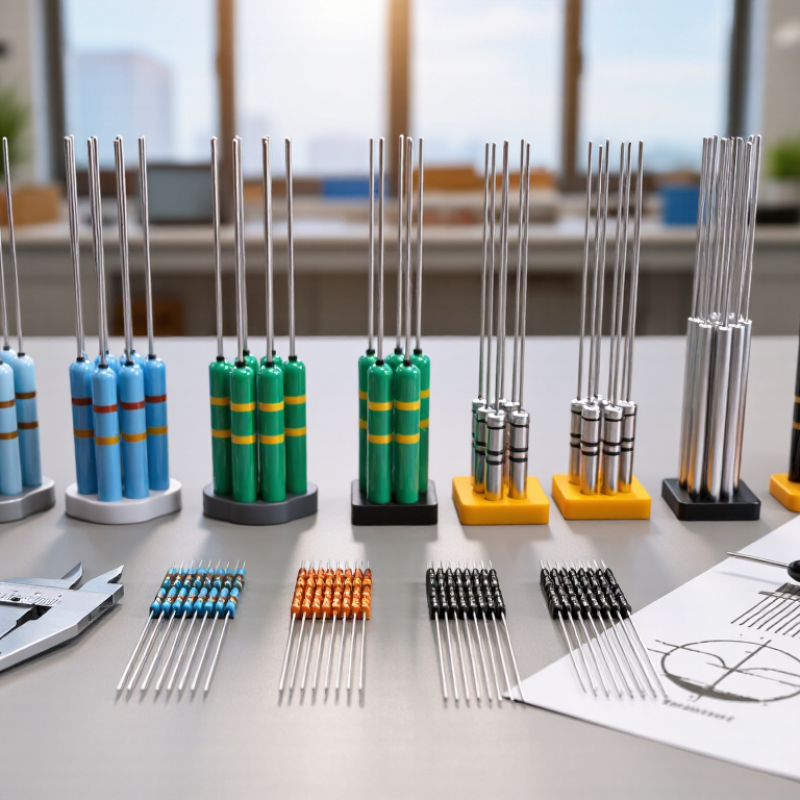
Top 10 Custom Resistor Manufacturers for Global Buyers

Custom Resistors: Types, Applications, and Buyer Requirements

Custom resistors are designed around a circuit’s actual electrical and physical demands. Wirewound types handle substantial power and suit braking circuits or load banks. Thin-film resistors offer tight tolerance and low noise for measurement equipment. Thick-film options can provide compact, cost-conscious solutions for control boards. The right choice depends on more than resistance value. Small details matter.

In motor drives, a resistor may need to absorb short energy pulses without overheating. In temperature or current sensing, predictable resistance changes and stable readings are essential. Buyers should specify resistance, tolerance, rated power, operating temperature, pulse conditions, and expected service life. Mounting style matters too: a chassis-mounted part needs different dimensions and terminals than a surface-mount component. A prototype can reveal issues that a drawing misses.

A useful request for quotation includes a circuit description, expected quantities, preferred materials, and mechanical constraints. Share the available space, lead configuration, and any environmental exposure, such as vibration or moisture. Ask for test data, tolerances across temperature, and confirmation of production consistency. If the application is unusual, request samples before committing to a large order. It is easy to over-specify a resistor; sometimes that adds cost without improving performance. Revisiting the requirements with the design engineer can prevent that.

How Custom Resistors Are Designed and Manufactured

A custom resistor begins with operating conditions, not a catalog shape. Engineers define resistance, tolerance, power, pulse load, temperature range, and available space. A 10-kilohm part for a sensor may need low drift, while a braking circuit may demand stronger pulse handling. Details matter. Lead spacing and mounting style can affect heat flow and fit.

Material choice follows those requirements. Metal film, foil, thick film, and wirewound constructions each bring different trade-offs in stability, size, and cost. The selected resistive element is formed on a substrate or wire, then connected to terminals and protected with a coating or case. Laser trimming can bring resistance closer to target. It does not fix every design problem.

Production samples are measured for resistance and, when required, temperature behavior, insulation, or load performance. Testing should reflect real use, including heat and electrical stress. A careful maker records results and checks variation across batches. Still, specifications can miss awkward conditions: airflow may be poor, or a nearby component may warm the resistor. Prototype testing sometimes reveals these gaps, and the design may need another revision.

Custom Resistor Design: Example TCR Targets

Temperature coefficient of resistance (TCR) describes how resistance changes with temperature, in parts per million per degree Celsius (ppm/°C). These are example engineering targets—not a survey of manufacturers. The achievable TCR depends on the resistor technology, resistance value, operating conditions, and specified production requirements.

Criteria for Evaluating Global Resistor Suppliers

Top 10 Custom Resistor Manufacturers for Global Buyers

When evaluating global resistor suppliers, compare more than quoted price and lead time. Check whether their process can hold resistance tolerance across the full production run. Ask for sample test reports, lot traceability, and details on how they inspect dimensions and electrical performance. A report should identify the test conditions, not just show a pass mark. Numbers matter.

Review technical fit against your actual operating conditions. A resistor used near a heat source may need careful power derating, while a compact board may demand tight dimensional control. Ask how the supplier handles design changes, material substitutions, and unexpected yield issues. Clear answers suggest a disciplined process. Vague promises deserve a second look. A polished brochure can still leave gaps, and even experienced buyers may overlook a small tolerance difference until assembly.

Tips: Send the same drawing and test requirements to each candidate. Compare their responses line by line, including packaging, communication time, and sample availability. Ask for a first-article inspection before approving volume production. Keep the evaluation practical; a supplier’s process matters only if it consistently meets your application’s needs.

Top 10 Custom Resistor Manufacturers for Global Buyers

For global buyers, a useful “Top 10 Custom Resistor Manufacturers” comparison starts with engineering fit, not rankings alone. Global Market Insights’ Resistor Market report estimated the market exceeded USD 5.5 billion in 2023 and projected 6.5% annual growth through 2032. That expansion raises the value of dependable sourcing, but market growth does not prove a supplier can meet a specific design. Buyers should check resistance range, tolerance, temperature coefficient, pulse capability, and documented test methods.

Ask each shortlisted manufacturer for a sample built to the actual drawing. Measure it under expected operating temperatures, then compare results with the datasheet. A thin-film part may suit stable measurement circuits; a wirewound design may better handle higher power. Request traceability records and clear change-notification practices. That matters. A low quoted price can hide setup charges, minimum order quantities, or long lead times.

For international orders, compare packaging, shipping options, and technical support across time zones. Ask how the supplier handles a failed sample and whether it can reproduce the same specifications in later production. A neat qualification sheet is useful, but it cannot replace testing. I would also revisit the shortlist after pilot production; early assumptions can be wrong, and buyers sometimes overlook assembly conditions when comparing parts.

How to Compare Manufacturers and Choose the Right Partner

Comparing custom resistor manufacturers starts with the application, not the quote. Define the resistance range, tolerance, power rating, operating temperature, and expected service life. Share the actual load profile, including short pulses and heat near neighboring components. Details matter.

Ask how each supplier controls material changes, process variation, and final inspection. Request sample data for resistance drift, temperature coefficient, and pulse performance—not only a certificate. A useful review includes test conditions, sample size, and acceptance limits. Check whether production records can trace a finished lot to its materials and inspection results. This takes time.

Compare engineering access, prototype lead time, capacity, and communication during a design change. Confirm who reviews drawings and how deviations are reported before shipment. A low unit price can hide costly rework or long qualification delays. Still, polished documents do not prove a stable process; verify claims with samples and a controlled pilot order. I would not overvalue one flawless sample. Repeatability across batches is harder, and more revealing.

Copyright 2025 Fluidra S.A. | Created by BCM Marketing Agencia Privacy Policy Legal note | Cookie policy |

Technical cookies are strictly necessary for our website to work and you can navigate through it. These types of cookies are those that, for example, allow us to identify you, give you access to certain restricted parts of the page if necessary, or remember different options or services already selected by you, such as your privacy preferences. Therefore, they are activated by default, your authorization not being necessary in this regard. Through the configuration of your browser, you can block or alert the presence of this type of cookies, although such blocking will affect the proper functioning of the different functionalities of our website.


The analysis cookies allow us to study the navigation of the users of our website in general (for example, which sections of the page are the most visited, which services are used most and if they work correctly, etc.). From the statistical information on navigation on our website, we can improve both the operation of the page itself and the different services it offers. Therefore, these cookies do not have an advertising purpose, but only serve to make our website work better, adapting to our users in general. By activating them you will contribute to this continuous improvement. You can enable or disable these cookies by checking the corresponding box, being disabled by default.


Functionality cookies allow us to remember your preferences, to personalize certain characteristics and general options of our website, every time you access it (for example, the language in which the information is presented to you, the sections marked as favorites, your browser type, etc.) Therefore, this type of cookies does not have an advertising purpose, but by activating them you will improve the functionality of the website (for example, adapting to your type of browser) and the customization of it based on your preferences (for example, by presenting the information in the language that you have chosen in previous occasions), which will contribute to the ease, usability and comfort of our page during your navigation. You can enable or disable these cookies by checking the corresponding box, being disabled by default.


Advertising cookies allow us to manage the advertising spaces included in our website based on criteria such as the content shown or the frequency in which the ads are displayed. For example, if you have been shown the same ad several times on our website, and you have not shown a personal interest by clicking on it, it will not appear again. In summary, by activating this type of cookies, the advertising shown on our website will be more useful and diverse, and less repetitive. You can enable or disable these cookies by checking the corresponding box, being disabled by default.


Behavioral advertising cookies allow us to obtain information based on the observation of your browsing habits and behaviors on the web, in order to show you advertising content that best suits your personal tastes and interests. To understand it in a very simple way, we will give you a fictitious example: if your last searches on the web were related to suspense literature, we would show you advertising about suspense books. Therefore, activating this type of cookies, the advertising that we show you on our website will not be generic, but will be oriented to your searches, tastes and interests, therefore adjusting exclusively to you. You can enable or disable these cookies by checking the corresponding box, being disabled by default.
To understand it in a very simple way, we will give you a fictitious example: if your last searches on the web were related to suspense literature, we would show you advertising about suspense books. Therefore, activating this type of cookies, the advertising that we show you on our website will not be generic, but will be oriented to your searches, tastes and interests, therefore adjusting exclusively to you. You can enable or disable these cookies by checking the corresponding box, being disabled by default.

SAVE

We use our own and third-party cookies to ensure the proper functioning of the website and to analyse our services, improve your experience on our website and show you advertisements related to your interests according to profiling based on your browsing habits (e.g. websites visited). You can accept all cookies by clicking "ACCEPT" or set or reject them by clicking here. If you would like to know more about the use of cookies, please see our COOKIE POLICY.


ACCEPT ALL
Reject no essentials


