
China Top Fusion Bonded Epoxy Pipe Suppliers?
FLUID HANDLING EXPERTS

Blog, all our news

China Top Fusion Bonded Epoxy Pipe Suppliers?

Choosing a reliable supplier in China for Fusion Bonded Epoxy Pipe involves more than comparing prices. These pipes protect steel from corrosion in demanding water, oil, gas, and industrial applications. Their performance depends on coating quality, surface preparation, application control, and careful inspection. Small details matter. A smooth finish alone cannot confirm coating thickness or adhesion. Buyers should examine product data, test reports, production capabilities, and traceability records before requesting a quotation. That sounds basic, but these checks are easy to overlook when a delivery deadline is pressing.

This guide explores how to assess Chinese suppliers, compare their offerings, and ask useful questions before placing an order. It considers factors such as pipe dimensions, coating specifications, inspection methods, packaging, and export experience. Requirements differ by project, so confirm applicable standards and acceptance criteria with qualified technical professionals. A supplier’s website can provide a starting point, not a complete assessment. Request current documentation and clarify how any test results relate to the pipes being quoted. A polished brochure may look convincing; production evidence is more useful. Even then, no single document tells the whole story. Careful comparison can help buyers build a shortlist and make a more informed decision.
China Top Fusion Bonded Epoxy Pipe Suppliers?

What Fusion-Bonded Epoxy Pipes Are and How Their Coatings Work

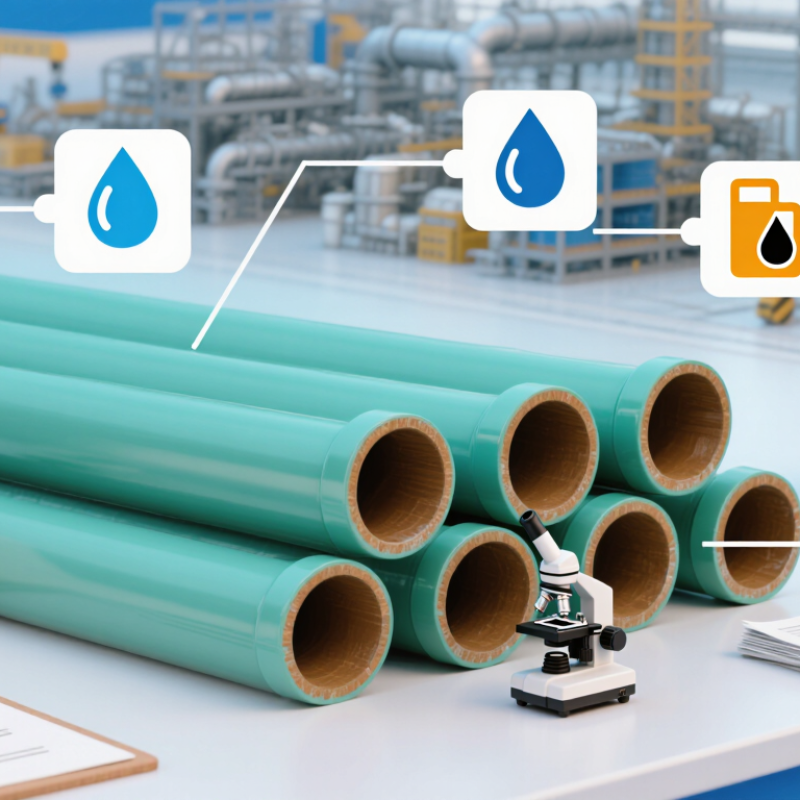
Fusion-bonded epoxy (FBE) pipes are steel pipes protected by a firmly bonded thermosetting coating. The pipe is cleaned and heated, then fine epoxy powder is applied to its surface. Heat melts the powder and helps it cure into a continuous layer. The result is a barrier between steel and moisture, soil, or other corrosive conditions.

Surface preparation matters as much as the powder itself. Abrasive blasting removes rust and scale, while controlled heating supports even coating and adhesion. On a well-prepared pipe, the cured layer resists damage from handling and can help limit corrosion inside or outside the pipe.

That matters. A coating can look smooth yet contain a thin spot or tiny holiday, so inspection may include thickness checks and electrical testing. FBE is not a cure-all; service temperature, chemical exposure, and installation conditions still need review.

In practical terms, a pipe’s coating quality depends on process control, not just its stated coating type. Inspectors may check cleaned surfaces, powder application, cure, adhesion, and repairs before shipment.

Small defects deserve attention. A rough patch at a field joint, for example, can expose steel after installation. Buyers should ask for clear coating specifications and inspection records, then match them to the pipeline’s actual operating conditions. Even good documentation has limits: handling and site work can change the final result.

Key Standards and Applications for FBE-Coated Pipes in China

China Top Fusion Bonded Epoxy Pipe Suppliers?

Key Standards and Applications for FBE-Coated Pipes in China

For buried steel pipelines, fusion-bonded epoxy (FBE) provides a continuous barrier against soil corrosion. ISO 21809-2 specifies requirements for external FBE coatings on pipeline transport systems. For water transmission pipes, ANSI/AWWA C213 covers fusion-bonded epoxy coatings and linings. These standards address practical checks such as surface preparation, coating thickness, adhesion, and holiday detection. Details matter. A pinhole missed during inspection can expose bare steel to moisture.

The World Bank’s 2016 assessment estimated global non-revenue water at roughly 25–30% of water supplied. This includes more than physical leakage, so it is not evidence that FBE alone reduces water loss.

Still, it highlights why durable water infrastructure matters. In China, project teams should match coating specifications to the service environment: buried gas lines, water mains, and industrial pipework have different exposure and operating conditions. Ask suppliers for test records tied to the specified standard, including cathodic disbondment and impact results. A certificate helps, but it does not replace checking sample preparation, coating thickness, and inspection methods. I would also verify field-joint protection separately; factory-coated pipe cannot protect an inadequately treated joint.

How to Assess China’s Leading Fusion-Bonded Epoxy Pipe Suppliers

China Top Fusion Bonded Epoxy Pipe Suppliers?

How to Assess China’s Leading Fusion-Bonded Epoxy Pipe Suppliers

Assess suppliers by their control of the full coating process, not by catalog claims alone. Ask how they prepare the steel surface, manage preheating, and apply epoxy. Request the specified coating thickness and the inspection records for recent production batches. Details matter. A glossy sample can still hide uneven coverage or weak preparation.

Check whether the supplier can provide holiday-test results, adhesion data, and traceable material records that match your project specification. Ask who performs each test and how failed sections are repaired and rechecked. Ask for evidence. Clear answers should include actual procedures and sample reports, not just assurances. Requirements vary by service and project, so confirm applicable standards with your engineering team.

Review production capacity, lead times, packaging, and export experience together. A technically capable factory may still struggle with scheduling or communication. Request references for comparable pipe sizes and operating conditions, then verify them where practical. If possible, inspect a production run or have an independent inspector review it. No checklist removes every risk. Even a careful review can miss a weak point, so record open questions before placing an order.

Comparing Supplier Capabilities, Quality Controls, and Certifications

Choosing among China’s fusion-bonded epoxy pipe suppliers takes more than comparing quoted prices. Check whether each plant can coat your required pipe diameters and production volumes consistently. Ask for batch records covering surface preparation, preheat temperature, coating thickness, cure, and holiday testing. ISO 21809-2:2014 specifies requirements for single-layer FBE coatings on buried or submerged pipelines, including qualification, application, and testing. Request test reports against your project specification, not just a certificate. Paperwork can look complete.

Quality controls should be visible on the production line: calibrated gauges, documented surface cleanliness, and traceable powder lots. Compare adhesion, impact, flexibility, and holiday-test results, along with repair procedures. The NACE International IMPACT study estimated global corrosion costs at US$2.5 trillion in 2013, roughly 3.4% of world GDP (NACE International, 2016). That scale makes coating verification worth careful attention. Verify that an ISO 9001 certificate is current and covers the relevant site and activities. I would also request recent third-party inspection records. A certificate alone is not proof. Confirm line capacity, inspection hold points, packing protection, and shipment tolerances. Loading damage can undo careful factory work.

China Top Fusion Bonded Epoxy Pipe Suppliers? - Comparing Supplier Capabilities, Quality Controls, and Certifications

Comparison Area What a Capable Supplier Should Demonstrate Relevant Standard or Evidence Buyer Verification
Product and coating scope Clearly defined pipe sizes, substrate specifications, coating type, service conditions, and whether the coating is for external protection, internal lining, or both. Project specification and applicable product standard. ISO 21809-2 covers external FBE coatings for buried or submerged pipelines; AWWA C213 covers fusion-bonded epoxy coatings and linings for steel water pipe and fittings. Compare the quotation and technical data sheet with the project specification; confirm that the standard’s scope matches the intended application.
Manufacturing capability Documented control of surface preparation, preheating, powder application, curing, handling, and coating repairs. Capacity and permitted pipe dimensions should be stated rather than assumed. Process flow, equipment list, capacity statement, work instructions, and production records for the relevant pipe range. Request a process audit or live production demonstration and verify that the proposed line can handle the ordered pipe dimensions and coating requirements.
Surface preparation Recorded abrasive-blasting parameters and inspection of cleanliness and surface profile before coating; contamination and flash rust should be controlled. Project specification and the referenced coating standard; inspection records should identify the method, acceptance criteria, and results. Review preparation procedures and sample inspection reports, and confirm the acceptance criteria before production begins.
Coating thickness Measured coating thickness with defined sampling locations, instrument checks, and documented acceptance against the applicable specification. ISO 21809-2, AWWA C213, or the project specification, as applicable. ASTM D7091 describes nondestructive measurement of dry-film thickness on ferrous metals. Check calibrated-instrument records, inspection frequency, and actual readings on production reports; use the project’s specified limits.
Holiday and continuity testing Inspection for coating discontinuities using a suitable detector, with voltage and test procedure selected for the coating system and thickness. Applicable product standard and project procedure. ASTM G62 describes holiday-testing methods for protective coatings on pipeline materials. Review detector calibration and test logs; confirm the test method and voltage are appropriate for the specified coating.
Adhesion and cathodic disbondment Type-test or qualification evidence for the specified coating system, plus documented controls for powder identification, storage, and application. Applicable coating standard and project specification. ASTM G8 provides test methods for cathodic disbonding of pipeline coatings. Request complete test reports identifying the coating system, test method, specimen, conditioning, results, and acceptance criteria.
Inspection and traceability Traceability linking pipe or production lot to substrate records, coating powder batch, process parameters, inspection results, and repair records. Inspection and test plan, material records, batch records, nonconformance reports, and final inspection documentation. Ask for a sample manufacturing record package and check that the traceability fields match the purchase order and marking requirements.
Quality management certification A functioning quality management system relevant to the manufacturing site and scope of work. ISO 9001 certification is evidence of a certified quality management system; it is not, by itself, product certification or proof that a coating meets a project specification. Verify the certificate’s validity, issuing certification body, site address, and scope. Confirm product compliance separately.
Potable-water suitability Where the pipe or lining will contact drinking water, evidence that the exact product and intended use meet the applicable health-effects requirements. NSF/ANSI/CAN 61 addresses health effects of drinking-water system components. Applicability depends on product, use, and market requirements. Check the certifier’s current listing for the exact coating or product, manufacturing location, and intended conditions of use.
Project compliance and delivery Clear confirmation of deviations, inspection hold points, repair limits, marking, packaging, delivery schedule, and required documentation. Approved technical submittals, inspection and test plan, purchase order, and project-specific quality requirements. Resolve exceptions in writing before award; include inspection access and document deliverables in the purchase contract.

Note: Standards and certification requirements depend on the pipe’s service, destination market, and project specification. Verify current editions and the validity and scope of any certificate or test report before procurement.

Questions to Ask Before Choosing an FBE Pipe Supplier

China Top Fusion Bonded Epoxy Pipe Suppliers?
Questions to Ask Before Choosing an FBE Pipe Supplier

Before comparing prices, ask how the supplier prepares each pipe surface. FBE performance depends on cleanliness, surface profile, and controlled application conditions. Request written details on abrasive blasting, preheating, coating thickness, and curing. Ask how operators check for pinholes or thin spots. Ask for records.

A reliable supplier should connect test results to identifiable production batches. Can they provide inspection reports, coating-thickness readings, and holiday-test results for your order? Ask what happens when a pipe fails inspection. Clear repair and retesting procedures matter. So does traceability. Sample records can reveal whether documentation is specific or merely generic.

Discuss the actual project conditions, including pipe dimensions, service temperature, soil exposure, and handling requirements. Confirm which technical specifications the supplier can meet, and ask how exceptions are documented. If possible, review a recent production sample or arrange a factory audit. Details matter. A polished presentation is not proof of consistent process control, and even a careful checklist can miss a practical issue. Ask who will answer technical questions after shipment, and how quickly they can provide coating records if a concern arises.

China FBE Pipe Suppliers: Questions to Ask Before Choosing

Suggested buyer-assigned evaluation weights for comparing suppliers—not market survey results.

Ask for applicable standards and project-specific compliance documents, coating process and quality-control records, test reports with traceability, production and delivery evidence, and technical support arrangements. Adjust the suggested weights to match your project requirements and verify supporting records before selection.

Copyright 2025 Fluidra S.A. | Created by BCM Marketing Agencia Privacy Policy Legal note | Cookie policy |

Technical cookies are strictly necessary for our website to work and you can navigate through it. These types of cookies are those that, for example, allow us to identify you, give you access to certain restricted parts of the page if necessary, or remember different options or services already selected by you, such as your privacy preferences. Therefore, they are activated by default, your authorization not being necessary in this regard. Through the configuration of your browser, you can block or alert the presence of this type of cookies, although such blocking will affect the proper functioning of the different functionalities of our website.


The analysis cookies allow us to study the navigation of the users of our website in general (for example, which sections of the page are the most visited, which services are used most and if they work correctly, etc.). From the statistical information on navigation on our website, we can improve both the operation of the page itself and the different services it offers. Therefore, these cookies do not have an advertising purpose, but only serve to make our website work better, adapting to our users in general. By activating them you will contribute to this continuous improvement. You can enable or disable these cookies by checking the corresponding box, being disabled by default.


Functionality cookies allow us to remember your preferences, to personalize certain characteristics and general options of our website, every time you access it (for example, the language in which the information is presented to you, the sections marked as favorites, your browser type, etc.) Therefore, this type of cookies does not have an advertising purpose, but by activating them you will improve the functionality of the website (for example, adapting to your type of browser) and the customization of it based on your preferences (for example, by presenting the information in the language that you have chosen in previous occasions), which will contribute to the ease, usability and comfort of our page during your navigation. You can enable or disable these cookies by checking the corresponding box, being disabled by default.


Advertising cookies allow us to manage the advertising spaces included in our website based on criteria such as the content shown or the frequency in which the ads are displayed. For example, if you have been shown the same ad several times on our website, and you have not shown a personal interest by clicking on it, it will not appear again. In summary, by activating this type of cookies, the advertising shown on our website will be more useful and diverse, and less repetitive. You can enable or disable these cookies by checking the corresponding box, being disabled by default.


Behavioral advertising cookies allow us to obtain information based on the observation of your browsing habits and behaviors on the web, in order to show you advertising content that best suits your personal tastes and interests. To understand it in a very simple way, we will give you a fictitious example: if your last searches on the web were related to suspense literature, we would show you advertising about suspense books. Therefore, activating this type of cookies, the advertising that we show you on our website will not be generic, but will be oriented to your searches, tastes and interests, therefore adjusting exclusively to you. You can enable or disable these cookies by checking the corresponding box, being disabled by default.
To understand it in a very simple way, we will give you a fictitious example: if your last searches on the web were related to suspense literature, we would show you advertising about suspense books. Therefore, activating this type of cookies, the advertising that we show you on our website will not be generic, but will be oriented to your searches, tastes and interests, therefore adjusting exclusively to you. You can enable or disable these cookies by checking the corresponding box, being disabled by default.

SAVE

We use our own and third-party cookies to ensure the proper functioning of the website and to analyse our services, improve your experience on our website and show you advertisements related to your interests according to profiling based on your browsing habits (e.g. websites visited). You can accept all cookies by clicking "ACCEPT" or set or reject them by clicking here. If you would like to know more about the use of cookies, please see our COOKIE POLICY.


ACCEPT ALL
Reject no essentials


