
China Top Fuel Cell Hydrogen Station Manufacturers?
FLUID HANDLING EXPERTS

Blog, all our news

China Top Fuel Cell Hydrogen Station Manufacturers?

China has become a significant manufacturing base for hydrogen refueling infrastructure. Its suppliers serve transport fleets, industrial users, and emerging mobility projects. This guide introduces leading Chinese manufacturers of Fuel Cell Hydrogen Station systems and explains how to assess them carefully.

A strong supplier should provide more than compressors and dispensers. It should demonstrate safe system integration, accurate pressure control, hydrogen purity management, and dependable storage design. Look for documented testing, professional engineering teams, and compliance with applicable international and local standards. Factory audits can reveal details that brochures often hide, such as welding quality, cable protection, drainage design, and emergency shutdown access. Service capability matters too. A station may look impressive during commissioning, yet perform poorly without replacement valves, software support, and trained technicians.

Real project experience offers useful evidence. Ask for operating references, maintenance records, delivery timelines, and performance data from comparable stations. Fleet applications may require fast filling and high availability, while smaller stations may prioritize compact equipment and lower installation costs. The best choice depends on climate, traffic volume, hydrogen supply, and local regulations. No ranking is perfect. Manufacturer claims still need independent verification. Site conditions can expose weaknesses that laboratory tests miss. Buyers should compare lifecycle cost, not only the initial quotation. This article therefore focuses on practical reliability, engineering depth, safety culture, and after-sales support when reviewing China’s top Fuel Cell Hydrogen Station manufacturers. Some suppliers may excel technically but lack overseas service coverage. That gap deserves attention.
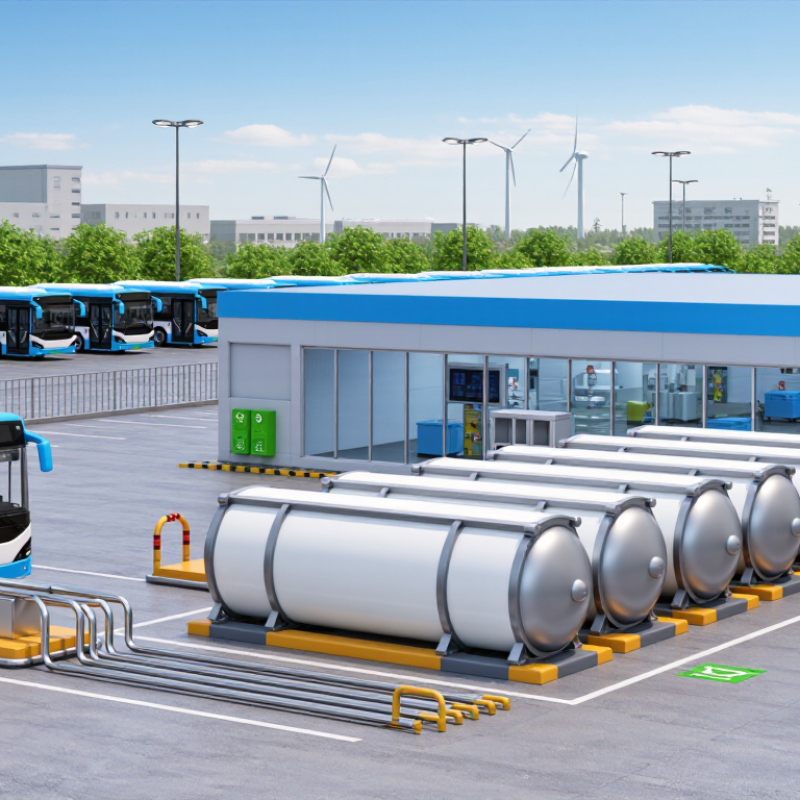
China Top Fuel Cell Hydrogen Station Manufacturers?

What Are Fuel Cell Hydrogen Stations?

What Are Fuel Cell Hydrogen Stations?

Fuel cell hydrogen stations supply compressed hydrogen to vehicles powered by fuel cells. They do not fill vehicles with liquid gasoline or diesel. Instead, hydrogen flows through a sealed dispenser into a reinforced storage tank. Common systems use 350-bar or 700-bar pressure, depending on the vehicle design.

A typical station includes delivery equipment, high-pressure storage vessels, compressors, cooling units, dispensers, and safety controls. Hydrogen may arrive by tube trailer or come from an on-site production system. Sensors check for leaks, abnormal pressure, and rising temperatures.

Ventilation is essential because hydrogen is very light and disperses upward quickly. Operators also inspect hoses, connectors, grounding points, and emergency shutoff devices.

Inside the vehicle, the fuel cell combines hydrogen with oxygen from the air. This electrochemical reaction produces electricity, heat, and water. Refueling can take only a few minutes, but the process is not effortless. Pressure, temperature, purity, and communication between the station and vehicle must work together.

A fuel cell station is not automatically low-carbon, either. Its environmental value depends partly on how the hydrogen was produced. The industry still faces high equipment costs, limited networks, and complex maintenance needs. That uncertainty deserves honest attention.

How Is China’s Hydrogen Station Industry Developing?

China’s hydrogen station industry is moving from pilot projects toward a wider transport network. Development remains uneven. Coastal provinces often have stronger supply chains and steady demand from buses and heavy trucks. Inland projects may wait for vehicle deployment, pipeline access, or lower hydrogen costs. This regional gap affects station design, financing, and daily operating efficiency.

Many stations now combine hydrogen production, storage, compression, and dispensing on one site. This layout can reduce delivery costs and improve supply visibility. Equipment manufacturers are also adding digital monitoring for pressure, temperature, filling time, and system alarms. Safety requires more than software. Trained technicians must inspect valves, connectors, ventilation, and emergency equipment. Small maintenance delays can damage customer confidence quickly.

The industry still needs more consistent data. Public reports may count operating, planned, and temporary stations differently. That makes market comparisons less reliable. Policy support remains important, but long-term growth will depend on utilization and operating revenue. A station serving only a few vehicles daily may appear successful on paper while losing money. This is uncomfortable. Developers are testing shared stations, transport corridors, and flexible equipment capacities. Yet, in some locations, construction may be moving faster than real demand. Experiences from early projects should be examined more honestly.

Who Are China’s Leading Fuel Cell Hydrogen Station Manufacturers?

Who Are China’s Leading Fuel Cell Hydrogen Station Manufacturers?

China’s leading fuel cell hydrogen station manufacturers are not defined by brand visibility alone. Strong suppliers usually combine dispenser engineering, high-pressure storage, compression systems, and digital safety controls.

China Hydrogen Alliance industry statistics reported more than 400 hydrogen refueling stations in operation or development by 2023. This expanding network has increased demand for integrated station builders, especially in heavy-duty transport corridors.

The most capable manufacturers typically serve buses, logistics fleets, ports, and industrial parks. Their experience shows in practical details: stable filling pressure, accurate metering, short maintenance windows, and reliable operation during winter mornings.

The International Energy Agency’s Global Hydrogen Review 2024 identifies China as a major center for hydrogen infrastructure deployment and fuel-cell vehicle growth. That scale matters.

Yet, “leading” remains difficult to measure. Public rankings often mix equipment suppliers, engineering contractors, and station operators. The comparison can become unclear.

Buyers should examine verified station uptime, pressure-cycle testing, emergency shutoff performance, and after-sales response.

ISO and national safety requirements also need careful review. Some projects still report uneven utilization, which suggests that manufacturing quality alone cannot guarantee commercial success.

Better data disclosure would make supplier comparisons more credible.

What Technologies Do Chinese Manufacturers Provide?

Chinese hydrogen station manufacturers increasingly provide integrated technologies for fuel cell mobility. Their systems may combine hydrogen storage, compression, cooling, dispensing, and station control. Many stations support 35 MPa and 70 MPa refueling for different vehicle types. High-pressure compressors reduce filling time, while cascade storage balances pressure during dispensing. Some suppliers also offer on-site electrolysis linked with solar or wind power. This can reduce transport needs, although electricity quality and operating costs require careful review.

Modern stations use sensors to monitor pressure, temperature, leakage, and valve conditions. Automated shutdown systems can isolate equipment within seconds. Remote platforms record refueling volume, maintenance alerts, and energy use. Several manufacturers design modular stations, allowing capacity upgrades as vehicle demand grows. Liquid cooling technology helps control heat during rapid filling. Yet real performance depends on climate, maintenance skills, and hydrogen purity. A promising design may still underperform in a dusty industrial area.

Tips: Check local certification, dispenser accuracy, emergency procedures, and spare-part access before purchase. Ask for tested data from similar climates. Do not rely only on brochure efficiency figures. A site trial is wiser. Factory inspection and operator training also improve reliability. One overlooked detail is noise from compressors. Nearby communities may notice it before engineers do.

How Should Buyers Compare Chinese Hydrogen Station Suppliers?

How Should Buyers Compare Chinese Hydrogen Station Suppliers?

Buyers should compare hydrogen station suppliers by verified performance, not catalogue promises. Ask for measured dispensing flow, pressure stability, hydrogen purity, and station uptime. A useful supplier can provide test records from operating sites, not only factory brochures. Request references with similar climate, traffic, storage pressure, and daily vehicle demand.

Examine the complete system. Review compressors, storage vessels, cooling units, dispensers, control software, and emergency shutdown devices. Check whether components have traceable certificates and whether testing follows recognized international or local standards. Factory acceptance testing should cover leaks, pressure cycling, communication faults, and power interruptions. Site acceptance testing should repeat critical checks under real operating conditions.

Service capability often separates a reliable supplier from an attractive quotation. Confirm spare-parts lead times, remote monitoring, technician training, and response procedures. Ask who supports the station after commissioning. A lower purchase price may become expensive when one compressor waits weeks for repair. Buyers should also compare electricity consumption, maintenance intervals, warranty exclusions, and software update policies. Some suppliers may answer every question confidently, yet their documents remain incomplete. That is a warning, not a minor inconvenience. I would score each supplier with the same checklist, then visit at least one running station before signing. Numbers can still mislead. Field evidence usually reveals the practical difference.

Copyright 2025 Fluidra S.A. | Created by BCM Marketing Agencia Privacy Policy Legal note | Cookie policy |

Technical cookies are strictly necessary for our website to work and you can navigate through it. These types of cookies are those that, for example, allow us to identify you, give you access to certain restricted parts of the page if necessary, or remember different options or services already selected by you, such as your privacy preferences. Therefore, they are activated by default, your authorization not being necessary in this regard. Through the configuration of your browser, you can block or alert the presence of this type of cookies, although such blocking will affect the proper functioning of the different functionalities of our website.


The analysis cookies allow us to study the navigation of the users of our website in general (for example, which sections of the page are the most visited, which services are used most and if they work correctly, etc.). From the statistical information on navigation on our website, we can improve both the operation of the page itself and the different services it offers. Therefore, these cookies do not have an advertising purpose, but only serve to make our website work better, adapting to our users in general. By activating them you will contribute to this continuous improvement. You can enable or disable these cookies by checking the corresponding box, being disabled by default.


Functionality cookies allow us to remember your preferences, to personalize certain characteristics and general options of our website, every time you access it (for example, the language in which the information is presented to you, the sections marked as favorites, your browser type, etc.) Therefore, this type of cookies does not have an advertising purpose, but by activating them you will improve the functionality of the website (for example, adapting to your type of browser) and the customization of it based on your preferences (for example, by presenting the information in the language that you have chosen in previous occasions), which will contribute to the ease, usability and comfort of our page during your navigation. You can enable or disable these cookies by checking the corresponding box, being disabled by default.


Advertising cookies allow us to manage the advertising spaces included in our website based on criteria such as the content shown or the frequency in which the ads are displayed. For example, if you have been shown the same ad several times on our website, and you have not shown a personal interest by clicking on it, it will not appear again. In summary, by activating this type of cookies, the advertising shown on our website will be more useful and diverse, and less repetitive. You can enable or disable these cookies by checking the corresponding box, being disabled by default.


Behavioral advertising cookies allow us to obtain information based on the observation of your browsing habits and behaviors on the web, in order to show you advertising content that best suits your personal tastes and interests. To understand it in a very simple way, we will give you a fictitious example: if your last searches on the web were related to suspense literature, we would show you advertising about suspense books. Therefore, activating this type of cookies, the advertising that we show you on our website will not be generic, but will be oriented to your searches, tastes and interests, therefore adjusting exclusively to you. You can enable or disable these cookies by checking the corresponding box, being disabled by default.
To understand it in a very simple way, we will give you a fictitious example: if your last searches on the web were related to suspense literature, we would show you advertising about suspense books. Therefore, activating this type of cookies, the advertising that we show you on our website will not be generic, but will be oriented to your searches, tastes and interests, therefore adjusting exclusively to you. You can enable or disable these cookies by checking the corresponding box, being disabled by default.

SAVE

We use our own and third-party cookies to ensure the proper functioning of the website and to analyse our services, improve your experience on our website and show you advertisements related to your interests according to profiling based on your browsing habits (e.g. websites visited). You can accept all cookies by clicking "ACCEPT" or set or reject them by clicking here. If you would like to know more about the use of cookies, please see our COOKIE POLICY.


ACCEPT ALL
Reject no essentials


