
China Top Belt Cleaner Manufacturers for Global Buyers
FLUID HANDLING EXPERTS

Blog, all our news

China Top Belt Cleaner Manufacturers for Global Buyers

China has become a significant sourcing base for Belt Cleaner systems used in mining, cement, aggregates, ports, and bulk-material handling. Global buyers often look beyond price. They examine cleaning performance, belt compatibility, replacement parts, manufacturing control, and technical support. A reliable Belt Cleaner should remove carryback without damaging the belt or creating unsafe maintenance conditions. That balance requires practical engineering, not attractive catalog language.

R. Todd Swinderman, a recognized conveyor-safety and reliability specialist, has stated, “You can’t improve what you don’t measure.” This principle matters when comparing China’s leading Belt Cleaner manufacturers. Serious suppliers should provide test data, material specifications, installation guidance, and clear service limits. Buyers should also inspect scraper blade quality, tensioning design, pulley clearance, and performance under wet, sticky, or abrasive conditions. Small details matter.

Field experience remains valuable. A cleaner that performs well in a dry factory trial may struggle beside a rainy stockpile. No manufacturer is perfect. Some product pages remain vague, and some technical promises need independent verification. That is not a reason to reject Chinese suppliers. It is a reason to ask better questions. Factory audits, sample testing, reference checks, and documented quality procedures can reduce uncertainty. The strongest manufacturers combine competitive production with responsive engineering support. They understand that a Belt Cleaner is not merely a rubber blade or steel frame. It is part of a conveyor’s operating reliability, maintenance cost, and workplace safety.
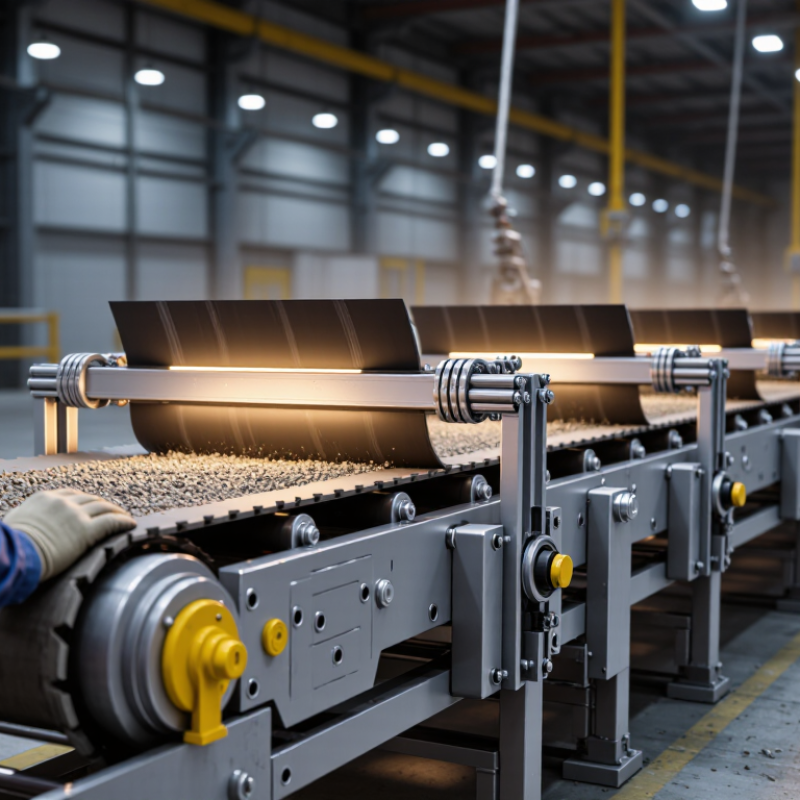
China Top Belt Cleaner Manufacturers for Global Buyers

What Belt Cleaners Are and Why They Matter in Conveyor Systems

Belt cleaners are mechanical devices installed at conveyor discharge points. They scrape adhered material from the belt’s carrying surface. This reduces carryback, spillage, dust, and premature wear on return components. The Conveyor Equipment Manufacturers Association’s Belt Conveyors for Bulk Materials, 7th Edition, treats belt cleaning as a key part of conveyor housekeeping and operating reliability.

The practical effect can be measured quickly. If a conveyor moves 1,000 tonnes per hour, only 0.5% carryback equals five tonnes of material returning each hour. That material may accumulate around pulleys, idlers, and walkways. Cleaner belts also improve visual inspections. The U.S. Mine Safety and Health Administration repeatedly identifies spillage, poor housekeeping, and conveyor contact hazards in mine safety alerts. A properly selected primary cleaner removes bulk carryback. A secondary cleaner handles the thin film left behind.

Design still demands experience. Belt speed, moisture, particle size, splice type, and belt tension all affect performance. A blade that works well on dry limestone may struggle with sticky clay. Excessive pressure can damage belt covers or create heat. Weak pressure leaves material behind. Field results are rarely perfect.

Maintenance teams should inspect blade wear, mounting alignment, and cleaner contact during regular shutdowns. The U.S. Occupational Safety and Health Administration emphasizes guarding, lockout procedures, and safe conveyor maintenance practices. These controls matter as much as the cleaner itself. A technically correct system can still underperform when operators ignore buildup, changing material conditions, or worn components.

How Chinese Belt Cleaner Manufacturers Design and Produce Their Products

Chinese belt cleaner manufacturers often begin with site data, not a standard drawing. They examine belt width, speed, material moisture, temperature, and conveyor structure. A cleaner for wet limestone needs a different blade profile from one used with dry coal. This sounds simple. It is not.

Experienced engineering teams select polyurethane, carbide, or composite materials according to wear conditions. They model pressure on the belt and adjust the tensioning system for stable contact. Many factories produce prototypes before approving mass production. Technicians test scraping efficiency, belt tracking, noise, and blade wear. They also inspect welds, fasteners, and surface finishes. Small details matter.

Production usually combines CNC machining, controlled molding, manual assembly, and documented quality checks. Inspectors measure blade thickness and mounting dimensions during several stages. Batch records help trace material lots and replacement parts.

Some manufacturers also collect feedback from ports, mines, and aggregate plants. Field data can reveal problems that laboratory tests miss.

Yet mistakes still occur. A blade may perform well in testing but wear quickly under heavy carryback. Mounting instructions may also be too general for older conveyor frames. Reliable manufacturers treat these issues as design evidence, not customer inconvenience. They revise drawings, improve training, and repeat testing when necessary. That process is slower, but it builds more dependable equipment for global buyers.

Main Types of Belt Cleaners Available from Chinese Manufacturers

Chinese manufacturers supply several belt cleaner types for coal, aggregate, cement, mining, and bulk material conveyors. Primary belt cleaners sit at the head pulley and remove thick carryback immediately after discharge. They commonly use tungsten carbide blades for abrasive materials or polyurethane blades for gentler cleaning. Secondary cleaners follow the primary unit. Their closer contact removes fine dust and sticky residue that remains on the belt surface.

Tertiary cleaners, including brush and rotary designs, suit applications requiring a cleaner return belt. Brush cleaners can handle light powders, although bristle wear may increase with sharp aggregate. V-plows and diagonal plows protect return rollers by pushing trapped material away from the belt’s underside. Chinese suppliers also offer spring-tensioned, pneumatic, and elastomer tensioning systems. Each reacts differently to belt movement and splice irregularities.

During conveyor inspections, I check material moisture, belt speed, pulley diameter, and available maintenance space. A cleaner that works well on dry limestone may perform poorly with wet clay. This detail is often underestimated. Blade pressure also matters. Excessive pressure can raise power demand and damage the belt, while low pressure leaves visible carryback. Requesting material samples, drawings, wear data, and replacement-part details helps buyers compare suppliers more reliably. Field testing remains wise. Product descriptions alone can hide practical weaknesses.

How Global Buyers Can Evaluate China’s Belt Cleaner Suppliers

China Top Belt Cleaner Manufacturers for Global Buyers

Global buyers should evaluate belt cleaner suppliers through evidence, not catalog language. Request a factory profile, production photos, and recent quality records. Confirm whether the supplier manufactures key components or only assembles them. A site audit, virtual or in person, can reveal useful details. Look for clean storage, labeled materials, calibrated tools, and traceable inspection steps. A polished catalog is not proof.

Ask for a sample matched to your conveyor width, belt speed, material load, and operating temperature. Check blade hardness, mounting stability, wear rate, and cleaning performance after repeated cycles. Request test data with clear methods, dates, and sample specifications. Vague claims deserve careful questions. A small gap in technical documents may become a costly installation problem. Dimensional drawings and replacement-part lists should be available before ordering.

Supplier reliability also depends on communication. Measure response time, engineering accuracy, packaging quality, and willingness to correct drawings. Verify export documents, product labeling, payment terms, warranty conditions, and spare-part availability. Independent inspection can confirm quantity and workmanship before shipment. No evaluation method is flawless. Even a responsive supplier may underestimate field conditions. Keep written approval records, and test the first shipment under controlled operating conditions before expanding the order.

How global buyers can evaluate China’s belt cleaner suppliers: A practical supplier assessment should give the greatest attention to cleaning performance and application fit, followed by material durability, quality-system control, delivery capability, technical support, and total cost. Buyers should verify each score with drawings, test results, inspection records, certifications, and written commercial terms before placing an order.

Key Export, Quality, and After-Sales Considerations for Buyers

For global buyers, selecting a China-based belt cleaner manufacturer requires more than comparing prices. Export experience matters because incorrect dimensions, packaging, or documents can delay installation. Ask for clear specifications, product drawings, packing photos, and export references for similar conveyor systems. Confirm the HS code, shipping terms, warranty scope, and inspection process before placing an order.

Quality should be checked against real operating conditions. Share the belt width, belt speed, material type, moisture level, temperature, and pulley arrangement. A cleaner used in a wet aggregate plant may need different blade material and tension control than one used for dry mineral handling. Request material certificates, dimensional records, and a factory test report. Photos help, but they do not replace physical inspection. That is easy to forget.

After-sales support often separates a reliable supplier from a difficult one. Buyers should confirm response times, installation guidance, spare blade availability, and technical support across time zones. A practical supplier can provide assembly drawings, replacement instructions, and video commissioning support. Keep critical wear parts in reserve, especially when the conveyor operates continuously. Even careful buyers can miss this detail.

The lowest quotation may exclude export packing, testing, or replacement parts. Review the full landed cost instead. No supplier is flawless, and communication can still fail after a successful shipment. Written specifications, approved samples, and staged payments reduce uncertainty. A small pre-shipment inspection may reveal alignment or surface-finish problems before the equipment reaches the site.

Copyright 2025 Fluidra S.A. | Created by BCM Marketing Agencia Privacy Policy Legal note | Cookie policy |

Technical cookies are strictly necessary for our website to work and you can navigate through it. These types of cookies are those that, for example, allow us to identify you, give you access to certain restricted parts of the page if necessary, or remember different options or services already selected by you, such as your privacy preferences. Therefore, they are activated by default, your authorization not being necessary in this regard. Through the configuration of your browser, you can block or alert the presence of this type of cookies, although such blocking will affect the proper functioning of the different functionalities of our website.


The analysis cookies allow us to study the navigation of the users of our website in general (for example, which sections of the page are the most visited, which services are used most and if they work correctly, etc.). From the statistical information on navigation on our website, we can improve both the operation of the page itself and the different services it offers. Therefore, these cookies do not have an advertising purpose, but only serve to make our website work better, adapting to our users in general. By activating them you will contribute to this continuous improvement. You can enable or disable these cookies by checking the corresponding box, being disabled by default.


Functionality cookies allow us to remember your preferences, to personalize certain characteristics and general options of our website, every time you access it (for example, the language in which the information is presented to you, the sections marked as favorites, your browser type, etc.) Therefore, this type of cookies does not have an advertising purpose, but by activating them you will improve the functionality of the website (for example, adapting to your type of browser) and the customization of it based on your preferences (for example, by presenting the information in the language that you have chosen in previous occasions), which will contribute to the ease, usability and comfort of our page during your navigation. You can enable or disable these cookies by checking the corresponding box, being disabled by default.


Advertising cookies allow us to manage the advertising spaces included in our website based on criteria such as the content shown or the frequency in which the ads are displayed. For example, if you have been shown the same ad several times on our website, and you have not shown a personal interest by clicking on it, it will not appear again. In summary, by activating this type of cookies, the advertising shown on our website will be more useful and diverse, and less repetitive. You can enable or disable these cookies by checking the corresponding box, being disabled by default.


Behavioral advertising cookies allow us to obtain information based on the observation of your browsing habits and behaviors on the web, in order to show you advertising content that best suits your personal tastes and interests. To understand it in a very simple way, we will give you a fictitious example: if your last searches on the web were related to suspense literature, we would show you advertising about suspense books. Therefore, activating this type of cookies, the advertising that we show you on our website will not be generic, but will be oriented to your searches, tastes and interests, therefore adjusting exclusively to you. You can enable or disable these cookies by checking the corresponding box, being disabled by default.
To understand it in a very simple way, we will give you a fictitious example: if your last searches on the web were related to suspense literature, we would show you advertising about suspense books. Therefore, activating this type of cookies, the advertising that we show you on our website will not be generic, but will be oriented to your searches, tastes and interests, therefore adjusting exclusively to you. You can enable or disable these cookies by checking the corresponding box, being disabled by default.

SAVE

We use our own and third-party cookies to ensure the proper functioning of the website and to analyse our services, improve your experience on our website and show you advertisements related to your interests according to profiling based on your browsing habits (e.g. websites visited). You can accept all cookies by clicking "ACCEPT" or set or reject them by clicking here. If you would like to know more about the use of cookies, please see our COOKIE POLICY.


ACCEPT ALL
Reject no essentials


