Top Cepex Compression Fittings Suppliers Worldwide
FLUID HANDLING EXPERTS

Blog, all our news

Top Cepex Compression Fittings Suppliers Worldwide

Selecting the right cepex compression fittings supplier is not a catalogue exercise. It is a check of material compatibility, pressure ratings, dimensional consistency, and support after delivery. Grand View Research’s global plastic pipes market analysis valued the market at approximately US$55.6 billion in 2022 and projected 4.6% annual growth through 2030. That broad-market figure is not specific to compression fittings, but it signals the scale of plastic piping demand—and the need to compare suppliers carefully.

Details matter. Buyers should check product data sheets, installation guidance, traceability, and the availability of replacement components. A fitting may look sound on a workbench yet fail to suit the pipe material or operating conditions. For a useful procurement perspective, management expert Peter Drucker wrote, “Quality in a product or service is not what the supplier puts in. It is what the customer gets out.” His statement concerns quality broadly, not Cepex fittings specifically; the distinction matters. This guide compares worldwide suppliers through practical criteria, including documented specifications, distribution reach, technical assistance, and consistency across product ranges. No supplier is right for every project. A careful shortlist—and a few questions asked before ordering—can prevent costly mismatches.
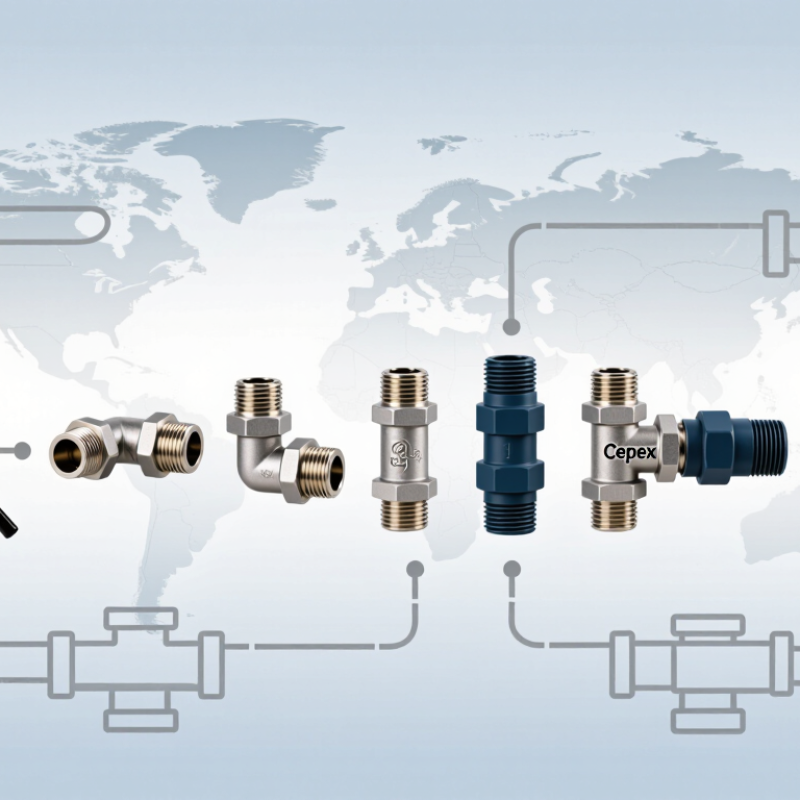
Top Cepex Compression Fittings Suppliers Worldwide

Understanding Cepex Compression Fittings and Their Applications

Compression fittings connect compatible plastic pipes using a body, gripping ring, seal, and tightening nut. They are used in irrigation laterals, greenhouse lines, water-service branches, and temporary bypasses. A clean, square cut matters. An angled end can wrinkle the seal or reduce insertion depth, even when the nut feels tight.

FAO’s AQUASTAT database reports that agriculture accounts for roughly 70% of global freshwater withdrawals, underscoring the practical value of reliable irrigation connections. This figure measures water use, not demand for fittings. Selection still depends on pipe outside diameter, material, operating pressure, temperature, and fluid compatibility. Check the manufacturer’s published limits, then test the assembled connection under working pressure. Field conditions are less tidy than drawings. Soil, vibration, and rushed installation can undermine a technically sound choice; that detail deserves more attention than it often gets. A small leak at a joint may seem minor, but repeated across a long line, it can waste water and disrupt delivery.


How to Evaluate Cepex Fittings Suppliers Worldwide

When evaluating compression-fitting suppliers worldwide, start with evidence, not catalogue photos. Request material specifications, dimensional tolerances, pressure-temperature ratings, and installation instructions for the exact fitting size. Check whether test reports identify the tested material and production batch. A sample should fit the intended pipe without excessive force or visible gaps. Ask how defects are recorded and resolved. A fast reply is useful, but it is not proof of consistent quality.

Delivery reliability deserves equal attention. The World Bank’s 2023 Logistics Performance Index assessed 139 economies across six dimensions, including shipment timeliness and logistics competence. Use those measures as context, then ask suppliers for recent on-time delivery figures, typical lead times, and stock policies. Request references from customers with similar pipe materials and operating conditions. A polished catalogue still proves little. I would also check whether certificates can be traced to the actual production lot; supplier documents can be incomplete.

Tips: Send the same technical checklist to every candidate. Compare pressure ratings, test evidence, traceability, lead times, and warranty terms side by side. Keep one fitting sample for a bench check. Small details matter. A slightly stiff nut may not fail immediately, but it deserves a question before a large order.

Leading Global Suppliers of Cepex Compression Fittings

Leading global suppliers of compression fittings serve installers, distributors, and industrial buyers across varied markets. Strong suppliers provide clear product data, responsive technical support, and dependable stock information. Their fittings should match the pipe’s outside diameter, material, and working conditions. Fit comes first. A fitting that looks correct may still leak if the tube is scratched, oval, or incorrectly measured.

When comparing suppliers, request pressure and temperature ratings, material details, installation guidance, and batch traceability. Check whether the supplier can explain compatibility with the fluid and pipe type, rather than offering a quick yes. Shipping times and replacement-part availability also matter, especially for projects with staged deliveries. Details matter. One common weakness in purchasing is treating a low unit price as the whole cost; delays and mismatched parts can erase the savings.

Tips: Measure the pipe carefully with calipers, and confirm its outside diameter before ordering. Ask for a sample when tolerances are unclear. Keep the data sheet with the installation record. Even careful checks are not perfect, so inspect connections for leaks after assembly.

Top Cepex Compression Fittings Suppliers Worldwide - Leading Global Suppliers of Cepex Compression Fittings

Global Sourcing Region Common Supplier Channel Products to Confirm Documentation to Request Key Purchasing Checks
Europe Pipe-system manufacturers, specialist plastics distributors, and water-management wholesalers Compression fittings for polyethylene (PE) pipe, including couplers, elbows, tees, and reducers Product data sheets, installation instructions, pressure and temperature limits, and applicable conformity documents Confirm pipe outside-diameter compatibility, intended water application, seal material, and local approval requirements.
Asia-Pacific Fitting manufacturers, export distributors, and regional plumbing or irrigation wholesalers Metric-size compression fittings and matching components for PE pressure-pipe systems Material specifications, dimensional drawings, test reports, quality-system documentation, and shipment traceability Check the exact size range, thread type where applicable, production consistency, and whether test documents match the offered product.
North America Waterworks and irrigation distributors, importers, and plastic-piping suppliers PE-pipe mechanical fittings selected for the project’s pipe dimensions and service conditions Installation guidance, pressure ratings, material declarations, and documentation required by the project or authority Verify dimensional compatibility and approvals for the intended jurisdiction; do not assume metric and inch-based sizes are interchangeable.
Middle East and Africa Regional infrastructure suppliers, project distributors, and pipe-system importers Compression fittings for water distribution, irrigation, and other specified PE-pipe applications Technical submittals, operating limits, installation instructions, and project-specific compliance records Confirm suitability for local operating temperatures, water conditions, installation practices, and project specifications.
Latin America Regional pipe and irrigation distributors, importers, and infrastructure suppliers PE-pipe compression fittings in sizes and configurations specified for the installation Datasheets, dimensional information, pressure limits, warranty terms, and locally required certification Check local standards, availability of replacement components, delivery lead time, and compatibility with the installed pipe.
Any Region Authorized or technically qualified distributors and manufacturers Fittings selected against the pipe material, outside diameter, pressure class, and application Where relevant, confirm declarations against ISO 17885 for mechanical fittings for pressure piping systems or EN 12201-3 for PE piping-system fittings Standards and approvals vary by product and market. Verify the specific fitting’s scope, certification, and rating before purchase.

This is a region-based sourcing guide, not a ranked list of individual suppliers. Product availability, certifications, dimensions, and pressure limits vary by supplier and product series; confirm them against current technical documentation.

Comparing Supplier Products, Services, and Distribution

Comparing compression-fitting suppliers means looking beyond catalog size. Check the available pipe diameters, fitting shapes, seal materials, and pressure ratings. These details affect whether a fitting suits a specific fluid, temperature range, and installation. Ask for technical data sheets and confirm that ratings apply to the full assembly, not just one component. Small print matters.

Service quality shows up before an order ships. A capable supplier can clarify tube tolerances, explain assembly steps, and identify when a material may not suit the application. Ask how staff handle unusual configurations and replacement-part requests. Clear answers are useful. Vague promises are not. Still, even experienced support cannot replace a qualified review of the system design.

Distribution can shape the real cost of a project. Compare local stock, typical dispatch times, minimum order quantities, and packaging for mixed-size fittings. For maintenance teams, consistent labeling and batch documentation can make later inspections less frustrating. Request sample lead-time estimates for both routine and urgent orders, then compare them with your own schedule. Delivery estimates can slip; that deserves attention. A supplier’s website may look complete, yet a needed size could be backordered. Verify availability in writing and check how order changes are handled. A careful comparison balances product fit, practical support, and dependable access—not the lowest listed price alone.

Choosing a Supplier for Your Project Requirements

Choosing a compression-fitting supplier starts with the actual service conditions, not a broad catalogue. Record tube material, outside diameter, wall thickness, operating pressure, temperature, vibration, and fluid compatibility. A fitting that seals on a test bench may behave differently beside a pump, where vibration and repeated pressure changes matter. Ask suppliers for dimensional tolerances, material certificates, pressure ratings, and installation instructions. Small details matter. Check whether replacement parts and technical support are available near the project site. A low unit price can become costly when one missing adapter delays commissioning.

Use leakage data to set meaningful acceptance checks. The U.S. Department of Energy’s Improving Compressed Air System Performance: A Sourcebook for Industry reports that leaks in poorly maintained compressed-air systems can equal 20–30% of compressor output. That figure describes system-wide leakage, not fittings alone, but it shows why connection quality deserves attention. Request evidence of pressure or leak testing, and clarify how samples were tested. No checklist catches every mismatch. A common blind spot is assuming all metric or imperial tubes fit the same connection. Compare actual dimensions against the supplier’s stated limits, and ask how installation errors are diagnosed. A short technical review before ordering may prevent rework; it is not a substitute for testing the assembled system under its intended conditions.

Copyright 2025 Fluidra S.A. | Created by BCM Marketing Agencia Privacy Policy Legal note | Cookie policy |

Technical cookies are strictly necessary for our website to work and you can navigate through it. These types of cookies are those that, for example, allow us to identify you, give you access to certain restricted parts of the page if necessary, or remember different options or services already selected by you, such as your privacy preferences. Therefore, they are activated by default, your authorization not being necessary in this regard. Through the configuration of your browser, you can block or alert the presence of this type of cookies, although such blocking will affect the proper functioning of the different functionalities of our website.


The analysis cookies allow us to study the navigation of the users of our website in general (for example, which sections of the page are the most visited, which services are used most and if they work correctly, etc.). From the statistical information on navigation on our website, we can improve both the operation of the page itself and the different services it offers. Therefore, these cookies do not have an advertising purpose, but only serve to make our website work better, adapting to our users in general. By activating them you will contribute to this continuous improvement. You can enable or disable these cookies by checking the corresponding box, being disabled by default.


Functionality cookies allow us to remember your preferences, to personalize certain characteristics and general options of our website, every time you access it (for example, the language in which the information is presented to you, the sections marked as favorites, your browser type, etc.) Therefore, this type of cookies does not have an advertising purpose, but by activating them you will improve the functionality of the website (for example, adapting to your type of browser) and the customization of it based on your preferences (for example, by presenting the information in the language that you have chosen in previous occasions), which will contribute to the ease, usability and comfort of our page during your navigation. You can enable or disable these cookies by checking the corresponding box, being disabled by default.


Advertising cookies allow us to manage the advertising spaces included in our website based on criteria such as the content shown or the frequency in which the ads are displayed. For example, if you have been shown the same ad several times on our website, and you have not shown a personal interest by clicking on it, it will not appear again. In summary, by activating this type of cookies, the advertising shown on our website will be more useful and diverse, and less repetitive. You can enable or disable these cookies by checking the corresponding box, being disabled by default.


Behavioral advertising cookies allow us to obtain information based on the observation of your browsing habits and behaviors on the web, in order to show you advertising content that best suits your personal tastes and interests. To understand it in a very simple way, we will give you a fictitious example: if your last searches on the web were related to suspense literature, we would show you advertising about suspense books. Therefore, activating this type of cookies, the advertising that we show you on our website will not be generic, but will be oriented to your searches, tastes and interests, therefore adjusting exclusively to you. You can enable or disable these cookies by checking the corresponding box, being disabled by default.
To understand it in a very simple way, we will give you a fictitious example: if your last searches on the web were related to suspense literature, we would show you advertising about suspense books. Therefore, activating this type of cookies, the advertising that we show you on our website will not be generic, but will be oriented to your searches, tastes and interests, therefore adjusting exclusively to you. You can enable or disable these cookies by checking the corresponding box, being disabled by default.

SAVE

We use our own and third-party cookies to ensure the proper functioning of the website and to analyse our services, improve your experience on our website and show you advertisements related to your interests according to profiling based on your browsing habits (e.g. websites visited). You can accept all cookies by clicking "ACCEPT" or set or reject them by clicking here. If you would like to know more about the use of cookies, please see our COOKIE POLICY.


ACCEPT ALL
Reject no essentials