
What Are the Top Back Stretcher Board Manufacturers in China?
FLUID HANDLING EXPERTS

Blog, all our news

What Are the Top Back Stretcher Board Manufacturers in China?

Choosing a Back Stretcher Board manufacturer in China takes more than comparing product photos and quoted prices. Buyers need to understand how each supplier controls materials, dimensions, assembly, and final inspection. A board may look sturdy online, yet feel unstable when its hinges shift or its surface flexes under pressure. Small details matter.

This guide looks at manufacturers through practical buying criteria: production experience, product specifications, quality checks, customization, and communication. Ask for clear information about the board’s material, adjustment levels, weight capacity, surface finish, and packaging. Request product samples when possible. A sample can reveal rough edges, loose joints, or an uncomfortable surface that a catalog image will not show. It is a simple check.

Reliable suppliers should explain their inspection process and provide consistent answers about lead times and order requirements. Factory photos, certificates, and test reports can help, but they should be reviewed in context rather than treated as proof on their own. Verify that documents match the product and supplier being discussed. This can take time. It is worth doing. Manufacturer rankings can also change as product lines, ownership, or quality systems change. No list replaces direct evaluation. The sections ahead introduce notable Chinese manufacturers and offer a grounded framework for comparing them, so buyers can shortlist suppliers with fewer assumptions and better questions.
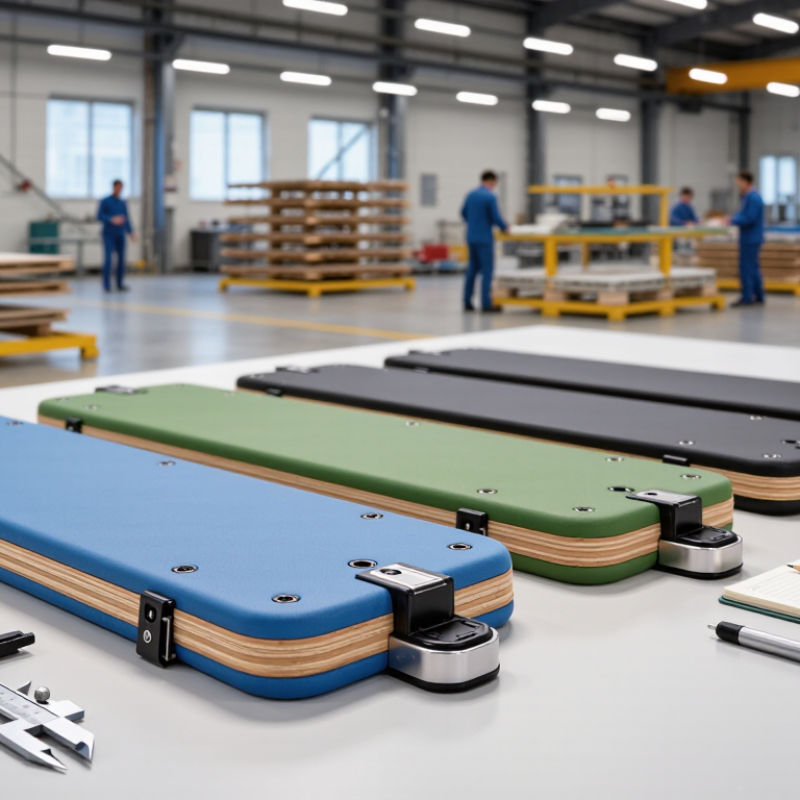
What Are the Top Back Stretcher Board Manufacturers in China?

What Is a Back Stretcher Board and How Is It Used?

A back stretcher board is a curved support designed to provide a gentle extension stretch while you lie on your back. Many boards have raised ridges or adjustable arch levels. The curve supports the middle or lower back, depending on how you position it. It is not a medical treatment or a guaranteed fix for back pain.

To use one, place the board on a firm, level floor and sit beside it. Lower yourself carefully, aligning the curve with the area you want to stretch. Keep your knees bent and feet on the floor at first. Breathe normally and stay for a short period, such as one or two minutes. Go slowly. The first session may feel awkward, and a stronger arch is not always better.

Stop if you feel sharp pain, numbness, or worsening symptoms. People with ongoing back problems should ask a qualified healthcare professional before use.

Tips: Start with the lowest arch setting, and place a thin towel over the board if its ridges feel uncomfortable. Use it on a non-slip surface, and avoid bouncing or forcing your back into position. Increase the duration only if the stretch feels comfortable; progress can be gradual.

How to Assess China’s Back Stretcher Board Manufacturers

What Are the Top Back Stretcher Board Manufacturers in China?

How to Assess China’s Back Stretcher Board Manufacturers

When assessing manufacturers in China, look beyond product photos and quoted prices. Start with the board’s dimensions, material, surface finish, and maximum load guidance. Ask how the design supports different back shapes and whether its edges feel smooth during use. Request a sample and inspect it on a firm, level floor. Details matter. A sample can reveal rough seams, flexing, or an unpleasant plastic smell that a catalog may not show.

Request written specifications and test records for strength, stability, and repeated use. Check whether the manufacturer can explain its testing method, not just provide a pass statement. Review quality-control steps, such as incoming material checks and finished-product inspections. Ask how production batches are tracked and how defects are handled. A factory may offer attractive customization, but frequent design changes can make consistency harder to maintain. No single document proves quality; compare claims against samples and clear records.

Tips: Compare at least three suppliers using the same questions. Keep notes on sample feel, measurements, packaging, and response time. If a specification is vague, ask for a measurable answer. A careful assessment takes time, and it may still leave a few uncertainties.

Which Manufacturers Lead China’s Back Stretcher Board Industry?

China’s back stretcher board leaders are best identified by manufacturing capability, not by a reliable public ranking. This niche has no widely published, product-specific market-share table. The National Bureau of Statistics reported that China’s sports industry added value of RMB 1.497 trillion in 2023, up 11. Sports equipment is only one part of that broad figure, so it cannot prove which factories lead this category.

Strong manufacturers typically show consistent board curvature, smooth edges, secure foot supports, and tested load limits. Ask for material specifications and inspection records, then compare samples for flex and surface finish. Small details matter. A board that rocks on a flat floor may feel unstable during use. The China Sporting Goods Federation’s industry reporting provides useful context on the wider sports-goods sector, but does not separately rank back stretcher board producers.

For buyers, the most credible suppliers can explain their quality checks and provide repeatable samples across production batches. They should also clarify whether they make the boards themselves or use subcontractors. That distinction is easy to overlook. Public data remains incomplete, and export volume alone is a weak measure of product quality; a careful factory audit is still worthwhile.

China’s Back Stretcher Board Industry: Public Data Availability

A verified, comparable dataset for manufacturer rankings, market share, production volume, or export volume is not available here. No company-level estimates are presented.

For a reliable comparison, use consistently sourced figures with a defined reporting period and measurement method.

How Do Chinese Manufacturers Differ in Products and Services?

Chinese back stretcher board manufacturers differ in construction, adjustment, and after-sales support. Some offer lightweight molded-plastic boards with a fixed curve; others provide adjustable arches, textured contact zones, or padded headrests. These details change how the board feels against the floor and how easily users can store it.

Check the stated load limit, surface finish, edge smoothness, and replacement-part availability. Ask for test records tied to the exact model. A factory-wide certificate alone may not describe that product’s performance.

Service depth also varies. Some suppliers support custom dimensions, private-label packaging, and multilingual instructions; others focus on standard models and larger orders. Clarify sample lead time, packaging protection, and how defects are handled before placing an order.

The World Health Organization estimates that 619 million people experienced low back pain in 2020, with cases projected to reach 843 million by 2050.

This figure signals a substantial need for back-care options, not proof that stretcher boards treat pain. Buyers should compare material specifications and user guidance carefully. Product pages can look reassuring. Real documentation matters more.

What Should Buyers Check Before Choosing a Manufacturer?

When comparing back stretcher board manufacturers in China, look beyond product photos and low quotes. Ask for the board’s material specification, dimensions, weight limit, and surface-finish details. A sample should sit flat, with smooth edges and no sharp molding seams. Check whether its curve and support points match your intended use. Comfort varies between users, so avoid relying on a single person’s impression.

Tips: Request a sample from the same production line used for bulk orders. Ask how load tests are performed, what defects trigger rejection, and whether inspection records are available. Confirm packaging, lead time, and how damaged or inconsistent items are handled. Get answers in writing.

A polished sample can still differ from a later shipment. Compare several units, including their hinges or adjustable parts, if applicable. Check for wobbling, cracking, strong odors, and uneven finishes. Ask about material consistency between batches and the factory’s process for tracking changes. Clear, specific answers are useful; vague assurances are not. No checklist removes every risk, and some details may only become clear after testing the product yourself.

What Are the Top Back Stretcher Board Manufacturers in China? — What Should Buyers Check Before Choosing a Manufacturer?
Evaluation Area What Buyers Should Check Evidence to Request Why It Matters
Product design and intended use Confirm the board’s intended user, use environment, adjustment options, and any limitations stated in the instructions. Check that product claims match the product’s documented purpose. Product specifications, user instructions, drawings, and a written description of intended use and limitations. Clear intended-use information helps buyers assess suitability and avoid unsupported health or treatment claims.
Materials and construction Ask for the material type and specifications for the board, support components, hinges, fasteners, and contact surfaces. Check for smooth edges, stable joints, and consistent finishing. Bill of materials or material declarations, component specifications, product photographs, and a production sample. Material and construction details help buyers evaluate durability, comfort, and product consistency.
Load and durability testing Ask how static load, repeated use, adjustment mechanisms, and structural integrity are tested. Confirm that test methods and acceptance criteria are defined for the product. Test procedures, dated test reports, sample identification, and documented acceptance criteria. Relevant testing provides evidence that the product has been assessed for its intended conditions of use; buyers should not assume a capacity without supporting test data.
Quality management Check whether the manufacturer has a documented quality system, how incoming materials and finished products are inspected, and how defects and corrective actions are handled. Quality-system certificate, inspection procedures, example inspection records, and corrective-action process. A functioning quality process supports repeatable production and traceability. Verify any certificate’s scope, issuing body, and validity.
Applicable regulations and claims Identify the destination market and determine whether the product is treated as a general consumer product or as a regulated medical device there. Check applicable requirements before making regulatory claims. Market-specific compliance documentation, classification rationale where applicable, and copies of relevant declarations or certificates. Regulatory obligations depend on the product’s design, intended purpose, claims, and destination market; a generic certificate does not establish compliance everywhere.
Batch inspection and traceability Ask how production lots are identified and inspected, what happens to nonconforming units, and whether inspection criteria are agreed before production. Sample inspection plan, batch records, lot-identification method, and defect-handling procedure. Defined inspection and traceability make it easier to investigate quality issues and manage production batches.
Packaging and shipping protection Review packaging for protection against impact, moisture, abrasion, and movement during transport. Check that carton markings and packing quantities meet the order requirements. Packaging specification, carton dimensions and weight, packing photographs, and a pre-shipment inspection record if agreed. Suitable packaging can reduce transit damage and help ensure the delivered goods match the purchase order.
Customization and change control Clarify which dimensions, colors, materials, labels, or packaging can be customized. Ask how design or material changes are approved and documented. Approved drawings or specifications, written change-control procedure, and a signed pre-production sample approval. Documented approvals reduce the risk of unapproved substitutions or differences between samples and production goods.
Production capacity and lead time Confirm the proposed production schedule, order quantity assumptions, peak-season constraints, and how delays are communicated. Written production plan, capacity information relevant to the order, and agreed delivery milestones. Specific, documented commitments are more useful for planning than general assurances about fast delivery or large capacity.
Commercial terms and after-sales support Review minimum order quantity, payment terms, quotation validity, warranty conditions, spare-part availability, and the process for resolving complaints. Formal quotation, purchase terms, warranty policy, and written complaint or replacement procedure. Clear terms help buyers compare offers on a like-for-like basis and understand remedies if products do not meet agreed specifications.
Supplier verification Verify the supplier’s legal identity, manufacturing or trading role, business address, and consistency between the contracting party and payment details. Business registration documents, facility or capability evidence, references where available, and a video or in-person factory assessment. Independent checks help buyers understand who is responsible for production, quality, and contractual obligations.
Copyright 2025 Fluidra S.A. | Created by BCM Marketing Agencia Privacy Policy Legal note | Cookie policy |

Technical cookies are strictly necessary for our website to work and you can navigate through it. These types of cookies are those that, for example, allow us to identify you, give you access to certain restricted parts of the page if necessary, or remember different options or services already selected by you, such as your privacy preferences. Therefore, they are activated by default, your authorization not being necessary in this regard. Through the configuration of your browser, you can block or alert the presence of this type of cookies, although such blocking will affect the proper functioning of the different functionalities of our website.


The analysis cookies allow us to study the navigation of the users of our website in general (for example, which sections of the page are the most visited, which services are used most and if they work correctly, etc.). From the statistical information on navigation on our website, we can improve both the operation of the page itself and the different services it offers. Therefore, these cookies do not have an advertising purpose, but only serve to make our website work better, adapting to our users in general. By activating them you will contribute to this continuous improvement. You can enable or disable these cookies by checking the corresponding box, being disabled by default.


Functionality cookies allow us to remember your preferences, to personalize certain characteristics and general options of our website, every time you access it (for example, the language in which the information is presented to you, the sections marked as favorites, your browser type, etc.) Therefore, this type of cookies does not have an advertising purpose, but by activating them you will improve the functionality of the website (for example, adapting to your type of browser) and the customization of it based on your preferences (for example, by presenting the information in the language that you have chosen in previous occasions), which will contribute to the ease, usability and comfort of our page during your navigation. You can enable or disable these cookies by checking the corresponding box, being disabled by default.


Advertising cookies allow us to manage the advertising spaces included in our website based on criteria such as the content shown or the frequency in which the ads are displayed. For example, if you have been shown the same ad several times on our website, and you have not shown a personal interest by clicking on it, it will not appear again. In summary, by activating this type of cookies, the advertising shown on our website will be more useful and diverse, and less repetitive. You can enable or disable these cookies by checking the corresponding box, being disabled by default.


Behavioral advertising cookies allow us to obtain information based on the observation of your browsing habits and behaviors on the web, in order to show you advertising content that best suits your personal tastes and interests. To understand it in a very simple way, we will give you a fictitious example: if your last searches on the web were related to suspense literature, we would show you advertising about suspense books. Therefore, activating this type of cookies, the advertising that we show you on our website will not be generic, but will be oriented to your searches, tastes and interests, therefore adjusting exclusively to you. You can enable or disable these cookies by checking the corresponding box, being disabled by default.
To understand it in a very simple way, we will give you a fictitious example: if your last searches on the web were related to suspense literature, we would show you advertising about suspense books. Therefore, activating this type of cookies, the advertising that we show you on our website will not be generic, but will be oriented to your searches, tastes and interests, therefore adjusting exclusively to you. You can enable or disable these cookies by checking the corresponding box, being disabled by default.

SAVE

We use our own and third-party cookies to ensure the proper functioning of the website and to analyse our services, improve your experience on our website and show you advertisements related to your interests according to profiling based on your browsing habits (e.g. websites visited). You can accept all cookies by clicking "ACCEPT" or set or reject them by clicking here. If you would like to know more about the use of cookies, please see our COOKIE POLICY.


ACCEPT ALL
Reject no essentials


