
Who Are China Top Armature Shaft Manufacturers?
FLUID HANDLING EXPERTS

Blog, all our news

Who Are China Top Armature Shaft Manufacturers?

China has become a major sourcing base for precision motor components, including the Armature Shaft. Its manufacturers serve power tools, automotive motors, household appliances, pumps, and industrial equipment. Yet “top” should not mean the largest factory alone. It should mean consistent performance, traceable processes, and honest technical communication.

Manufacturing expert Dr. Geoffrey Boothroyd expressed a useful principle: “Design must consider manufacturing from the beginning.” This idea fits Armature Shaft purchasing closely. A reliable supplier should review shaft drawings before production. It should check steel grade, diameter tolerance, keyway accuracy, runout, surface hardness, and balancing requirements. CNC turning creates the profile. Grinding controls the final dimensions. Heat treatment protects wear-prone areas. Inspection records should connect each batch with measurable results.

Strong Chinese manufacturers usually provide material certificates, process inspection reports, sample approval, and stable export packaging. Some also support custom splines, knurling, grooves, and stepped shafts. Ask about production capacity, not only quoted price. Ask how rejected parts are isolated. Ask whether the supplier measures runout after heat treatment. Small questions expose large differences.

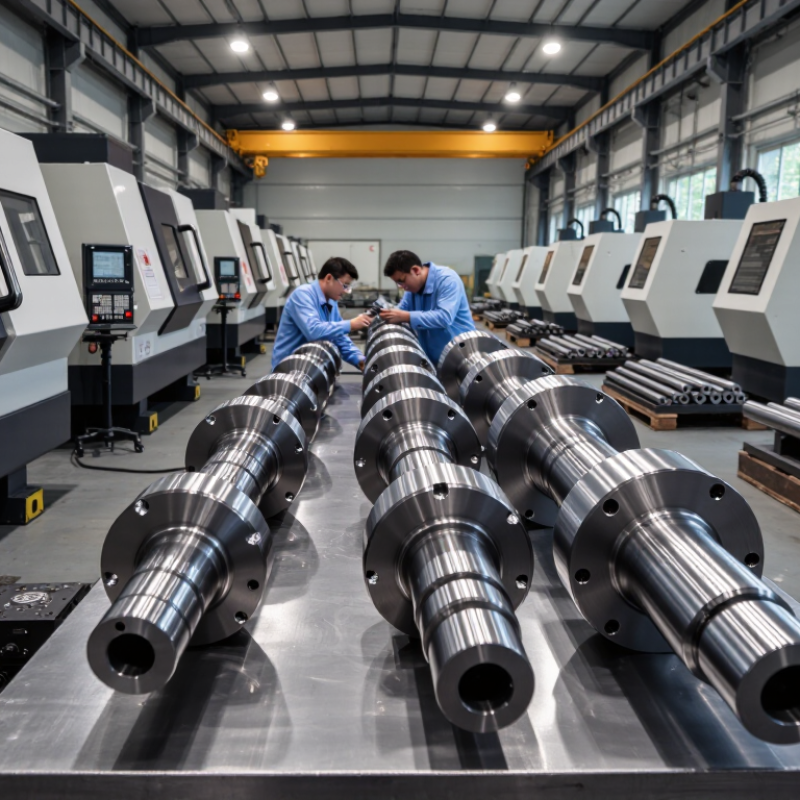
The factory floor matters.

A polished website proves little. A clean inspection room proves more. However, even capable manufacturers may show uneven documentation or delayed engineering replies. That weakness deserves attention, not automatic rejection. Buyers should compare verified samples, communication quality, lead time, and corrective-action speed. This outline examines China’s leading Armature Shaft manufacturers through those practical standards, while recognizing that supplier rankings can change with equipment, workforce, and quality discipline.
Who Are China Top Armature Shaft Manufacturers?

What Is an Armature Shaft and Why Does Manufacturing Quality Matter?

An armature shaft is the rotating steel core that transfers torque from an electric motor to its load. It supports the armature, commutator, bearings, and sometimes a cooling fan. Its diameter may look modest, but small errors can create large operating problems.

Manufacturing quality matters because the shaft must remain straight under speed, heat, and repeated torque. Skilled manufacturers control runout, concentricity, surface hardness, and keyway dimensions during machining. Dynamic balancing is also essential. A shaft with uneven mass can produce vibration, bearing wear, and unpleasant noise. In practical inspections, a smooth surface is not enough. A shaft may look perfect while hidden stress or poor heat treatment weakens it.

Reliable producers use verified steel grades, controlled forging or bar-stock processes, and traceable inspection records. They measure critical areas with calibrated instruments, then test hardness, dimensions, and balance. Some also inspect for cracks after machining. These steps increase consistency across production batches.

Quality decisions are rarely simple. A harder surface may improve wear resistance, yet excessive hardness can reduce toughness. Tight tolerances improve alignment, but they may raise manufacturing costs. Even experienced teams can miss a minor defect when inspection depends on one method. That is why responsible manufacturers combine process control, dimensional checks, and application-specific testing before shipment. A shaft designed for a compact appliance should not automatically follow the same standards as one used in industrial equipment.

Who Are China Top Armature Shaft Manufacturers? - What Is an Armature Shaft and Why Does Manufacturing Quality Matter?

An armature shaft is the rotating shaft that supports the armature core, commutator or rotor assembly, and bearings in many electric motors and generators. The following table summarizes the principal manufacturing dimensions used to evaluate armature-shaft quality without presenting company or brand rankings.

Evaluation Dimension Typical Industry Data or Practice Why Manufacturing Quality Matters
Primary Function Transmits torque from the rotor or armature to the driven equipment while maintaining the position of the laminated core, commutator, gears, fans, and bearings. Incorrect shaft geometry can create eccentric rotation, excess vibration, bearing load, noise, and premature motor failure.
Common Materials Frequently selected materials include medium-carbon steel such as C45 or AISI 1045, alloy steel such as 40Cr or AISI 5140/4140, and corrosion-resistant stainless steels such as 17-4 PH when application conditions require them. Material selection determines tensile strength, fatigue resistance, machinability, hardenability, corrosion resistance, and compatibility with the required heat treatment.
Manufacturing Route A common route is bar or forged-stock preparation, turning, drilling or milling, heat treatment, grinding of critical journals, deburring, cleaning, inspection, and final balancing when required. Each stage affects dimensional stability. Poor sequencing or inadequate process control may cause distortion, surface damage, burrs, or inconsistent bearing fits.
Dimensional Accuracy Bearing seats, seal diameters, keyways, splines, and commutator locations are normally controlled according to the engineering drawing and the applicable fit system. ISO 286 is commonly referenced for hole-and-shaft tolerances and fits. A shaft that is too large may damage bearings during assembly; a shaft that is too small may produce looseness, fretting, slip, or inaccurate rotor positioning.
Runout and Concentricity Runout and coaxiality limits are application-specific and should be stated on the drawing. They are commonly checked with precision V-blocks, centers, dial indicators, or coordinate-measuring equipment. Excessive runout changes the air gap and bearing loading, producing vibration, uneven brush wear, acoustic noise, and reduced motor efficiency.
Surface Finish Bearing journals and seal-running surfaces are generally ground or finely turned to a drawing-specified Ra value. The required finish depends on bearing type, lubrication, sealing method, and rotational speed. Excessively rough surfaces can accelerate seal and bearing wear, while unsuitable finishing processes can create grinding burns, waviness, or poor lubricant behavior.
Heat Treatment Normalizing, quenching and tempering, induction hardening, or case hardening may be used. The treatment is selected according to the required core strength, surface hardness, wear resistance, and fatigue life. Insufficient hardness can cause journal wear and fretting. Excessive hardness or improper treatment may reduce toughness and increase the risk of cracking or distortion.
Keyways and Splines Torque-transfer features may include parallel keyways, involute splines, serrations, or press-fit sections. Their dimensions, flank condition, and positional tolerances should be defined by the drive-system design. Poorly formed or incorrectly positioned features can cause backlash, stress concentration, assembly difficulty, torque loss, or shaft cracking.
Dynamic Balance Rotor assemblies are balanced as a complete rotating unit when speed and vibration requirements make this necessary. ISO 21940 is widely used as a reference for balancing quality grades and procedures. Unbalance generates centrifugal force that rises with the square of rotational speed, increasing vibration, bearing fatigue, noise, and the possibility of structural damage.
Inspection Methods Typical checks include dimensional measurement, runout measurement, surface-roughness testing, hardness testing, visual inspection, magnetic-particle or other non-destructive testing where appropriate, and material-certificate review. A documented inspection plan helps detect cracks, material mix-ups, dimensional drift, heat-treatment problems, and surface defects before assembly or shipment.
Bearing Fit and Assembly The fit depends on which ring rotates, the applied load, operating temperature, speed, and bearing design. Assembly may use controlled pressing, heating, or other methods that avoid impact damage. An incorrect fit can cause creep, excessive preload, insufficient internal clearance, bearing overheating, or damage to the raceways.
Corrosion Protection Protection may include controlled packaging, rust-preventive oil, phosphate treatment, plating, or material selection suited to the environment. Coatings must not interfere with critical fits unless specifically allowed. Corrosion can reduce journal dimensions, damage fits, contaminate bearings, and create stress-raising pits that shorten fatigue life.
Traceability and Quality Control A controlled supplier should be able to link the shaft to the drawing revision, material batch, heat-treatment record, inspection results, and nonconformance history. ISO 9001 is commonly used as a quality-management reference. Traceability supports root-cause analysis, corrective action, repeatability, and reliable production of replacement or high-volume parts.
Application-Specific Performance Required specifications vary with motor speed, torque, power, duty cycle, temperature, load direction, shaft length, rotor mass, and environmental exposure. There is no single universal tolerance or material for every armature shaft. A shaft designed only for static strength may still fail from fatigue, resonance, fretting, thermal expansion, or inadequate corrosion protection during actual service.
Technical note: Final material grades, tolerances, hardness values, surface-finish requirements, balance grades, and inspection criteria should always be confirmed against the customer’s engineering drawing, operating conditions, and applicable standards.

How to Evaluate China’s Leading Armature Shaft Manufacturers

Choosing among China’s leading armature shaft manufacturers requires more than comparing prices. China produced about 31.6% of global manufacturing value added in 2023, according to UNIDO’s International Yearbook of Industrial Statistics 2024. That scale creates strong engineering capability, but quality still varies between factories. Request material certificates, heat-treatment records, and dimensional inspection reports. A reliable supplier should explain shaft steel grades, hardness targets, keyway tolerances, and grinding methods clearly.

Check production evidence, not polished presentations. For rotating parts, ask for radial runout results, dynamic balancing records, and surface roughness readings. ISO 21940 provides a recognized framework for balancing rotating components. The IEA reports that motor systems consume roughly half of global electricity, so small efficiency losses can become expensive during continuous operation. Ask whether the shaft is tested with actual bearings and commutators. This reveals problems that a basic visual inspection may miss.

I have seen low-cost samples pass appearance checks but fail after repeated thermal cycles. That mistake is easy to underestimate. Review capability studies, batch traceability, and corrective-action records. Factory audits should include machining areas, calibration labels, and final packing. Supplier claims are useful, but measurable evidence matters more. Also compare lead times against realistic capacity, not optimistic promises. The best manufacturer is not always the cheapest one; it is the one that controls variation consistently. Still, no audit is perfect. Independent verification remains worthwhile for critical motor applications.

Which Chinese Manufacturers Specialize in Armature Shaft Production?

Which Chinese Manufacturers Specialize in Armature Shaft Production?

Chinese armature shaft manufacturers typically serve brushed motors, starter motors, power tools, and compact industrial drives. The stronger suppliers combine cold heading, CNC turning, splining, grinding, heat treatment, and automated inspection. This integrated workflow reduces handling marks and alignment errors. A shaft may look simple. Its tolerance chain is not.

Demand is expanding with vehicle electrification and small motor production. The China Association of Automobile Manufacturers reported 9.495 million new-energy vehicles sold in China during 2023, representing 31.6% of total vehicle sales. The International Energy Agency also notes that motor-driven systems consume roughly half of global electricity. These figures encourage manufacturers to improve shaft balance, surface hardness, and transmission efficiency.

When evaluating Chinese specialists, buyers should request runout records, material certificates, hardness maps, and sample inspection reports. Practical audits should examine bearing journals under magnification, not only review a polished catalogue. ISO 21940 balancing procedures and ISO 286 dimensional tolerances provide useful technical references. Some factories claim full production control, yet outsource grinding or heat treatment. That is not automatically a weakness, but traceability must remain visible. Ask for batch codes and corrective-action records. A low quotation can hide unstable tooling, inconsistent carburizing, or excessive finishing stock. This remains an uncomfortable point: supplier rankings based only on price or export volume can misidentify the most capable armature shaft producer.

What Technologies and Quality Standards Set Top Suppliers Apart?

China’s top armature shaft manufacturers are defined by process control, not low quotations.

The U.S. Department of Energy reports that motor systems consume about 70% of industrial electricity. This makes shaft accuracy a practical efficiency issue. Suppliers should control steel chemistry, forging temperature, and heat treatment records. They should also use CNC turning, centerless grinding, and dynamic balancing.

Quality starts with measurable standards. ISO 9001 supports traceable production and corrective actions. ISO 286 helps define shaft fits, while ISO 21940 guides rotor balancing. For automotive applications, IATF 16949 adds stronger process-risk controls.

A capable factory can provide hardness readings, runout results, concentricity data, and material certificates for every production batch. Coordinate measuring machines and calibrated micrometers should verify critical journals. Small errors matter.

Field experience still exposes uncomfortable gaps. A shaft may pass final inspection but develop fretting near a bearing seat. That suggests better fatigue testing and clearer assembly data are needed. The International Energy Agency links electric motor systems with more than 40% of global electricity use, so reliability affects operating costs.

Top suppliers therefore test prototypes under heat, vibration, and repeated loading. They document failures honestly. Perfect quality is unlikely. Consistent learning is more credible.

How to Choose the Right Chinese Armature Shaft Manufacturer for Your Needs

Choosing the right Chinese armature shaft manufacturer requires more than comparing unit prices. The top manufacturers usually show stable machining capability, clear inspection records, and practical knowledge of motor applications. Ask about steel grades, heat treatment, surface hardness, shaft diameter tolerances, and runout control. Request material certificates and dimensional reports for recent production batches. A supplier that answers with specific figures is easier to evaluate than one using broad promises.

Review the factory’s equipment and quality process. CNC lathes, grinding machines, balancing equipment, and calibrated measuring tools can affect shaft performance. Confirm whether production follows approved drawings and whether each batch has traceable records. Request samples before placing a large order. Check the keyway, bearing seats, threads, and surface finish with suitable gauges. A polished sample can still hide production weaknesses. That detail is easy to miss.

Tips: Compare at least three manufacturers. Ask for a sample inspection plan. Discuss packaging for long shafts and corrosion protection. Confirm lead times, minimum order quantities, replacement procedures, and communication channels. A video audit may help, but it cannot replace independent inspection when precision is critical. Be cautious with unusually low quotations. I once treated price as the main factor, and the later rework cost more than expected. Reliable cooperation needs evidence, not confidence alone.

Article Source:

Copyright 2025 Fluidra S.A. | Created by BCM Marketing Agencia Privacy Policy Legal note | Cookie policy |

Technical cookies are strictly necessary for our website to work and you can navigate through it. These types of cookies are those that, for example, allow us to identify you, give you access to certain restricted parts of the page if necessary, or remember different options or services already selected by you, such as your privacy preferences. Therefore, they are activated by default, your authorization not being necessary in this regard. Through the configuration of your browser, you can block or alert the presence of this type of cookies, although such blocking will affect the proper functioning of the different functionalities of our website.


The analysis cookies allow us to study the navigation of the users of our website in general (for example, which sections of the page are the most visited, which services are used most and if they work correctly, etc.). From the statistical information on navigation on our website, we can improve both the operation of the page itself and the different services it offers. Therefore, these cookies do not have an advertising purpose, but only serve to make our website work better, adapting to our users in general. By activating them you will contribute to this continuous improvement. You can enable or disable these cookies by checking the corresponding box, being disabled by default.


Functionality cookies allow us to remember your preferences, to personalize certain characteristics and general options of our website, every time you access it (for example, the language in which the information is presented to you, the sections marked as favorites, your browser type, etc.) Therefore, this type of cookies does not have an advertising purpose, but by activating them you will improve the functionality of the website (for example, adapting to your type of browser) and the customization of it based on your preferences (for example, by presenting the information in the language that you have chosen in previous occasions), which will contribute to the ease, usability and comfort of our page during your navigation. You can enable or disable these cookies by checking the corresponding box, being disabled by default.


Advertising cookies allow us to manage the advertising spaces included in our website based on criteria such as the content shown or the frequency in which the ads are displayed. For example, if you have been shown the same ad several times on our website, and you have not shown a personal interest by clicking on it, it will not appear again. In summary, by activating this type of cookies, the advertising shown on our website will be more useful and diverse, and less repetitive. You can enable or disable these cookies by checking the corresponding box, being disabled by default.


Behavioral advertising cookies allow us to obtain information based on the observation of your browsing habits and behaviors on the web, in order to show you advertising content that best suits your personal tastes and interests. To understand it in a very simple way, we will give you a fictitious example: if your last searches on the web were related to suspense literature, we would show you advertising about suspense books. Therefore, activating this type of cookies, the advertising that we show you on our website will not be generic, but will be oriented to your searches, tastes and interests, therefore adjusting exclusively to you. You can enable or disable these cookies by checking the corresponding box, being disabled by default.
To understand it in a very simple way, we will give you a fictitious example: if your last searches on the web were related to suspense literature, we would show you advertising about suspense books. Therefore, activating this type of cookies, the advertising that we show you on our website will not be generic, but will be oriented to your searches, tastes and interests, therefore adjusting exclusively to you. You can enable or disable these cookies by checking the corresponding box, being disabled by default.

SAVE

We use our own and third-party cookies to ensure the proper functioning of the website and to analyse our services, improve your experience on our website and show you advertisements related to your interests according to profiling based on your browsing habits (e.g. websites visited). You can accept all cookies by clicking "ACCEPT" or set or reject them by clicking here. If you would like to know more about the use of cookies, please see our COOKIE POLICY.


ACCEPT ALL
Reject no essentials



