
Top 10 Aluminium Beer Can Suppliers Worldwide
FLUID HANDLING EXPERTS

Blog, all our news

Top 10 Aluminium Beer Can Suppliers Worldwide

Aluminium Beer Cans have become a practical benchmark for modern beverage packaging. They are light, stackable, durable, and widely accepted by existing recycling systems. The International Aluminium Institute reports that recycling aluminium requires up to 95% less energy than producing primary metal. That difference matters inside a busy filling plant, where pallets, transport distance, and production speed directly affect costs.

Demand is also shaped by changing consumer habits. Grand View Research identifies convenience, portability, and sustainability as major forces supporting the global metal beverage packaging market. Can Manufacturers Institute materials note that an aluminium beverage can may return to the shelf in roughly 60 days through an efficient recycling loop. The timeline sounds impressive. Real-world collection rates still vary greatly by country.

Gerd Götz, former Director General of European Aluminium, has said, “Aluminium is a permanent material.” That principle explains why supplier selection requires more than comparing unit prices. Can-sheet quality, coating performance, filling-line compatibility, recycled content, printing accuracy, and delivery reliability all deserve attention. Ball Corporation, Crown Holdings, Canpack, Ardagh Metal Packaging, and other leading manufacturers compete across these factors.

This Top 10 Aluminium Beer Can Suppliers Worldwide guide examines their capabilities, production reach, certifications, and market relevance. The ranking is not flawless. Regional demand, freight costs, and confidential contract terms can change the result. Readers should verify specifications directly before making a purchasing decision. A can may look simple. Its supply chain is not.
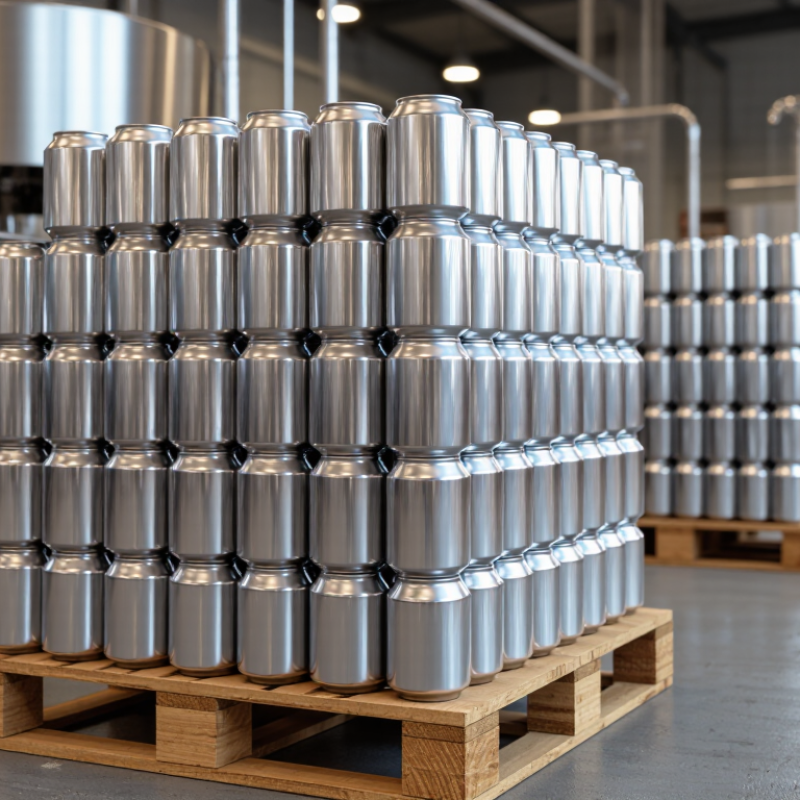
Top 10 Aluminium Beer Can Suppliers Worldwide

What Defines a Leading Aluminium Beer Can Supplier Worldwide

What Defines a Leading Aluminium Beer Can Supplier Worldwide

A leading aluminium beer can supplier offers more than attractive pricing. It provides stable quality across every production batch. Experienced suppliers control alloy thickness, can dimensions, coating performance, and lid compatibility. These details affect filling speed, shelf life, and consumer safety. Reliable factories use documented inspections, calibrated equipment, and traceable raw materials. They can also share test results for pressure resistance, seam integrity, and internal coating performance.

Production capacity matters, but flexibility matters too. A dependable supplier manages seasonal demand without sacrificing consistency. Clear lead times help breweries plan packaging, transport, and promotions. Strong technical teams respond quickly when a canning line shows unusual pressure or sealing issues. They should understand regional food-contact requirements and maintain current quality certifications. Sustainability also deserves practical attention, including recycled aluminium content, energy use, and transport efficiency.

Tips: Ask for sample cans, recent test records, and production references. Check the seam under magnification. Request a small trial order before scaling up. Do not judge quality from appearance alone. A supplier may have impressive machinery yet weak communication. No factory performs perfectly every day. The more trustworthy partner admits occasional defects, explains the cause, and shows corrective action. That honesty is often more valuable than a polished sales presentation.

Key Criteria for Comparing Aluminium Beer Can Manufacturers

Top 10 Aluminium Beer Can Suppliers Worldwide

Key Criteria for Comparing Aluminium Beer Can Manufacturers

Comparing aluminium beer can manufacturers requires more than checking unit prices. Start with alloy quality, can-wall thickness, and dimensional consistency. A reliable supplier should provide material certificates and batch-level traceability. Small variations can affect filling lines, seam strength, and transport damage.

Production capability matters. Review annual capacity, available can sizes, tooling ownership, and average lead times. Ask whether the factory can handle seasonal demand without changing specifications. Manufacturing samples should be tested for pressure resistance, leakage, coating adhesion, and seam accuracy. Practical evidence is stronger than polished sales claims. Ask for recent test records.

Surface quality also deserves close attention. Inspect the internal coating for pinholes, uneven coverage, or strange odours after filling. Check external printing clarity, colour control, and scratch resistance. Food-contact compliance should be supported by current documentation for the destination market. Certifications help, but an audit reveals more. Look at hygiene controls, calibration records, worker training, and corrective-action reports.

Sustainability claims need measurable details. Compare recycled aluminium content, electricity use, water management, and scrap recovery rates. Freight distance and packaging design also influence the real footprint. Communication is another useful test. Do technical teams answer clearly when specifications change? Do they report delays early? No supplier is perfect. I would still treat vague answers as a warning. A small pilot order can expose problems before a large launch, although pilot results may not represent every production shift.

Profiles of the Top 10 Aluminium Beer Can Suppliers

The top ten aluminium beer can suppliers differ by capability, not only production volume. The first profile is an integrated producer with smelting, rolling, and can-making facilities. The second focuses on high-speed regional plants. The third offers advanced printed finishes for seasonal beer releases. The fourth specializes in lightweight can walls. The fifth reports high recycled-metal use. The sixth concentrates on closures, tabs, and lid consistency. The seventh serves smaller breweries with flexible order quantities. The eighth uses strategically placed distribution hubs. The ninth provides strong technical support for filling lines. The tenth targets emerging markets with export-ready packaging. These profiles show why “top” is difficult to define. Capacity, service, and verified sustainability data can conflict.

According to the International Aluminium Institute, recycled aluminium requires about 5% of the energy used for primary aluminium production. The Aluminium Association has reported average recycled content near 70% in beverage cans in some major markets. Market reports from Grand View Research also identify packaging demand as a major aluminium growth driver. Still, supplier claims need careful checking. A glossy sustainability statement is not proof. Review recycled content, gauge reduction, defect rates, lead times, and delivery records. Request plant-level evidence when possible.

Tips: Compare at least three quotations. Test cans on your filling line. Check seam strength after transport. Ask whether recycled content is certified. Small suppliers may respond faster, but their backup capacity can be limited. That risk deserves attention.

Top 10 Aluminium Beer Can Suppliers Worldwide

Global Beer Can Format Benchmark for Supplier Profiles

The chart compares ten commonly used nominal aluminium beer-can capacities in international markets. These standard formats help suppliers serve different retail, hospitality, deposit-return, and export requirements. Values represent nominal fill volume and are not company-specific production figures.

Product Range, Production Capacity, and Global Market Coverage

Top 10 Aluminium Beer Can Suppliers Worldwide

The strongest aluminium beer can suppliers compete through product range, capacity, and dependable market coverage. Their portfolios commonly include standard 330 ml and 500 ml cans, sleek formats, ends, tabs, and lightweight designs. Some facilities also support printed finishes, specialty shapes, and recycled-content options. Product flexibility matters when breweries test seasonal releases or export packs.

Production capacity must be checked carefully. The International Aluminium Institute reported 70.6 million tonnes of primary aluminium production in 2023. That figure shows raw-material scale, not can-making capacity. Suppliers still need rolling mills, can lines, coating systems, and reliable quality controls. Large producers may operate several plants across Asia, Europe, and the Americas. Regional factories can shorten delivery routes and reduce supply risks. Capacity is not everything. A supplier with impressive output may still struggle during peak demand.

Tips: Ask for monthly can capacity, minimum order quantities, recycled-content percentages, and audited lead times. Review plant locations against your filling sites. The World Bank’s Commodity Markets Outlook also shows aluminium prices can remain volatile, so contracts should define adjustment formulas. Global market coverage sounds attractive, but local technical support is often more valuable. This is where many comparisons become incomplete. Verify certifications, food-contact compliance, dimensional tolerances, and backup production before selecting a supplier.

Sustainability, Quality Standards, and Procurement Considerations

Choosing among the top 10 aluminium beer can suppliers worldwide requires more than comparing prices. Sustainability claims should include measurable recycled content, energy use, water consumption, and transport emissions. Ask for recent life cycle data, not polished marketing language. A supplier using lightweight cans may reduce material consumption, but thinner walls can affect stacking strength and filling performance. That trade-off deserves testing.

Quality begins with consistent aluminium thickness, reliable coating performance, and accurate can dimensions. Request food-contact compliance documents, batch certificates, and traceability records. Independent testing should examine seam integrity, pressure resistance, coating adhesion, and corrosion protection. Certifications such as ISO 9001 and ISO 14001 can support credibility, but certificates alone cannot replace factory audits. Small defects become expensive when millions of cans reach a filling line.

Procurement teams should review minimum order quantities, production capacity, lead times, pallet design, and regional delivery options. Evaluate how suppliers handle rejected batches and unexpected demand. Sample runs often reveal more than presentations. A supplier may offer attractive recycled content but lack stable availability during market disruptions. That risk needs a written contingency plan. Perfect sustainability scores are unrealistic. I would question any supplier making them. Reliable partnerships grow through transparent data, practical trials, and regular performance reviews.

Copyright 2025 Fluidra S.A. | Created by BCM Marketing Agencia Privacy Policy Legal note | Cookie policy |

Technical cookies are strictly necessary for our website to work and you can navigate through it. These types of cookies are those that, for example, allow us to identify you, give you access to certain restricted parts of the page if necessary, or remember different options or services already selected by you, such as your privacy preferences. Therefore, they are activated by default, your authorization not being necessary in this regard. Through the configuration of your browser, you can block or alert the presence of this type of cookies, although such blocking will affect the proper functioning of the different functionalities of our website.


The analysis cookies allow us to study the navigation of the users of our website in general (for example, which sections of the page are the most visited, which services are used most and if they work correctly, etc.). From the statistical information on navigation on our website, we can improve both the operation of the page itself and the different services it offers. Therefore, these cookies do not have an advertising purpose, but only serve to make our website work better, adapting to our users in general. By activating them you will contribute to this continuous improvement. You can enable or disable these cookies by checking the corresponding box, being disabled by default.


Functionality cookies allow us to remember your preferences, to personalize certain characteristics and general options of our website, every time you access it (for example, the language in which the information is presented to you, the sections marked as favorites, your browser type, etc.) Therefore, this type of cookies does not have an advertising purpose, but by activating them you will improve the functionality of the website (for example, adapting to your type of browser) and the customization of it based on your preferences (for example, by presenting the information in the language that you have chosen in previous occasions), which will contribute to the ease, usability and comfort of our page during your navigation. You can enable or disable these cookies by checking the corresponding box, being disabled by default.


Advertising cookies allow us to manage the advertising spaces included in our website based on criteria such as the content shown or the frequency in which the ads are displayed. For example, if you have been shown the same ad several times on our website, and you have not shown a personal interest by clicking on it, it will not appear again. In summary, by activating this type of cookies, the advertising shown on our website will be more useful and diverse, and less repetitive. You can enable or disable these cookies by checking the corresponding box, being disabled by default.


Behavioral advertising cookies allow us to obtain information based on the observation of your browsing habits and behaviors on the web, in order to show you advertising content that best suits your personal tastes and interests. To understand it in a very simple way, we will give you a fictitious example: if your last searches on the web were related to suspense literature, we would show you advertising about suspense books. Therefore, activating this type of cookies, the advertising that we show you on our website will not be generic, but will be oriented to your searches, tastes and interests, therefore adjusting exclusively to you. You can enable or disable these cookies by checking the corresponding box, being disabled by default.
To understand it in a very simple way, we will give you a fictitious example: if your last searches on the web were related to suspense literature, we would show you advertising about suspense books. Therefore, activating this type of cookies, the advertising that we show you on our website will not be generic, but will be oriented to your searches, tastes and interests, therefore adjusting exclusively to you. You can enable or disable these cookies by checking the corresponding box, being disabled by default.

SAVE

We use our own and third-party cookies to ensure the proper functioning of the website and to analyse our services, improve your experience on our website and show you advertisements related to your interests according to profiling based on your browsing habits (e.g. websites visited). You can accept all cookies by clicking "ACCEPT" or set or reject them by clicking here. If you would like to know more about the use of cookies, please see our COOKIE POLICY.


ACCEPT ALL
Reject no essentials


