
Top 10 Frequency VFD Suppliers for Global Buyers
FLUID HANDLING EXPERTS

Blog, all our news

Top 10 Frequency VFD Suppliers for Global Buyers

Choosing a Frequency Vfd supplier is a technical decision, not a popularity contest. Global buyers must examine performance, support, compliance, and lifecycle value together. A low purchase price may become expensive after installation.

Professor Ned Mohan, a respected power-electronics educator, emphasizes a practical principle: “Good power-electronic design begins with understanding the application.” That principle applies directly to Frequency Vfd selection. Motor horsepower alone cannot define the right drive. Load inertia, starting torque, duty cycle, ambient temperature, voltage quality, and communication requirements matter just as much.

This guide introduces the Top 10 Frequency VFD Suppliers for Global Buyers. It considers established manufacturers with experience across manufacturing, HVAC, water treatment, renewable energy, and process automation. The comparison focuses on product reliability, control accuracy, overload capability, harmonic performance, certifications, software, spare parts, and regional service networks.

Details matter.

A drive running beside a hot compressor needs different protection than one controlling a clean-room fan. A remote mining site also needs stronger technical support than a local workshop. These practical differences can change the final supplier choice.

No ranking is perfect. Market availability, project scale, and installer expertise may alter the outcome. Some suppliers excel in premium automation, while others offer stronger value for standardized systems. Buyers should verify current specifications, warranty terms, firmware support, and local regulations before purchasing.

The strongest supplier is not always the largest. It is the one that matches the motor, environment, application risk, and long-term operating plan. This review aims to make that decision clearer, while recognizing that real installations often reveal issues catalogs do not.
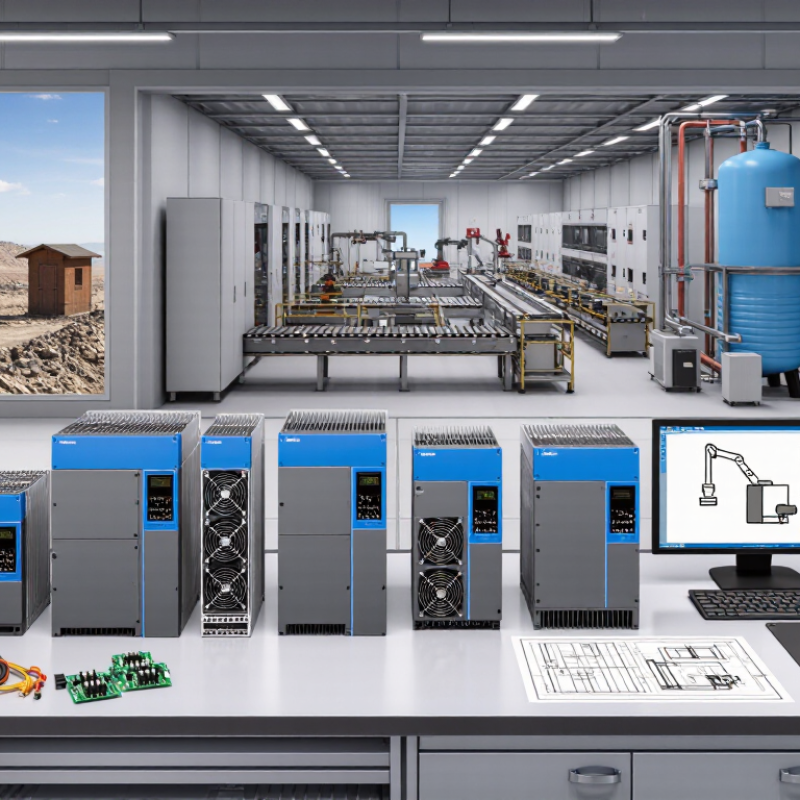
Top 10 Frequency VFD Suppliers for Global Buyers

What Frequency VFDs Are and Why Global Buyers Use Them

Top 10 Frequency VFD Suppliers for Global Buyers

What Frequency VFDs Are and Why Global Buyers Use Them

A frequency VFD, or variable frequency drive, controls an electric motor’s speed by adjusting power frequency and voltage. It typically includes a rectifier, DC bus, and inverter. This allows pumps, fans, conveyors, and compressors to match output with real demand. Less throttling means less wasted energy.

The savings can be substantial. The U.S. Department of Energy’s Industrial Motor Systems Market Assessment reports that motor-driven equipment uses about 68% of industrial electricity in the United States. The International Energy Agency also identifies motor systems as a major efficiency opportunity across global industry. For buyers, a VFD may reduce starting current, mechanical shock, noise, and maintenance pressure. A slower fan often needs far less power.

Practical details matter.

In commissioning work, engineers check motor insulation, cable length, harmonics, cooling, and overload settings before startup. Poor sizing can cause nuisance trips or premature failure. A VFD is not automatically efficient; an incorrectly programmed unit can waste energy and create heat. This is where supplier expertise matters. Buyers should request verified efficiency data, EMC test results, lifecycle support, spare-part availability, and compatibility with local grid conditions. IEC 60034-30-1 efficiency classifications help compare motors, but they do not replace a complete drive-system assessment. Some projected payback calculations look impressive. Real sites are messier. Load patterns change, operators override settings, and savings may fall short.

How the Top 10 VFD Suppliers Were Selected and Compared

Selecting the top 10 frequency VFD suppliers requires more than comparing brochure prices. Our review combines hands-on installation experience, technical documentation, customer feedback, and service records. We examined drive performance across pumps, conveyors, fans, and heavy-starting machines.

Technical comparison began with voltage ranges, overload capacity, control accuracy, and harmonic performance. We checked whether published ratings matched practical conditions, including dusty cabinets, unstable power, and high ambient temperatures. A supplier with strong laboratory results may still struggle when replacement parts arrive slowly. That matters on a factory floor.

We also assessed commissioning support, training quality, warranty clarity, and local repair access. Energy-saving claims were tested against motor speed, load patterns, and operating hours rather than accepted at face value. Some suppliers offered excellent software but limited troubleshooting guidance. Others had simpler interfaces that technicians learned faster. This is where judgment becomes imperfect. Available field data is not equally detailed, and regional service quality can change over time.

Lifecycle cost received equal attention. We compared purchase price, installation effort, maintenance intervals, firmware support, and expected downtime. Independent certifications helped establish reliability, but certification alone did not prove suitability for every application. Trial installations, reference checks, and conversations with maintenance engineers provided useful evidence. The final ranking reflects balanced performance, not one impressive specification.

Profiles of the Top 10 Frequency VFD Suppliers Worldwide

The global frequency VFD market is expanding with industrial automation, energy management, and renewable power integration. Grand View Research estimated the market at approximately USD 24.6 billion in 2023, with strong growth expected through 2030. The top ten suppliers typically divide into distinct profiles: multinational automation specialists, regional power-electronics manufacturers, process-industry experts, and compact-drive innovators. Their products commonly support pumps, conveyors, compressors, HVAC systems, and precision machinery.

A global automation supplier usually offers broad voltage ranges, cloud monitoring, and extensive service networks. A process-focused supplier may provide stronger harmonic-control options for water treatment, metals, or chemical plants. Regional manufacturers often compete through faster customization and practical pricing. Smaller specialists can deliver compact drives with surprisingly advanced sensorless vector control.

The U.S. Department of Energy reports that motor systems consume a major share of industrial electricity, making efficiency claims important during supplier evaluation. Look for tested efficiency data, thermal derating curves, and documented overload performance.

No ranking is perfectly neutral. Fit matters more. Buyers should compare warranty terms, local commissioning skills, spare-part availability, cybersecurity practices, and compliance certificates. Some suppliers publish impressive laboratory results but provide limited field evidence. That gap deserves attention. A reliable profile includes installed-base experience, independent testing, transparent service response times, and references from similar operating environments. It also explains limitations honestly, because a drive designed for a clean factory may struggle in dusty mines or high-humidity workshops.

Key Differences in VFD Performance, Applications, and Support

Global buyers comparing the top ten frequency VFD suppliers should look beyond rated horsepower. Real performance appears during acceleration, low-speed torque, and sudden load changes. A reliable drive should maintain stable motor control without excessive heating or nuisance trips. Check overload capacity, speed accuracy, braking response, and harmonic behavior. A high efficiency figure is not enough.

Application fit matters just as much. A pump installation may need sleep-mode control, dry-run protection, and smooth pressure adjustment. A conveyor may require high starting torque, frequent reversing, and controlled stopping. Fans often benefit from energy-saving speed regulation, while cranes demand stronger braking and precise load handling. Enclosure ratings also deserve attention. Dusty workshops and humid processing areas need different protection from clean indoor cabinets. I have seen projects fail because engineers selected by kilowatts alone.

Support can separate a workable purchase from an expensive delay. Strong suppliers provide sizing tools, readable manuals, wiring examples, parameter backups, and trained commissioning assistance. Ask about local service coverage, spare-part availability, firmware management, and response times during a fault. Compatibility with existing motors, control systems, and communication networks should be tested before shipment. Factory testing helps, but field conditions are less polite. One overlooked cable length or grounding detail can create interference. My own assessment is rarely perfect; installation data should challenge the original selection, not merely confirm it.

Top 10 Frequency VFD Suppliers for Global Buyers: Key Differences in VFD Performance, Applications, and Support

This chart compares representative engineering requirements by application rather than supplier or brand data. Overload capacity is shown as a percentage of the VFD’s rated output current, while speed-control range indicates the typical low-to-high operating ratio used during selection.

Values are typical selection benchmarks used in industrial projects. Actual requirements vary with motor type, load inertia, duty cycle, braking needs, environmental conditions, and applicable standards.

How Global Buyers Can Choose the Right VFD Supplier

Top 10 Frequency VFD Suppliers for Global Buyers

Choosing among ten frequency VFD suppliers requires more than comparing prices. A reliable supplier should provide clear efficiency data, tested protection ratings, and practical commissioning support. The International Energy Agency reports that electric motor systems consume about half of global electricity. Therefore, even small efficiency gains can reduce operating costs. Ask each supplier for verified performance at your actual load, not only at rated capacity. Variable-torque applications often achieve 20% to 50% energy savings, according to U.S. Department of Energy guidance.

Check compliance with IEC 61800 standards, enclosure ratings, harmonic limits, and regional certification requirements. Experience matters here. A supplier that has installed drives in dusty factories may understand cooling problems better than a sales team with perfect slides. Review fault records, spare-part availability, warranty conditions, and response times. Do not ignore software compatibility. A VFD that cannot communicate reliably with your control system creates expensive downtime. I would not trust a polished brochure alone.

Tips: Request a sample test report and a reference project with similar motor power. Compare total ownership cost over five years, including installation, filters, service, and energy use. Clarify whether technicians can support your time zone. Leave room for doubt. Supplier claims still need independent verification.

Article Source:

Copyright 2025 Fluidra S.A. | Created by BCM Marketing Agencia Privacy Policy Legal note | Cookie policy |

Technical cookies are strictly necessary for our website to work and you can navigate through it. These types of cookies are those that, for example, allow us to identify you, give you access to certain restricted parts of the page if necessary, or remember different options or services already selected by you, such as your privacy preferences. Therefore, they are activated by default, your authorization not being necessary in this regard. Through the configuration of your browser, you can block or alert the presence of this type of cookies, although such blocking will affect the proper functioning of the different functionalities of our website.


The analysis cookies allow us to study the navigation of the users of our website in general (for example, which sections of the page are the most visited, which services are used most and if they work correctly, etc.). From the statistical information on navigation on our website, we can improve both the operation of the page itself and the different services it offers. Therefore, these cookies do not have an advertising purpose, but only serve to make our website work better, adapting to our users in general. By activating them you will contribute to this continuous improvement. You can enable or disable these cookies by checking the corresponding box, being disabled by default.


Functionality cookies allow us to remember your preferences, to personalize certain characteristics and general options of our website, every time you access it (for example, the language in which the information is presented to you, the sections marked as favorites, your browser type, etc.) Therefore, this type of cookies does not have an advertising purpose, but by activating them you will improve the functionality of the website (for example, adapting to your type of browser) and the customization of it based on your preferences (for example, by presenting the information in the language that you have chosen in previous occasions), which will contribute to the ease, usability and comfort of our page during your navigation. You can enable or disable these cookies by checking the corresponding box, being disabled by default.


Advertising cookies allow us to manage the advertising spaces included in our website based on criteria such as the content shown or the frequency in which the ads are displayed. For example, if you have been shown the same ad several times on our website, and you have not shown a personal interest by clicking on it, it will not appear again. In summary, by activating this type of cookies, the advertising shown on our website will be more useful and diverse, and less repetitive. You can enable or disable these cookies by checking the corresponding box, being disabled by default.


Behavioral advertising cookies allow us to obtain information based on the observation of your browsing habits and behaviors on the web, in order to show you advertising content that best suits your personal tastes and interests. To understand it in a very simple way, we will give you a fictitious example: if your last searches on the web were related to suspense literature, we would show you advertising about suspense books. Therefore, activating this type of cookies, the advertising that we show you on our website will not be generic, but will be oriented to your searches, tastes and interests, therefore adjusting exclusively to you. You can enable or disable these cookies by checking the corresponding box, being disabled by default.
To understand it in a very simple way, we will give you a fictitious example: if your last searches on the web were related to suspense literature, we would show you advertising about suspense books. Therefore, activating this type of cookies, the advertising that we show you on our website will not be generic, but will be oriented to your searches, tastes and interests, therefore adjusting exclusively to you. You can enable or disable these cookies by checking the corresponding box, being disabled by default.

SAVE

We use our own and third-party cookies to ensure the proper functioning of the website and to analyse our services, improve your experience on our website and show you advertisements related to your interests according to profiling based on your browsing habits (e.g. websites visited). You can accept all cookies by clicking "ACCEPT" or set or reject them by clicking here. If you would like to know more about the use of cookies, please see our COOKIE POLICY.


ACCEPT ALL
Reject no essentials


