
China Top 10 Ultrasonic Disperser Manufacturers
FLUID HANDLING EXPERTS

Blog, all our news

China Top 10 Ultrasonic Disperser Manufacturers

An Ultrasonic Disperser uses high-frequency sound to break agglomerates and support mixing, emulsification, and particle-size reduction. In laboratories and production settings, results depend on more than the unit’s rated power. Probe design, sample volume, processing time, temperature control, and material compatibility all matter. Small details can change the outcome.

This guide introduces ten manufacturers in China and offers practical points for comparing their equipment. It considers product range, technical documentation, customization options, quality controls, and after-sales support. Buyers should also check whether stated specifications match their own materials and operating conditions. A machine tested with a small water sample may behave differently with a dense slurry or heat-sensitive formulation. That gap deserves attention.

Rankings can vary with application, budget, and the evidence available; they should not replace direct supplier checks. Request clear specifications, operating guidance, and relevant test data before making a decision. Ask how the supplier handles probe wear, replacement parts, and service inquiries, too. These questions may seem basic. They are useful. This overview aims to make the comparison clearer, while recognizing that no single manufacturer suits every process. Verify claims independently, and treat unusually broad performance promises with care.
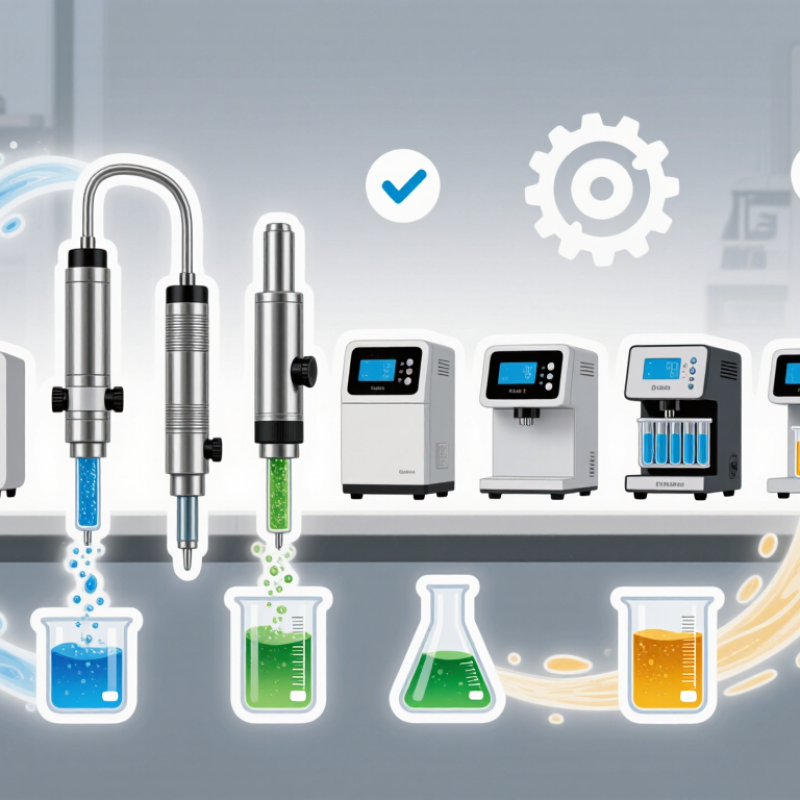
China Top 10 Ultrasonic Disperser Manufacturers

Ultrasonic Dispersers: Operating Principles and Industrial Applications

China Top 10 Ultrasonic Disperser Manufacturers
Ultrasonic Dispersers: Operating Principles and Industrial Applications

An ultrasonic disperser converts electrical energy into high-frequency mechanical vibration. A probe transfers that vibration into a liquid, where rapid pressure changes form and collapse tiny cavitation bubbles. Their collapse creates localized shear forces and microjets. These forces can break apart agglomerates and help distribute particles through a liquid. The result depends on more than power: probe depth, batch volume, viscosity, and processing time all matter. Heat can build quickly.

In industrial production, ultrasonic dispersion is used for coatings, inks, ceramic slurries, cosmetics, and other liquid formulations. For example, a poorly dispersed pigment may leave visible specks on a coated panel. A well-controlled process can improve uniformity, but it does not guarantee a stable product. Formulation chemistry still matters. Scale-up also takes care; a setting that works in a small beaker may not deliver the same energy throughout a larger tank. That part is often underestimated.

Tips: Keep the probe submerged and away from vessel walls. Track temperature during trials, and compare samples at consistent intervals. Record amplitude and processing time. A simple log can reveal patterns, though it will not explain every result.

China Top 10 Ultrasonic Disperser Manufacturers - Ultrasonic Dispersers: Operating Principles and Industrial Applications

No. Industrial Application Operating Principle Typical Materials or Process Main Process Contribution Practical Consideration
1 Nanomaterial dispersion Ultrasonic vibration creates cavitation in a liquid; collapsing bubbles generate localized shear and microstreaming. Carbon nanotubes, graphene, and other fine powders dispersed in a liquid medium. Helps break up agglomerates and improve distribution through the liquid. Powder wetting, viscosity, concentration, and heat buildup can affect dispersion results.
2 Paints and coatings Cavitation and acoustic streaming apply mechanical forces to pigment agglomerates. Pigments and functional fillers in coating formulations. Supports deagglomeration and more uniform pigment distribution. Formulation compatibility and temperature control should be considered.
3 Inks and printing materials High-frequency probe motion transfers energy into the liquid and promotes particle breakup. Pigment dispersions and other particulate ink components. Can assist with dispersion uniformity in suitable formulations. Excessive processing may heat the batch or affect sensitive formulation components.
4 Pharmaceutical suspensions Acoustic cavitation and fluid motion help disperse solid particles in a liquid. Suspensions and development-scale liquid formulations. Can reduce visible particle clustering and support a more even suspension. Validated process conditions and product-specific safety requirements are essential.
5 Cosmetics and personal care Ultrasonic energy promotes mixing and particle deagglomeration in liquid formulations. Lotions, creams, pigment-containing products, and liquid dispersions. Supports uniform distribution of selected ingredients. Formulation temperature and sensitivity of ingredients should be monitored.
6 Food and beverage processing Cavitation-induced shear and streaming act on dispersed components in a liquid. Selected emulsions, suspensions, and ingredient dispersions. May assist mixing or dispersion in processes designed for ultrasonic treatment. Equipment design, sanitation, and food-process regulations must be addressed.
7 Battery materials Ultrasonic cavitation and shear help distribute fine particles within a liquid slurry. Electrode slurries containing active materials, conductive additives, and binders. Can help break up agglomerates and improve slurry homogeneity. Slurry viscosity, solids loading, and material sensitivity influence process selection.
8 Ceramics and advanced materials Acoustic forces act on particles suspended in a liquid, assisting deagglomeration. Ceramic powders and other fine inorganic particles in liquid suspensions. Helps produce a more uniform particle distribution before downstream processing. Abrasive solids can cause probe wear; equipment materials and maintenance matter.
9 Wastewater and environmental treatment Cavitation produces localized physical effects in the liquid and can enhance contact between process components. Selected liquid treatment processes and laboratory or pilot-scale studies. Can support mixing or treatment steps when integrated into a suitable process. Effectiveness depends on water composition, reactor design, and treatment objectives.
10 Biotechnology and laboratory research Probe-generated ultrasonic energy creates cavitation and intense local fluid motion. Sample preparation, cell disruption, and small-volume research procedures. Provides a controllable means of applying mechanical energy to liquid samples. Heat-sensitive samples may require cooling and carefully controlled treatment.

How to Evaluate Ultrasonic Disperser Manufacturers in China

China Top 10 Ultrasonic Disperser Manufacturers

When evaluating Chinese ultrasonic disperser manufacturers, look beyond advertised power and price. The World Bank’s World Development Indicators put China’s manufacturing value added at roughly 26% of GDP in 2023. That scale supports a broad supplier base, but it does not prove that any individual machine is well engineered. Numbers can mislead.

Ask for a sample test using your actual slurry, not just water. Request the test volume, probe material, frequency, amplitude, processing time, and temperature rise. For particle-size results, check whether the method follows ISO 13320:2020, which specifies laser diffraction procedures. Compare repeatability across runs, not only the smallest reported particle size. Ask for raw test records and a clear explanation of measurement conditions. Ask for proof.

Inspect practical details: probe replacement, cooling, sound enclosure, spare-part availability, and local service response times. A short video of a stable production run can help, but it cannot replace an acceptance test at your own operating scale. Clarify warranty exclusions and who pays for return shipping. Not enough. One limitation remains: supplier demonstrations may use easier materials than yours. Treat their results as a starting point, then verify performance independently before placing a large order.

China’s Top 10 Ultrasonic Disperser Manufacturers

China’s Top 10 Ultrasonic Disperser Manufacturers

When comparing China’s top ultrasonic disperser manufacturers, a ranking alone rarely answers the practical question: will the equipment handle your formulation? Suppliers may offer bench, pilot, and production-scale systems, but listed power does not tell the whole story. Ask about working volume, viscosity, probe geometry, cooling, and continuous operating limits. Small details matter.

Build a shortlist around evidence. Request a processing trial with your own material, then compare particle-size results, temperature rise, and batch consistency. Review electrical specifications, wetted-part materials, maintenance instructions, and warranty coverage. A clear technical response can be more useful than a polished catalogue. Keep records.

The best fit may depend on process support, not just equipment price. Ask how the manufacturer can scale a stable laboratory recipe to a larger vessel, and whether drawings and operating guidance are available. Some project details may remain uncertain before testing; treat estimates cautiously rather than as guarantees. No ranking is perfect. Recheck current capabilities, lead times, and service arrangements before deciding.

Comparing Product Ranges, Technologies, and Customization Options

Comparing China’s top ultrasonic disperser manufacturers means looking beyond advertised power. Product ranges may include benchtop probes for small batches, pilot-scale systems, and inline units for continuous processing. Match the equipment to your batch volume, viscosity, and target particle size. A probe that works well in a beaker may not disperse material evenly in a deep tank. Small details matter.

Technology comparisons should cover more than frequency. Review amplitude control, probe diameter, generator stability, cooling, and whether the system supports pulsed operation. For inline processing, check flow-cell design and the stated throughput under realistic conditions. Ask how performance was tested; published figures can change with sample temperature and viscosity. Specifications can look tidy on paper. Real mixtures are less tidy.

Customization options may include probe materials, vessel dimensions, jacketed tanks, automated controls, and connections for existing production lines. Request drawings and confirm which parts contact the material. For a useful comparison, share a representative sample or provide its measurable properties, then ask for a documented trial. One imperfect point: suppliers may describe customization broadly, while lead times and validation requirements receive less attention. Clarify those details before comparing quotations, especially when a standard unit needs modified seals, cooling, or control software.

This chart shows broad, indicative power ranges commonly used to describe laboratory, pilot-scale, and production-scale ultrasonic dispersers. It is a market overview, not a comparison or ranking of individual manufacturers; actual specifications and available customization vary by system.

Key Factors for Selecting a Chinese Ultrasonic Disperser Supplier

When comparing China’s ultrasonic disperser manufacturers, begin with the material and process, not the catalog’s highest power rating. Record batch volume, viscosity, target particle size, and operating time. Vessel shape and probe immersion depth can affect dispersion, so share these details with suppliers. Ask for the recommended frequency and power range, plus test conditions behind any performance claims. Numbers need context.

Check how the supplier verifies quality. Request a sample test using your material, and ask for recorded settings, temperature changes, and processing time. A clean, repeatable test matters more than a polished demonstration. It is not a perfect forecast: production batches may behave differently. Review probe material, sealing, cooling, control functions, and access to replacement parts. Clear manuals and responsive technical support also matter when a process needs adjustment.

Tips: Send the same written requirements to each supplier. Compare test data, warranty terms, lead times, and service response—not just price. Ask who performs final inspection, and what records come with the unit. Small details matter. One overlooked cooling limit can disrupt a long run.

Article Source:

Copyright 2025 Fluidra S.A. | Created by BCM Marketing Agencia Privacy Policy Legal note | Cookie policy |

Technical cookies are strictly necessary for our website to work and you can navigate through it. These types of cookies are those that, for example, allow us to identify you, give you access to certain restricted parts of the page if necessary, or remember different options or services already selected by you, such as your privacy preferences. Therefore, they are activated by default, your authorization not being necessary in this regard. Through the configuration of your browser, you can block or alert the presence of this type of cookies, although such blocking will affect the proper functioning of the different functionalities of our website.


The analysis cookies allow us to study the navigation of the users of our website in general (for example, which sections of the page are the most visited, which services are used most and if they work correctly, etc.). From the statistical information on navigation on our website, we can improve both the operation of the page itself and the different services it offers. Therefore, these cookies do not have an advertising purpose, but only serve to make our website work better, adapting to our users in general. By activating them you will contribute to this continuous improvement. You can enable or disable these cookies by checking the corresponding box, being disabled by default.


Functionality cookies allow us to remember your preferences, to personalize certain characteristics and general options of our website, every time you access it (for example, the language in which the information is presented to you, the sections marked as favorites, your browser type, etc.) Therefore, this type of cookies does not have an advertising purpose, but by activating them you will improve the functionality of the website (for example, adapting to your type of browser) and the customization of it based on your preferences (for example, by presenting the information in the language that you have chosen in previous occasions), which will contribute to the ease, usability and comfort of our page during your navigation. You can enable or disable these cookies by checking the corresponding box, being disabled by default.


Advertising cookies allow us to manage the advertising spaces included in our website based on criteria such as the content shown or the frequency in which the ads are displayed. For example, if you have been shown the same ad several times on our website, and you have not shown a personal interest by clicking on it, it will not appear again. In summary, by activating this type of cookies, the advertising shown on our website will be more useful and diverse, and less repetitive. You can enable or disable these cookies by checking the corresponding box, being disabled by default.


Behavioral advertising cookies allow us to obtain information based on the observation of your browsing habits and behaviors on the web, in order to show you advertising content that best suits your personal tastes and interests. To understand it in a very simple way, we will give you a fictitious example: if your last searches on the web were related to suspense literature, we would show you advertising about suspense books. Therefore, activating this type of cookies, the advertising that we show you on our website will not be generic, but will be oriented to your searches, tastes and interests, therefore adjusting exclusively to you. You can enable or disable these cookies by checking the corresponding box, being disabled by default.
To understand it in a very simple way, we will give you a fictitious example: if your last searches on the web were related to suspense literature, we would show you advertising about suspense books. Therefore, activating this type of cookies, the advertising that we show you on our website will not be generic, but will be oriented to your searches, tastes and interests, therefore adjusting exclusively to you. You can enable or disable these cookies by checking the corresponding box, being disabled by default.

SAVE

We use our own and third-party cookies to ensure the proper functioning of the website and to analyse our services, improve your experience on our website and show you advertisements related to your interests according to profiling based on your browsing habits (e.g. websites visited). You can accept all cookies by clicking "ACCEPT" or set or reject them by clicking here. If you would like to know more about the use of cookies, please see our COOKIE POLICY.


ACCEPT ALL
Reject no essentials



