
Top 10 Type B Washers What Global Buyers Need to Know?
FLUID HANDLING EXPERTS

Blog, all our news

Top 10 Type B Washers What Global Buyers Need to Know?

Choosing the right Type B Washers is rarely as simple as comparing prices. Global buyers must examine dimensions, material, finish, load distribution, and production consistency. The “Top 10 Type B Washers” guide will examine practical options for machinery, construction, automotive assemblies, and general industrial applications.

The Type B designation may vary between standards, catalogs, and supplier descriptions. That small detail can create costly confusion. A washer that looks correct may have a different inside diameter, outside diameter, thickness, or tolerance. “A washer is small, but its load path is not,” says Michael R. Walker, a fastener quality consultant with experience in international sourcing. His point deserves attention. Poor contact can mark painted surfaces, loosen joints, or concentrate pressure around a bolt hole.

Reliable purchasing requires more than a polished product photograph. Buyers should request material certificates, dimensional inspection records, coating details, and sample approvals. Stainless steel may suit humid environments, while carbon steel can offer strength and economy when properly protected. Packaging also matters. Mixed sizes in one carton can slow production and create avoidable errors.

No ranking is perfect. Supplier performance can change. Some recommendations may suit heavy equipment but fail in delicate sheet-metal work. This guide therefore compares strengths, limitations, application fit, and buying risks. It also asks an uncomfortable question: are buyers selecting Type B Washers by engineering need, or simply by familiar catalog language? That distinction can protect budgets, assemblies, and long-term reliability.
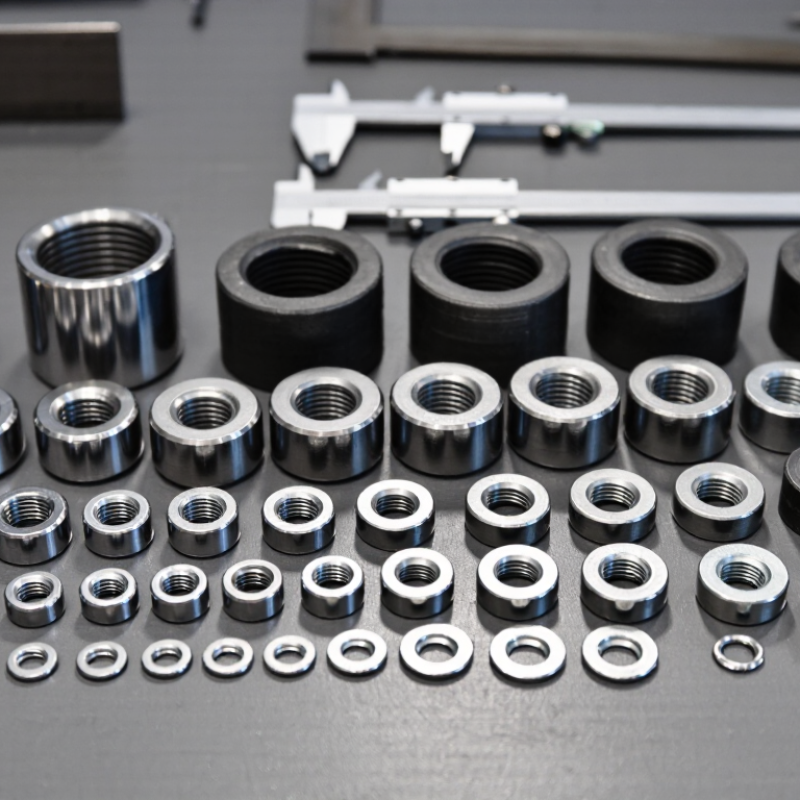
Top 10 Type B Washers What Global Buyers Need to Know?

What Type B Washers Are and How They Differ from Standard Washers

Type B washers are not a universal product category. Their meaning depends on the governing standard, drawing, and market. In many specifications, Type B refers to a washer with a defined outside diameter, inside diameter, and thickness range. These dimensions may differ from a standard flat washer. Always confirm the reference standard before requesting quotations.

A standard washer usually provides basic load distribution beneath a bolt head or nut. A Type B washer may offer a wider bearing surface or tighter dimensional control. This can protect softer materials, reduce surface damage, and improve clamping consistency. The difference may look small, but a few millimeters can affect assembly performance. Check the hole size carefully. It should fit the fastener without excessive movement. Also compare thickness, edge condition, hardness, coating, and material grade.

Specification errors are common. A buyer may write “Type B washer” without naming the standard. That description is incomplete. Suppliers can interpret it differently across regions. A clear purchase request should include the standard number, nominal fastener size, dimensions, material, finish, and inspection requirements. Sample approval helps, especially for high-volume orders. It is not perfect, though. Samples cannot replace production checks. Packaging and labeling also deserve attention, since mixed washer sizes are difficult to detect visually. A simple drawing often prevents an expensive misunderstanding.

Key Dimensions, Materials, and Performance Features to Compare

For global buyers, “Type B washer” needs a clear standard reference. The term can describe different dimensional series across markets. Confirm the inside diameter, outside diameter, thickness, and tolerance on the drawing. A 10 mm nominal bore is not enough. Measure samples with calibrated micrometers, especially when the washer supports a narrow flange or slotted hole. ASME B18.21.1 and relevant ISO specifications provide useful dimensional controls, but they should not replace the purchase drawing.

Material selection affects both service life and installation behavior. Carbon steel suits many indoor assemblies, while stainless steel improves corrosion resistance but may change friction during tightening. Compare hardness, tensile strength, coating thickness, and salt-spray results. ASTM F436/F436M is commonly referenced for hardened structural washers. For demanding joints, check hardness mapping and coating adhesion, not only a certificate. Certificates can be correct, yet incomplete.

Performance depends on more than dimensions. Compare surface flatness, burr control, load distribution, and resistance to embedding. The Fastener Industry Coalition’s technical guidance emphasizes controlled tightening because friction strongly influences clamp load. Grand View Research’s 2024 fasteners market analysis projects continued global growth through 2030, increasing pressure on consistent quality and traceability. A supplier should provide lot identification, inspection records, and test methods. Keep one production sample. It sounds excessive. It has prevented costly confusion. Some buyers still compare price before compression behavior, which is a weakness worth reconsidering.

Top 10 Type B Washers: What Global Buyers Need to Know?

Key dimensions, materials, and performance features to compare

Dimensions

Check nominal inner diameter, outside diameter, and thickness. The washer ID should provide clearance for the fastener while the OD and thickness determine load distribution and spacing.

Materials

Zinc-plated carbon steel is common for general indoor use. A2 stainless steel suits ordinary outdoor exposure, while A4 stainless steel offers improved resistance in coastal or chloride-rich environments.

Performance

Compare hardness, flatness, surface treatment, corrosion resistance, and dimensional tolerance. Verify the required specification before ordering because “Type B” terminology can vary by standard and market.

Dimensional reference: representative ISO 7089-style metric plain-washer sizes, shown in millimetres. Confirm the applicable standard, material grade, coating, and tolerance with the purchase specification.

Top 10 Type B Washer Designs for Different Industrial Applications

Type B washers serve different industrial needs, but the label can vary between standards and supplier catalogs. Verify the governing specification before buying. For structural joints, standard flat washers spread clamp load across steel surfaces. Large-outside-diameter designs protect thin sheet metal. Reduced-outside-diameter washers fit narrow flanges. Square washers resist rotation on timber, channels, and slotted frames. Countersunk washers support flush-head fasteners where exposed surfaces must remain smooth.

The remaining five designs target more specialized conditions. Wave washers provide light axial preload in motors, pumps, and compact bearing assemblies. Spring washers help maintain tension under limited vibration, although engineers should not treat them as a complete locking solution. Tab washers offer mechanical positioning in serviceable machinery. Sealing washers combine a metal carrier with an elastomer layer for pipes, tanks, and outdoor enclosures. Shoulder washers electrically isolate bolts from panels, busbars, and sensor brackets. Each design needs the correct inner diameter, outer diameter, thickness, material, and hardness.

In practical sourcing, measure the joint stack rather than copying an old part blindly. Check contact pressure, coating compatibility, temperature range, and tightening torque. Stainless steel may resist corrosion, but it can behave differently during tightening. A washer that looks suitable may deform under a heavy flange. Field inspections often reveal this late. A small trial assembly, torque check, and visual inspection can prevent costly rework. Type B is not always a universal definition, and that detail deserves more attention.

Global Standards, Quality Checks, and Supplier Requirements

Top 10 Type B Washers: What Global Buyers Need to Know?

Global Standards, Quality Checks, and Supplier Requirements

Type B washer terminology is not globally consistent. One supplier may use it for a wider flat washer, while another follows a regional catalog. Confirm the governing standard, drawing, material, thickness, inner diameter, and outer diameter before comparing quotations. ISO 7091, ASTM F844, and national standards may describe similar products, but they are not automatically interchangeable. Request a dimensional drawing with tolerances. A clear drawing prevents expensive assumptions.

Quality control should cover more than appearance. Inspect sample lots with calibrated gauges, micrometers, and go/no-go pins. Check burrs around the hole, edge damage, flatness, hardness, and coating thickness. For carbon steel washers, confirm the material certificate and corrosion-test method. Stainless steel requires grade verification, not just a bright surface. Ask suppliers for batch traceability, inspection records, packaging details, and a corrective-action process. A professional supplier should explain sampling plans and rejection limits. Still, no checklist is perfect. Small changes in stamping tools can affect fit between production batches.

Tips: Approve a pre-production sample. Compare ten pieces, not one. Photograph measurements. Put every requirement into the purchase order. Ask how rejected parts are separated. Review the first shipment carefully, even when earlier samples passed. Suppliers should also disclose subcontracted plating or heat treatment, because hidden process changes can weaken reliability.

How International Buyers Can Evaluate Costs, Compliance, and Logistics

For global buyers, “Type B washer” is not a complete specification. The designation can vary by national standard, so confirm diameter, thickness, material, hardness, and surface treatment. Request a controlled drawing, inspection report, and sample measurement. A low unit price means little if the washer fails under load.

Calculate landed cost, not just the factory quotation. Include tooling, inspection, packaging, inland transport, duties, insurance, and port charges. The WTO estimates that full trade-facilitation implementation could reduce global trade costs by 14.3%. Documentation quality helps capture that benefit. One missing certificate can delay a container. It happens.

Compliance should match the washer’s application and destination market. Check the declared material, restricted-substance requirements, traceability, and test methods. Ask whether dimensional reports follow the agreed standard, such as an applicable ISO or national specification. Do not accept “equivalent” without written evidence. A spreadsheet can still lie. Independent pre-shipment inspection is often worthwhile, especially for large orders or safety-related assemblies. According to UNCTAD’s Review of Maritime Transport 2023, over 80% of world merchandise trade by volume moves by sea. Plan around sailing schedules, transshipment risks, container moisture, and port congestion. Keep buffer stock where downtime costs more than storage. The cheapest route is not always the cheapest decision.

Copyright 2025 Fluidra S.A. | Created by BCM Marketing Agencia Privacy Policy Legal note | Cookie policy |

Technical cookies are strictly necessary for our website to work and you can navigate through it. These types of cookies are those that, for example, allow us to identify you, give you access to certain restricted parts of the page if necessary, or remember different options or services already selected by you, such as your privacy preferences. Therefore, they are activated by default, your authorization not being necessary in this regard. Through the configuration of your browser, you can block or alert the presence of this type of cookies, although such blocking will affect the proper functioning of the different functionalities of our website.


The analysis cookies allow us to study the navigation of the users of our website in general (for example, which sections of the page are the most visited, which services are used most and if they work correctly, etc.). From the statistical information on navigation on our website, we can improve both the operation of the page itself and the different services it offers. Therefore, these cookies do not have an advertising purpose, but only serve to make our website work better, adapting to our users in general. By activating them you will contribute to this continuous improvement. You can enable or disable these cookies by checking the corresponding box, being disabled by default.


Functionality cookies allow us to remember your preferences, to personalize certain characteristics and general options of our website, every time you access it (for example, the language in which the information is presented to you, the sections marked as favorites, your browser type, etc.) Therefore, this type of cookies does not have an advertising purpose, but by activating them you will improve the functionality of the website (for example, adapting to your type of browser) and the customization of it based on your preferences (for example, by presenting the information in the language that you have chosen in previous occasions), which will contribute to the ease, usability and comfort of our page during your navigation. You can enable or disable these cookies by checking the corresponding box, being disabled by default.


Advertising cookies allow us to manage the advertising spaces included in our website based on criteria such as the content shown or the frequency in which the ads are displayed. For example, if you have been shown the same ad several times on our website, and you have not shown a personal interest by clicking on it, it will not appear again. In summary, by activating this type of cookies, the advertising shown on our website will be more useful and diverse, and less repetitive. You can enable or disable these cookies by checking the corresponding box, being disabled by default.


Behavioral advertising cookies allow us to obtain information based on the observation of your browsing habits and behaviors on the web, in order to show you advertising content that best suits your personal tastes and interests. To understand it in a very simple way, we will give you a fictitious example: if your last searches on the web were related to suspense literature, we would show you advertising about suspense books. Therefore, activating this type of cookies, the advertising that we show you on our website will not be generic, but will be oriented to your searches, tastes and interests, therefore adjusting exclusively to you. You can enable or disable these cookies by checking the corresponding box, being disabled by default.
To understand it in a very simple way, we will give you a fictitious example: if your last searches on the web were related to suspense literature, we would show you advertising about suspense books. Therefore, activating this type of cookies, the advertising that we show you on our website will not be generic, but will be oriented to your searches, tastes and interests, therefore adjusting exclusively to you. You can enable or disable these cookies by checking the corresponding box, being disabled by default.

SAVE

We use our own and third-party cookies to ensure the proper functioning of the website and to analyse our services, improve your experience on our website and show you advertisements related to your interests according to profiling based on your browsing habits (e.g. websites visited). You can accept all cookies by clicking "ACCEPT" or set or reject them by clicking here. If you would like to know more about the use of cookies, please see our COOKIE POLICY.


ACCEPT ALL
Reject no essentials


