
What Are the Top 10 Surface Engineering Companies in China?
FLUID HANDLING EXPERTS

Blog, all our news

What Are the Top 10 Surface Engineering Companies in China?

China’s manufacturing base spans automotive parts, aerospace components, machinery, electronics, and medical devices. In these fields, Surface Engineering can influence wear resistance, corrosion protection, friction, appearance, and service life. The right partner may apply processes such as thermal spraying, physical vapor deposition, plating, or precision finishing. Not every company offers the same capabilities. Details matter.

This guide introduces ten Chinese companies active in surface engineering and explains what buyers may wish to examine. It considers factors such as process range, technical experience, quality controls, equipment, industry applications, and communication during project development. A company’s website can provide useful clues, but it cannot confirm every claim. Ask for relevant case studies, coating specifications, test methods, and sample results where appropriate. Small differences in substrate preparation or coating thickness can affect performance.

There is no single supplier that fits every application. A coating suited to a high-wear machine component may not meet the needs of a decorative consumer product. This overview is a starting point, not a substitute for technical evaluation. Some company information may change, and public materials can leave important gaps. That is worth remembering. Readers should confirm current capabilities, certifications, delivery arrangements, and application requirements directly with each supplier before making a decision.
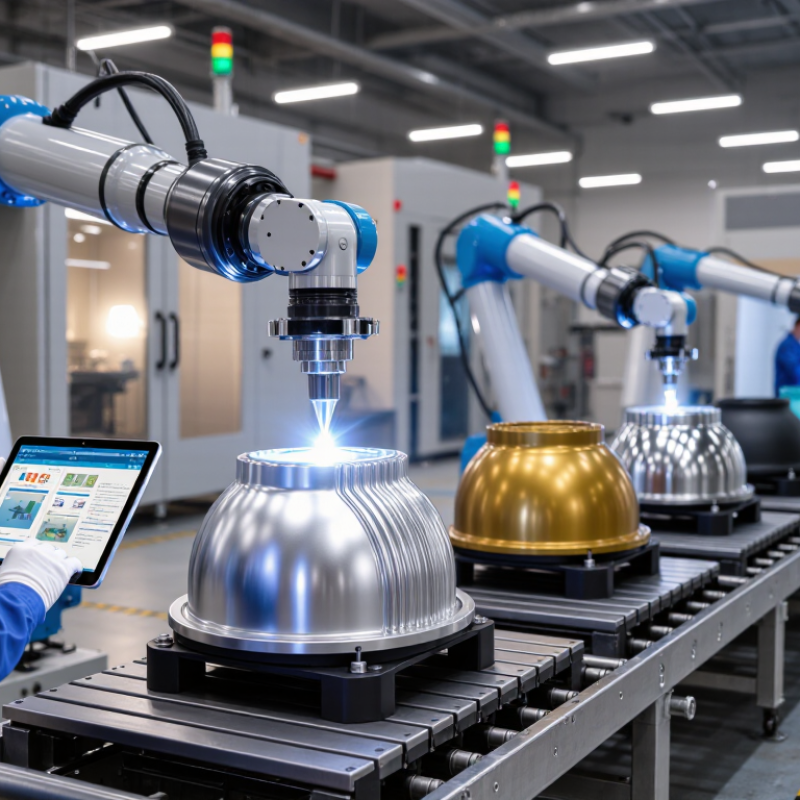
What Are the Top 10 Surface Engineering Companies in China?

How Surface Engineering Shapes China’s Industrial Landscape

Surface engineering shapes China’s industrial landscape by helping components last longer under heat, friction, corrosion, and repeated loading. In factories, a treated gear may run more quietly, while a coated pump shaft can resist abrasive particles in process fluids. These improvements often come from practical methods such as thermal spraying, nitriding, electroplating, and precision surface finishing. Small details matter.

The value is not just a harder surface. Engineers must match the treatment to the base material, operating temperature, and expected wear pattern. A coating that performs well in a dry test may fail in a humid production line. Reliable suppliers therefore document process conditions and use measurements such as coating thickness, hardness, adhesion, and wear testing. Results depend on careful control, not a single impressive specification.

Across automotive, energy, machinery, and electronics manufacturing, surface engineering can reduce maintenance and extend component life. It can also add cost, energy use, and inspection steps, so the benefits need to be measured against the actual service conditions. Not always. A useful comparison of leading companies should examine technical range, testing discipline, production consistency, and support after delivery—not just the number of available processes. Even strong data has limits when real-world operating conditions change.

What Are the Top 10 Surface Engineering Companies in China? - How Surface Engineering Shapes China’s Industrial Landscape

To avoid presenting unnamed or unverifiable company profiles, this table summarizes ten established surface-engineering processes and their industrial roles. It is a technology overview, not a ranking of companies.

No. Surface-engineering process How it modifies the surface Typical materials or components Common industrial applications Typical engineering purpose
1 Thermal spraying Heated or accelerated coating material is deposited onto a prepared surface as a coating. Steel structures, rolls, turbine components, and machine parts Power generation, steel production, petrochemical equipment, and machinery maintenance To improve wear, corrosion, or heat resistance, depending on the coating material and service conditions.
2 Physical vapor deposition (PVD) Material is vaporized in a vacuum and condensed as a thin film on a component. Cutting tools, dies, molds, and precision components Metalworking, automotive manufacturing, electronics, and tooling To add thin, functional coatings that can improve hardness, friction behavior, or wear resistance.
3 Chemical vapor deposition (CVD) Chemical reactions of gaseous precursors form a solid coating on a heated substrate. Cutting tools, semiconductor materials, and heat-resistant components Toolmaking, electronics, and advanced materials production To form uniform coatings; the achievable properties depend on the deposited material and process conditions.
4 Electroplating An electric current deposits a metallic layer from an electrolyte onto a conductive workpiece. Steel and other conductive components Automotive parts, hardware, machinery, and electrical components To provide a metallic finish or improve corrosion resistance, conductivity, or wear performance, depending on the plated metal.
5 Anodizing An electrochemical process thickens the protective oxide layer on a metal surface, commonly aluminum. Aluminum profiles, housings, panels, and components Construction, transportation, consumer products, and electronics To improve corrosion and wear resistance and, where specified, provide a surface suitable for coloring.
6 Nitriding Nitrogen diffuses into the surface of a ferrous alloy to form a hardened surface layer. Gears, crankshafts, dies, and other alloy-steel parts Automotive, machinery, tooling, and general equipment manufacturing To increase surface hardness and resistance to wear and fatigue while limiting dimensional change compared with some other hardening treatments.
7 Carburizing Carbon diffuses into the surface of low-carbon steel, followed by hardening heat treatment. Gears, shafts, bearings, and transmission components Automotive, construction machinery, and industrial gear manufacturing To produce a hard, wear-resistant case with a tougher core.
8 Laser cladding A laser melts feedstock and a thin portion of the substrate to create a metallurgically bonded layer. Valves, rolls, shafts, molds, and equipment components Mining, energy, metallurgy, and repair or remanufacturing operations To restore worn surfaces or apply localized layers selected for corrosion, wear, or heat resistance.
9 Shot peening Small media impact the surface, inducing compressive residual stresses in the near-surface material. Springs, gears, and fatigue-loaded metal components Automotive, aerospace, rail, and machinery manufacturing To improve fatigue performance when the process is properly controlled for the component and loading conditions.
10 Thermal barrier coatings A heat-insulating ceramic coating is applied over a bond coat on a heat-exposed component. Gas-turbine hot-section components and other high-temperature parts Power generation, aviation, and industrial gas turbines To reduce heat transfer to the underlying component; coating design and service life depend on operating conditions.

Criteria for Identifying Leading Surface Engineering Companies

What Are the Top 10 Surface Engineering Companies in China?
Criteria for Identifying Leading Surface Engineering Companies

Identifying leading surface engineering companies requires more than comparing company size or product catalogs. A sound assessment starts with technical capability: can the provider explain how coating choice, surface preparation, and process settings suit a specific part? Look for documented experience with relevant materials and operating conditions, such as abrasion, heat, or corrosion. Details matter. A clear explanation is more useful than a broad promise of “high performance.”

Quality evidence should be practical and traceable. Ask how sample parts are inspected, which test methods are used, and whether results link to specific production batches. Useful records may include coating thickness readings, adhesion results, and written acceptance limits. Consistency matters. Check how the company handles defects, process changes, and repeat orders. Also consider equipment maintenance, staff training, delivery reliability, and responsible handling of process materials. These points can be checked through technical documents, customer references, or a site assessment where available. No scorecard is perfect; test results from one geometry may not predict performance on another. That uncertainty deserves attention, not a polished sales claim.

What Are the Top 10 Surface Engineering Companies in China?

Criteria for Identifying Leading Surface Engineering Companies

These standards provide evidence-based evaluation dimensions: quality management, environmental management, occupational health and safety, laboratory competence, and energy management. The chart shows the publication year of each listed edition—not company scores or a company ranking.

Sources: ISO 9001:2015, ISO 14001:2015, ISO 45001:2018, ISO/IEC 17025:2017, ISO 50001:2018.

Profiles of Ten Notable Surface Engineering Companies in China

China’s surface-engineering sector includes specialists in coatings, thermal treatment, and precision finishing. These profiles compare capabilities, not verified rankings. A supplier’s suitability depends on its materials, process controls, and documented results.

One company focuses on plasma spraying for wear-resistant industrial parts.

Another applies physical vapor deposition to tools and small components.

A third provides heat treatment, with careful control of temperature and cooling.

One specialist handles electroplating and tracks coating thickness across batches.

Another offers anodizing for aluminum parts exposed to moisture.

A sixth develops laser cladding for repairing worn surfaces.

One provider works on corrosion-resistant coatings for heavy equipment.

Another serves automotive suppliers with high-volume finishing lines.

A ninth specializes in polishing and surface preparation for precise components.

The tenth combines testing services with custom coating development.

Details matter.

Tips: Request sample test reports, process ranges, and references for similar parts. Check how the supplier measures adhesion and thickness. Ask about batch consistency, too. A polished presentation alone proves little.

Core Technologies and Industries Served by These Companies

China’s leading surface engineering companies work with several core technologies. Thermal spraying deposits protective layers on large or worn components. Physical vapor deposition creates thin, hard films for cutting tools and precision parts. Laser cladding adds a metallurgically bonded layer, often to repair shafts, valves, or rollers. Electroplating and anodizing remain useful where conductivity, corrosion resistance, or appearance matters.

Different industries need different solutions. Automotive suppliers often seek wear-resistant parts for engines, transmissions, and molds. Energy companies may need coatings that withstand heat, erosion, or corrosive fluids in turbines and pipelines. Aerospace applications demand close control of coating thickness and adhesion. Electronics manufacturers value uniform films on small components. These needs shape each company’s equipment, testing methods, and production scale. Details matter.

A coating is not magic. Poor surface preparation can undermine even an advanced process. Reliable providers typically check roughness, hardness, thickness, and bond strength, then test parts under relevant service conditions. Some results still depend on component geometry or operating history, so a laboratory sample may not predict field performance perfectly. Buyers should compare process expertise, quality records, and repair capability—not just coating names.

How the Companies Compare in Capabilities and Market Focus

China’s leading surface engineering companies differ less by one “best” process than by how well their capabilities fit a customer’s part. Some focus on physical vapor deposition for cutting tools and precision components, where thin, hard coatings can reduce wear. Others specialize in thermal spraying or laser cladding for larger industrial parts exposed to heat, friction, or corrosion. A coating’s name tells only part of the story. Ask for thickness tolerances, adhesion results, and test conditions.

Market focus shapes factory choices. Suppliers serving automotive and machinery clients may prioritize repeatable batches and short production cycles. Those working with energy or heavy equipment often handle larger parts and tougher service conditions. Electronics-focused facilities may need clean process control and uniform finishes across small components. Look for process records and sample inspections. Details matter.

A fair comparison should also include engineering support, not just equipment lists. Can the supplier review a drawing, flag masking risks, and explain how a finish affects fit? Can it provide test coupons from the same production run? These questions reveal practical experience. Not always. Public information can be uneven, and a polished capability list does not prove consistent results. The distinction between a specialist and a broad-service provider is not always neat.

Copyright 2025 Fluidra S.A. | Created by BCM Marketing Agencia Privacy Policy Legal note | Cookie policy |

Technical cookies are strictly necessary for our website to work and you can navigate through it. These types of cookies are those that, for example, allow us to identify you, give you access to certain restricted parts of the page if necessary, or remember different options or services already selected by you, such as your privacy preferences. Therefore, they are activated by default, your authorization not being necessary in this regard. Through the configuration of your browser, you can block or alert the presence of this type of cookies, although such blocking will affect the proper functioning of the different functionalities of our website.


The analysis cookies allow us to study the navigation of the users of our website in general (for example, which sections of the page are the most visited, which services are used most and if they work correctly, etc.). From the statistical information on navigation on our website, we can improve both the operation of the page itself and the different services it offers. Therefore, these cookies do not have an advertising purpose, but only serve to make our website work better, adapting to our users in general. By activating them you will contribute to this continuous improvement. You can enable or disable these cookies by checking the corresponding box, being disabled by default.


Functionality cookies allow us to remember your preferences, to personalize certain characteristics and general options of our website, every time you access it (for example, the language in which the information is presented to you, the sections marked as favorites, your browser type, etc.) Therefore, this type of cookies does not have an advertising purpose, but by activating them you will improve the functionality of the website (for example, adapting to your type of browser) and the customization of it based on your preferences (for example, by presenting the information in the language that you have chosen in previous occasions), which will contribute to the ease, usability and comfort of our page during your navigation. You can enable or disable these cookies by checking the corresponding box, being disabled by default.


Advertising cookies allow us to manage the advertising spaces included in our website based on criteria such as the content shown or the frequency in which the ads are displayed. For example, if you have been shown the same ad several times on our website, and you have not shown a personal interest by clicking on it, it will not appear again. In summary, by activating this type of cookies, the advertising shown on our website will be more useful and diverse, and less repetitive. You can enable or disable these cookies by checking the corresponding box, being disabled by default.


Behavioral advertising cookies allow us to obtain information based on the observation of your browsing habits and behaviors on the web, in order to show you advertising content that best suits your personal tastes and interests. To understand it in a very simple way, we will give you a fictitious example: if your last searches on the web were related to suspense literature, we would show you advertising about suspense books. Therefore, activating this type of cookies, the advertising that we show you on our website will not be generic, but will be oriented to your searches, tastes and interests, therefore adjusting exclusively to you. You can enable or disable these cookies by checking the corresponding box, being disabled by default.
To understand it in a very simple way, we will give you a fictitious example: if your last searches on the web were related to suspense literature, we would show you advertising about suspense books. Therefore, activating this type of cookies, the advertising that we show you on our website will not be generic, but will be oriented to your searches, tastes and interests, therefore adjusting exclusively to you. You can enable or disable these cookies by checking the corresponding box, being disabled by default.

SAVE

We use our own and third-party cookies to ensure the proper functioning of the website and to analyse our services, improve your experience on our website and show you advertisements related to your interests according to profiling based on your browsing habits (e.g. websites visited). You can accept all cookies by clicking "ACCEPT" or set or reject them by clicking here. If you would like to know more about the use of cookies, please see our COOKIE POLICY.


ACCEPT ALL
Reject no essentials



