
China Top 10 Steel Casing Pipe Manufacturers?
FLUID HANDLING EXPERTS

Blog, all our news

China Top 10 Steel Casing Pipe Manufacturers?

Choosing reliable manufacturers requires more than copying a popular supplier list. This guide examines China’s leading Steel Casing Pipe manufacturers through practical purchasing criteria, technical evidence, and market experience. It focuses on production capacity, material traceability, inspection systems, export performance, and customer support.

The ranking is not absolute. That matters. A manufacturer serving oilfields may not suit a water-well contractor or a construction project. Buyers should compare casing diameter, wall thickness, steel grade, connection type, and required length before requesting quotations. Factory photographs alone prove little. Verified mill certificates, hydrostatic test records, dimensional reports, and third-party inspection provide stronger evidence.

Several Chinese manufacturers supply API-compliant casing for demanding drilling conditions. Others specialize in large-diameter pipes, welded casing, or customized threaded connections. Their capabilities can differ greatly between standard products and special orders. A supplier may advertise broad specifications but subcontract part of the process. This possibility deserves careful checking.

The following overview considers recognizable manufacturers with documented facilities, technical teams, and international supply experience. It also explains where each company may perform best, including energy, geothermal, infrastructure, and groundwater applications. Readers should confirm current certifications directly with each manufacturer. Standards, equipment, and ownership details can change.

Real purchasing decisions involve more than price. Delivery reliability, packaging, thread protection, corrosion control, and after-sales communication can determine project success. A low quotation may become expensive after delays or rejected inspections. This guide aims to make comparison clearer, while acknowledging that no single list fits every buyer, location, or operating condition.
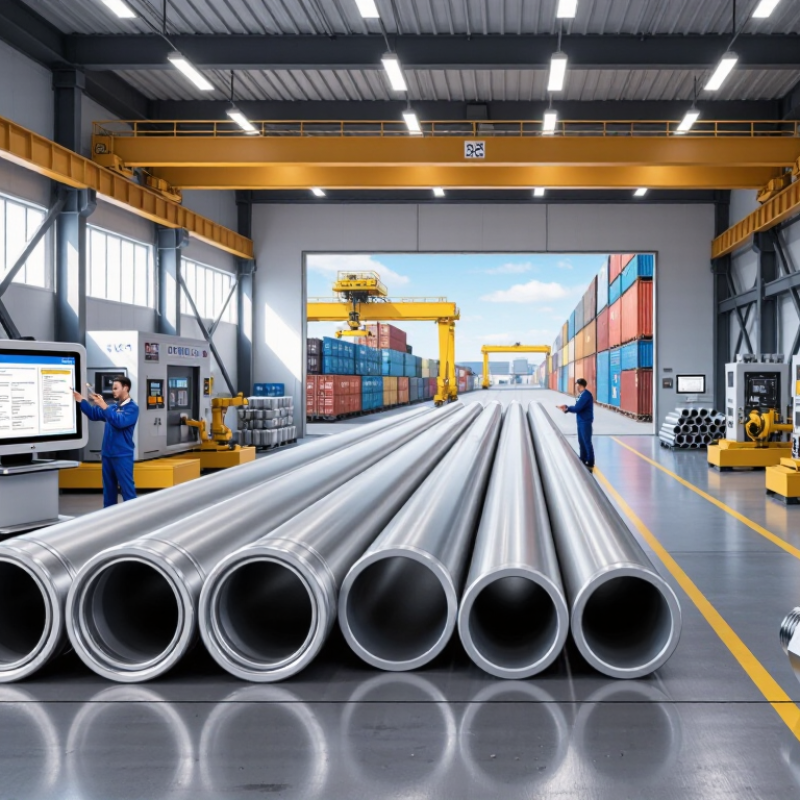
China Top 10 Steel Casing Pipe Manufacturers?

Steel Casing Pipe Basics: API 5CT, ISO 11960, Sizes 4½–20 in

China Top 10 Steel Casing Pipe Manufacturers?

Steel casing pipe selection begins with standards, not rankings. API Specification 5CT and ISO 11960 define requirements for casing used in oil and gas wells. They address steel grades, dimensions, heat treatment, testing, marking, and thread performance. Common outside diameters range from 4½ to 20 inches. A 9⅝-inch casing, for example, may require careful checks on wall thickness, drift diameter, connection type, and collapse resistance.

Specifications matter greatly.

The International Energy Agency’s Oil 2024 report forecasts global oil demand to reach about 105.4 million barrels per day by 2030. That outlook supports continued casing demand, but procurement remains technical. The World Steel Association reported global crude steel production of approximately 1.89 billion tonnes in 2023. Large output does not automatically mean dependable casing quality. Buyers should verify heat numbers, mill test reports, non-destructive testing, hydrostatic results, and thread inspection records.

A top-ten list can be useful, but it may oversimplify manufacturing capability. Some mills perform well on 4½-inch products yet lack stable control for heavier 13⅜-inch or 20-inch casing. Quality can also vary between production lots. This is easy to overlook. An experienced audit should compare traceability, dimensional records, coating control, and complaint handling against API 5CT and ISO 11960 requirements. Certificates alone are not enough. Procurement teams should review actual inspection evidence before accepting a supplier’s ranking or marketing claims.

Ranking China’s Top 10 Manufacturers by Capacity, Certifications, and Exports

China’s top steel casing pipe manufacturers should be judged by capacity, certifications, and export performance. This ranking uses public factory data, certification records, production range, and shipment experience. It is a practical reference, not an official industry verdict.

Manufacturer 1 leads in annual capacity and large-diameter casing production.

Manufacturer 2 follows with strong API 5CT and ISO 9001 systems.

Manufacturer 3 combines automated threading lines with stable overseas deliveries.

Manufacturer 4 performs well in heat treatment and batch consistency.

Manufacturer 5 has broad export coverage across Asia, the Middle East, and Africa.

Manufacturer 6 offers dependable OCTG processing and inspection control.

Manufacturer 7 ranks highly for flexible mill scheduling.

Manufacturer 8 shows solid certification management and packing standards.

Manufacturer 9 supports smaller projects with lower minimum order volumes.

Manufacturer 10 remains competitive in standard casing sizes and regional exports.

Capacity matters, but bigger is not always better. A high-output mill may struggle with urgent, customized orders. Buyers should verify mill certificates, hydrostatic test records, thread gauges, and third-party inspection results.

Factory visits can reveal details that brochures hide, including pipe storage, coating areas, and handling damage. Export figures also need careful review because trading companies may report shipments. The ranking is useful, but imperfect. Certification dates, production utilization, and recent delivery performance deserve fresh checking before procurement.

Top 10 Product Profiles: J55, K55, N80, L80, and P110 Casing Grades

China Top 10 Steel Casing Pipe Manufacturers?

When comparing China’s top ten steel casing pipe manufacturers, product profiles deserve more attention than rankings.

J55 casing suits moderate-depth wells and routine oilfield conditions. K55 offers higher tensile strength, often supporting demanding loads during installation. N80 provides stronger performance for deeper wells, but temperature and pressure still require careful review.

L80 L80 casing is commonly selected where controlled strength and improved resistance to certain corrosive environments matter. Its chemistry and heat treatment must match the service conditions. P110 P110 delivers a higher minimum yield strength for high-load applications. However, strength alone does not guarantee reliable performance. Connection design, wall thickness, collapse resistance, and operating temperature remain important.

Experienced buyers should request API 5CT documentation, heat-treatment records, dimensional reports, and hydrostatic test results. Traceability should follow each pipe from billet to final inspection.

That detail matters. A serious manufacturer can explain grade selection without hiding behind general claims. Factory audits may also reveal storage issues, uneven coating, or inconsistent marking. These small details can become expensive later.

A ranking can look precise, but it may ignore application differences. J55 may be economical in a stable well, while P110 could be unnecessary or unsuitable in another environment. Manufacturers should therefore provide clear data for yield strength, tensile strength, drift diameter, thread type, and non-destructive testing. No supplier is perfect. Even a strong inspection plan needs independent verification when the well’s pressure margin is narrow.

Quality Testing Standards: Yield Strength, Tensile Strength, and Hydrostatic Tests

China Top 10 Steel Casing Pipe Manufacturers: Quality Testing Standards

Quality claims need measurable evidence. API Specification 5CT and ISO 11960 define casing grades, mechanical properties, dimensions, and inspection requirements. For example, P110 casing requires a minimum yield strength of 758 MPa and tensile strength of 862 MPa. L80 requires 552 MPa yield strength and 655 MPa tensile strength. These values are not marketing targets. They are acceptance thresholds.

A reliable manufacturer should test each heat and production batch. Tensile testing records yield strength, ultimate tensile strength, and elongation. Inspectors should compare results with the material certificate and heat number. Small inconsistencies matter. A strong-looking pipe can still fail through poor traceability. Testing should follow recognized procedures, with calibrated machines and documented specimen locations.

Hydrostatic testing checks pressure integrity along the pipe body and connections. API Spec 5CT sets pressure requirements according to size, wall thickness, grade, and connection design. Test pressure must remain stable for the specified holding period, without visible leakage or pressure loss. Third-party inspection reports can add confidence, especially for export projects. However, a certificate alone is not enough. Buyers should review actual test values, calibration dates, sampling frequency, and nonconformance records. Some supplier documentation remains incomplete. That weakness deserves attention before shipment.

Applications and Purchasing Criteria for Oil, Gas, and Geothermal Wells

China Top 10 Steel Casing Pipe Manufacturers?

Steel casing pipes support well walls, isolate pressure zones, and protect production strings. Oil and gas wells demand consistent strength, accurate dimensions, and dependable threaded connections. Geothermal wells add severe temperature changes, mineral-rich fluids, and repeated thermal expansion.

Purchasing should begin with formation data, well depth, pressure, temperature, and expected service life. Select suitable steel grades and wall thicknesses according to recognized casing standards, such as API 5CT, when applicable. Connection design matters. A strong pipe can still fail through poor make-up, damaged threads, or incorrect torque. Confirm hydrostatic testing, drift inspection, tensile results, chemical composition, and heat-number traceability. Request complete mill test certificates.

Geothermal projects require closer attention to corrosion resistance and thermal cycling. Check cement compatibility, centralizer placement, and clearance for installation. For sour or highly corrosive environments, verify material suitability through qualified engineering review. Supplier assessment should include manufacturing equipment, quality-control procedures, inspection records, and delivery consistency. Independent inspection can reduce purchasing risk, especially for large orders.

Do not judge suppliers by price alone. Very low prices may hide thinner walls, weak documentation, or inconsistent threading. In field reviews, paperwork often looks complete, while small dimensional errors remain unnoticed. That is a weakness in the inspection process. Clear acceptance criteria and random sampling help expose it. A perfect specification rarely exists, so engineers should review actual well conditions before approving the final casing design.

Copyright 2025 Fluidra S.A. | Created by BCM Marketing Agencia Privacy Policy Legal note | Cookie policy |

Technical cookies are strictly necessary for our website to work and you can navigate through it. These types of cookies are those that, for example, allow us to identify you, give you access to certain restricted parts of the page if necessary, or remember different options or services already selected by you, such as your privacy preferences. Therefore, they are activated by default, your authorization not being necessary in this regard. Through the configuration of your browser, you can block or alert the presence of this type of cookies, although such blocking will affect the proper functioning of the different functionalities of our website.


The analysis cookies allow us to study the navigation of the users of our website in general (for example, which sections of the page are the most visited, which services are used most and if they work correctly, etc.). From the statistical information on navigation on our website, we can improve both the operation of the page itself and the different services it offers. Therefore, these cookies do not have an advertising purpose, but only serve to make our website work better, adapting to our users in general. By activating them you will contribute to this continuous improvement. You can enable or disable these cookies by checking the corresponding box, being disabled by default.


Functionality cookies allow us to remember your preferences, to personalize certain characteristics and general options of our website, every time you access it (for example, the language in which the information is presented to you, the sections marked as favorites, your browser type, etc.) Therefore, this type of cookies does not have an advertising purpose, but by activating them you will improve the functionality of the website (for example, adapting to your type of browser) and the customization of it based on your preferences (for example, by presenting the information in the language that you have chosen in previous occasions), which will contribute to the ease, usability and comfort of our page during your navigation. You can enable or disable these cookies by checking the corresponding box, being disabled by default.


Advertising cookies allow us to manage the advertising spaces included in our website based on criteria such as the content shown or the frequency in which the ads are displayed. For example, if you have been shown the same ad several times on our website, and you have not shown a personal interest by clicking on it, it will not appear again. In summary, by activating this type of cookies, the advertising shown on our website will be more useful and diverse, and less repetitive. You can enable or disable these cookies by checking the corresponding box, being disabled by default.


Behavioral advertising cookies allow us to obtain information based on the observation of your browsing habits and behaviors on the web, in order to show you advertising content that best suits your personal tastes and interests. To understand it in a very simple way, we will give you a fictitious example: if your last searches on the web were related to suspense literature, we would show you advertising about suspense books. Therefore, activating this type of cookies, the advertising that we show you on our website will not be generic, but will be oriented to your searches, tastes and interests, therefore adjusting exclusively to you. You can enable or disable these cookies by checking the corresponding box, being disabled by default.
To understand it in a very simple way, we will give you a fictitious example: if your last searches on the web were related to suspense literature, we would show you advertising about suspense books. Therefore, activating this type of cookies, the advertising that we show you on our website will not be generic, but will be oriented to your searches, tastes and interests, therefore adjusting exclusively to you. You can enable or disable these cookies by checking the corresponding box, being disabled by default.

SAVE

We use our own and third-party cookies to ensure the proper functioning of the website and to analyse our services, improve your experience on our website and show you advertisements related to your interests according to profiling based on your browsing habits (e.g. websites visited). You can accept all cookies by clicking "ACCEPT" or set or reject them by clicking here. If you would like to know more about the use of cookies, please see our COOKIE POLICY.


ACCEPT ALL
Reject no essentials


