
Top 10 Peptide Packaging Boxes for Global Buyers
FLUID HANDLING EXPERTS

Blog, all our news

Top 10 Peptide Packaging Boxes for Global Buyers

Choosing the right packaging requires more than attractive printing. For global buyers, Peptide Packaging Boxes must protect products, communicate essential information, and support lawful distribution across different markets. A box may look premium on a showroom table, yet fail during humid warehouse storage or long-distance shipping. Small details matter, including board thickness, internal fit, tamper evidence, label clarity, and batch identification.

This guide introduces ten packaging options for peptide-related products handled through approved and regulated channels. Each option is considered through practical buying factors, such as material quality, structural strength, branding flexibility, sustainability, and supplier reliability. Sample cartons, folding boxes, rigid cases, and protective inserts may serve different needs. The best choice depends on product sensitivity, transport conditions, order volume, and local packaging rules.

Real purchasing decisions are rarely perfect. A lower unit price may bring higher damage rates. A beautiful finish may complicate recycling. A compact design may leave too little space for required information. Buyers should request material specifications, factory credentials, quality records, and pre-production samples before placing large orders. Independent testing can also help verify compression strength, print durability, and closure performance.

Compliance remains essential. Packaging should not imply unapproved medical claims or support unlawful distribution. Requirements can differ between countries and product categories. Qualified regulatory and packaging professionals should review final artwork, labeling, and shipping arrangements. With careful evaluation, these Top 10 Peptide Packaging Boxes can help buyers balance protection, trust, presentation, and responsible global supply.
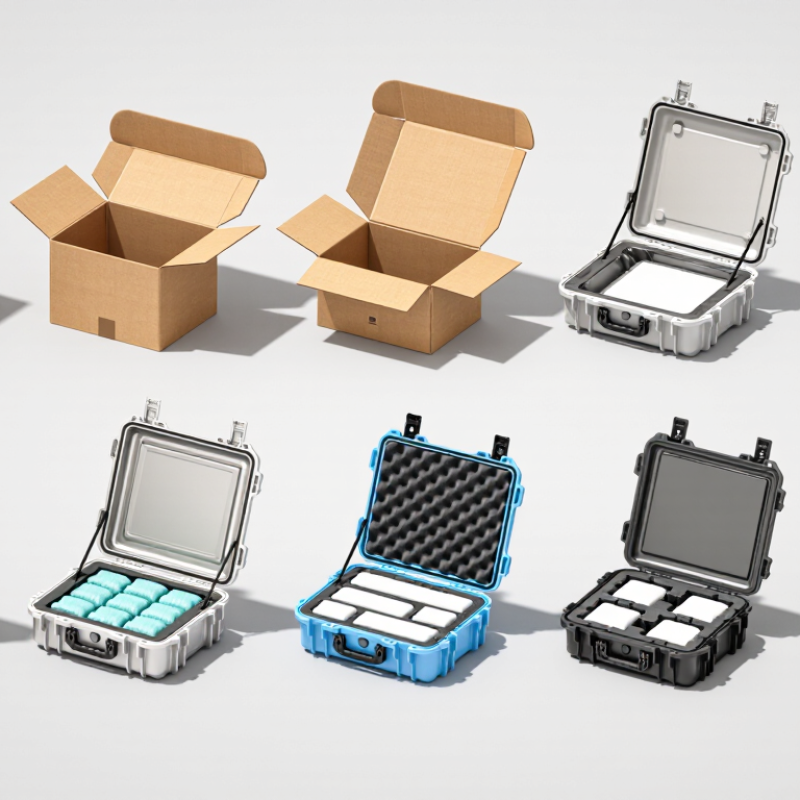
Top 10 Peptide Packaging Boxes for Global Buyers

Peptide Storage Profiles: 2–8°C Refrigeration and 15–25°C Controlled Conditions

Top 10 Peptide Packaging Boxes for Global Buyers

Peptide Storage Profiles: 2–8°C Refrigeration and 15–25°C Controlled Conditions

Peptide packaging boxes must match the product’s validated storage profile. WHO Technical Report Series No. 961, Annex 9, describes refrigerated storage near 5°C, commonly managed within 2–8°C. For controlled conditions, 15–25°C is widely used in pharmaceutical handling. A box is not merely a container. It is a temperature-management system.

For 2–8°C shipments, insulated boxes need qualified coolant placement, internal spacing, and reliable temperature indicators. Packaging professionals should review thermal mapping results before approving a design. WHO good distribution practice guidance stresses documented temperature control during transport and storage. A practical box may include a secondary sealed pouch, absorbent material, and a tamper-evident closure. Small details matter.

For 15–25°C conditions, insulation still protects against short exposure to heat or cold. USP General Chapter <659> supports defined storage conditions and controlled temperature expectations. Data loggers can reveal hidden temperature spikes near box walls. That evidence is valuable, although one logger may not represent every shipment. This is where buyers should question assumptions. Box dimensions, route duration, seasonal weather, and opening frequency can change performance. A strong specification should state payload size, conditioning time, allowable excursions, and test method. Sometimes, simpler packaging performs better.

Top 10 Peptide Packaging Boxes for Global Buyers - Peptide Storage Profiles: 2–8°C Refrigeration and 15–25°C Controlled Conditions

Rank Packaging Box Type Typical Primary Container Recommended Storage Profile Temperature Range Key Protection Features Typical Global Shipping Use
1 Insulated Cold-Chain Carton Sealed vial or prefilled syringe Refrigerated distribution for temperature-sensitive peptides 2–8°C Thermal insulation, coolant cavity, tamper-evident closure, impact protection International air shipments requiring a maintained refrigerated range
2 Foam Insert Vial Box Small glass or polymer vial Refrigerated storage with strong secondary protection 2–8°C Precision-cut foam, vial separation, vibration reduction, stackable outer carton Small-batch laboratory and clinical sample shipments
3 Multi-Vial Divider Box Multiple sealed vials Refrigerated storage for grouped peptide products 2–8°C Cell dividers, barcode-label area, moisture-resistant coating, organized loading Wholesale distribution and consolidated international orders
4 Controlled-Ambient Folding Carton Sealed vial, ampoule, or blister Controlled ambient storage when supported by the product specification 15–25°C Light-blocking board, dust protection, tamper-evident seal, compact format Routine parcel delivery without active refrigeration
5 Light-Protective Foil-Lined Box Light-sensitive peptide vial 2–8°C or 15–25°C according to the approved product label 2–8°C / 15–25°C Reduced light exposure, foil-laminated interior, cushioning, clear orientation markings Long-distance air transport where light exposure must be minimized
6 Dry-Powder Peptide Box Lyophilized powder vial Dry, protected storage; temperature depends on stability data 2–8°C / 15–25°C Desiccant compatibility, moisture barrier, vial neck protection, secure insert Research and analytical shipments of freeze-dried peptide materials
7 Syringe Protection Box Prefilled syringe or cartridge Refrigerated or controlled ambient storage based on validated requirements 2–8°C / 15–25°C Rigid cradle, tip-cap clearance, anti-rolling structure, puncture and shock resistance Medical supply distribution and direct-to-site deliveries
8 Temperature-Monitoring Shipper Box Vial, syringe, or secondary pouch Validated cold-chain or controlled-ambient transport 2–8°C / 15–25°C Space for a temperature logger, insulated panels, security seal, shipping labels Cross-border shipments requiring temperature evidence and traceability
9 Compact Sample Transport Box One to four sample vials Short-duration refrigerated or controlled-ambient transit 2–8°C / 15–25°C Low internal movement, tamper indication, compact dimensions, easy handling Laboratory samples, stability testing, and small international consignments
10 Reusable Insulated Return Box Vial tray or sealed secondary container Repeated refrigerated logistics with qualified pack-out procedures 2–8°C Reusable insulation, replaceable coolant components, durable shell, cleaning-compatible surfaces Recurring clinical, research, and distributor supply routes

Storage temperatures must be confirmed against the peptide manufacturer’s approved label, stability data, and validated transport procedure. The 2–8°C range indicates refrigerated storage, while 15–25°C indicates controlled ambient conditions.

Packaging Quality Benchmarks: ISO 15378, EU GDP, and ISTA 3A Testing

Top 10 Peptide Packaging Boxes for Global Buyers

For peptide shipments, box selection begins with controlled manufacturing. ISO 15378 aligns primary packaging production with pharmaceutical quality systems and risk-based process control. Buyers should request traceability records, cleanliness controls, and documented change management. A printed certificate alone is not enough.

EU GDP guidance requires documented temperature conditions, qualified transport processes, and investigation of deviations. This matters because WHO has reported that up to 50% of temperature-sensitive vaccines are wasted annually through cold-chain failures. Peptide packaging should therefore include calibrated indicators, validated insulation, and clear handling instructions. ISTA 3A testing adds practical stress checks, including vibration, compression, impact, and environmental conditioning. A box may pass one test and still fail during a delayed airport transfer. That uncomfortable gap deserves attention.

Tips: Ask for the full ISTA 3A test report, not only a pass statement. Check whether testing used your actual payload, coolant ratio, and seasonal profile. Compare internal temperatures at the center and corners. Also review ISO 15378 audit scope and EU GDP deviation procedures. The “top ten” box should survive real distribution, not just a clean laboratory route. Industry reports often generalize performance; your lane may behave differently.

Top 10 Peptide Box Designs Ranked by Protection, Materials, and Cost

Top 10 Peptide Packaging Boxes for Global Buyers

Protection, material quality, and cost shape this practical ranking of peptide box designs.

Rank 1 is the rigid two-piece box, offering strong compression resistance and a premium unboxing experience.

Rank 2 is the folding carton with a fitted insert, balancing protection, storage efficiency, and moderate cost.

Rank 3 is the corrugated mailer, suitable for longer shipping routes and heavier secondary packaging.

Rank 4 is the tuck-end carton, affordable and easy to assemble.

Rank 5 is the magnetic closure box, attractive but less economical for large orders.

Rank 6 is the sleeve-and-tray design, which protects small containers while using fewer materials.

Rank 7 is the kraft paper box, recyclable and cost-effective, though moisture resistance needs attention.

Rank 8 is the molded-pulp insert box, sturdy and environmentally responsible.

Rank 9 is the lightweight folding sleeve, useful for retail presentation but limited against impact.

Rank 10 is the simple paperboard carton, the lowest-cost option with basic protection.

Tips:

Match the insert to the container shape. Leave no loose movement inside. Use moisture-resistant coatings for humid routes. Confirm packaging rules in every destination market. A low-cost box can become expensive after damage claims. However, premium packaging is not always better. Excessive layers increase waste and shipping weight. This ranking may change after drop tests, humidity trials, and real customer feedback. Small weaknesses matter. Clear labels, batch information, and secure closures also support traceability and professional handling.

Global Buyer Comparison: MOQ, Customization, Dimensions, and Shipping Risks

Top 10 Peptide Packaging Boxes for Global Buyers

Global buyers often compare ten common peptide packaging box styles by MOQ, customization, size, and shipping exposure. Folding cartons may begin near 500 units, while rigid boxes often require 1,000 or more. These figures vary by factory capacity and finishing method. Request a written quotation, not a verbal estimate.

Customization affects both cost and timing. Buyers can specify board thickness, inner trays, tamper-evident seals, printing colors, and barcode placement. A 30 mm vial may need a foam insert, while a small tube requires tighter retention. Measure the filled container, cap, label, and protective wrap. Guesswork creates movement damage. It also wastes internal space.

Dimensions deserve practical testing. A box that fits perfectly may fail after humidity exposure or compression. Ask for a sample packed in a shipping carton. Check corner crushing, insert movement, and label readability. Shipping risks include customs delays, wet handling, mixed cartons, and dimensional-weight charges. Double-wall outer cartons and sealed inner bags can reduce exposure, but they do not solve every route-specific problem. Confirm pallet limits and documentation requirements with the carrier and destination authorities. Some suppliers promise “global shipping” without explaining insurance or replacement terms. That promise needs scrutiny. I would also recheck the MOQ after artwork approval; small design changes can quietly raise production quantities.

Selection Checklist: Barrier Performance, Tamper Evidence, and Serialization

Top 10 Peptide Packaging Boxes for Global Buyers

Peptide packaging boxes need more than attractive printing. They must protect sensitive contents from moisture, oxygen, light, and temperature changes. USP <671> evaluates packaging systems through moisture-permeation and barrier testing. Ask suppliers for test reports, not broad claims. A box may look rigid but still fail after repeated warehouse handling. That detail is easy to miss.

Tamper evidence should be visible within seconds. Use tear strips, destructible labels, or sealed carton ends. The European Commission’s Delegated Regulation (EU) 2016/161 requires medicine packs to carry a unique identifier and an anti-tampering device. The design should show damage clearly. Subtle seals are often a poor choice. Human inspection remains imperfect.

Serialization must support package-level traceability. Under the U.S. Drug Supply Chain Security Act, electronic tracing is required at the package level across the supply chain. A 2D code commonly carries the product code, batch number, expiry date, and serial number, following GS1 healthcare guidance. Test scanning on curved surfaces and under dim warehouse lighting. Cold-chain labels also need adhesive stability. One weakness remains: more data does not guarantee better control. Packaging teams should review failed scans, damaged seals, and unclear instructions before final approval.

Copyright 2025 Fluidra S.A. | Created by BCM Marketing Agencia Privacy Policy Legal note | Cookie policy |

Technical cookies are strictly necessary for our website to work and you can navigate through it. These types of cookies are those that, for example, allow us to identify you, give you access to certain restricted parts of the page if necessary, or remember different options or services already selected by you, such as your privacy preferences. Therefore, they are activated by default, your authorization not being necessary in this regard. Through the configuration of your browser, you can block or alert the presence of this type of cookies, although such blocking will affect the proper functioning of the different functionalities of our website.


The analysis cookies allow us to study the navigation of the users of our website in general (for example, which sections of the page are the most visited, which services are used most and if they work correctly, etc.). From the statistical information on navigation on our website, we can improve both the operation of the page itself and the different services it offers. Therefore, these cookies do not have an advertising purpose, but only serve to make our website work better, adapting to our users in general. By activating them you will contribute to this continuous improvement. You can enable or disable these cookies by checking the corresponding box, being disabled by default.


Functionality cookies allow us to remember your preferences, to personalize certain characteristics and general options of our website, every time you access it (for example, the language in which the information is presented to you, the sections marked as favorites, your browser type, etc.) Therefore, this type of cookies does not have an advertising purpose, but by activating them you will improve the functionality of the website (for example, adapting to your type of browser) and the customization of it based on your preferences (for example, by presenting the information in the language that you have chosen in previous occasions), which will contribute to the ease, usability and comfort of our page during your navigation. You can enable or disable these cookies by checking the corresponding box, being disabled by default.


Advertising cookies allow us to manage the advertising spaces included in our website based on criteria such as the content shown or the frequency in which the ads are displayed. For example, if you have been shown the same ad several times on our website, and you have not shown a personal interest by clicking on it, it will not appear again. In summary, by activating this type of cookies, the advertising shown on our website will be more useful and diverse, and less repetitive. You can enable or disable these cookies by checking the corresponding box, being disabled by default.


Behavioral advertising cookies allow us to obtain information based on the observation of your browsing habits and behaviors on the web, in order to show you advertising content that best suits your personal tastes and interests. To understand it in a very simple way, we will give you a fictitious example: if your last searches on the web were related to suspense literature, we would show you advertising about suspense books. Therefore, activating this type of cookies, the advertising that we show you on our website will not be generic, but will be oriented to your searches, tastes and interests, therefore adjusting exclusively to you. You can enable or disable these cookies by checking the corresponding box, being disabled by default.
To understand it in a very simple way, we will give you a fictitious example: if your last searches on the web were related to suspense literature, we would show you advertising about suspense books. Therefore, activating this type of cookies, the advertising that we show you on our website will not be generic, but will be oriented to your searches, tastes and interests, therefore adjusting exclusively to you. You can enable or disable these cookies by checking the corresponding box, being disabled by default.

SAVE

We use our own and third-party cookies to ensure the proper functioning of the website and to analyse our services, improve your experience on our website and show you advertisements related to your interests according to profiling based on your browsing habits (e.g. websites visited). You can accept all cookies by clicking "ACCEPT" or set or reject them by clicking here. If you would like to know more about the use of cookies, please see our COOKIE POLICY.


ACCEPT ALL
Reject no essentials


