
China Top 10 Palletizing Machine Manufacturers?
FLUID HANDLING EXPERTS

Blog, all our news

China Top 10 Palletizing Machine Manufacturers?

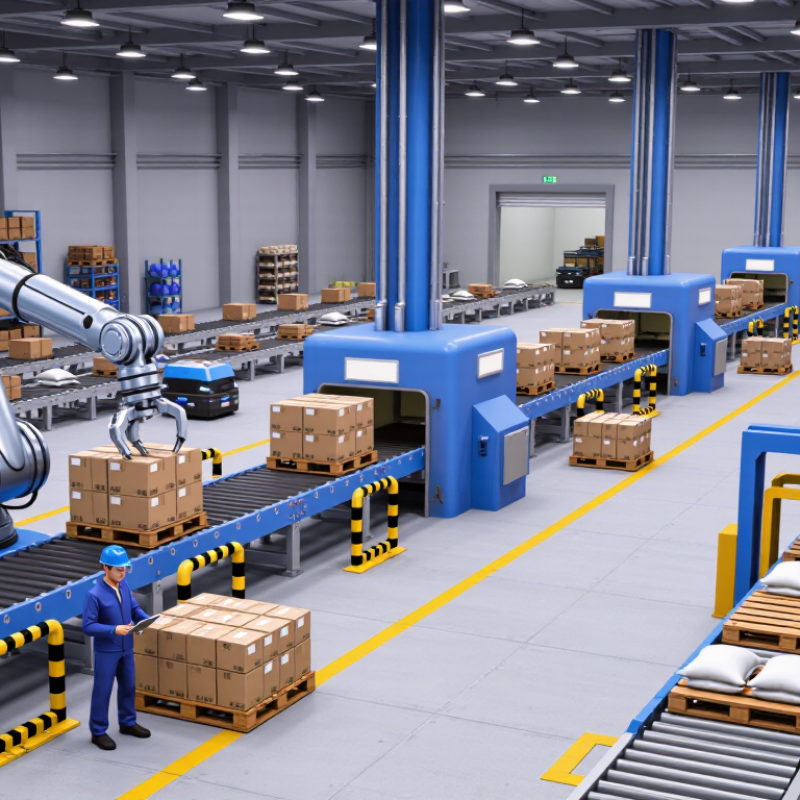
China’s palletizing industry has changed quickly, driven by food, beverage, chemical, pharmaceutical, and logistics demand. Behind many efficient production lines, a Palletizing Machine places cartons, bags, or containers in stable, repeatable patterns. The result is easier handling, safer warehouses, and fewer repetitive lifting tasks.

This guide examines China’s top 10 palletizing machine manufacturers through practical and technical criteria. We consider factory experience, robotic or conventional designs, payload capacity, cycle speed, software controls, and integration support. We also look at real application details, such as carton dimensions, pallet sizes, conveyor layouts, and shift requirements. A capable supplier should explain these limits clearly. It should not promise perfect performance without testing.

Small details matter.

A reliable manufacturer usually provides layout drawings, sample trials, installation guidance, operator training, and responsive spare-parts support. Certifications and quality systems are important, but they do not replace proven engineering. We will therefore compare public information with the practical questions buyers should ask before ordering. Can the gripper handle dusty bags? Does the robot maintain accuracy after long shifts? How quickly can a technician diagnose a sensor fault?

No ranking is perfectly universal. Some manufacturers publish detailed technical data, while others reveal less about factory testing and after-sales performance. That limitation deserves attention. This overview aims to offer a balanced starting point, not an unquestionable verdict. By comparing capabilities, industries served, customization, and ownership costs, readers can identify the Chinese supplier that best matches their line, budget, and long-term operating conditions.
China Top 10 Palletizing Machine Manufacturers?

What Defines a Palletizing Machine Manufacturer? Key Terms and System Types

When researching China’s top 10 palletizing machine manufacturers, start with the term manufacturer. It should mean more than a trading office. A real manufacturer engineers, assembles, tests, and supports the system. Ask for factory records, component traceability, and documented acceptance tests. Experience appears in small details. Cable routing should be clean. Guards should open without awkward tools. Operators need clear recovery instructions. These signs are practical, not promotional.

Key terms can reveal technical depth. Payload describes the maximum product weight at the gripper. Reach defines the working envelope. Cycle time states how quickly the robot completes a placement pattern. Infeed speed, pallet height, layer pattern, and changeover time also affect output. Do not judge capacity from a single number. A carton may deform at high acceleration. Dust, cold rooms, uneven floors, and variable box sizes can expose weak designs. Site trials are more reliable than polished videos.

System types include robotic, conventional layer, and gantry palletizers. Robotic systems suit mixed formats and frequent product changes. Layer machines often deliver stable, high throughput with uniform cases. Gantry systems can provide precise movement across broad layouts. The best choice depends on product behavior, floor space, safety design, and maintenance skills. Request risk assessments, training plans, spare-part lists, and remote support terms. A manufacturer should explain limitations plainly. Some specifications remain uncertain until testing. That is not failure; hiding it is.

China’s Robotics Market: 276,288 Industrial Robots Installed in 2023 (IFR)

China’s robotics market reached 276,288 industrial robot installations in 2023, according to the International Federation of Robotics (IFR). This figure shows strong demand for automated production, including robotic palletizing systems. These machines arrange cartons, bags, or containers onto pallets with consistent spacing and repeatable movement.

The “top 10” palletizing machine manufacturers should not be judged by sales claims alone. A reliable evaluation examines payload range, cycle speed, gripper design, software control, safety functions, and after-sales support. Factory experience also matters. A system handling 25-kilogram bags requires different mechanics from one stacking lightweight cartons. Floor space, pallet patterns, product temperature, and conveyor layout can change the final choice.

China’s large installation base has encouraged more local engineering experience and faster system customization. Many integrators can connect robots with conveyors, vision devices, wrapping units, and warehouse software.

Yet installation numbers do not automatically prove quality. That needs careful checking. Buyers should request factory references, maintenance records, testing videos, and clear performance conditions. They should also confirm whether quoted cycle times include product changes and pallet exchanges.

Some projects still expose practical weaknesses. Dust can affect sensors, irregular cartons can reduce stacking accuracy, and poorly planned access can make maintenance frustrating. A promising supplier may still need stronger documentation or clearer training. These details deserve attention before comparing manufacturers or approving a palletizing line.

Ranking the Top 10: Revenue, Output, Patents, Certifications, and Service Data

China Top 10 Palletizing Machine Manufacturers?

A reliable top-ten ranking should measure more than shipment volume. Revenue can show commercial strength, while annual output reflects manufacturing capacity. World Robotics 2024 reported 276,288 industrial robots installed in China during 2023, representing about 51% of global installations. This figure confirms strong automation demand, but it does not prove palletizing expertise. Our ranking therefore compares disclosed revenue, palletizing output, patent activity, certification records, and after-sales performance.

Revenue receives 30% of the score, based on audited statements and credible industry filings.

Output receives 25%, using verified production or shipment data where available.

Certifications, including ISO 9001 and ISO 14001, contribute 15%, while service receives 10%.

Patent quality matters, not only patent quantity. WIPO’s IP Statistics Data Center can help distinguish active invention portfolios from simple registration volume. Response time, spare-parts access, commissioning coverage, and technician availability are practical indicators.

The data is imperfect.

Some manufacturers publish detailed figures; others disclose very little. That gap can distort rankings. A smaller producer may hold stronger palletizing patents but report lower revenue. Conversely, a large automation group may achieve high output without revealing product-level figures. Readers should treat this ranking as a transparent comparison, not an absolute verdict. Cross-checking supplier claims against audited documents, certification databases, customer references, and site acceptance records remains essential. Sources include World Robotics 2024, WIPO IP Statistics Data Center, ISO certification records, and publicly available company filings.

Technical Comparison: Payload, Reach, Cycle Time, Accuracy, and OEE

China’s top ten palletizing machine manufacturers should be compared by measured output, not brochure speed. The World Robotics 2024 report recorded 541,302 industrial robot installations worldwide in 2023. That growth makes disciplined testing more important. For pallet loads, payload must include the gripper, slip sheets, and product variation. Reach is not free. At maximum extension, acceleration usually falls, and cycle time can widen. Ask each supplier to run identical cartons, stack patterns, and pallet heights.

Cycle time should state the complete motion, including pickup, travel, placement, and return. A claimed 12-second cycle may exclude pallet changes or safety pauses. Accuracy claims also need context. ISO 9283 provides methods for measuring pose accuracy and repeatability under defined conditions. Buyers should request repeatability results at normal payload and full reach, not only laboratory settings. Small errors become visible when the top layer leans.

OEE is harder. Calculate availability, performance, and quality from logged production data. The commonly cited 85% world-class benchmark is useful, but not sacred for a new cell. Record micro-stops, gripper faults, changeover minutes, and rejected cases for at least one full shift. In practice, suppliers may optimize cycle time while weakening carton stability. That trade-off deserves scrutiny. Cold floors, dusty cases, and uneven pallets can expose weaknesses that a polished demonstration hides.

Buyer’s Guide: ISO 10218 Safety, Integration Cost, ROI, and After-Sales Support

China Top 10 Palletizing Machine Manufacturers?

A palletizing machine should be judged beyond purchase price. ISO 10218-1 and ISO 10218-2:2025 emphasize risk assessment, safeguarding, emergency stops, and validated integration. Ask for safety test records, not only a compliance statement. During a factory visit, watch the robot stop when a gate opens. Then check restart controls, light curtains, and access distances.

Integration often determines the real budget. Include grippers, conveyors, pallet dispensers, guarding, programming, shipping, training, and production downtime. Industry integration benchmarks commonly place these costs at 30–70% of the robot cell price. A small footprint may still need reinforced flooring and electrical upgrades. The International Federation of Robotics reported 541,302 industrial robots installed worldwide in 2023, showing strong automation demand. Yet high adoption does not guarantee a fast payback.

Calculate ROI from actual shift data. Measure cartons per hour, operators per shift, changeover minutes, rejected cases, and annual maintenance. A three-year model is more credible than a payback promise. Industry research from Interact Analysis reports that labor shortages remain a major automation driver, but integration complexity still delays projects. That matters. A spreadsheet can look convincing, yet unstable cartons can destroy the forecast. Require remote diagnostics, spare-parts lead times, response targets, and local service coverage. Ask who owns the source code. Also test a mixed-SKU pattern before signing, because advertised cycle rates often use ideal conditions.

Article Source:

Copyright 2025 Fluidra S.A. | Created by BCM Marketing Agencia Privacy Policy Legal note | Cookie policy |

Technical cookies are strictly necessary for our website to work and you can navigate through it. These types of cookies are those that, for example, allow us to identify you, give you access to certain restricted parts of the page if necessary, or remember different options or services already selected by you, such as your privacy preferences. Therefore, they are activated by default, your authorization not being necessary in this regard. Through the configuration of your browser, you can block or alert the presence of this type of cookies, although such blocking will affect the proper functioning of the different functionalities of our website.


The analysis cookies allow us to study the navigation of the users of our website in general (for example, which sections of the page are the most visited, which services are used most and if they work correctly, etc.). From the statistical information on navigation on our website, we can improve both the operation of the page itself and the different services it offers. Therefore, these cookies do not have an advertising purpose, but only serve to make our website work better, adapting to our users in general. By activating them you will contribute to this continuous improvement. You can enable or disable these cookies by checking the corresponding box, being disabled by default.


Functionality cookies allow us to remember your preferences, to personalize certain characteristics and general options of our website, every time you access it (for example, the language in which the information is presented to you, the sections marked as favorites, your browser type, etc.) Therefore, this type of cookies does not have an advertising purpose, but by activating them you will improve the functionality of the website (for example, adapting to your type of browser) and the customization of it based on your preferences (for example, by presenting the information in the language that you have chosen in previous occasions), which will contribute to the ease, usability and comfort of our page during your navigation. You can enable or disable these cookies by checking the corresponding box, being disabled by default.


Advertising cookies allow us to manage the advertising spaces included in our website based on criteria such as the content shown or the frequency in which the ads are displayed. For example, if you have been shown the same ad several times on our website, and you have not shown a personal interest by clicking on it, it will not appear again. In summary, by activating this type of cookies, the advertising shown on our website will be more useful and diverse, and less repetitive. You can enable or disable these cookies by checking the corresponding box, being disabled by default.


Behavioral advertising cookies allow us to obtain information based on the observation of your browsing habits and behaviors on the web, in order to show you advertising content that best suits your personal tastes and interests. To understand it in a very simple way, we will give you a fictitious example: if your last searches on the web were related to suspense literature, we would show you advertising about suspense books. Therefore, activating this type of cookies, the advertising that we show you on our website will not be generic, but will be oriented to your searches, tastes and interests, therefore adjusting exclusively to you. You can enable or disable these cookies by checking the corresponding box, being disabled by default.
To understand it in a very simple way, we will give you a fictitious example: if your last searches on the web were related to suspense literature, we would show you advertising about suspense books. Therefore, activating this type of cookies, the advertising that we show you on our website will not be generic, but will be oriented to your searches, tastes and interests, therefore adjusting exclusively to you. You can enable or disable these cookies by checking the corresponding box, being disabled by default.

SAVE

We use our own and third-party cookies to ensure the proper functioning of the website and to analyse our services, improve your experience on our website and show you advertisements related to your interests according to profiling based on your browsing habits (e.g. websites visited). You can accept all cookies by clicking "ACCEPT" or set or reject them by clicking here. If you would like to know more about the use of cookies, please see our COOKIE POLICY.


ACCEPT ALL
Reject no essentials


