
China Top 10 Oil Immersed Transformer Manufacturers?
FLUID HANDLING EXPERTS

Blog, all our news

China Top 10 Oil Immersed Transformer Manufacturers?

The search for China’s top 10 oil-immersed transformer manufacturers matters as power networks expand and equipment requirements grow more demanding. The International Energy Agency’s 2023 report, Electricity Grids and Secure Energy Transitions, says annual grid investment needs to rise from about USD 300 billion to more than USD 600 billion by 2030. That wider investment trend increases the importance of dependable transformers, from substations to industrial sites.

The report warns: “The world’s electricity grids are not keeping pace with the rapid growth of clean energy technologies.” IEA Executive Director Fatih Birol has highlighted this challenge. It gives buyers useful context, though it is not a transformer-specific forecast. An Electric Transformer Oil-Immersed Transformer must be judged on more than rated capacity. Oil quality, winding design, cooling performance, factory testing, and service support all matter. A small detail, such as a clear test report or accessible spare parts, can matter years later.

This guide compares manufacturers using practical signals: product range, export experience, certifications, quality controls, and documented project references. Rankings can vary by application and available evidence. That is worth remembering. A large catalogue does not prove consistent field performance, and public data may be incomplete. Buyers should verify current specifications and request test records directly before shortlisting suppliers.
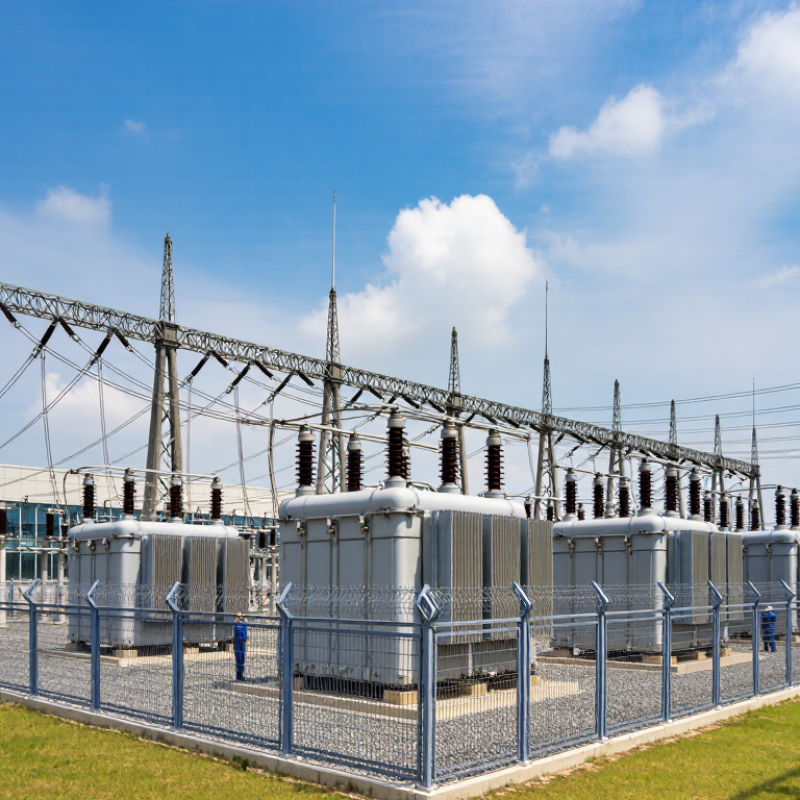
China Top 10 Oil Immersed Transformer Manufacturers?

What Is an Oil-Immersed Transformer?

What Is an Oil-Immersed Transformer?

An oil-immersed transformer places its magnetic core and windings inside a tank filled with insulating oil. The oil helps prevent electrical breakdown and carries heat away from energized components. As the transformer operates, warmed oil rises and cooler oil moves down, creating natural circulation in many designs. Radiators or cooling fans can help release heat. That matters.

The tank may use a conservator to accommodate changes in oil volume, or a sealed design that limits contact with outside air. The right arrangement depends on capacity, installation conditions, and maintenance needs. In field inspections, technicians often check for leaks, unusual temperature readings, damaged seals, and signs of oil deterioration. These details can reveal developing problems, though no single check tells the whole story. Oil-immersed equipment can be robust, but it still needs routine care and suitable ventilation around its enclosure.

Tips: Keep cooling surfaces clear of dust and debris. Record oil tests and temperature trends over time. Any internal inspection or oil sampling should follow the equipment maker’s instructions and be handled by qualified personnel. A quiet transformer is not automatically a healthy one.

What Is an Oil-Immersed Transformer?

An oil-immersed transformer uses insulating liquid around its core and windings to provide electrical insulation and carry heat away. The chart shows selected temperature-rise limits for liquid-immersed transformers under IEC 60076-2; actual limits depend on the transformer design and applicable requirements.

How to read it: Temperature rise is measured above the surrounding ambient temperature. A rise of 1 K equals a difference of 1 °C. Values shown are standard limits, not measured temperatures for a particular transformer.

How Oil-Immersed Transformers Work

An oil-immersed transformer transfers electrical energy between windings through electromagnetic induction. Alternating current in the primary winding creates a changing magnetic field in the laminated steel core. That field induces voltage in the secondary winding. Simple in principle.

Under load, however, copper and core losses generate heat, and insulation condition matters.

Mineral insulating oil surrounds the core and windings, carrying heat to the tank walls or external radiators. In many designs, hot oil rises while cooler oil sinks, creating natural circulation; larger units may use pumps and fans.

The oil also provides electrical insulation, so moisture, dissolved gases, and particles can weaken performance. Routine sampling can reveal developing faults before a breakdown, but one test never tells the whole story.

The U.S. Department of Energy’s 2013 distribution-transformer standards analysis projected 3.43 quadrillion Btu in energy savings over 30 years, underscoring the value of reducing losses across many units. That figure covers efficiency standards, not oil cooling alone. Design details, load patterns, ambient temperature, and maintenance all shape real-world performance.

Key Criteria for Evaluating Chinese Manufacturers

When comparing Chinese oil-immersed transformer manufacturers, start with engineering fit, not catalogue size. Check rated voltage, capacity, cooling method, impedance, and installation conditions against the project specification. Ask how the design accounts for ambient heat, altitude, and expected load cycles. Details matter. Request type-test and routine-test records, including temperature-rise, ratio, winding-resistance, and dielectric results. Confirm that the figures match the proposed design, not merely a similar unit. Review applicable IEC or project-required standards, along with calibration records for test equipment. Documents should be traceable.

Materials and production controls deserve equal attention. Ask for evidence of conductor and core-steel grades, insulation systems, oil specifications, and tank corrosion protection. During a factory assessment, look at winding cleanliness, drying records, weld inspection, and vacuum oil filling. A spreadsheet alone can mislead. Check how defects are recorded and corrected, rather than accepting a quality certificate at face value. Also evaluate delivery planning, spare-parts availability, and technical support after installation. Request references for comparable transformer ratings and operating conditions, then verify what those installations actually required. No checklist is perfect. Some buyers may also overlook how local service response affects downtime; that deserves a direct question before selection.

China’s Top 10 Oil-Immersed Transformer Manufacturers

China’s Top 10 Oil-Immersed Transformer Manufacturers

China’s top ten oil-immersed transformer manufacturers are best compared by capability, not by a single ranking. A useful assessment considers design range, production capacity, quality controls, and after-sales support. These units serve substations, industrial sites, and commercial networks, where reliability matters over many years. Look for clear information on rated capacity, voltage levels, cooling methods, and insulation materials. Ask how each unit is tested before shipment, and request records for routine and type tests. Oil handling deserves attention too. Clean processing and effective sealing help reduce moisture and contamination risks. Small details matter.

A manufacturer’s published specifications are only part of the picture. Confirm that the factory can build to the project’s requirements and provide practical installation guidance. Review sample drawings, inspection procedures, delivery schedules, and warranty terms. If possible, arrange an independent factory assessment or review completed project references. A top-ten list can be a useful starting point, but it may overlook differences in service quality or product fit. Rankings change, and marketing claims are not proof. Even a careful comparison can miss something; check the details that matter most to your site before choosing a supplier.

China’s Top 10 Oil-Immersed Transformer Manufacturers

Non-ranked market overview: the rows summarize common oil-immersed transformer product segments, not individual manufacturers or a verified company ranking. Specifications vary by project and supplier.

No. Product Segment Typical Rating Range Common Voltage Classes Typical Cooling / Configuration Common Applications
1 Pole-Mounted Distribution Transformer Typically tens to several hundred kVA Distribution primary voltage to low-voltage supply; commonly 0.4 kV secondary in three-phase systems Usually ONAN; single-phase or three-phase designs Overhead distribution networks and rural electrification
2 Pad-Mounted Distribution Transformer Commonly hundreds of kVA to a few MVA Medium-voltage distribution to low-voltage utilization levels Typically sealed tank; often ONAN Underground distribution, commercial sites, and residential developments
3 Substation Distribution Transformer Hundreds of kVA to several MVA Typically medium-voltage primary with low-voltage secondary ONAN; optional forced-air cooling on some designs Utility substations, campuses, factories, and large buildings
4 Industrial Power Transformer Typically a few MVA to tens of MVA Designed for the site supply and process voltage; often medium-voltage primary ONAN or ONAF, depending on rating and load profile Manufacturing plants, mines, and industrial power systems
5 Renewable-Energy Step-Up Transformer From hundreds of kVA to tens of MVA, depending on the project Generator-side voltage stepped up to a collection or grid voltage Often ONAN or ONAF; design matched to variable generation duty Solar farms, wind farms, and other grid-connected generation
6 Furnace Transformer Project-specific; ratings range from MVA-scale to much larger installations High-voltage supply with very low secondary voltage and high current Specialized oil cooling and electrical design Electric arc furnaces, steelmaking, and other high-current processes
7 Rectifier Transformer Application-specific; commonly specified in MVA Selected to match the rectifier input and required DC output Oil-immersed design with winding and thermal provisions for harmonic duty Electrolysis, industrial drives, and high-power DC systems
8 Traction Transformer Varies by railway system and installation Matched to railway supply and traction-converter requirements Specialized design for cyclic and dynamic loading Railway traction substations and rail power systems
9 Grid Power Transformer Typically tens to hundreds of MVA Commonly used across transmission and sub-transmission voltage levels ONAN, ONAF, or other specified cooling arrangements Transmission substations and bulk power networks
10 Autotransformer Usually selected for high-capacity transmission interconnections Connects transmission systems with different, often relatively close, voltage levels Oil-immersed; cooling arrangement determined by rating and site conditions Grid interconnection, voltage transformation, and transmission networks

Cooling abbreviations are commonly used in transformer specifications: ONAN means Oil Natural Air Natural, and ONAF means Oil Natural Air Forced. Voltage, rating, cooling, and compliance requirements should be confirmed against the project specification and applicable standards, such as the IEC 60076 series.

Applications and Market Trends in China

China’s oil-immersed transformers serve substations, industrial parks, and renewable-energy projects. Their liquid cooling supports high-capacity operation, while sealed tanks help protect insulation from dust and moisture. Demand is shifting toward equipment that can handle variable wind and solar output. The IEA’s Renewables 2023 report projected that China would account for almost 60% of global renewable capacity additions from 2023 to 2028. More generation also means more grid connections and substations. The opportunity is clear, but project schedules and local grid capacity can still constrain deployment.

The IEA’s 2023 report Electricity Grids and Secure Energy Transitions estimated that annual global grid investment needs to exceed US$600 billion by 2030 to meet climate goals. This is not a China-only estimate, but it highlights the wider need for upgraded transformers and grid infrastructure. Buyers should assess load cycles, ambient temperatures, overload requirements, and maintenance access—not just rated capacity. Oil sampling and leak inspections matter. They are easy to overlook.

Tips: For outdoor installations, check cooling performance and corrosion protection against local weather. Request documented test results and a clear maintenance plan. A higher efficiency rating helps, but real savings depend on actual load. That detail is sometimes missed.

Copyright 2025 Fluidra S.A. | Created by BCM Marketing Agencia Privacy Policy Legal note | Cookie policy |

Technical cookies are strictly necessary for our website to work and you can navigate through it. These types of cookies are those that, for example, allow us to identify you, give you access to certain restricted parts of the page if necessary, or remember different options or services already selected by you, such as your privacy preferences. Therefore, they are activated by default, your authorization not being necessary in this regard. Through the configuration of your browser, you can block or alert the presence of this type of cookies, although such blocking will affect the proper functioning of the different functionalities of our website.


The analysis cookies allow us to study the navigation of the users of our website in general (for example, which sections of the page are the most visited, which services are used most and if they work correctly, etc.). From the statistical information on navigation on our website, we can improve both the operation of the page itself and the different services it offers. Therefore, these cookies do not have an advertising purpose, but only serve to make our website work better, adapting to our users in general. By activating them you will contribute to this continuous improvement. You can enable or disable these cookies by checking the corresponding box, being disabled by default.


Functionality cookies allow us to remember your preferences, to personalize certain characteristics and general options of our website, every time you access it (for example, the language in which the information is presented to you, the sections marked as favorites, your browser type, etc.) Therefore, this type of cookies does not have an advertising purpose, but by activating them you will improve the functionality of the website (for example, adapting to your type of browser) and the customization of it based on your preferences (for example, by presenting the information in the language that you have chosen in previous occasions), which will contribute to the ease, usability and comfort of our page during your navigation. You can enable or disable these cookies by checking the corresponding box, being disabled by default.


Advertising cookies allow us to manage the advertising spaces included in our website based on criteria such as the content shown or the frequency in which the ads are displayed. For example, if you have been shown the same ad several times on our website, and you have not shown a personal interest by clicking on it, it will not appear again. In summary, by activating this type of cookies, the advertising shown on our website will be more useful and diverse, and less repetitive. You can enable or disable these cookies by checking the corresponding box, being disabled by default.


Behavioral advertising cookies allow us to obtain information based on the observation of your browsing habits and behaviors on the web, in order to show you advertising content that best suits your personal tastes and interests. To understand it in a very simple way, we will give you a fictitious example: if your last searches on the web were related to suspense literature, we would show you advertising about suspense books. Therefore, activating this type of cookies, the advertising that we show you on our website will not be generic, but will be oriented to your searches, tastes and interests, therefore adjusting exclusively to you. You can enable or disable these cookies by checking the corresponding box, being disabled by default.
To understand it in a very simple way, we will give you a fictitious example: if your last searches on the web were related to suspense literature, we would show you advertising about suspense books. Therefore, activating this type of cookies, the advertising that we show you on our website will not be generic, but will be oriented to your searches, tastes and interests, therefore adjusting exclusively to you. You can enable or disable these cookies by checking the corresponding box, being disabled by default.

SAVE

We use our own and third-party cookies to ensure the proper functioning of the website and to analyse our services, improve your experience on our website and show you advertisements related to your interests according to profiling based on your browsing habits (e.g. websites visited). You can accept all cookies by clicking "ACCEPT" or set or reject them by clicking here. If you would like to know more about the use of cookies, please see our COOKIE POLICY.


ACCEPT ALL
Reject no essentials


