
What Are the Top 10 Magnetic Hook Suppliers in China?
FLUID HANDLING EXPERTS

Blog, all our news

What Are the Top 10 Magnetic Hook Suppliers in China?

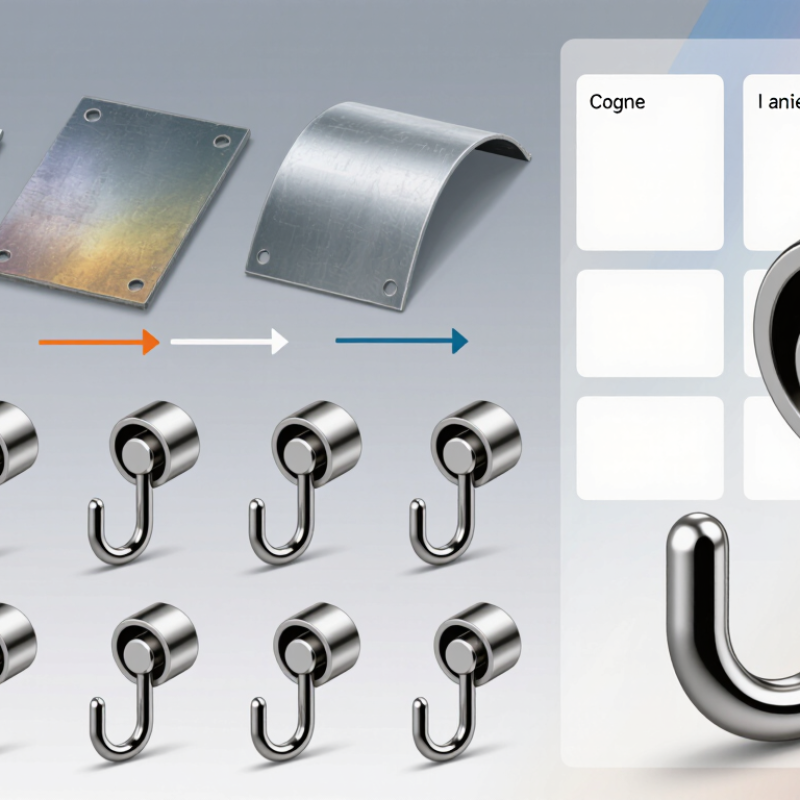
Magnetic Hooks look simple: a magnet, a steel shell, and a small hook. Yet their performance depends on magnet grade, contact surface, coating, and load direction. A hook that holds firmly on a clean steel cabinet may slip on a painted or curved surface. Small details matter.

The material supply chain adds context. The U.S. Geological Survey’s Mineral Commodity Summaries 2024 estimated China’s rare-earth mine production at 240,000 metric tons in 2023, out of roughly 350,000 metric tons worldwide. This figure describes rare-earth output, not magnetic-hook manufacturing or supplier quality. Still, it shows why buyers should ask which magnet materials a supplier uses and how those materials are verified. Not every hook uses a rare-earth magnet.

This guide examines ten China-based suppliers through practical sourcing questions: product range, stated holding capacity, customization, quality-control evidence, and export experience. Buyers should request test conditions, not just a maximum-load claim. Ask whether testing used a clean, flat steel plate and whether the reported force was measured vertically. A sample is useful. A repeatable test is better. Supplier claims can vary, and published information may be incomplete; that limitation deserves attention before comparing prices or placing a bulk order.
What Are the Top 10 Magnetic Hook Suppliers in China?

Understanding Magnetic Hooks and Their Common Applications

Magnetic hooks use a permanent magnet to hold objects against ferromagnetic surfaces such as steel cabinets, beams, or equipment panels. Their grip depends on more than the stated pull force. A clean, flat, thick steel surface usually provides better contact than a curved, painted, or thin panel. Small details matter. A hook may resist a straight pull well but slide under a sideways load, especially when a hanging item swings.

In workshops, kitchens, garages, and warehouses, these hooks can hold keys, lightweight tools, cables, aprons, or small signs. They are useful when drilling holes is inconvenient or when storage needs change often. Before hanging anything valuable or heavy, check the supplier’s load rating and test the hook on the actual surface. That distinction matters. Dust, moisture, vibration, and uneven contact can reduce holding strength, and heat may affect some magnet assemblies. I would not treat a printed capacity as a guaranteed working load; real surfaces are rarely as ideal as test conditions. A quick trial with a modest load can reveal slipping before the hook becomes part of a daily setup.

Key Criteria for Evaluating Chinese Magnetic Hook Suppliers

A reliable magnetic hook supplier should explain how its holding-force rating was measured. Ask whether testing used a clean, thick steel plate or a thinner surface like the one in your application. Results can change with steel thickness, paint, gaps, and pulling direction. Request separate figures for direct pull and sideways movement. Those details matter more than a large number on a product sheet.

Check magnet grade, protective coating, hook material, and load limits. Ask for samples from a normal production batch, then test them on your own surfaces. A hook that holds firmly on a laboratory plate may slide on a painted cabinet. Small differences count. Review inspection records, dimensional tolerances, and how defects are handled. A supplier should answer clearly and provide relevant test reports, not just polished photos. Communication can reveal a lot. If technical questions receive vague replies, consistency may be difficult to verify. Packaging also deserves attention; hooks can chip or scratch during transit if they move freely. No supplier is flawless, and sample testing takes time, but it can expose assumptions before a larger order.

Profiles of Ten Magnetic Hook Suppliers in China

China’s magnetic hook suppliers vary in product focus, factory scale, and customization options. These ten profiles describe common supplier types, not verified company rankings. A heavy-duty specialist may offer larger magnetic bases for workshops and warehouses. A household-focused maker may prioritize compact hooks with smooth finishes. A customization-oriented supplier may adjust hook shape, coating, or packaging. An OEM producer may follow buyer drawings, though design ownership should be clarified. A small-batch supplier may suit trial orders, but its unit prices can be higher.

Other useful profiles include a metalworking factory with in-house stamping, a supplier emphasizing surface finishing, and a magnet-focused producer that can explain its material choices. An export-oriented supplier may provide clearer packaging specifications. A quality-control-focused factory may document pull-force tests. Ask how tests are performed; a bare number is not enough. Details matter.

Before comparing quotes, request product dimensions, base diameter, coating options, and test conditions. Test samples on the intended surface. Magnetic performance can change with metal thickness, paint, and contact area. Some suppliers may describe capacity broadly. Verify it with recent samples and production records. The picture is rarely perfect. A transparent supplier should explain limitations, lead times, and what happens when a batch differs from the approved sample.

Comparing Suppliers by Products, Quality, and Customization

Comparing China’s ten leading magnetic-hook suppliers requires more than checking catalog size. Grand View Research valued the global permanent-magnet market at about US$45.3 billion in 2023 and projected 7.6% annual growth through 2030. That expansion makes clear specifications essential. Compare hook styles, magnet grades, dimensions, coatings, and stated load limits. A broad range is useful. But a catalog can still mislead.

Quality claims need evidence. Ask suppliers for batch-level pull-force test results, material declarations, and coating details. Test samples on the intended surface: a hook rated for a thick steel plate may hold less on a thin cabinet door. Check whether the supplier reports vertical pull or side-load capacity; these are not interchangeable. ISO 9001 certification can indicate a quality-management system, but it does not prove that every hook meets its advertised load. Small detail. Big difference.

Customization separates capable suppliers from simple resellers. Compare options for hook shape, magnet size, protective finish, packaging, and logo-free private labeling. Request a drawing and sample before approving a production run, then confirm tolerances and inspection criteria in writing. Lead time and minimum order quantities matter, too. Some buyers overlook them. The ranking should reward suppliers that share test methods and respond clearly—not just those offering the lowest quote. A perfect comparison is unlikely; supplier data are not always presented consistently.

How to Select a Supplier for Your Business Needs

Choosing a magnetic-hook supplier is not just a price comparison. Check the magnet’s grade, hook material, coating thickness, and stated holding force. Ask how that force was measured: a clean, flat steel plate gives different results from a painted or curved surface. Request samples and test them under your actual conditions. Small details matter.

McKinsey Global Institute’s 2020 report, Risk, Resilience, and Rebalancing, estimates that supply-chain disruptions can cost an average company 42% of one year’s EBITDA over a decade. This figure covers many industries, not magnetic hooks specifically, but it underlines why supplier continuity deserves scrutiny. Ask for production capacity, typical lead times, minimum order quantities, and a written inspection plan. Compare test results across several samples, including edge positions and repeated loading. A neat sample can still hide inconsistent batches. I would also check packaging; hooks rubbing together can chip their coating before arrival. Verify claims with dated test records, and clarify who pays if a batch misses the agreed specification. Some checks take time. That can feel excessive for a small order, yet skipping them is a risk worth questioning.

What Are the Top 10 Magnetic Hook Suppliers in China? - How to Select a Supplier for Your Business Needs

Use the criteria below to compare and shortlist suppliers. They are evaluation factors, not a ranking of named companies; verify all specifications and claims directly with each supplier.

No. Supplier Evaluation Factor What to Check Evidence to Request Why It Matters
1 Product and Size Range Available hook shapes, magnet diameters, housing styles, and finishes. Current catalog, dimensional drawings, and samples of the required configuration. Confirms that the supplier can meet the intended application and fit requirements.
2 Holding-Force Testing Test method, load direction, contact surface, and whether the stated force is a maximum pull force or a working-load recommendation. Test report showing the setup, surface material, results, and sample identification. Magnetic pull force varies with surface material, thickness, air gap, and load direction; a number without test conditions can be misleading.
3 Magnet Material and Grade Magnet type and grade, operating-temperature limits, and any stated corrosion protection. Material specification, technical data sheet, and traceability details where available. Material selection affects magnetic performance, temperature suitability, and resistance to damage or corrosion.
4 Housing and Hook Construction Housing material, hook material, attachment method, finish, and visible workmanship. Material details, production sample, and inspection criteria for the finished assembly. The housing and hook influence durability, appearance, and suitability for the intended environment.
5 Customization Capability Ability to adjust dimensions, hook shape, finish, packaging, or labeling, and any tooling requirements. Written specification review, prototype process, tooling quotation, and sample approval terms. Clarifies whether a standard item is suitable or whether a custom design is needed.
6 Quality-Control Process Incoming-material checks, in-process inspection, final inspection, and handling of nonconforming products. Inspection plan, sample inspection records, and the supplier's documented corrective-action process. A defined process helps identify defects and maintain consistency between production batches.
7 Order Quantity and Lead Time Minimum order quantity, sample lead time, production lead time, and capacity for repeat orders. A written quotation with quantities, schedule assumptions, and shipment-ready dates. Helps align purchasing plans with inventory needs and delivery deadlines.
8 Compliance and Documentation Documentation relevant to the destination market, product materials, and any customer-specific requirements. Applicable test reports, declarations, material documents, or other records; verify scope and validity. Requirements differ by market and application, so documentation should be checked against the buyer's actual obligations.
9 Packaging and Export Readiness Individual protection, carton specifications, packing quantity, and precautions for magnetic products during transport. Packaging specification, carton dimensions and weight, and shipping documents agreed for the order. Appropriate packaging can reduce handling damage and support smoother international shipment planning.
10 Commercial Terms and Communication Quotation validity, payment terms, warranty or defect-resolution terms, response clarity, and change-control practices. Written quotation, approved product specification, order terms, and documented communication channel. Clear terms reduce misunderstandings about price, specification changes, delivery, and remedies for defects.
Copyright 2025 Fluidra S.A. | Created by BCM Marketing Agencia Privacy Policy Legal note | Cookie policy |

Technical cookies are strictly necessary for our website to work and you can navigate through it. These types of cookies are those that, for example, allow us to identify you, give you access to certain restricted parts of the page if necessary, or remember different options or services already selected by you, such as your privacy preferences. Therefore, they are activated by default, your authorization not being necessary in this regard. Through the configuration of your browser, you can block or alert the presence of this type of cookies, although such blocking will affect the proper functioning of the different functionalities of our website.


The analysis cookies allow us to study the navigation of the users of our website in general (for example, which sections of the page are the most visited, which services are used most and if they work correctly, etc.). From the statistical information on navigation on our website, we can improve both the operation of the page itself and the different services it offers. Therefore, these cookies do not have an advertising purpose, but only serve to make our website work better, adapting to our users in general. By activating them you will contribute to this continuous improvement. You can enable or disable these cookies by checking the corresponding box, being disabled by default.


Functionality cookies allow us to remember your preferences, to personalize certain characteristics and general options of our website, every time you access it (for example, the language in which the information is presented to you, the sections marked as favorites, your browser type, etc.) Therefore, this type of cookies does not have an advertising purpose, but by activating them you will improve the functionality of the website (for example, adapting to your type of browser) and the customization of it based on your preferences (for example, by presenting the information in the language that you have chosen in previous occasions), which will contribute to the ease, usability and comfort of our page during your navigation. You can enable or disable these cookies by checking the corresponding box, being disabled by default.


Advertising cookies allow us to manage the advertising spaces included in our website based on criteria such as the content shown or the frequency in which the ads are displayed. For example, if you have been shown the same ad several times on our website, and you have not shown a personal interest by clicking on it, it will not appear again. In summary, by activating this type of cookies, the advertising shown on our website will be more useful and diverse, and less repetitive. You can enable or disable these cookies by checking the corresponding box, being disabled by default.


Behavioral advertising cookies allow us to obtain information based on the observation of your browsing habits and behaviors on the web, in order to show you advertising content that best suits your personal tastes and interests. To understand it in a very simple way, we will give you a fictitious example: if your last searches on the web were related to suspense literature, we would show you advertising about suspense books. Therefore, activating this type of cookies, the advertising that we show you on our website will not be generic, but will be oriented to your searches, tastes and interests, therefore adjusting exclusively to you. You can enable or disable these cookies by checking the corresponding box, being disabled by default.
To understand it in a very simple way, we will give you a fictitious example: if your last searches on the web were related to suspense literature, we would show you advertising about suspense books. Therefore, activating this type of cookies, the advertising that we show you on our website will not be generic, but will be oriented to your searches, tastes and interests, therefore adjusting exclusively to you. You can enable or disable these cookies by checking the corresponding box, being disabled by default.

SAVE

We use our own and third-party cookies to ensure the proper functioning of the website and to analyse our services, improve your experience on our website and show you advertisements related to your interests according to profiling based on your browsing habits (e.g. websites visited). You can accept all cookies by clicking "ACCEPT" or set or reject them by clicking here. If you would like to know more about the use of cookies, please see our COOKIE POLICY.


ACCEPT ALL
Reject no essentials


