
Choosing a reliable 90° Peel Strength Tester requires more than comparing prices or polished product photographs. This equipment measures how much force separates an adhesive layer from a substrate at a controlled 90-degree angle. Small differences in peel speed, fixture alignment, load-cell capacity, or specimen width can change the results.
This guide introduces ten manufacturers with practical laboratory needs in mind. It considers instrument design, measurement repeatability, calibration support, software usability, and after-sales service. It also examines whether each supplier supports recognized methods, such as ASTM D3330 or related international standards. A well-designed tester should hold the sample steadily, maintain a consistent travel speed, and display force changes clearly during testing.
Real testing is rarely perfect. Humidity, liner condition, operator handling, and surface cleanliness can influence every reading. That matters.
Experience from packaging, labels, tapes, films, and medical materials shows that dependable fixtures often matter as much as advanced software. A strong manufacturer should provide clear specifications, traceable calibration options, technical documentation, and responsive support when results look unusual. Marketing claims alone are not enough.
The manufacturers in this overview are compared using transparent, practical criteria rather than one universal ranking. There is no single best choice for every laboratory. A research facility may value high-resolution data, while a production team may prioritize speed and simple operation. Some comparisons remain difficult because suppliers publish different performance details. Readers should verify current specifications, local service availability, and application compatibility before purchasing. This approach supports a more informed decision and encourages careful interpretation of peel-strength data.
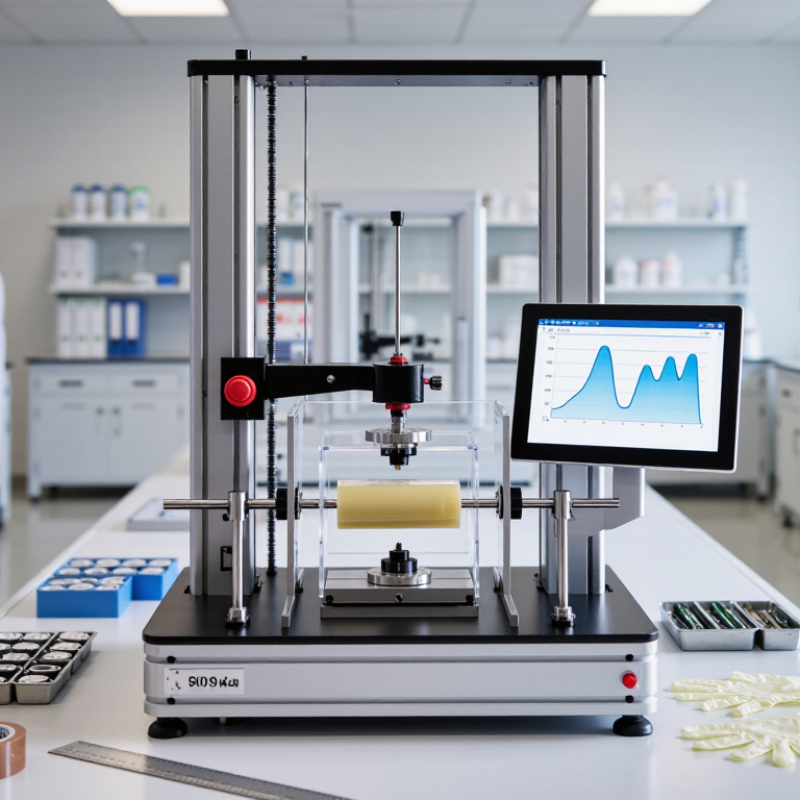
Choosing among the top 10 90° peel strength tester manufacturers requires more than comparing load capacity. The instrument must support the selected test standard and produce stable, traceable results. ASTM D3330 is widely used for pressure-sensitive adhesive tapes, including 90° peel procedures. ISO 8510-1 applies to bonded assemblies with flexible adherends. The standards differ in specimen preparation, conditioning, peel rate, and reporting details.
A reliable tester should maintain a true 90° peel angle throughout the test. Even a small angle change can affect measured force. The frame needs smooth, controlled movement, while the load cell should match the expected adhesive strength. Operators should record specimen width, backing type, adhesive area, conditioning time, peel rate, and failure mode. Test strips must remain aligned. Small wrinkles matter.
Use calibrated force measurement and verify the travel speed before production testing. Environmental control is also important, especially for temperature-sensitive adhesives. A clean result can still be misleading. I have found that inconsistent cutting often causes more variation than the tester itself. This point is easy to overlook. Laboratories should compare several specimens, report individual values, and avoid hiding unusual failures. ASTM D3330 and ISO 8510-1 should not be treated as interchangeable methods. Always follow the exact edition and selected procedure, then document any deviation clearly.

A reliable 90° peel test begins with controlled geometry, not a glossy instrument panel. The specimen must remain aligned at exactly 90° during separation. Even a small angle drift can change the measured force. Set the crosshead speed to 300 mm/min and record any deviation. This speed creates a practical comparison point for pressure-sensitive tapes, labels, films, and laminated materials.
Report force in N/25 mm, using a specimen width of 25 mm whenever possible. Measure the backing and adhesive layers before testing. Condition samples at stable temperature and humidity for at least 24 hours. A clean roller, consistent application pressure, and fixed dwell time matter greatly. I have seen excellent-looking tests fail because operators touched the adhesive surface. Small contamination leaves large variations.
When comparing the top 10 manufacturers, examine calibration traceability, load-cell resolution, angle control, and software data export. Ask whether the instrument supports repeatable start and end points. Check how easily operators can replace fixtures and clean contact surfaces. A wider load cell is not automatically better. It may reduce sensitivity for low-force materials. The test is not magically perfect. Flexible backings can stretch, while brittle coatings may fracture suddenly. Record the peel curve, average force, peak force, failure mode, and room conditions. One overlooked detail remains specimen cutting. Uneven edges can create uneven stress, making a capable tester appear unreliable.
Top 10 90° Peel Strength Tester Manufacturers
The top ten manufacturers should be judged by measured accuracy, usable load range, and dependable global support. Accuracy comes first. A tester should detect small force changes without producing unstable readings during repeated 90° peel tests. Strong models commonly offer calibrated load cells, controlled peel speed, and clear data logging. Still, advertised accuracy may not match performance in a busy laboratory.
Ranked by load range, the best manufacturers cover delicate films, labels, tapes, and heavier laminates. Some systems measure forces below one newton, while others handle several hundred newtons. Interchangeable load cells improve flexibility. However, excessive range can reduce sensitivity at low loads. That trade-off deserves careful review. Real samples should be tested before purchase.
Global support separates reliable suppliers from ordinary equipment sellers. Leading manufacturers provide installation guidance, calibration certificates, replacement grips, software updates, and responsive technical service across regions. Local service partners can reduce downtime when a load cell fails unexpectedly. Training also matters. An accurate instrument is less useful when operators misunderstand sample alignment or peel angle. In practice, the highest-ranked ten balance precision, range, documentation, and service access rather than relying on one impressive specification. Some rankings remain debatable, because laboratory conditions, sample thickness, and operator skill can change the result.
When comparing the top 10 90° peel strength tester manufacturers, load-cell selection deserves careful attention. A 10 N cell may reveal weak adhesive failure more clearly than a 1,000 N cell. However, oversized cells can reduce practical sensitivity. ASTM D3330 and ISO 8510-2 both emphasize controlled peel angles, speed, and specimen preparation. These details often influence results more than the instrument’s headline force rating.
Fixtures should hold the strip at exactly 90 degrees without twisting. A polished roller, adjustable clamp, and stable backing plate can prevent uneven peeling. Software is equally important. Strong systems record force-time curves, calculate average and peak values, and export raw data for audits. According to Smithers’ The Future of Flexible Packaging to 2028, global flexible packaging demand is expected to approach 300 billion dollars by 2028. More packaging trials will require repeatable adhesion data.
Resolution claims need careful reading. A display resolution of 0.001 N does not guarantee measurement accuracy. Calibration quality, noise, sampling rate, and environmental control still matter. ASTM E4 recommends verified force calibration, while ISO 7500-1 supports machine verification practices. In daily lab work, I would compare repeatability across ten specimens, not one attractive graph. Software can also feel overly complex. That is a practical weakness. A clear interface may prevent more errors than advanced features used rarely.
Top 10 90° Peel Strength Tester Manufacturers
When comparing the top 10 90° peel strength tester manufacturers, focus on application fit, not catalog rank. A tester for packaging tape may not suit a thin medical film. The instrument should control peel angle, speed, and force with minimal vibration. For labels, a stable backing plate helps prevent edge lifting. Films and laminates often need low-capacity load cells, because small force changes matter. Medical materials require clean contact surfaces and repeatable fixtures. Look for calibration records, software traceability, and clear technical support. These details indicate dependable engineering.
For tapes, select a wide travel range and a grip that avoids stretching the adhesive layer. For labels, record dwell time, liner removal angle, substrate type, and conditioning temperature. Laminates can curl after cutting, so specimen alignment deserves attention. A 90° result is meaningful only when preparation stays consistent. Test methods should match applicable ASTM or ISO guidance, while internal procedures define practical controls. Do not treat a high force reading as proof of better performance. A stiffer backing, rougher surface, or slower conditioning period can change the result. Not always obvious.
Tips: Request raw data, not only average values. Check whether the force sensor resolves your expected range. Run repeated specimens and inspect failure modes, such as adhesive residue, film tearing, or clean release. Keep an audit trail for calibration and operator settings. Automation improves consistency, but it cannot correct a poorly prepared sample. Recheck the method when results look unusually perfect.

Cepex is the brand for the fluid handling market belonging to the Fluidra group. One of the leading european manufacturer of valves and fittings in thermoplastic materials.
Dedicated to the swimming pool, irrigation and industrial markets, we distribute our products worldwide with the Fluidra commercial network and presence in 46 countries with 136 sales branches.


