
Top 10 Bus Bar Copper Suppliers for Global Buyers
FLUID HANDLING EXPERTS

Blog, all our news

Top 10 Bus Bar Copper Suppliers for Global Buyers

Bus Bar Copper is a critical part of power distribution, from compact switchgear to large industrial panels. A poor material choice can create problems that are difficult to spot until equipment runs hot or connections loosen. Buyers therefore need more than a supplier name. They need clear information about copper grade, conductivity, dimensions, surface finish, and available fabrication services. Details matter.

This guide introduces ten suppliers serving global buyers and offers a practical starting point for comparing them. It considers product range, manufacturing capabilities, quality documentation, export experience, and responsiveness. Ask for current test reports, dimensional tolerances, and traceability details; a polished website alone is not proof of consistent production. For a real project, confirm the required specifications with your engineering team and request samples when practical. Not always easy. Lead times, minimum order quantities, and shipping arrangements can change, so verify them directly before placing an order.

A shortlist cannot decide which supplier fits every application. A large manufacturer may suit repeat orders, while a specialist could handle unusual profiles or smaller batches more attentively. That takes work. The comparison here aims to make early research clearer, not replace technical checks or supplier discussions. Expect useful differences, and a few unanswered questions.
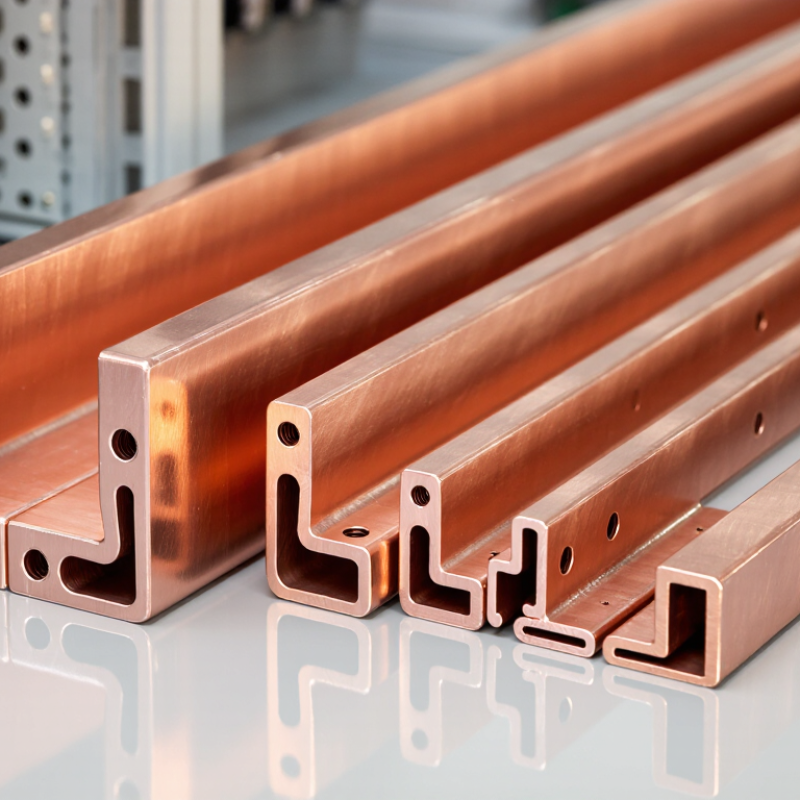
Top 10 Bus Bar Copper Suppliers for Global Buyers

What Bus Bar Copper Is and How It Is Used

Busbar copper is a rigid conductor that carries and distributes electrical current inside switchboards, control panels, battery systems, and data-center power rooms. Unlike a cable, it often presents a flat, exposed surface, making connections and inspection more direct. Copper’s high electrical conductivity helps limit resistive losses; its thermal and mechanical behavior also matter when equipment faces heavy loads or fault currents. A busbar is not just “thicker wire.” Its dimensions, supports, joints, and enclosure shape affect heat and safe performance.

The International Energy Agency’s Global Critical Minerals Outlook 2024 puts copper demand at about 26.7 million tonnes in 2023 and projects roughly 31 million tonnes by 2035 under its stated-policies scenario. That broader demand pressure makes careful material selection practical, not cosmetic. Designers should check conductivity, cross-section, plating needs, operating temperature, and verified assembly ratings. A small joint can become the weak point. Calculations also depend on real installation conditions, which are sometimes estimated too casually.

Tips: Confirm the busbar’s current and temperature-rise ratings for the complete assembly, not the copper bar alone. Check joint surfaces for clean contact, and follow the equipment maker’s specified torque. A tiny detail, but it matters.

Key Criteria for Evaluating Global Copper Suppliers

Choosing a bus bar copper supplier for global sourcing requires more than comparing quotations. Check the copper grade and verify that mill test reports match the material supplied. Confirm conductivity and temper; even small variations can affect bending behavior and heat performance. Request dimensional tolerances for thickness, width, and flatness, plus the inspection method used during production. A supplier should explain how out-of-spec batches are isolated and corrected. If answers remain vague, pause before approving a large order.

Production consistency matters as much as price. Review monthly capacity, lead times, and contingency plans, especially when demand changes. Check packaging for edge damage and moisture protection; copper may arrive clean but still need careful storage. For cross-border shipments, confirm documents support traceability, origin, and batch identification. A polished brochure can still leave gaps. Small details matter.

Tips: Send a drawing and sample specification before requesting a quote. Ask the supplier to mark measured dimensions on a trial piece. Compare total landed cost, not just unit price. Keep a retained sample for later checks. No checklist catches everything.

How to Compare Supplier Capabilities and Certifications

Comparing copper bus-bar suppliers means checking evidence, not polished brochures. The USGS Mineral Commodity Summaries 2025 estimates global mine production reached 23 million metric tons in 2024. That scale makes material traceability a practical sourcing question. Ask whether each shipment can be linked to a production lot and mill test certificate.

Check the scope and validity of quality certifications. ISO 9001 supports consistent management processes, but it does not certify a bus bar’s performance. Request test results for copper grade, electrical conductivity, dimensions, and mechanical properties. For plated bars, examine coating thickness and adhesion records. Small gaps matter.

If bars form part of a low-voltage assembly, ask how the finished assembly was verified against IEC 61439, including temperature-rise evidence where applicable. The standard concerns assemblies, not standalone bars. A capable supplier should explain this distinction clearly. Compare sample measurements with the stated tolerances, and check whether reports match the exact product and production site.

One awkward detail: a complete document pack can still hide weak process control. An independent audit or witnessed test may reveal what certificates alone cannot.

Top 10 Bus Bar Copper Suppliers for Global Buyers

Global buyers building a top-ten shortlist of bus bar copper suppliers should compare measurable capability, not polished sales claims. The USGS Mineral Commodity Summaries 2024 estimates global copper mine production at about 22 million metric tons in 2023. That scale does not guarantee steady delivery of finished busbar; conversion capacity and stock availability matter too. Price alone misleads. Check copper grade, conductivity data, dimensional tolerances, production lead time, and the supplier’s ability to maintain them across repeat orders.

Ask for recent inspection records and material test certificates, then verify a production sample against the drawing. A one-meter bar can reveal uneven thickness, rough cut edges, or handling marks that a brochure will not show. Paperwork matters. Request clear evidence of traceability and a defined process for reporting defects.

Compare packaging as well: separators and firm bracing help prevent scratches during transport. A supplier that answers technical questions promptly may be easier to work with, but responsiveness is not proof of quality. Buyers sometimes overvalue a low first-quote price; I would treat that as a purchasing risk, not a saving, until sample results and delivery performance are checked.

How to Verify Suppliers and Plan International Procurement

For bus bar copper suppliers, verify the product before comparing the price. Request a recent inspection report showing copper grade, conductivity, dimensions, and surface condition. Check that the report matches the proposed batch, not merely a similar product. Ask for clear photos of labels and packaging. Better still, arrange an independent sample test when order value or performance risk justifies the cost. Paperwork helps, but it is not proof by itself.

Review the supplier’s production capacity and traceability process. Can it link each coil or bar bundle to a batch record? Ask how it controls thickness, edge quality, and packing against moisture. A video call can show the workshop, though it cannot replace an audit. Small gaps matter. A missing tolerance detail may become a costly dispute after shipment. Confirm specifications in a signed purchase order, including inspection criteria and remedies for nonconforming goods.

Plan international procurement around the full landed cost, not the factory quote alone. Compare freight options, transit times, insurance, customs documentation, and delivery terms with your logistics provider. Confirm who prepares export documents and who handles import clearance. Keep a buffer for port delays; estimates can be wrong. I have seen careful buyers overlook one detail: wooden packaging requirements. Include packaging, marking, and delivery milestones in writing, then review them before production begins. A checklist is useful, but it can still miss things.

Copper Busbar Supplier Verification: Conductivity Benchmarks

Compare published minimum electrical conductivity benchmarks for common copper grades when reviewing material certificates and supplier specifications. These figures are grade-level references, not supplier performance ratings; confirm the applicable product standard, temper, and test results for each order.

Conductivity is shown as a percentage of the International Annealed Copper Standard (IACS). Use the values as a screening reference and verify compliance with the agreed specification before international procurement.

Copyright 2025 Fluidra S.A. | Created by BCM Marketing Agencia Privacy Policy Legal note | Cookie policy |

Technical cookies are strictly necessary for our website to work and you can navigate through it. These types of cookies are those that, for example, allow us to identify you, give you access to certain restricted parts of the page if necessary, or remember different options or services already selected by you, such as your privacy preferences. Therefore, they are activated by default, your authorization not being necessary in this regard. Through the configuration of your browser, you can block or alert the presence of this type of cookies, although such blocking will affect the proper functioning of the different functionalities of our website.


The analysis cookies allow us to study the navigation of the users of our website in general (for example, which sections of the page are the most visited, which services are used most and if they work correctly, etc.). From the statistical information on navigation on our website, we can improve both the operation of the page itself and the different services it offers. Therefore, these cookies do not have an advertising purpose, but only serve to make our website work better, adapting to our users in general. By activating them you will contribute to this continuous improvement. You can enable or disable these cookies by checking the corresponding box, being disabled by default.


Functionality cookies allow us to remember your preferences, to personalize certain characteristics and general options of our website, every time you access it (for example, the language in which the information is presented to you, the sections marked as favorites, your browser type, etc.) Therefore, this type of cookies does not have an advertising purpose, but by activating them you will improve the functionality of the website (for example, adapting to your type of browser) and the customization of it based on your preferences (for example, by presenting the information in the language that you have chosen in previous occasions), which will contribute to the ease, usability and comfort of our page during your navigation. You can enable or disable these cookies by checking the corresponding box, being disabled by default.


Advertising cookies allow us to manage the advertising spaces included in our website based on criteria such as the content shown or the frequency in which the ads are displayed. For example, if you have been shown the same ad several times on our website, and you have not shown a personal interest by clicking on it, it will not appear again. In summary, by activating this type of cookies, the advertising shown on our website will be more useful and diverse, and less repetitive. You can enable or disable these cookies by checking the corresponding box, being disabled by default.


Behavioral advertising cookies allow us to obtain information based on the observation of your browsing habits and behaviors on the web, in order to show you advertising content that best suits your personal tastes and interests. To understand it in a very simple way, we will give you a fictitious example: if your last searches on the web were related to suspense literature, we would show you advertising about suspense books. Therefore, activating this type of cookies, the advertising that we show you on our website will not be generic, but will be oriented to your searches, tastes and interests, therefore adjusting exclusively to you. You can enable or disable these cookies by checking the corresponding box, being disabled by default.
To understand it in a very simple way, we will give you a fictitious example: if your last searches on the web were related to suspense literature, we would show you advertising about suspense books. Therefore, activating this type of cookies, the advertising that we show you on our website will not be generic, but will be oriented to your searches, tastes and interests, therefore adjusting exclusively to you. You can enable or disable these cookies by checking the corresponding box, being disabled by default.

SAVE

We use our own and third-party cookies to ensure the proper functioning of the website and to analyse our services, improve your experience on our website and show you advertisements related to your interests according to profiling based on your browsing habits (e.g. websites visited). You can accept all cookies by clicking "ACCEPT" or set or reject them by clicking here. If you would like to know more about the use of cookies, please see our COOKIE POLICY.


ACCEPT ALL
Reject no essentials


