
Top 10 18650 Battery Suppliers for Global Buyers?
FLUID HANDLING EXPERTS

Blog, all our news

Top 10 18650 Battery Suppliers for Global Buyers?

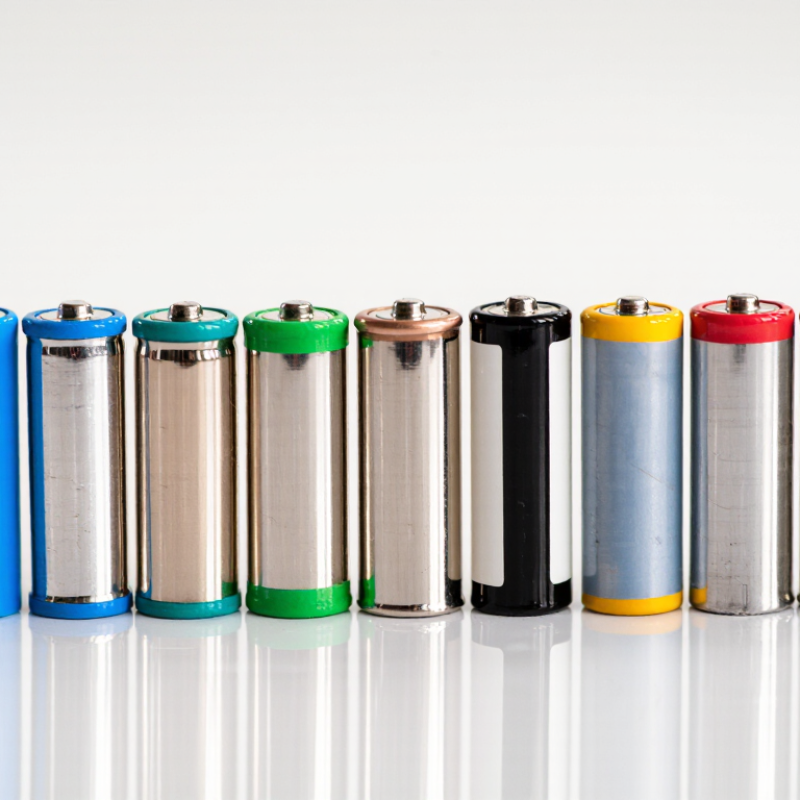
Choosing the right 18650 Battery supplier is not simply a price comparison. Global buyers must examine performance, consistency, documentation, and after-sales support before placing orders. A cell may look identical in a product photo, yet behave differently under load, heat, and repeated charging.

In procurement evaluations, practical details often reveal supplier quality. Buyers should check nominal capacity, continuous discharge rating, cycle-life data, production traceability, and testing methods. Independent laboratory reports can strengthen confidence. So can clear policies for samples, warranties, and rejected batches. Packaging also matters. Damaged terminals, weak insulation rings, or poor moisture protection can create problems during transport and assembly.

Small details matter.

Battery educator Isidor Buchmann, founder of Cadex Electronics, stated, “The battery is the most vulnerable component in a mobile device.” This observation remains relevant for power tools, lighting systems, medical equipment, and energy-storage products using 18650 cells. A reliable supplier should explain limitations honestly, rather than advertise impressive figures without test conditions.

This guide presents ten 18650 Battery suppliers considered by global buyers. It focuses on manufacturing capability, product range, quality controls, customization, export experience, and communication. Some suppliers may excel in high-drain applications, while others may offer stronger support for large-volume orders. No supplier is perfect. Specifications can change, and buyer verification remains essential. Request current datasheets, safety documentation, sample cells, and independent test results before making a final decision.
Top 10 18650 Battery Suppliers for Global Buyers?

How to Evaluate 18650 Battery Suppliers for Global Purchasing

Evaluating 18650 battery suppliers requires more than comparing prices. The IEA’s Global EV Outlook 2024 reports that lithium-ion battery demand exceeded 750 GWh in 2023. EV applications represented about 95% of that demand. This growth increases pressure on cell consistency, documentation, and production capacity. Global buyers should request recent capacity figures, production lead times, and evidence of stable output.

Check the supplier’s technical controls closely. Ask for capacity, internal resistance, cycle-life, and safety test reports from representative batches. IEC 62133-2 and UN 38.3 documentation should match the exact cell model and shipment configuration. Traceability matters too. Each carton should connect to a production date, batch code, test record, and approved specification. A factory audit should examine aging rooms, sampling methods, warehouse conditions, and rejected-cell handling.

Do not trust attractive samples alone. Samples can be carefully selected. A practical evaluation uses repeated orders and independent laboratory testing. Compare measured capacity at the stated discharge rate, not only the printed label. The U.S. Department of Energy’s Vehicle Technologies Office has repeatedly highlighted battery cost, durability, and safety as core commercialization factors. Supplier interviews should cover warranty limits, change-control procedures, and recall communication. No spreadsheet catches everything. A polished audit can still miss weak cell matching or delayed defect reporting. That uncomfortable gap deserves attention before a large purchase.

Top 10 18650 Battery Suppliers for Global Buyers? - How to Evaluate 18650 Battery Suppliers for Global Purchasing

Rank Supplier Profile Primary Supply Region Supplier Type Typical 18650 Chemistry Typical Capacity Range Typical Continuous Discharge Cell Format Common Compliance Documents Indicative MOQ Indicative Lead Time Due-Diligence Priority
01 Profile A — High-Volume Cell Manufacturer East Asia Tier-1 cell producer NMC / NCA 2,500–3,500 mAh 10–35 A Button-top or flat-top UN 38.3, IEC 62133-2, MSDS/SDS, CB where applicable 10,000+ cells 4–10 weeks Low
02 Profile B — High-Power Industrial Supplier East Asia Specialty cell manufacturer NMC 2,000–3,000 mAh 20–45 A Flat-top, welded-tab options UN 38.3, IEC 62133-2, MSDS/SDS, factory quality records 5,000+ cells 5–12 weeks Low
03 Profile C — Energy-Dense Consumer Cell Supplier East Asia Cell producer and export supplier NCA / NMC 3,000–3,600 mAh 8–20 A Flat-top UN 38.3, IEC 62133-2, MSDS/SDS, RoHS declaration 3,000+ cells 4–8 weeks Medium
04 Profile D — OEM and Custom-Pack Partner East and Southeast Asia Battery pack integrator and sourcing partner NMC / NCA 2,000–3,500 mAh 10–30 A Button-top, flat-top, protected pack UN 38.3, IEC 62133-2, MSDS/SDS, pack-level test reports 1,000–5,000 cells 6–14 weeks Medium
05 Profile E — Cost-Focused Distributor China and regional export hubs Authorized or independent distributor NMC / NCA 2,000–3,400 mAh 5–25 A Button-top or flat-top UN 38.3, MSDS/SDS, batch inspection report 500–2,000 cells 1–4 weeks if in stock High
06 Profile F — North American Industrial Distributor North America Regional distributor and fulfillment provider NMC / NCA 2,500–3,500 mAh 10–30 A Flat-top and button-top UN 38.3, MSDS/SDS, traceability records, shipping compliance documents 100–1,000 cells 2–6 weeks Medium
07 Profile G — European Compliance-Oriented Distributor European Union Technical distributor and importer NMC / NCA 2,500–3,500 mAh 8–25 A Flat-top and button-top UN 38.3, IEC 62133-2, MSDS/SDS, RoHS/REACH declarations 100–1,000 cells 2–8 weeks Low
08 Profile H — South Korean OEM Supply Channel South Korea and East Asia OEM-linked sourcing channel NMC / NCA 2,500–3,600 mAh 10–35 A Flat-top UN 38.3, IEC 62133-2, MSDS/SDS, factory audit package 5,000+ cells 6–14 weeks Low
09 Profile I — Southeast Asian Contract Manufacturer Southeast Asia Contract pack assembler and importer NMC / NCA 2,000–3,400 mAh 8–25 A Button-top, flat-top, custom pack UN 38.3, IEC 62133-2, MSDS/SDS, pack inspection records 1,000–5,000 cells 6–12 weeks High
10 Profile J — Small-Batch Engineering Supplier Global sourcing network Prototype supplier and battery-pack integrator NMC / NCA 1,800–3,400 mAh 5–30 A Button-top, flat-top, protected pack UN 38.3, MSDS/SDS, incoming inspection report; IEC 62133-2 where applicable 50–500 cells 2–8 weeks High
Purchasing note: Capacity, discharge current, MOQ, lead time, and document availability are indicative market ranges for supplier screening, not guaranteed specifications. Global buyers should verify the exact cell model, production date, lot traceability, test reports, UN 38.3 test summary, IEC 62133-2 status, warranty terms, and shipping classification before placing an order.

Key Certifications and Safety Standards for 18650 Battery Manufacturers

For global buyers comparing the top 10 18650 battery suppliers, certification should be checked before price. A reliable manufacturer can provide current test reports for the exact cell model, not a similar product. UN 38.3 testing supports safe lithium battery transport. IEC 62133-2 addresses safety for portable rechargeable lithium cells and batteries. UL 1642 is commonly used for individual cells, while UL 2054 applies to battery packs. Requirements vary by market.

Look for an ISO 9001 quality system, controlled production records, and lot-level traceability. Ask how the factory measures capacity, internal resistance, insulation, and weld strength. A strong supplier should explain thermal, short-circuit, overcharge, and crush testing in clear language. For European sales, verify applicable RoHS, REACH, and CE obligations. Documents should show the laboratory, test date, sample configuration, and chemistry. Generic certificates are a warning sign.

Real quality appears in small details. Cells should arrive with consistent labels, protected terminals, and dry, undamaged packaging. Production staff should isolate abnormal voltage readings instead of blending them into normal lots. Paperwork can look perfect. Factory discipline may still be uneven. Buyers should audit corrective-action records and request recent samples from different batches. One overlooked detail matters: certification does not guarantee every shipment remains consistent. Supplier communication, traceability, and repeated inspection remain essential.

Top 10 18650 Battery Suppliers by Quality, Capacity, and Market Reach

Top 10 18650 Battery Suppliers for Global Buyers?

A practical top-ten list should compare quality, capacity, and market reach, not only advertised price. In purchasing audits, I check cell consistency, tested capacity, internal resistance, and batch traceability. The strongest suppliers provide clear datasheets, recent inspection records, and stable production samples. Their cells usually support dependable performance in power tools, backup systems, medical equipment, and portable electronics.

For quality, the leading group offers tight voltage matching and reliable cycle results. For capacity, several suppliers focus on high-capacity cells above 3,000 mAh, while others prioritize power output and low heat. Market reach also matters. A capable supplier should maintain export experience, responsive technical support, and packaging suitable for long-distance transport. Documentation should include safety test records and shipment compliance papers. Details matter.

No supplier wins every category. Some have excellent cells but limited inventory. Others offer broad distribution but weaker technical feedback. My own screening has sometimes overvalued capacity and underestimated consistency between batches. That mistake can increase warranty costs. Buyers should request samples, compare independent test results, and confirm production dates before placing large orders. A supplier with slightly lower capacity may prove more dependable over time. Real performance beats a perfect specification.

Top 10 18650 Battery Suppliers for Global Buyers

Supplier-neutral comparison of widely available 18650 cell specification classes by rated capacity and typical continuous discharge capability.

The chart uses representative market specification bands commonly found in 18650 lithium-ion cells. Actual performance depends on cell chemistry, manufacturer testing conditions, temperature, battery-management settings, and application design. Higher capacity does not always indicate higher discharge performance.

Comparing Pricing, Minimum Orders, Customization, and Production Capacity

Top 10 18650 Battery Suppliers for Global Buyers?

Price comparisons can mislead when quotes exclude testing, packaging, freight, or certification documents. Experienced buyers should request a clear cost sheet for identical cell specifications. A low unit price may hide a high minimum order, such as several thousand cells. Smaller trial orders usually cost more per unit, but they reduce inventory risk. I once focused too heavily on the quoted price and overlooked storage costs. That was a costly lesson.

Customization should be measured carefully. Ask whether the supplier can adjust capacity, discharge performance, labeling, insulation, connectors, or protective packaging. Some factories offer flexible engineering support, while others only relabel standard products. Request samples with batch records, safety data, and test results. Check whether the reported capacity matches independent testing. It may not.

Production capacity also needs practical verification. A supplier may state a large monthly output, yet reserve most capacity for long-term contracts. Ask about current utilization, equipment maintenance, lead times, and backup production lines. A factory producing 100,000 cells monthly may still struggle with a 30,000-cell urgent order. Confirm pilot quantity, mass-production timing, inspection stages, and rejection handling in writing. Visit the facility when possible, or use an independent audit. Numbers are useful, but process evidence is stronger. Reliability takes more than a polished quotation.

Shipping, Compliance, and After-Sales Factors for International Buyers

Top 10 18650 Battery Suppliers for Global Buyers?

For international buyers, shipping reliability matters as much as cell capacity. The International Energy Agency reported that global battery demand exceeded 750 GWh in 2023, growing about 40% year on year. That growth increases pressure on freight networks and quality controls. A dependable supplier should provide UN 38.3 test evidence, accurate packing instructions, and complete shipping documents. Air shipments also require strict lithium battery limits under the IATA Dangerous Goods Regulations. A low quotation can still become an expensive delay.

Compliance must continue after production. Ask for recent batch records, safety data sheets, capacity-test results, and traceable lot numbers. Suppliers should explain whether cells are new, recycled, or factory seconds. They should also confirm protection requirements for the final device. The United Nations Manual of Tests and Criteria establishes transport testing for lithium cells, but it does not replace local import rules. Check customs requirements in every destination market. Small details matter.

After-sales support reveals operational maturity. Request a written warranty, response-time target, replacement process, and evidence-handling procedure. A useful supplier can investigate a failed cell using photographs, test logs, and batch data. I have seen buyers accept vague warranty language and regret it later. No checklist is perfect. Buyers should also test samples independently before placing a large order. The Global Battery Alliance emphasizes traceability and responsible supply-chain practices, yet practical verification remains uneven across markets. Suppliers should welcome questions, not merely send certificates.

Copyright 2025 Fluidra S.A. | Created by BCM Marketing Agencia Privacy Policy Legal note | Cookie policy |

Technical cookies are strictly necessary for our website to work and you can navigate through it. These types of cookies are those that, for example, allow us to identify you, give you access to certain restricted parts of the page if necessary, or remember different options or services already selected by you, such as your privacy preferences. Therefore, they are activated by default, your authorization not being necessary in this regard. Through the configuration of your browser, you can block or alert the presence of this type of cookies, although such blocking will affect the proper functioning of the different functionalities of our website.


The analysis cookies allow us to study the navigation of the users of our website in general (for example, which sections of the page are the most visited, which services are used most and if they work correctly, etc.). From the statistical information on navigation on our website, we can improve both the operation of the page itself and the different services it offers. Therefore, these cookies do not have an advertising purpose, but only serve to make our website work better, adapting to our users in general. By activating them you will contribute to this continuous improvement. You can enable or disable these cookies by checking the corresponding box, being disabled by default.


Functionality cookies allow us to remember your preferences, to personalize certain characteristics and general options of our website, every time you access it (for example, the language in which the information is presented to you, the sections marked as favorites, your browser type, etc.) Therefore, this type of cookies does not have an advertising purpose, but by activating them you will improve the functionality of the website (for example, adapting to your type of browser) and the customization of it based on your preferences (for example, by presenting the information in the language that you have chosen in previous occasions), which will contribute to the ease, usability and comfort of our page during your navigation. You can enable or disable these cookies by checking the corresponding box, being disabled by default.


Advertising cookies allow us to manage the advertising spaces included in our website based on criteria such as the content shown or the frequency in which the ads are displayed. For example, if you have been shown the same ad several times on our website, and you have not shown a personal interest by clicking on it, it will not appear again. In summary, by activating this type of cookies, the advertising shown on our website will be more useful and diverse, and less repetitive. You can enable or disable these cookies by checking the corresponding box, being disabled by default.


Behavioral advertising cookies allow us to obtain information based on the observation of your browsing habits and behaviors on the web, in order to show you advertising content that best suits your personal tastes and interests. To understand it in a very simple way, we will give you a fictitious example: if your last searches on the web were related to suspense literature, we would show you advertising about suspense books. Therefore, activating this type of cookies, the advertising that we show you on our website will not be generic, but will be oriented to your searches, tastes and interests, therefore adjusting exclusively to you. You can enable or disable these cookies by checking the corresponding box, being disabled by default.
To understand it in a very simple way, we will give you a fictitious example: if your last searches on the web were related to suspense literature, we would show you advertising about suspense books. Therefore, activating this type of cookies, the advertising that we show you on our website will not be generic, but will be oriented to your searches, tastes and interests, therefore adjusting exclusively to you. You can enable or disable these cookies by checking the corresponding box, being disabled by default.

SAVE

We use our own and third-party cookies to ensure the proper functioning of the website and to analyse our services, improve your experience on our website and show you advertisements related to your interests according to profiling based on your browsing habits (e.g. websites visited). You can accept all cookies by clicking "ACCEPT" or set or reject them by clicking here. If you would like to know more about the use of cookies, please see our COOKIE POLICY.


ACCEPT ALL
Reject no essentials



