
China Top 10 Electric Fuel Pump Manufacturers
FLUID HANDLING EXPERTS

Blog, all our news

China Top 10 Electric Fuel Pump Manufacturers

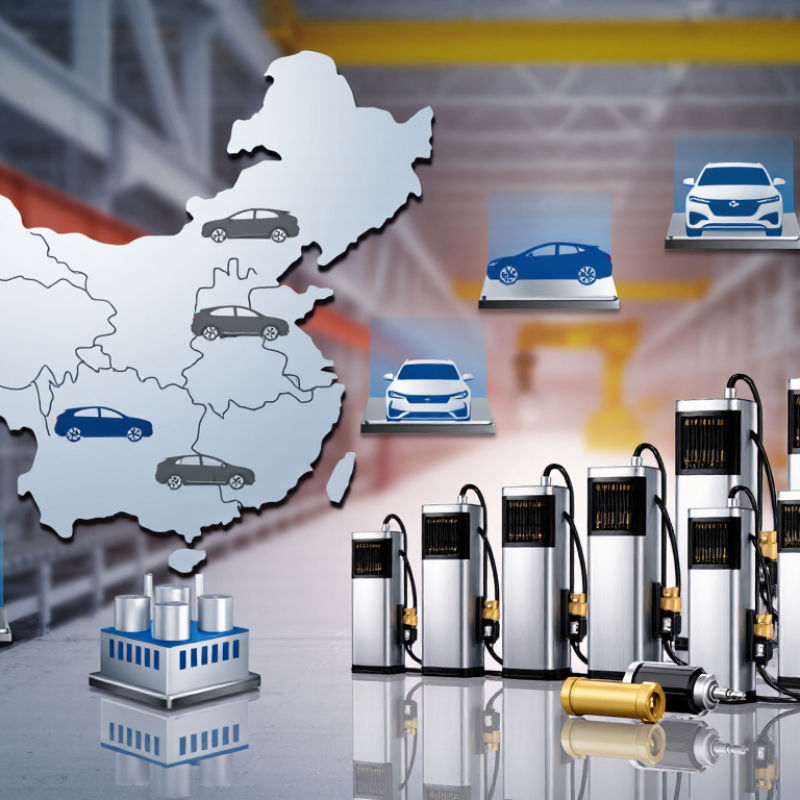
China remains one of the world’s largest automotive manufacturing bases, making its electric fuel pump suppliers important to both domestic and export markets. The China Association of Automobile Manufacturers reported 30.16 million vehicles produced in 2023. That scale supports demand for fuel delivery components across conventional vehicles, hybrids, and replacement markets. Electric Fuel Pumps may be small, but their reliability matters: a fault can leave a vehicle struggling to start or run smoothly.

The market is also changing. The International Energy Agency’s Global EV Outlook 2024 estimated that nearly 14 million electric cars were sold worldwide in 2023, including about 8.1 million in China. This shift changes the long-term mix of demand; it does not erase the existing fleet of combustion-engine vehicles. For buyers, that means supplier assessment should consider current production capacity, product range, testing practices, and experience serving different vehicle platforms. Data from CAAM and the IEA offer useful context, though neither report ranks pump manufacturers.

This guide introduces ten Chinese manufacturers associated with electric fuel pumps. It is intended as a practical starting point, not a definitive league table. Company scale alone tells only part of the story. Buyers should verify specifications, certifications, factory capabilities, and customer references directly, since public information can be incomplete or outdated. Small details matter. A pump’s fit, pressure consistency, and durability under heat can shape its real-world performance. And one caution: a polished catalogue is not proof of dependable production.
China Top 10 Electric Fuel Pump Manufacturers

Electric Fuel Pumps: Functions, Types, and Applications

An electric fuel pump moves fuel from the tank to the engine at a controlled rate and pressure. In many modern vehicles, it sits inside the tank, where surrounding fuel helps reduce heat and operating noise. Inline pumps mount along the fuel line and can serve certain vehicle layouts or replacement systems. The right design depends on the engine and fuel system. Pressure matters.

Fuel-injected engines need steady pressure for accurate delivery, while older carbureted systems generally require less. Some high-pressure injection systems have additional pump stages. Cars, motorcycles, boats, and stationary engines use electric pumps, but their flow and pressure requirements differ. A pump that runs is not necessarily working well; worn parts, blocked filters, or electrical faults can still cause poor delivery. Diagnosis can be less straightforward than it looks.

Tips: Check the vehicle service specifications before selecting a pump. Measure pressure with a suitable gauge, and inspect wiring and filters when troubleshooting. Listen for changes in pump noise, but do not treat sound alone as a diagnosis. A small detail, such as a weak electrical connection, may imitate a failing pump.

Electric Fuel Pumps: Typical Supply Pressure by Application

Indicative low-pressure fuel-supply ranges; actual specifications vary by vehicle and system design.

Electric fuel pumps commonly provide low-pressure fuel delivery. In gasoline direct-injection and diesel common-rail systems, a separate high-pressure pump raises fuel pressure beyond the supply ranges shown here.

China’s Electric Fuel Pump Industry and Its Market Structure

China’s electric fuel pump industry includes component makers, pump assemblers, vehicle suppliers, and distributors serving the replacement market. Larger manufacturers often supply vehicle production programs, where stable output and documented testing matter. Smaller producers may focus on particular pump designs, price ranges, or replacement applications. The structure is not always tidy. Some companies handle several stages, while others depend on outside suppliers for motors, housings, or electronic controls.

For buyers, a pump is more than a catalog part. Fitment, electrical connections, pressure consistency, and resistance to fuel exposure all affect performance. Factory checks may include flow tests, noise inspection, and endurance sampling. However, testing methods and public technical details can differ between suppliers, so comparisons need careful review. That distinction can blur. A low quoted price may not include the same inspection depth or support. China’s market therefore offers broad manufacturing capacity, but supplier evaluation still takes work. Specifications, traceable test records, and clear warranty terms provide more useful evidence than production claims alone.

Profiles of Ten Leading Electric Fuel Pump Manufacturers in China

Profiles of China’s electric fuel pump manufacturers are best compared by engineering capability, not by factory size alone. The China Association of Automobile Manufacturers reported 31.28 million vehicles produced in 2024, including 12.89 million new energy vehicles. That scale creates a diverse supplier base, but it is not a direct forecast for fuel-pump demand: battery-electric vehicles do not use conventional fuel pumps. The distinction matters.

Across ten manufacturer profiles, examine practical differences: compact in-tank gasoline units, diesel delivery systems, hybrid-compatible modules, brushless motors, pressure-control assemblies, molded housings, filtration integration, endurance testing, production automation, and application-specific design support. Ask how each supplier manages noise, heat, vibration, and fuel-level variation. A pump that sounds quiet on a test bench may behave differently inside a hot, partly filled tank. Small details count.

CAAM’s 2024 figures provide useful market context, not proof of any individual supplier’s quality. Look for verifiable test methods, traceable quality records, and clear operating specifications alongside production capacity. Some public profiles may lack comparable data. That is a limitation worth noting, rather than filling gaps with confident claims.

Comparing Manufacturers by Products, Production, and Certifications

Comparing China’s electric fuel pump manufacturers requires more than checking catalog size.

A supplier may offer in-tank pumps, inline units, and complete modules, yet each serves different vehicle layouts and pressure demands. Compare stated flow rates, operating pressure, voltage range, connector design, and fuel-compatible materials. Ask for test data under realistic temperatures, not only ideal laboratory conditions. Small details matter.

Production capability deserves equal attention. Review monthly capacity, process controls, inspection points, and how each batch is traced from components to final testing. A modern assembly line is useful, but it does not prove consistent output by itself. Request sample inspection records and clarify how defects are handled. Look closer.

Certifications can indicate a structured quality system, but check the certificate’s scope, issuing body, and current validity. ISO 9001 or IATF 16949 coverage may apply to a site or process, not every pump model. Product-specific approvals should also match the intended market and application.

One limitation is that public factory information can be incomplete; verify important claims directly and compare like-for-like products before ranking suppliers. A neat brochure is not evidence.

Key Factors for Evaluating Chinese Electric Fuel Pump Suppliers

Evaluating Chinese electric fuel pump suppliers requires more than comparing unit prices. OICA reported global motor vehicle production of 93.5 million units in 2023, up 10% from 2022. That scale makes stable production planning and traceable components important. Ask for batch records, material specifications, and documented end-of-line testing. Request pump curves showing flow and pressure at defined voltage and fuel temperature. Small test details matter.

The IEA’s Global EV Outlook 2024 reported nearly 14 million electric car sales in 2023, about 18% of global car sales. This shift makes it useful to clarify whether a supplier supports conventional vehicles, hybrids, or both. Check how its design handles heat, vibration, voltage variation, and extended operating cycles. Review endurance-test conditions, not just pass rates. A polished audit sheet can still miss a weak test setup. Ask to observe a sample test, then compare its records with the delivered batch. Quality systems, engineering response time, and change-control discipline deserve equal scrutiny; price alone is a thin measure.

China Top 10 Electric Fuel Pump Manufacturers - Key Factors for Evaluating Chinese Electric Fuel Pump Suppliers

No. Evaluation Factor What to Verify Strong Supporting Evidence Why It Matters
1 Vehicle and application coverage Check supported vehicle types, engine applications, pump configurations, and fitment references. A current application catalog, dimensional drawings, and a clearly defined process for confirming fitment. Correct fitment helps avoid installation problems and mismatched pump performance.
2 Flow and pressure performance Compare rated flow and operating pressure at stated test conditions, including voltage and fuel type. Product specifications and test reports showing flow-versus-pressure results under defined conditions. Pump output depends on operating conditions; figures without test conditions are difficult to compare.
3 Electrical characteristics Confirm rated voltage, current draw, connector and polarity details, and electrical performance under load. Electrical test records and specifications tied to the exact pump model and test conditions. Electrical mismatch can affect pump operation, vehicle compatibility, and circuit loading.
4 Fuel and material compatibility Ask which fuels and fuel blends are supported and whether wetted materials are suitable for the intended application. Material specifications and compatibility test documentation for the stated fuel and service conditions. Fuel composition can affect seals, plastics, and other components in contact with fuel.
5 Filtration and contamination protection Review inlet filtration, any supplied strainer, and maintenance or replacement guidance. Filter or strainer specifications and documented inspection or service recommendations. Contamination can restrict fuel flow and contribute to wear or premature failure.
6 Environmental and mechanical testing Check how the pump is evaluated for temperature exposure, vibration, and other conditions relevant to its installation. Test plans and results that identify test conditions, sample identification, and acceptance criteria. Automotive pumps operate in environments where heat and vibration can affect reliability.
7 Durability and life validation Ask about endurance-test methods, operating cycles, test conditions, and the failure criteria used. A documented validation report linked to the relevant product design and production version. A defined test method makes durability claims more meaningful and comparable.
8 Quality management and process control Review the quality system, production controls, inspection stages, and handling of nonconforming products. Current certificates whose scope and issuing body can be verified, plus relevant audit or process-control records. IATF 16949 is an automotive quality-management standard; certification should be checked rather than assumed. Documented controls support consistent production and corrective action when defects occur.
9 Traceability and change control Confirm whether production batches can be traced and how changes to materials, components, or processes are controlled. Sample labels or records showing batch identification, inspection history, and a documented change-notification process. Traceability helps investigate quality issues and identify affected production lots.
10 Commercial terms and after-sales support Review minimum order quantities, lead times, packaging, warranty terms, complaint handling, and technical support. Written quotations and policies specifying applicable products, terms, response channels, and claim requirements. Clear terms reduce supply uncertainty and make post-sale issues easier to resolve.
Copyright 2025 Fluidra S.A. | Created by BCM Marketing Agencia Privacy Policy Legal note | Cookie policy |

Technical cookies are strictly necessary for our website to work and you can navigate through it. These types of cookies are those that, for example, allow us to identify you, give you access to certain restricted parts of the page if necessary, or remember different options or services already selected by you, such as your privacy preferences. Therefore, they are activated by default, your authorization not being necessary in this regard. Through the configuration of your browser, you can block or alert the presence of this type of cookies, although such blocking will affect the proper functioning of the different functionalities of our website.


The analysis cookies allow us to study the navigation of the users of our website in general (for example, which sections of the page are the most visited, which services are used most and if they work correctly, etc.). From the statistical information on navigation on our website, we can improve both the operation of the page itself and the different services it offers. Therefore, these cookies do not have an advertising purpose, but only serve to make our website work better, adapting to our users in general. By activating them you will contribute to this continuous improvement. You can enable or disable these cookies by checking the corresponding box, being disabled by default.


Functionality cookies allow us to remember your preferences, to personalize certain characteristics and general options of our website, every time you access it (for example, the language in which the information is presented to you, the sections marked as favorites, your browser type, etc.) Therefore, this type of cookies does not have an advertising purpose, but by activating them you will improve the functionality of the website (for example, adapting to your type of browser) and the customization of it based on your preferences (for example, by presenting the information in the language that you have chosen in previous occasions), which will contribute to the ease, usability and comfort of our page during your navigation. You can enable or disable these cookies by checking the corresponding box, being disabled by default.


Advertising cookies allow us to manage the advertising spaces included in our website based on criteria such as the content shown or the frequency in which the ads are displayed. For example, if you have been shown the same ad several times on our website, and you have not shown a personal interest by clicking on it, it will not appear again. In summary, by activating this type of cookies, the advertising shown on our website will be more useful and diverse, and less repetitive. You can enable or disable these cookies by checking the corresponding box, being disabled by default.


Behavioral advertising cookies allow us to obtain information based on the observation of your browsing habits and behaviors on the web, in order to show you advertising content that best suits your personal tastes and interests. To understand it in a very simple way, we will give you a fictitious example: if your last searches on the web were related to suspense literature, we would show you advertising about suspense books. Therefore, activating this type of cookies, the advertising that we show you on our website will not be generic, but will be oriented to your searches, tastes and interests, therefore adjusting exclusively to you. You can enable or disable these cookies by checking the corresponding box, being disabled by default.
To understand it in a very simple way, we will give you a fictitious example: if your last searches on the web were related to suspense literature, we would show you advertising about suspense books. Therefore, activating this type of cookies, the advertising that we show you on our website will not be generic, but will be oriented to your searches, tastes and interests, therefore adjusting exclusively to you. You can enable or disable these cookies by checking the corresponding box, being disabled by default.

SAVE

We use our own and third-party cookies to ensure the proper functioning of the website and to analyse our services, improve your experience on our website and show you advertisements related to your interests according to profiling based on your browsing habits (e.g. websites visited). You can accept all cookies by clicking "ACCEPT" or set or reject them by clicking here. If you would like to know more about the use of cookies, please see our COOKIE POLICY.


ACCEPT ALL
Reject no essentials


