
10 Best Dynamic Seal Manufacturers Worldwide
FLUID HANDLING EXPERTS

Blog, all our news

10 Best Dynamic Seal Manufacturers Worldwide

Dynamic Seal technology sits quietly inside pumps, hydraulic cylinders, compressors, gearboxes, and rotating equipment. Its role is simple but demanding: retain pressure, exclude contaminants, and support reliable movement under heat, friction, and vibration.

Market evidence shows why this component deserves closer attention. Grand View Research estimates that the global industrial seals market reached approximately USD 14 billion in the early 2020s, with continued growth expected through the decade. MarketsandMarkets also identifies energy, automotive, aerospace, and industrial machinery as major demand sectors. These reports describe broad seal markets, not Dynamic Seal products alone. That distinction matters.

Robert Flitney, author of Seals and Sealing Handbook, defines the purpose clearly: “A seal is a device that prevents the passage of a fluid across a boundary.” Real-world performance is less tidy. A seal may pass laboratory tests yet fail early after installation. Shaft runout, poor surface finishing, incorrect lubrication, and assembly damage can all change the outcome.

This guide examines 10 Best Dynamic Seal Manufacturers Worldwide through practical criteria. These include material capability, pressure and temperature performance, quality systems, testing depth, customization, delivery reliability, and field experience. Manufacturers serving mining may prioritize abrasion resistance. Aerospace suppliers face tighter traceability and certification demands. Food-processing applications require compatible materials and cleanable designs.

No ranking is flawless. Supplier strengths vary by application, region, and operating conditions. Buyers should verify technical data, certifications, and sample performance before making a final decision. A strong Dynamic Seal is not merely a purchased part. It is a carefully matched engineering solution.
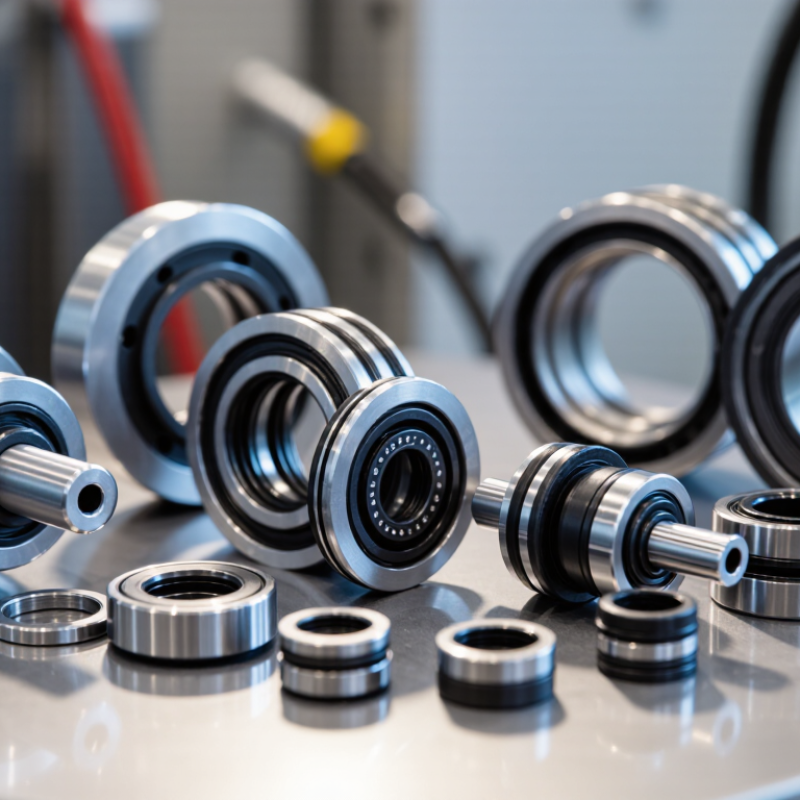
10 Best Dynamic Seal Manufacturers Worldwide

What Dynamic Seals Are and Why They Matter in Industry

Dynamic seals are engineered barriers that control fluid or gas around moving parts. They operate on piston rods, rotating shafts, and hydraulic cylinders. Unlike static seals, they must remain effective while surfaces slide, rotate, or vibrate.

A sealing lip presses against a shaft or rod, limiting leakage without creating excessive friction. Small details matter. Surface finish, installation accuracy, lubrication, and seal geometry all affect performance. In industrial equipment, a damaged seal can release hydraulic fluid, reduce pressure, contaminate products, or stop production. Dust and abrasive particles make the problem worse. Field technicians often find that premature failure begins with a scratched shaft or an incorrectly fitted groove.

Material selection requires careful engineering. Polyurethane suits many high-pressure applications, while PTFE can perform well under heat and chemical exposure. Elastomers remain useful when flexibility and cost matter. Temperature, pressure, speed, media compatibility, and maintenance conditions must be checked together. Choosing by size alone is risky. A seal may fit perfectly and still fail quickly. That point is easy to overlook.

Reliable manufacturers support testing, dimensional control, traceability, and practical technical guidance. Their seals should match recognized industry requirements and real operating conditions. However, no catalogue can replace field data. Engineers should inspect wear patterns, measure leakage, and review installation procedures before changing materials. Sometimes the seal is not the true cause. Misalignment, poor lubrication, or excessive pressure may be responsible.

Criteria for Evaluating the Best Dynamic Seal Manufacturers

Selecting the best dynamic seal manufacturers requires more than comparing catalog sizes or quoted prices. Practical experience matters. A manufacturer should understand how seals behave under rotation, reciprocation, pressure changes, and shaft misalignment. Ask for test data covering temperature, speed, pressure, friction, and leakage. Real operating conditions rarely match a perfect laboratory setup.

Material expertise is equally important. Reliable manufacturers explain why a compound suits hydraulic fluid, steam, chemicals, or abrasive media. They should control molding accuracy, surface finish, tolerances, and batch consistency. Traceability matters. Each production lot should connect to inspection records and material certificates. A polished brochure is not proof. Independent certifications, documented quality systems, and clear failure-analysis procedures offer stronger evidence.

Technical support can separate a capable supplier from a merely adequate one. Evaluate response times, engineering drawings, installation guidance, and prototype support. Ask whether the manufacturer can modify a seal for unusual grooves, pressure cycling, or limited installation space. Field experience helps reveal problems before production begins. Still, no supplier is flawless. I would examine reported failures honestly, rather than expecting perfect claims. Transparent communication often signals reliability better than confident sales language. Cost should include replacement labor, downtime, maintenance intervals, and total service life. A lower initial price may become expensive after repeated leakage or premature wear.

Global Overview of Leading Dynamic Seal Manufacturers

10 Best Dynamic Seal Manufacturers Worldwide

The global dynamic seal sector serves pumps, hydraulic cylinders, compressors, and rotating equipment. Its leading manufacturers compete through material science, testing discipline, and application support. Grand View Research estimated the global mechanical seals market at approximately USD 4.8 billion in 2023. The report also forecasts steady growth through 2030, driven by industrial machinery, energy, and water treatment demand.

Performance depends on more than catalog dimensions. A seal running beside a hot pump shaft may face pressure spikes, abrasive particles, and dry-start conditions. Experienced manufacturers therefore validate products through leakage tests, endurance cycles, and temperature testing. MarketsandMarkets identifies industrial expansion, energy infrastructure, and stricter equipment-efficiency requirements as major sealing-market drivers. These trends reward suppliers with reliable engineering data, not attractive claims alone.

Regional strengths remain visible. European producers often emphasize precision manufacturing and certification systems. North American suppliers commonly focus on engineered solutions and field service. Asian manufacturers are expanding capacity, automation, and cost-efficient product ranges. Still, comparisons can be imperfect. Public market reports frequently combine static and dynamic seals, making exact rankings difficult. Buyers should examine test standards, traceability, replacement lead times, and technical response speed. A low purchase price can become expensive beside a leaking shaft. Performance is what matters.

Key Technologies, Materials, and Product Applications

Dynamic seal manufacturers are judged by more than catalog size. The strongest suppliers combine application testing, material science, and repeatable production control. Engineers examine lip geometry, shaft speed, pressure, temperature, and media compatibility before choosing a supplier. A seal designed for hydraulic cylinders differs sharply from one used in a food-processing pump. Small data gaps matter. They can turn a reliable design into an expensive maintenance event.

Common technologies include CNC-machined prototypes, compression molding, automated inspection, and finite-element simulation. These methods help control contact pressure and reduce friction at the sealing interface.

PTFE handles chemical exposure and low friction, while polyurethane offers strong abrasion resistance.

Nitrile rubber remains practical for many oil-based systems. Fluoroelastomers suit higher temperatures, although cost and compression behavior require closer review. Material choice should follow real operating conditions, not a generic temperature chart.

Product applications range from rotating shafts and pumps to hydraulic actuators, compressors, and agricultural equipment. A capable manufacturer should provide batch traceability, dimensional reports, and test results linked to the actual compound. Field experience still matters. Installation errors, rough shafts, and poor lubrication can defeat excellent seals.

I would question impressive claims without endurance data. Some specifications look precise but omit cycling frequency, pressure changes, or contamination levels. That omission deserves a second conversation.

How to Choose the Right Dynamic Seal Manufacturer for Your Needs

Choosing the right dynamic seal manufacturer starts with your operating conditions, not a polished catalog. Define shaft speed, pressure, temperature, media, movement, and expected service life. A seal running in hot oil needs different materials than one exposed to abrasive dust and water.

Ask for test data that matches your equipment. Reliable manufacturers should explain material grades, friction behavior, leakage limits, and failure modes. Check whether their laboratories control temperature, pressure, and shaft speed during testing. Request dimensional drawings, tolerance ranges, inspection records, and batch traceability. These details reveal more than broad claims about quality.

Production experience matters when your design is unusual. The manufacturer should review installation space, surface roughness, hardness, and lubrication before recommending a seal. Confirm whether they can support prototypes, small batches, and stable volume production. Response time also matters when a failed seal stops a machine. No supplier looks perfect on paper. I would question any company promising unlimited performance without test limits. A sample may pass laboratory testing but fail after misalignment, poor storage, or careless installation. Discuss these risks openly, and run a field trial under real loads before committing to a large order.

Copyright 2025 Fluidra S.A. | Created by BCM Marketing Agencia Privacy Policy Legal note | Cookie policy |

Technical cookies are strictly necessary for our website to work and you can navigate through it. These types of cookies are those that, for example, allow us to identify you, give you access to certain restricted parts of the page if necessary, or remember different options or services already selected by you, such as your privacy preferences. Therefore, they are activated by default, your authorization not being necessary in this regard. Through the configuration of your browser, you can block or alert the presence of this type of cookies, although such blocking will affect the proper functioning of the different functionalities of our website.


The analysis cookies allow us to study the navigation of the users of our website in general (for example, which sections of the page are the most visited, which services are used most and if they work correctly, etc.). From the statistical information on navigation on our website, we can improve both the operation of the page itself and the different services it offers. Therefore, these cookies do not have an advertising purpose, but only serve to make our website work better, adapting to our users in general. By activating them you will contribute to this continuous improvement. You can enable or disable these cookies by checking the corresponding box, being disabled by default.


Functionality cookies allow us to remember your preferences, to personalize certain characteristics and general options of our website, every time you access it (for example, the language in which the information is presented to you, the sections marked as favorites, your browser type, etc.) Therefore, this type of cookies does not have an advertising purpose, but by activating them you will improve the functionality of the website (for example, adapting to your type of browser) and the customization of it based on your preferences (for example, by presenting the information in the language that you have chosen in previous occasions), which will contribute to the ease, usability and comfort of our page during your navigation. You can enable or disable these cookies by checking the corresponding box, being disabled by default.


Advertising cookies allow us to manage the advertising spaces included in our website based on criteria such as the content shown or the frequency in which the ads are displayed. For example, if you have been shown the same ad several times on our website, and you have not shown a personal interest by clicking on it, it will not appear again. In summary, by activating this type of cookies, the advertising shown on our website will be more useful and diverse, and less repetitive. You can enable or disable these cookies by checking the corresponding box, being disabled by default.


Behavioral advertising cookies allow us to obtain information based on the observation of your browsing habits and behaviors on the web, in order to show you advertising content that best suits your personal tastes and interests. To understand it in a very simple way, we will give you a fictitious example: if your last searches on the web were related to suspense literature, we would show you advertising about suspense books. Therefore, activating this type of cookies, the advertising that we show you on our website will not be generic, but will be oriented to your searches, tastes and interests, therefore adjusting exclusively to you. You can enable or disable these cookies by checking the corresponding box, being disabled by default.
To understand it in a very simple way, we will give you a fictitious example: if your last searches on the web were related to suspense literature, we would show you advertising about suspense books. Therefore, activating this type of cookies, the advertising that we show you on our website will not be generic, but will be oriented to your searches, tastes and interests, therefore adjusting exclusively to you. You can enable or disable these cookies by checking the corresponding box, being disabled by default.

SAVE

We use our own and third-party cookies to ensure the proper functioning of the website and to analyse our services, improve your experience on our website and show you advertisements related to your interests according to profiling based on your browsing habits (e.g. websites visited). You can accept all cookies by clicking "ACCEPT" or set or reject them by clicking here. If you would like to know more about the use of cookies, please see our COOKIE POLICY.


ACCEPT ALL
Reject no essentials


