
Top 10 Dual Micro Switch Manufacturers for Global Buyers
FLUID HANDLING EXPERTS

Blog, all our news

Top 10 Dual Micro Switch Manufacturers for Global Buyers

A Dual Micro Switch may be tiny, but its failure can stop a vehicle function, interrupt an appliance, or disable a control panel. Buyers therefore need more than a low unit price. They need dependable actuation, suitable electrical ratings, consistent production, and traceable quality records. Small details matter: contact material, operating force, terminal design, and performance after repeated cycles.

Demand indicators show why supplier selection deserves attention. The International Energy Agency’s Global EV Outlook 2024 reports that electric-car sales reached nearly 14 million in 2023, about 18% of new car sales. Separately, OICA reported approximately 93.5 million motor vehicles produced worldwide that year. These figures describe adjacent markets, not Dual Micro Switch sales. They do, however, illustrate the scale of industries that rely on dependable electrical components. Standards, test methods, and supplier documentation remain essential when comparing manufacturers.

This guide evaluates ten manufacturers through practical questions: Can they document ratings and endurance tests? Do they support customization and stable lead times? Are their certifications and quality claims independently verifiable? One sourcing point needs care: no attributable quotation from a named Dual Micro Switch specialist was supplied or verified for this introduction. Rather than inventing one, this article relies on published industry data and evidence buyers can check. That is less flashy. It is also more useful.
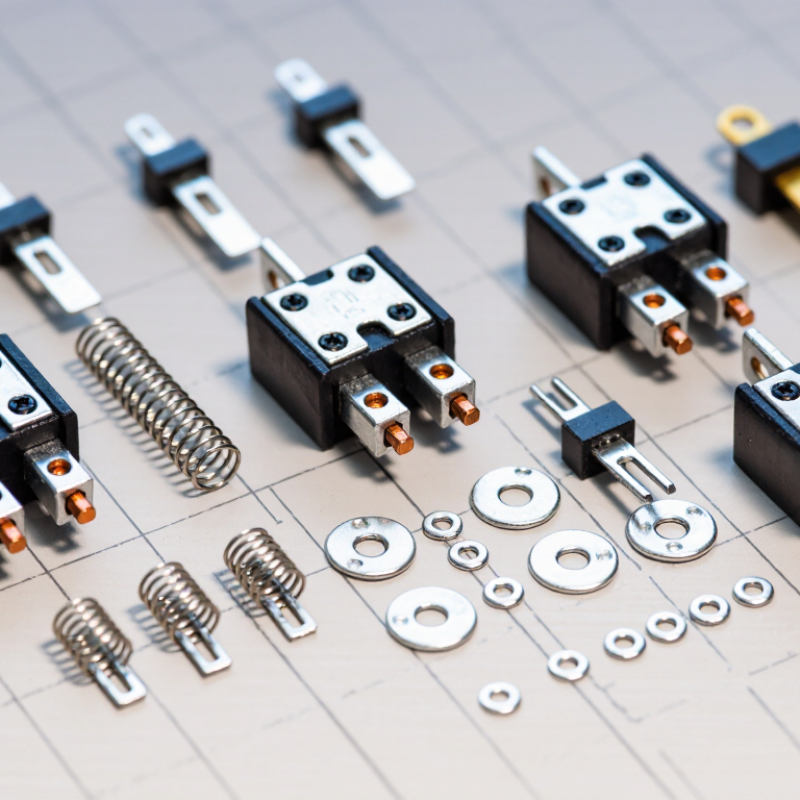
Top 10 Dual Micro Switch Manufacturers for Global Buyers

Understanding Dual Micro Switches and Their Industrial Applications

A dual micro switch uses one compact mechanism to operate two switching circuits, either together or in a defined sequence. The exact contact arrangement varies by design, so buyers should check the wiring diagram rather than rely on the name alone. These switches can provide separate signals for control and monitoring, or help equipment detect whether a mechanism has reached a set position. Small parts. Important work.

In an industrial control panel, one circuit might stop a motor while another reports the machine’s status. In a conveyor, a switch can detect a guard or moving component near its travel limit. Its crisp click is useful, but sound alone does not confirm correct operation. Engineers should consider actuator force, travel, contact rating, temperature, vibration, and expected operating cycles. A switch suited to a dry indoor cabinet may perform differently near dust, oil, or repeated shock.

For global purchasing teams, practical evaluation means reviewing specifications, sample parts, and test records together. Check whether both circuits change state as required, and confirm terminal layout before designing the harness. Ask how performance is verified over repeated operations. This sounds simple, but it is not. Tolerances, installation angle, and actuator alignment can affect results. Even a well-specified component may need testing in the actual assembly, where real vibration and mounting conditions reveal details a datasheet cannot.

Criteria for Evaluating Dual Micro Switch Manufacturers

When evaluating dual micro switch manufacturers, start with the switching arrangement. Confirm whether both switches operate together or independently, and check their travel, operating force, and reset behavior. Small differences matter. A switch that feels crisp on a bench may behave differently inside a warm, vibrating enclosure.

Ask for test data tied to the exact model, not just a general catalogue. Useful records include electrical endurance, contact resistance, insulation performance, and results under stated temperature and humidity conditions. Check that rated voltage and current match your load, including inrush current where relevant. Request dimensional drawings and tolerances; a terminal offset of a fraction of a millimeter can complicate assembly. Samples help, but a few successful cycles prove little.

Review how the manufacturer controls production changes and traces lots. Clear inspection plans, calibration records, and corrective-action reports are stronger evidence than polished claims. If possible, compare sample measurements with the drawings and repeat tests after mounting the part in your own fixture. This takes time. It can also reveal weaknesses that a supplier’s test setup misses. No manufacturer will fit every application, and documentation may be incomplete; note gaps before treating a quotation as a reliable basis for selection.

Top Dual Micro Switch Manufacturers Serving Global Buyers

Top dual micro switch manufacturers serving global buyers should offer more than a compact component and a low quoted price. Buyers need to compare operating force, travel, contact arrangement, electrical rating, and expected mechanical life. These details affect how a switch behaves inside a control panel or handheld device. Small differences matter. Ask for drawings, test conditions, and sample units before approving production. A specification sheet can still leave practical questions unanswered.

Reliable manufacturers explain how they control contact consistency, assembly tolerances, and inspection records. For overseas orders, confirm packaging, lead times, and how production changes are communicated. Request traceability for batches, especially when switches will be used in equipment that is difficult to service.

Test samples under the intended load and mounting conditions; a bench test may not reflect vibration or repeated user pressure. Some buyers focus heavily on unit cost. That can be a mistake. Yet supplier claims also deserve verification, not blind trust. Compare documented performance with your own application needs, and keep a clear record of approvals and revisions.

Comparing Manufacturers by Product Range, Quality, and Support

A useful comparison of dual micro switch manufacturers starts with the actual operating conditions. Check whether each supplier offers the required actuator style, terminal layout, operating force, and electrical rating. A broad catalog helps when one design cannot fit every enclosure. But more options do not automatically mean a better match.

Quality needs evidence beyond a product page. Look for clear drawings, dimensional tolerances, and test details covering switching life, contact resistance, and insulation. Ask how production batches are inspected and whether sample parts can be checked before an order. Small differences matter. A terminal that sits slightly proud may complicate assembly, while inconsistent operating force can affect a finished device. No checklist catches everything.

Support is easier to judge through specific questions. Can the manufacturer explain a rating, provide a drawing revision, or flag a mismatch between load and switch specification? Compare sample turnaround, response time, change control, and batch traceability. These details are practical, not glamorous. A polished catalog can still leave gaps, and buyers may overlook them when comparing prices alone. Keep the same technical requirements for every candidate, then record where each supplier gives precise answers and where it does not.

Top 10 Dual Micro Switch Manufacturers for Global Buyers - Comparing Manufacturers by Product Range, Quality, and Support

Brand-neutral comparison framework. Product specifications, certifications, and support vary by manufacturer and model; confirm them using current product documents and written quotations before purchase.

No. Comparison Dimension What to Compare Evidence to Request
1 Product range Available actuator styles, terminal options, mounting formats, and circuit configurations. Check whether “dual” refers to two circuits, two actuators, or another design. Current catalog, dimensional drawings, and exact part-number list.
2 Electrical ratings Rated voltage and current, load type, switching configuration, and applicable AC or DC conditions. Ratings are model- and load-dependent. Model-specific datasheet and the manufacturer’s stated electrical-life test conditions.
3 Mechanical performance Operating force, pre-travel, differential movement, overtravel, and mechanical endurance for the selected model. Datasheet limits, test method, and sample inspection results.
4 Contact and materials Contact material, terminal plating, housing material, and any material restrictions relevant to the application. Material declarations and product-specific construction details.
5 Environmental suitability Specified operating temperature, humidity limits, sealing or IP rating where applicable, and resistance to vibration or contamination. Test reports or datasheet statements for the exact configuration; do not assume a rating applies to every variant.
6 Quality systems Documented quality-management controls, traceability, incoming inspection, and corrective-action process. Current quality-system certificate and confirmation of its scope and issuing body.
7 Regulatory documentation Required approvals and declarations depend on the end product, target market, and switch model; verify applicability rather than relying on a general claim. Model-specific certificates, declarations, and searchable listing details where applicable.
8 Customization and engineering Availability of application review, dimensional changes, terminal or actuator options, and engineering-change controls. Written customization scope, sample plan, change-notification policy, and approval process.
9 Supply and lead time Quoted minimum order quantity, production lead time, capacity, packaging, and continuity arrangements for the requested part number. Current quotation, delivery schedule, and written confirmation of order terms.
10 After-sales support Technical response channels, complaint handling, warranty terms, and access to replacement or failure-analysis support. Published support contacts, warranty conditions, and documented return or corrective-action procedure.

Selecting a Manufacturer for Your Application and Market

Selecting a manufacturer for your application begins with the switch’s actual job. A dual micro switch may need to control two circuits, fit a tight enclosure, or respond to a precise actuator movement. Define the operating force, travel, mounting dimensions, electrical load, and expected switching cycles before comparing suppliers. Ask for test data that matches your conditions, not just a general product sheet. Small differences matter. A few millimeters can change the fit.

Market requirements also shape the choice. A switch used in a warm, dusty cabinet may need different sealing and materials than one installed in a clean indoor device. Share the expected temperature range, vibration exposure, and installation environment with prospective manufacturers. Request samples and inspect terminal connections, actuator feel, and dimensional consistency. Test them in your own assembly. A polished brochure cannot reveal every production variation.

Assess how the manufacturer handles quality and communication. Ask how incoming materials, production batches, and endurance tests are recorded. Confirm available documentation and whether specifications can be maintained across repeat orders. Global shipments can add lead-time and packaging concerns, so discuss them early. Be candid about forecast uncertainty; it may affect tooling or minimum quantities. One uncomfortable question is worth asking: what happens when a batch fails inspection? The answer should describe a clear process, not just reassurance.

Copyright 2025 Fluidra S.A. | Created by BCM Marketing Agencia Privacy Policy Legal note | Cookie policy |

Technical cookies are strictly necessary for our website to work and you can navigate through it. These types of cookies are those that, for example, allow us to identify you, give you access to certain restricted parts of the page if necessary, or remember different options or services already selected by you, such as your privacy preferences. Therefore, they are activated by default, your authorization not being necessary in this regard. Through the configuration of your browser, you can block or alert the presence of this type of cookies, although such blocking will affect the proper functioning of the different functionalities of our website.


The analysis cookies allow us to study the navigation of the users of our website in general (for example, which sections of the page are the most visited, which services are used most and if they work correctly, etc.). From the statistical information on navigation on our website, we can improve both the operation of the page itself and the different services it offers. Therefore, these cookies do not have an advertising purpose, but only serve to make our website work better, adapting to our users in general. By activating them you will contribute to this continuous improvement. You can enable or disable these cookies by checking the corresponding box, being disabled by default.


Functionality cookies allow us to remember your preferences, to personalize certain characteristics and general options of our website, every time you access it (for example, the language in which the information is presented to you, the sections marked as favorites, your browser type, etc.) Therefore, this type of cookies does not have an advertising purpose, but by activating them you will improve the functionality of the website (for example, adapting to your type of browser) and the customization of it based on your preferences (for example, by presenting the information in the language that you have chosen in previous occasions), which will contribute to the ease, usability and comfort of our page during your navigation. You can enable or disable these cookies by checking the corresponding box, being disabled by default.


Advertising cookies allow us to manage the advertising spaces included in our website based on criteria such as the content shown or the frequency in which the ads are displayed. For example, if you have been shown the same ad several times on our website, and you have not shown a personal interest by clicking on it, it will not appear again. In summary, by activating this type of cookies, the advertising shown on our website will be more useful and diverse, and less repetitive. You can enable or disable these cookies by checking the corresponding box, being disabled by default.


Behavioral advertising cookies allow us to obtain information based on the observation of your browsing habits and behaviors on the web, in order to show you advertising content that best suits your personal tastes and interests. To understand it in a very simple way, we will give you a fictitious example: if your last searches on the web were related to suspense literature, we would show you advertising about suspense books. Therefore, activating this type of cookies, the advertising that we show you on our website will not be generic, but will be oriented to your searches, tastes and interests, therefore adjusting exclusively to you. You can enable or disable these cookies by checking the corresponding box, being disabled by default.
To understand it in a very simple way, we will give you a fictitious example: if your last searches on the web were related to suspense literature, we would show you advertising about suspense books. Therefore, activating this type of cookies, the advertising that we show you on our website will not be generic, but will be oriented to your searches, tastes and interests, therefore adjusting exclusively to you. You can enable or disable these cookies by checking the corresponding box, being disabled by default.

SAVE

We use our own and third-party cookies to ensure the proper functioning of the website and to analyse our services, improve your experience on our website and show you advertisements related to your interests according to profiling based on your browsing habits (e.g. websites visited). You can accept all cookies by clicking "ACCEPT" or set or reject them by clicking here. If you would like to know more about the use of cookies, please see our COOKIE POLICY.


ACCEPT ALL
Reject no essentials


