
China Top 10 Socks Machine Manufacturers and Prices?
FLUID HANDLING EXPERTS

Blog, all our news

China Top 10 Socks Machine Manufacturers and Prices?

Choosing a sock machine involves more than comparing the lowest quotation. This guide examines China’s top 10 sock machine manufacturers and their pricing structures. It focuses on circular knitting equipment for sports socks, casual socks, compression designs, and custom production.

Real factory experience matters. A reliable supplier should explain cylinder diameter, needle count, knitting speed, production capacity, and compatible yarn types. Buyers should also check sample quality, spare-part availability, installation support, and warranty terms. A showroom can look impressive. The machine must still perform consistently on the factory floor.

This article compares manufacturer profiles, product strengths, export experience, and estimated Machine Price Socks across different machine categories. Prices may change with automation, brand reputation, configuration, shipping, and after-sales service. Public listings are sometimes incomplete, and similar models may use different names. That limitation deserves attention. Quoted prices should be confirmed directly with manufacturers and matched against technical specifications. Practical details, such as power requirements, delivery time, operator training, and maintenance costs, can influence the final investment more than the initial offer. The ranking is therefore a useful starting point, not an absolute judgment. Clear specifications and verifiable service records remain more valuable than attractive advertising.
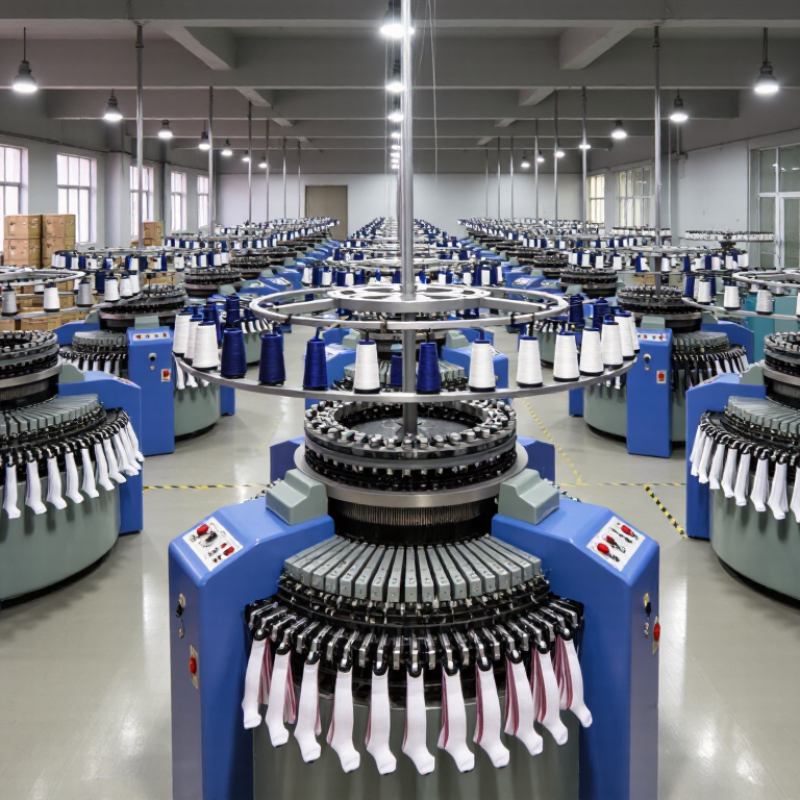
China Top 10 Socks Machine Manufacturers and Prices?

What Are Socks Machines and How Do They Work?

What Are Socks Machines and How Do They Work?

A socks machine is a computerized circular knitting system. It forms yarn into a tube, row by row, using needles arranged around a cylinder. The cylinder size and needle count control the sock’s diameter, thickness, and texture. Modern machines can produce plain, terry, ribbed, patterned, and elastic sections in one programmed cycle.

During operation, yarn feeders guide several yarns into the needle bed. Needles rise, catch the yarn, and create interlocking loops. A separate feeder may add elastic yarn around the cuff. Sensors monitor yarn tension and detect broken threads. The machine then shapes the heel and toe through programmed needle movements. Some models use electronic selection, which allows detailed patterns without manual changes.

Production speed depends on gauge, yarn type, design complexity, and operator skill. Industry quotations often place new commercial sock machines between 8,000 and 35,000 US dollars, while specialized systems may cost more. These figures are indicative, not fixed. Installation, software, spare needles, and training can change the final budget.

Grand View Research projects steady growth in the global hosiery market through 2030, supported by demand for sportswear and seamless products. ITMF shipment statistics also show continued investment in automated textile machinery. However, market reports rarely measure real factory downtime. That gap matters. A fast machine is not automatically profitable when maintenance, electricity, and rejected socks are ignored. Testing yarn compatibility before purchase remains practical, though many buyers underestimate it.

Key Factors for Comparing Chinese Socks Machine Manufacturers

Comparing Chinese socks machine manufacturers requires more than checking the lowest quotation. ITMF’s 2023 International Textile Machinery Shipment Statistics reported about 96,000 new circular knitting machines shipped worldwide. However, this figure covers more than sock equipment. Buyers should separate sock-specific capability from broad market volume.

Machine price is only one variable. Request a detailed quotation covering cylinders, feeders, control software, installation, training, spare parts, and warranty terms. A low quote may exclude essential needles or after-sales travel. Compare output at the same gauge, yarn type, sock length, and working speed. Ask for a live production test, not only a polished video. Small details matter. Check stitch consistency, heel shaping, noise, oil leakage, and power consumption.

Energy deserves attention. The International Energy Agency reports that industry remains a major global electricity user, so efficient motors and standby controls can reduce long-term costs. Request measured electricity use per dozen pairs. Also review service response times and spare-part availability inside your target market. UN Comtrade data can help assess China’s textile machinery trade flows, but it cannot prove factory reliability. That limitation matters. Factory audits, sample testing, and written performance guarantees provide stronger evidence. A useful comparison sheet should score technical results, operator training, delivery history, and total ownership cost. Some buyers still overvalue headline speed; real output often falls when yarn quality, maintenance, or worker experience changes.

China Top 10 Socks Machine Manufacturers and Prices? - Key Factors for Comparing Chinese Socks Machine Manufacturers
Comparative overview of anonymized Chinese supplier profiles. Prices are indicative factory-direct FOB China ranges for standard configurations and should be confirmed against the final specification.
Rank Anonymous Supplier Profile Main Machine Type Typical Needle Range Common Gauge Options Estimated Output Indicative FOB China Price Typical Lead Time Warranty Key Comparison Strength
1 Supplier 01 Computerized single-cylinder sock knitting machine 96–240 needles 3.5G–18G 250–350 pairs per 24 hours US$8,000–14,000 35–60 days 12 months High automation and broad pattern capability
2 Supplier 02 Automatic single-cylinder machine with terry function 84–240 needles 3.5G–18G 220–330 pairs per 24 hours US$7,500–13,500 30–55 days 12 months Good balance of price and product versatility
3 Supplier 03 Double-cylinder sock knitting machine 84–200 needles 6G–16G 180–280 pairs per 24 hours US$9,000–16,000 40–70 days 12 months Suitable for rib structures and shaped socks
4 Supplier 04 Sports and performance sock knitting machine 96–240 needles 3.5G–14G 230–340 pairs per 24 hours US$8,500–15,000 35–60 days 12 months Supports elastic yarn and reinforced zones
5 Supplier 05 Fine-gauge dress and business sock machine 144–240 needles 14G–20G 260–380 pairs per 24 hours US$10,000–17,500 45–75 days 12 months Fine fabric quality and detailed designs
6 Supplier 06 Heavy-gauge work and winter sock machine 48–144 needles 3.5G–8G 160–260 pairs per 24 hours US$6,500–12,500 30–55 days 12 months Strong performance with thick yarns
7 Supplier 07 Medical, compression and graduated sock machine 96–200 needles 3.5G–14G 180–300 pairs per 24 hours US$11,000–20,000 50–80 days 12 months Advanced tension and elastic-yarn control
8 Supplier 08 Entry-level computerized sock knitting machine 84–200 needles 3.5G–16G 180–290 pairs per 24 hours US$4,500–8,500 25–45 days 12 months Lower initial investment for small factories
9 Supplier 09 High-speed seamless sock knitting machine 96–240 needles 3.5G–18G 280–420 pairs per 24 hours US$10,500–18,500 45–70 days 12 months High productivity for standardized designs
10 Supplier 10 Multi-function sample and small-batch sock machine 84–200 needles 3.5G–16G 160–280 pairs per 24 hours US$5,500–10,500 30–50 days 12 months Flexible sampling and fast style changes
Important purchasing factors: Confirm the actual production speed using the intended yarn, sock size, pattern complexity and operating schedule. The final quotation should also specify machine gauge, number of feeders, terry capability, toe-closing method, software functions, spare parts, installation, operator training, electrical standards, packing and after-sales support. Prices exclude freight, duties, installation travel and other destination charges unless stated otherwise.

China’s Top 10 Socks Machine Manufacturers

China’s top ten socks machine manufacturers are often compared by machine stability, output, customization, and service support. A practical review should examine circular knitting equipment, computerized pattern systems, and automatic linking machines. Most leading suppliers serve sportswear, medical, casual, and seamless sock producers. Their machines commonly support 84 to 240 needles, depending on sock design and yarn type.

Prices vary widely. Basic computerized models may cost about 6,000 to 12,000 US dollars. Advanced machines with faster cylinders, automatic control, and pattern memory can exceed 20,000 dollars. Supporting equipment, installation, spare parts, and shipping may add significant costs. Ask for a full quotation. Not just the machine price.

Experienced buyers should request sample socks made with their own yarn. This test reveals tension problems, needle marks, and pattern limits. Check production speed under realistic conditions, not only the supplier’s highest claim. A useful supplier should provide manuals, remote troubleshooting, operator training, and replaceable parts. Service response matters.

The strongest manufacturers usually maintain inspection records and offer factory testing before shipment. Still, “top ten” lists can be subjective. A large factory may provide better capacity but slower customization. A smaller producer may respond faster yet lack spare-part depth. I would compare at least three quotations and inspect warranty terms carefully. Details matter.

China Socks Machine Market: Indicative Price Ranges

The chart compares indicative new-machine price ranges by common sock-machine configuration. Prices are shown in USD per unit and may vary according to gauge, automation level, output capacity, customization, and export terms. Company and brand names are intentionally excluded.

Socks Machine Price Ranges and Main Cost Factors

Socks Machine Price Ranges and Main Cost Factors

A new computerized socks machine commonly costs between US$8,000 and US$35,000. Basic single-cylinder models sit near the lower end. Jacquard, terry, or multi-feed configurations can exceed US$50,000.

These are practical market ranges, not fixed quotations. Final prices depend on specifications, production speed, and included accessories.

ITMF’s International Textile Machinery Shipment Statistics tracks circular knitting equipment shipments, but it does not publish one universal socks-machine price. WTO and UN Comtrade records under HS 8447 also show broad machinery trade values. However, this category includes several knitting-machine types. Buyers should not treat customs averages as direct retail prices. That distinction is often missed.

The main cost driver is configuration. A standard machine may need fewer feeders, needles, and electronic controls. Complex patterns require more programming capacity and specialized components. Servo systems, automatic toe closing, and inspection sensors also raise the purchase price.

Installation, operator training, spare needles, software, freight, and import duties can add 10% to 25% to the equipment budget.

Energy use matters over time. A cheaper machine may consume more electricity or require frequent maintenance. That assumption needs checking.

Ask for hourly output, defect rates, warranty terms, and the cost of critical replacement parts. A written quotation should separate machine cost from every service charge.

How to Choose the Right Socks Machine Supplier in China

Choosing the right socks machine supplier in China requires more than comparing quoted prices. Grand View Research valued the global hosiery market at about USD 91.6 billion in 2023, with continued growth expected through 2030. That demand encourages new suppliers, but market growth does not prove manufacturing competence. Request factory videos, machine serial records, and production samples made with your yarn, gauge, and pattern requirements.

Ask for measurable evidence. A serious supplier should disclose output per hour, needle configuration, power consumption, warranty limits, and spare-parts availability. ITMF’s International Textile Machinery Shipment Statistics show that global machinery demand can fluctuate sharply between years. Therefore, delivery promises should be checked against current production capacity, not sales language. Visit the factory if possible. Inspect assembly areas, testing procedures, and technician training.

Price needs a wider calculation. Include tooling, software, installation, training, freight, taxes, and expected downtime. A low initial quote can become expensive when imported parts wait for weeks. Compare at least three written offers using identical specifications. Also ask for a live trial with a production-length run, not only a small sample. Some buyers overlook service response time. I have seen this mistake become costly. No supplier is perfect, and even a well-audited factory may miss a detail. Put every assumption into the contract, then review it with an independent textile engineer before payment.

Copyright 2025 Fluidra S.A. | Created by BCM Marketing Agencia Privacy Policy Legal note | Cookie policy |

Technical cookies are strictly necessary for our website to work and you can navigate through it. These types of cookies are those that, for example, allow us to identify you, give you access to certain restricted parts of the page if necessary, or remember different options or services already selected by you, such as your privacy preferences. Therefore, they are activated by default, your authorization not being necessary in this regard. Through the configuration of your browser, you can block or alert the presence of this type of cookies, although such blocking will affect the proper functioning of the different functionalities of our website.


The analysis cookies allow us to study the navigation of the users of our website in general (for example, which sections of the page are the most visited, which services are used most and if they work correctly, etc.). From the statistical information on navigation on our website, we can improve both the operation of the page itself and the different services it offers. Therefore, these cookies do not have an advertising purpose, but only serve to make our website work better, adapting to our users in general. By activating them you will contribute to this continuous improvement. You can enable or disable these cookies by checking the corresponding box, being disabled by default.


Functionality cookies allow us to remember your preferences, to personalize certain characteristics and general options of our website, every time you access it (for example, the language in which the information is presented to you, the sections marked as favorites, your browser type, etc.) Therefore, this type of cookies does not have an advertising purpose, but by activating them you will improve the functionality of the website (for example, adapting to your type of browser) and the customization of it based on your preferences (for example, by presenting the information in the language that you have chosen in previous occasions), which will contribute to the ease, usability and comfort of our page during your navigation. You can enable or disable these cookies by checking the corresponding box, being disabled by default.


Advertising cookies allow us to manage the advertising spaces included in our website based on criteria such as the content shown or the frequency in which the ads are displayed. For example, if you have been shown the same ad several times on our website, and you have not shown a personal interest by clicking on it, it will not appear again. In summary, by activating this type of cookies, the advertising shown on our website will be more useful and diverse, and less repetitive. You can enable or disable these cookies by checking the corresponding box, being disabled by default.


Behavioral advertising cookies allow us to obtain information based on the observation of your browsing habits and behaviors on the web, in order to show you advertising content that best suits your personal tastes and interests. To understand it in a very simple way, we will give you a fictitious example: if your last searches on the web were related to suspense literature, we would show you advertising about suspense books. Therefore, activating this type of cookies, the advertising that we show you on our website will not be generic, but will be oriented to your searches, tastes and interests, therefore adjusting exclusively to you. You can enable or disable these cookies by checking the corresponding box, being disabled by default.
To understand it in a very simple way, we will give you a fictitious example: if your last searches on the web were related to suspense literature, we would show you advertising about suspense books. Therefore, activating this type of cookies, the advertising that we show you on our website will not be generic, but will be oriented to your searches, tastes and interests, therefore adjusting exclusively to you. You can enable or disable these cookies by checking the corresponding box, being disabled by default.

SAVE

We use our own and third-party cookies to ensure the proper functioning of the website and to analyse our services, improve your experience on our website and show you advertisements related to your interests according to profiling based on your browsing habits (e.g. websites visited). You can accept all cookies by clicking "ACCEPT" or set or reject them by clicking here. If you would like to know more about the use of cookies, please see our COOKIE POLICY.


ACCEPT ALL
Reject no essentials


