
China Top 10 Belt Conveyor Roller Manufacturers?
FLUID HANDLING EXPERTS

Blog, all our news

China Top 10 Belt Conveyor Roller Manufacturers?

Choosing a belt conveyor roller supplier in China involves more than comparing prices or browsing product photos. Rollers influence belt tracking, noise, energy use, and maintenance intervals. A poorly matched roller may develop vibration or bearing problems sooner than expected. Small details matter.

China has a broad network of conveyor component manufacturers, serving industries such as mining, ports, agriculture, and logistics. Their capabilities differ. Some focus on high-volume standard rollers; others offer custom dimensions, sealing arrangements, or materials for demanding conditions. Factory location, production capacity, testing methods, and export experience can all affect the fit for a project.

This guide introduces ten manufacturers for buyers beginning their research. It is not a universal ranking, and inclusion should not replace direct technical checks. Ask for drawings, material specifications, bearing details, and evidence of quality control. Where possible, compare sample rollers under conditions similar to your actual belt speed, load, dust, and moisture exposure. A polished catalog is useful, but it cannot show every weakness.

There is no perfect shortlist. Product information can change, and published claims may need confirmation with the manufacturer. Use the profiles as a starting point, then assess response quality, delivery commitments, warranty terms, and after-sales support. A few careful questions can prevent a costly mismatch.
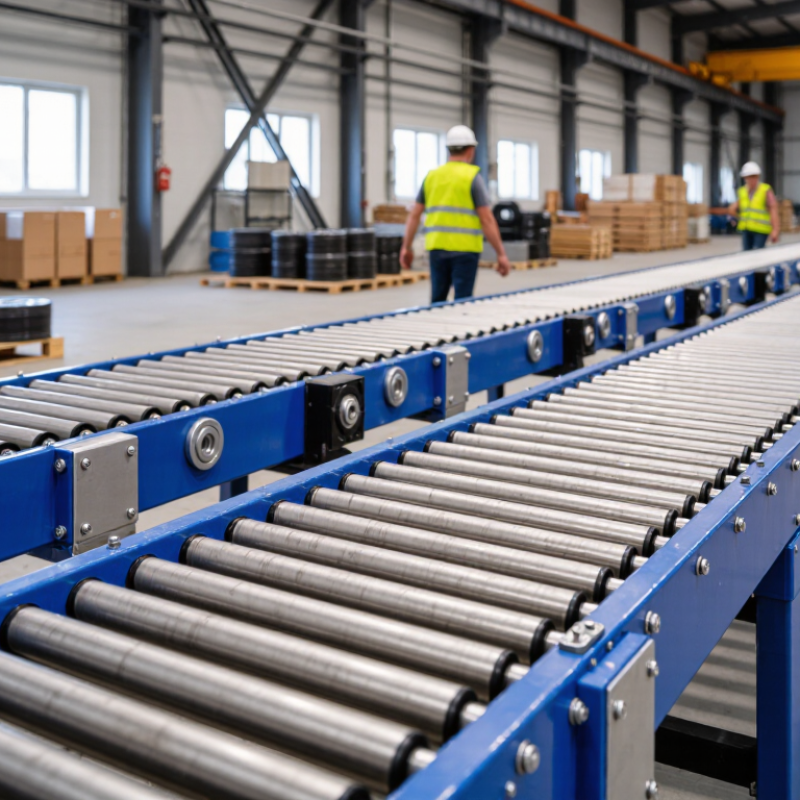
China Top 10 Belt Conveyor Roller Manufacturers?

Belt Conveyor Roller Types: 4 Idler Roles in Bulk-Material Systems

In bulk-material systems, idlers do more than hold a belt. CEMA’s Belt Conveyors for Bulk Materials explains how idler selection and spacing relate to belt load, material load, and operating conditions. Four common roles stand out: carrying, impact, return, and training. Small parts. Big consequences.

Carrying idlers support the loaded belt, often in a trough that helps contain material. Impact idlers sit beneath loading points, where falling rock can bruise the belt and overload ordinary rollers. Return idlers support the empty belt on its way back; cleaning access and carryback can affect their performance. Training idlers help correct belt wander, but they cannot fix poor loading or a misaligned structure. A roller is not a cure-all.

The U.S. Department of Energy’s motor-systems sourcebook estimates that motor-driven systems account for about 70% of U.S. industrial electricity use. That figure covers many applications, not conveyors alone, but it underlines why avoidable drag deserves attention. In practice, seized bearings, packed fines, and uneven roller spacing can add resistance. Teams sometimes choose by price first; that judgment can prove costly. Match the idler role to the loading zone, belt speed, material size, and maintenance conditions.

Industry Standards: ISO 1537 and CEMA 502 for Conveyor Idlers

Choosing conveyor idlers by price alone can hide costly mismatches. ISO 1537:1975 specifies idlers for troughed belt conveyors, giving engineers a shared dimensional reference. CEMA 502 provides guidance for bulk-material idler dimensions and load ratings. These standards help buyers compare technical specifications, but neither can predict every site condition.

Check the actual load, belt speed, trough angle, and material profile against the applicable standard tables. A roller that fits the frame may still be poorly matched to impact zones or abrasive dust. For example, confirm that the stated load rating suits the conveyor’s operating duty, not just its unloaded test condition. Standards are a baseline, not a durability guarantee. Field alignment and maintenance still matter.

Tips: Ask suppliers for the standard edition, roller dimensions, and load-rating basis. Compare the same duty class across quotations. Then inspect sample rollers for smooth rotation, sealing, and obvious runout. Small details count. Dust can expose weak seals quickly. ISO 1537 dates to 1975, so verify that the referenced edition and project requirements align; older guidance may not address every modern operating condition.

How to Compare China’s Top 10 Roller Manufacturers: 5 Quality Metrics

Comparing China’s top 10 belt conveyor roller manufacturers takes more than checking prices and delivery dates. Usefive quality metrics: dimensional accuracy, material consistency, bearing and seal protection, load performance, and traceable inspection records. Ask for measured roller diameter, shaft straightness, and runout—not just catalog specifications. A dial indicator check can reveal wobble that is hard to spot by eye.

Material details matter. Confirm the shell thickness, steel grade, and surface finish for your operating environment. Then inspect bearing seals and ask how rollers are tested under load. Look for noise, heat, and vibration during a continuous run. A smooth hand spin is useful, but it proves very little. Request inspection data from a production batch, and check whether the report identifies actual test conditions.

Compare like with like. Manufacturers may use different test loads or measurement methods, so unclear figures deserve follow-up. Ask for sample rollers and verify dimensions after delivery. Review how defects are logged and how corrective actions are documented. I would not treat a polished factory video as strong evidence; it shows a moment, not a process. One awkward point: even careful checks cannot predict every failure in a dusty, misaligned conveyor. Record your application conditions and evaluate samples in a realistic setup.

Manufacturer Profiles: Product Range, Production Capacity, and Certifications

A useful profile of China’s belt conveyor roller manufacturers should show more than a product catalogue. Compare standard, impact, return, and self-aligning rollers, then check whether custom shaft lengths and sealing options are available. These details matter on site. A roller designed for dusty bulk handling may need different seals from one used in a clean warehouse.

Production capacity needs careful reading. Monthly output is meaningful only when the manufacturer explains its production lines, testing process, and typical lead time. Ask whether stated capacity covers finished rollers or components, and whether sample orders follow the same inspection steps as larger batches. A neat factory photo proves little. Request recent dimensional inspection records, runout measurements, and information about bearing and shell tolerances. Some public profiles leave these details out; that gap deserves attention.

Certifications should be checked against their scope and validity, not treated as automatic proof of product performance. Review quality-management certificates, relevant test reports, and material documentation, where applicable. Confirm that the documents identify the actual manufacturing site and product category. For a fair top-ten comparison, use the same questions for every supplier and record answers in a simple table. A minor weakness in transparency may be worth noting, even when the product range looks impressive.

Roller Selection: Match Diameter, Belt Speed, Load, and Operating Conditions

Selecting a conveyor roller starts with the belt, not a catalog dimension. Roller diameter affects rotational speed, bearing load, and belt support. At a belt speed of 2.5 meters per second, a smaller roller turns faster and may increase bearing wear. A larger diameter can reduce rotational speed, but it needs enough clearance and may add weight. Measure the actual belt speed and check the conveyor layout before choosing. Small details matter.

Assess the load at each roller, especially where wet material or heavy packages drop onto the belt. A light return roller may suit an empty belt but struggle near a loaded transfer point. Match shell thickness, shaft size, and bearing rating to the load profile, not just average tonnage. Dust, washdown, heat, and outdoor moisture also affect seal and material choices. Check how often the line starts and stops; frequent starts can stress components more than steady running. That sounds simple. It isn’t always. An estimate may miss actual operating temperatures or impact loads, so verify measurements on site and allow for uncertainty.

Copyright 2025 Fluidra S.A. | Created by BCM Marketing Agencia Privacy Policy Legal note | Cookie policy |

Technical cookies are strictly necessary for our website to work and you can navigate through it. These types of cookies are those that, for example, allow us to identify you, give you access to certain restricted parts of the page if necessary, or remember different options or services already selected by you, such as your privacy preferences. Therefore, they are activated by default, your authorization not being necessary in this regard. Through the configuration of your browser, you can block or alert the presence of this type of cookies, although such blocking will affect the proper functioning of the different functionalities of our website.


The analysis cookies allow us to study the navigation of the users of our website in general (for example, which sections of the page are the most visited, which services are used most and if they work correctly, etc.). From the statistical information on navigation on our website, we can improve both the operation of the page itself and the different services it offers. Therefore, these cookies do not have an advertising purpose, but only serve to make our website work better, adapting to our users in general. By activating them you will contribute to this continuous improvement. You can enable or disable these cookies by checking the corresponding box, being disabled by default.


Functionality cookies allow us to remember your preferences, to personalize certain characteristics and general options of our website, every time you access it (for example, the language in which the information is presented to you, the sections marked as favorites, your browser type, etc.) Therefore, this type of cookies does not have an advertising purpose, but by activating them you will improve the functionality of the website (for example, adapting to your type of browser) and the customization of it based on your preferences (for example, by presenting the information in the language that you have chosen in previous occasions), which will contribute to the ease, usability and comfort of our page during your navigation. You can enable or disable these cookies by checking the corresponding box, being disabled by default.


Advertising cookies allow us to manage the advertising spaces included in our website based on criteria such as the content shown or the frequency in which the ads are displayed. For example, if you have been shown the same ad several times on our website, and you have not shown a personal interest by clicking on it, it will not appear again. In summary, by activating this type of cookies, the advertising shown on our website will be more useful and diverse, and less repetitive. You can enable or disable these cookies by checking the corresponding box, being disabled by default.


Behavioral advertising cookies allow us to obtain information based on the observation of your browsing habits and behaviors on the web, in order to show you advertising content that best suits your personal tastes and interests. To understand it in a very simple way, we will give you a fictitious example: if your last searches on the web were related to suspense literature, we would show you advertising about suspense books. Therefore, activating this type of cookies, the advertising that we show you on our website will not be generic, but will be oriented to your searches, tastes and interests, therefore adjusting exclusively to you. You can enable or disable these cookies by checking the corresponding box, being disabled by default.
To understand it in a very simple way, we will give you a fictitious example: if your last searches on the web were related to suspense literature, we would show you advertising about suspense books. Therefore, activating this type of cookies, the advertising that we show you on our website will not be generic, but will be oriented to your searches, tastes and interests, therefore adjusting exclusively to you. You can enable or disable these cookies by checking the corresponding box, being disabled by default.

SAVE

We use our own and third-party cookies to ensure the proper functioning of the website and to analyse our services, improve your experience on our website and show you advertisements related to your interests according to profiling based on your browsing habits (e.g. websites visited). You can accept all cookies by clicking "ACCEPT" or set or reject them by clicking here. If you would like to know more about the use of cookies, please see our COOKIE POLICY.


ACCEPT ALL
Reject no essentials


