
What Are the Top 10 Chemical Eyewash Stations?
FLUID HANDLING EXPERTS

Blog, all our news

What Are the Top 10 Chemical Eyewash Stations?

A chemical splash can turn an ordinary workday into an emergency. A worker may reach for an eyewash station with burning eyes, wet gloves, and only seconds to spare. Chemical Eyewash equipment must therefore be easy to find, simple to activate, and suited to the hazards nearby. Small details matter: the handle’s position, the water flow, and whether stored materials block access.

Occupational health researcher Dr. David Michaels has emphasized the importance of protecting workers from preventable hazards. I cannot verify a Chemical Eyewash-specific quotation from him, so I will not invent one. The principle still applies. A station is useful only when it works as intended and workers know how to use it. Fast access matters.

This guide compares ten types and models of chemical eyewash stations by practical factors: installation, water supply, maintenance demands, and fit for different work areas. Some facilities need a plumbed unit near a fixed process. Others may need a self-contained station where plumbing is unavailable. No single ranking can settle every choice; room layout, chemical risks, and upkeep change the answer. That is worth admitting. A polished product sheet cannot show a blocked aisle or a neglected inspection. The comparisons ahead aim to make those trade-offs clearer, so safety teams can shortlist options and verify each station against their actual site conditions.
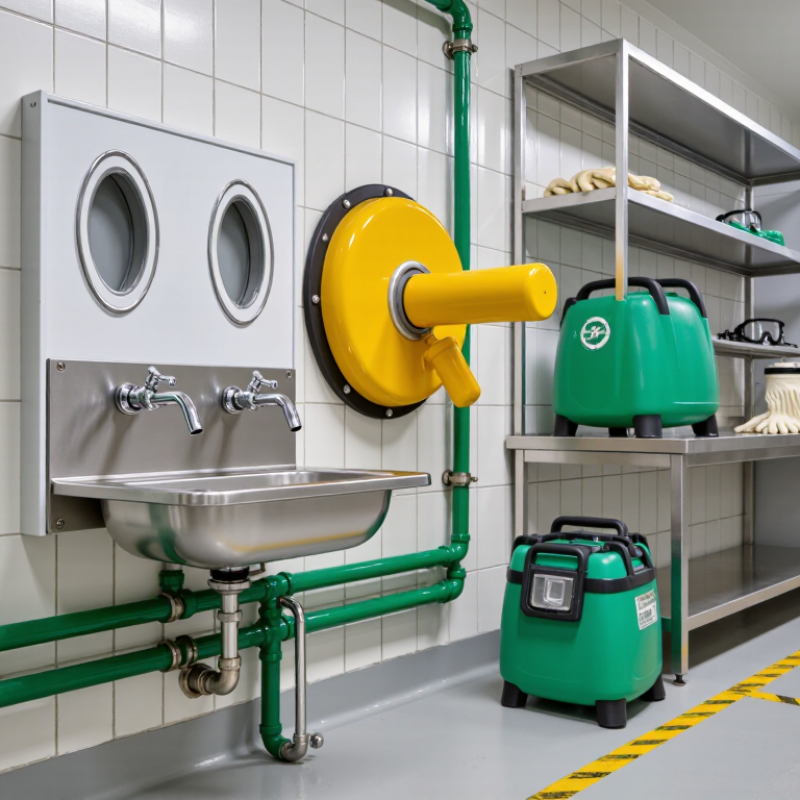
What Are the Top 10 Chemical Eyewash Stations?

What Chemical Eyewash Stations Do and Which Workplace Hazards Require Them

A chemical eyewash station provides a nearby source of flushing fluid after hazardous material enters the eyes. It helps dilute and wash away contaminants while the worker gets further medical guidance. After exposure, begin flushing immediately and follow the chemical’s safety data sheet and workplace emergency procedures. Keep the eyelids open so fluid can reach the whole eye. Seconds matter. Do not let locating a supervisor or reading a label delay rinsing.

Eyewash stations are important wherever splashes or airborne particles could reach workers’ eyes. Common examples include chemical mixing and transfer, laboratory handling, industrial cleaning, and battery maintenance. Corrosive liquids, irritants, and fine powders each pose different risks, so assess the actual substances and tasks rather than relying on a generic checklist. Place stations along clear, unobstructed routes and maintain them according to the manufacturer’s instructions and applicable workplace requirements. A station can look ready but still be blocked by a cart, or fail to deliver adequate flow. That gap matters. Regular checks and practical drills help reveal problems before an emergency.

How ANSI/ISEA Z358.1 Sets the 10-Second Access Requirement

Chemical exposure can turn a routine task into an emergency within moments. ANSI/ISEA Z358.1 sets a 10-second access benchmark for emergency eyewash equipment. This is a response-time requirement, not a universal distance for every floor plan. Workers should reach the unit on the same level, without doors, stored cartons, or machinery blocking the way. Seconds matter. A route that looks clear on a drawing may be crowded during a busy shift.

Place eyewash stations near chemical handling areas and along a clearly marked, well-lit path. Consider the chemical involved, the chance of a splash, and how workers move through the space. A station just beyond a closed door may seem nearby but still delay access. Walk the route at an ordinary pace, then repeat the check when carts and bins are in use. Still, a neat map can give false confidence. For plumbed units, regular activation checks help identify flow problems; also keep the path open. The standard addresses water flow, temperature, and flushing duration, so quick access is only one part of readiness.

Comparing 10 Station Types Against the 0.4-gpm, 15-Minute Flush Standard

What Are the Top 10 Chemical Eyewash Stations?

The key comparison is whether a station can deliver at least 0.4 gallons per minute for 15 minutes. That is the benchmark used for emergency eyewash performance. Wall-mounted and pedestal plumbed units can meet it when supply pressure and piping are adequate. Deck-mounted and sink-mounted units save space, but nearby taps are not proof of compliant flow. Combination shower-and-eyewash stations add body rinsing; check the eyewash heads separately. Small details matter.

Freeze-protected and heated plumbed stations suit cold or exposed locations, though temperature controls need regular checks. Gravity-fed portable units can meet the benchmark if their rated capacity sustains the stated flow for the full flush. Pressurized self-contained units may also qualify, but pressure can fall as they operate. Mobile cart units offer flexibility, yet access and inspection can be overlooked. Personal rinse bottles are useful for immediate first aid, but they do not replace a station capable of a 15-minute flush.

For any type, verify the manufacturer’s flow rating, water supply, activation, and maintenance instructions. A timed test with a collection container can reveal weak flow; do not rely on appearance alone. Keep the path clear, and place the station where a worker can reach it quickly. Water should be suitable for flushing and comfortably tempered. Small oversights happen. That is worth checking.

Why Tepid Water at 60–100°F Matters for Chemical Eye Exposure

Why Tepid Water at 60–100°F Matters for Chemical Eye Exposure

When a chemical splashes into an eye, begin flushing immediately. Tepid water—between 60°F and 100°F (about 16–38°C)—helps make a sustained rinse more tolerable. The temperature matters. Water that feels painfully cold or hot can make someone pull away before rinsing long enough.

Use a chemical eyewash station that delivers a gentle, continuous flow to both eyes. Hold the eyelids open, move the eyes in different directions, and remove contact lenses if they come out easily. Do not rub. Many emergency guidelines call for at least 15 minutes of flushing, but some substances require longer. Check the product’s safety information and seek urgent medical guidance; never delay rinsing to look things up.

A station is only useful if it works when needed. Keep its path clear, check the water flow and temperature routinely, and make sure nearby staff know how to operate it. That detail is easy to underestimate. Tepid water is not a substitute for proper flushing or medical care, and a comfortable rinse should not become a reason to stop early.

What Are the Top 10 Chemical Eyewash Stations? — Why Tepid Water at 60–100°F Matters for Chemical Eye Exposure

A key safety benchmark: the tepid-water temperature range for emergency eyewash equipment.

ANSI/ISEA Z358.1 defines tepid water as 60–100°F (approximately 16–38°C). Water within this range can help support effective flushing while reducing the risk that extreme temperatures discourage users from continuing. Follow the applicable standard, the chemical’s safety data sheet, and medical guidance.

How Installation, Weekly Activation, and Maintenance Shape Station Selection

What Are the Top 10 Chemical Eyewash Stations?

How Installation, Weekly Activation, and Maintenance Shape Station Selection

Choosing an eyewash station starts with the chemicals handled and the tasks performed nearby. Install it close to the hazard, on the same level, with a clear route and no door or cart blocking access. Check the water supply, drainage, freezing risk, and unit suitability for the work area. A station may look ideal on a floor plan but feel awkward to reach. Walk the route.

For plumbed stations, schedule weekly activation when required by applicable guidance and the manufacturer’s instructions. Confirm that water flows freely through both outlets, and follow instructions for flushing the lines. Check for leaks, blocked spray heads, damaged covers, and changes in water condition. For self-contained units, inspect solution levels and expiry dates. Keep a written log; missed checks are easy to overlook during a busy shift. Maintenance needs vary by model and site conditions.

Tips: Keep the path clear and the station visible. Test access with gloves on. Small obstacles matter. A quick weekly check is useful, but it cannot replace repairs or scheduled servicing.

Copyright 2025 Fluidra S.A. | Created by BCM Marketing Agencia Privacy Policy Legal note | Cookie policy |

Technical cookies are strictly necessary for our website to work and you can navigate through it. These types of cookies are those that, for example, allow us to identify you, give you access to certain restricted parts of the page if necessary, or remember different options or services already selected by you, such as your privacy preferences. Therefore, they are activated by default, your authorization not being necessary in this regard. Through the configuration of your browser, you can block or alert the presence of this type of cookies, although such blocking will affect the proper functioning of the different functionalities of our website.


The analysis cookies allow us to study the navigation of the users of our website in general (for example, which sections of the page are the most visited, which services are used most and if they work correctly, etc.). From the statistical information on navigation on our website, we can improve both the operation of the page itself and the different services it offers. Therefore, these cookies do not have an advertising purpose, but only serve to make our website work better, adapting to our users in general. By activating them you will contribute to this continuous improvement. You can enable or disable these cookies by checking the corresponding box, being disabled by default.


Functionality cookies allow us to remember your preferences, to personalize certain characteristics and general options of our website, every time you access it (for example, the language in which the information is presented to you, the sections marked as favorites, your browser type, etc.) Therefore, this type of cookies does not have an advertising purpose, but by activating them you will improve the functionality of the website (for example, adapting to your type of browser) and the customization of it based on your preferences (for example, by presenting the information in the language that you have chosen in previous occasions), which will contribute to the ease, usability and comfort of our page during your navigation. You can enable or disable these cookies by checking the corresponding box, being disabled by default.


Advertising cookies allow us to manage the advertising spaces included in our website based on criteria such as the content shown or the frequency in which the ads are displayed. For example, if you have been shown the same ad several times on our website, and you have not shown a personal interest by clicking on it, it will not appear again. In summary, by activating this type of cookies, the advertising shown on our website will be more useful and diverse, and less repetitive. You can enable or disable these cookies by checking the corresponding box, being disabled by default.


Behavioral advertising cookies allow us to obtain information based on the observation of your browsing habits and behaviors on the web, in order to show you advertising content that best suits your personal tastes and interests. To understand it in a very simple way, we will give you a fictitious example: if your last searches on the web were related to suspense literature, we would show you advertising about suspense books. Therefore, activating this type of cookies, the advertising that we show you on our website will not be generic, but will be oriented to your searches, tastes and interests, therefore adjusting exclusively to you. You can enable or disable these cookies by checking the corresponding box, being disabled by default.
To understand it in a very simple way, we will give you a fictitious example: if your last searches on the web were related to suspense literature, we would show you advertising about suspense books. Therefore, activating this type of cookies, the advertising that we show you on our website will not be generic, but will be oriented to your searches, tastes and interests, therefore adjusting exclusively to you. You can enable or disable these cookies by checking the corresponding box, being disabled by default.

SAVE

We use our own and third-party cookies to ensure the proper functioning of the website and to analyse our services, improve your experience on our website and show you advertisements related to your interests according to profiling based on your browsing habits (e.g. websites visited). You can accept all cookies by clicking "ACCEPT" or set or reject them by clicking here. If you would like to know more about the use of cookies, please see our COOKIE POLICY.


ACCEPT ALL
Reject no essentials


