
Top 10 Carbon Fiber Production Line Suppliers Worldwide
FLUID HANDLING EXPERTS

Blog, all our news

Top 10 Carbon Fiber Production Line Suppliers Worldwide

Carbon fiber is moving from a specialist aerospace material toward wider industrial use. Aircraft structures, electric vehicles, wind turbine components, and hydrogen pressure vessels are driving this shift. The International Energy Agency reported that global electric car sales exceeded 17 million in 2024, increasing demand for lighter and more energy-efficient designs. The Global Wind Energy Council also recorded more than 117 gigawatts of new wind capacity installed in 2023. These developments create pressure for stable, scalable composite manufacturing.

A reliable Carbon fiber production line supplier must offer more than ovens and winding machines. Line design affects precursor quality, oxidation control, carbonization temperature, surface treatment, sizing, energy consumption, and final tensile performance. MarketsandMarkets and Grand View Research both forecast strong growth in the global carbon fiber market through the end of this decade. However, market forecasts differ because companies report capacity, output, and technology readiness in inconsistent ways. That matters.

This guide reviews ten international suppliers through practical criteria: process integration, annual capacity, automation, quality systems, technical support, delivery experience, and lifecycle cost. Public company filings, industry reports, and documented project references provide the foundation. Factory details can still change. Some suppliers disclose little. Others present impressive equipment images without publishing stable production data. That deserves scrutiny.

The ranking is not absolute. A high-volume aerospace line may not suit a smaller automotive plant. Energy use, local labor, feedstock availability, and after-sales service can change the decision. Buyers should request pilot-line results, acceptance-test records, maintenance schedules, and verified customer references before signing contracts. The strongest supplier is not always the largest. It is the one that can repeatedly deliver consistent fiber, measurable efficiency, and practical support under real operating conditions.
Top 10 Carbon Fiber Production Line Suppliers Worldwide

Carbon Fiber Production Lines: Scope, Components, and Applications

Carbon fiber production lines convert precursor materials into strong, lightweight reinforcement. Their scope usually covers oxidation, carbonization, surface treatment, sizing, drying, winding, and quality inspection. Each stage needs stable temperature, controlled tension, and clean airflow. Small process variations can change tensile strength or surface bonding. That is where engineering discipline matters.

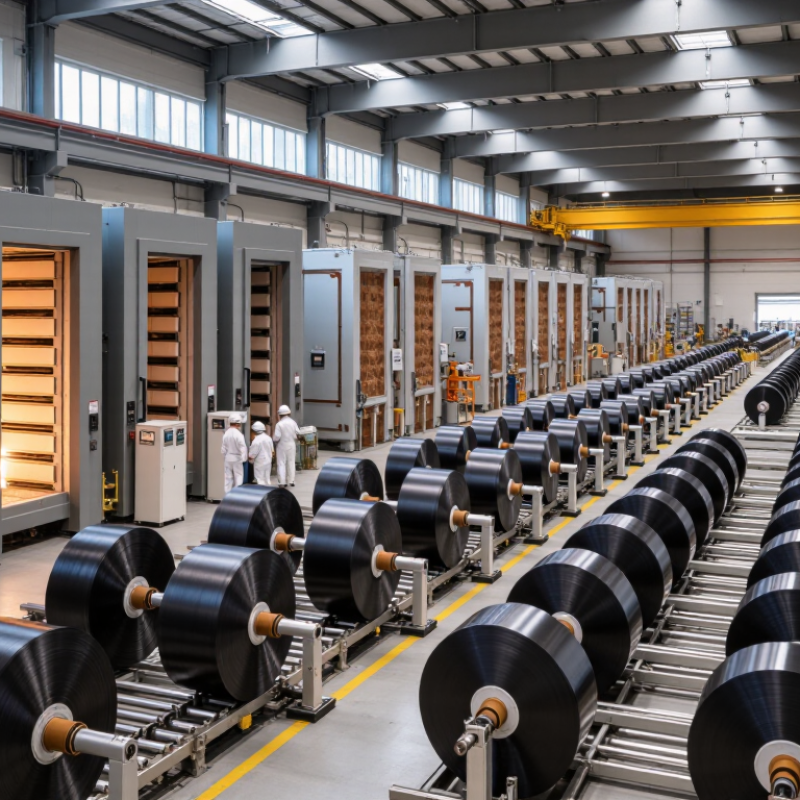
A typical line includes precursor creels, guiding rollers, heated furnaces, cooling zones, coating units, dryers, and automated winders. Sensors track line speed, furnace temperature, fiber tension, and coating weight. Laboratory equipment then checks strength, modulus, diameter, and sizing distribution. Data records should remain traceable from each production lot. Simple systems often perform better.

Applications range from aircraft structures and pressure vessels to wind turbine components, sporting equipment, and vehicle parts. Aerospace lines demand tight tolerances and extensive inspection. Industrial lines may prioritize throughput, energy efficiency, and stable roll quality. A supplier assessment should examine pilot testing, maintenance access, spare-part planning, operator training, and process documentation. A polished factory visit can still hide weak after-sales support. This is an easy mistake to make. Production targets also deserve skepticism; laboratory results may not match continuous operation. Independent trials under realistic speeds provide stronger evidence.

Criteria for Ranking the Top 10 Global Suppliers

Top 10 Carbon Fiber Production Line Suppliers Worldwide

Ranking global carbon fiber production line suppliers requires more than comparing catalog specifications. A credible assessment examines engineering experience, process stability, and verified production results. I would review reference plants, commissioning records, and long-term operating data. These details often reveal weaknesses hidden behind attractive capacity figures.

The ranking should measure precursor compatibility, carbonization control, energy efficiency, automation, and product consistency. Strong suppliers provide traceable testing records and practical maintenance training. They also explain expected yield, downtime, and replacement costs clearly. Independent audits can support claims about quality and workplace safety. Local service coverage matters when a furnace alarm stops production at night. However, no scorecard is perfect. A low-cost line may outperform a premium system in a specific factory. Site conditions can change the result.

Tips: Ask for production samples, not only brochures. Visit an operating facility when possible. Compare tensile strength, modulus, line speed, and energy use under similar conditions. Check whether software updates, spare parts, and technical support remain available after installation. Leave room for pilot trials. Real fibers can behave differently from laboratory samples, and that difference deserves careful investigation.

Top 10 Carbon Fiber Production Line Suppliers Worldwide

Top 10 Carbon Fiber Production Line Suppliers Worldwide

The top 10 carbon fiber production line suppliers worldwide are judged by engineering depth, process stability, and after-sales support. A reliable supplier should understand precursor preparation, oxidation, carbonization, surface treatment, and winding. These stages must work as one controlled system. Small temperature changes can alter tensile strength, shrinkage, and production yield.

Experienced suppliers usually provide pilot-scale testing before full installation. This step reveals practical issues, such as uneven fiber tension or unstable furnace airflow. Strong suppliers also offer layout planning, equipment commissioning, operator training, and maintenance schedules. Their technical teams should explain energy use, line speed, fiber specifications, and expected output with measurable data. Vague promises deserve careful review.

The best candidates often demonstrate experience with different tow sizes and production capacities. They should provide traceable quality records, calibration procedures, and spare-parts planning. A supplier may have advanced equipment, yet weak communication can delay production for weeks. That matters when a damaged heating element stops an entire line. Buyers should inspect reference projects and speak with operating teams, not only sales representatives. This process takes time. It can still prevent expensive mistakes.

Supplier rankings should remain flexible because project goals differ. A research center may value modular equipment, while a large manufacturer needs continuous automation and high throughput. No single line fits every factory. Performance also depends on local utilities, workforce skills, raw materials, and compliance requirements. Careful technical audits create a more dependable comparison of the top 10 carbon fiber production line suppliers worldwide.

Top 10 Carbon Fiber Production Line Suppliers Worldwide

Rank Anonymous Supplier Primary Region Production-Line Scope Precursor Compatibility Typical Carbonization Range Product Forms Supported Key Application Focus
1 Supplier A East Asia Integrated oxidation, carbonization, surface treatment, sizing and winding lines PAN-based precursor Approximately 1,000–2,000°C Continuous tow and multi-filament yarn Aerospace, automotive and industrial composites
2 Supplier B Western Europe Pilot and industrial lines with automated tension and atmosphere control PAN-based precursor Approximately 1,200–2,000°C Standard-tow and intermediate-tow fiber Aerospace qualification and advanced mobility
3 Supplier C North America Modular lines for carbonization, graphitization, treatment and take-up PAN-based precursor and selected alternative precursors Approximately 900–2,500°C Continuous tow, chopped fiber and technical yarn Wind energy, pressure vessels and transportation
4 Supplier D East Asia High-throughput oxidation and carbonization systems with multi-zone furnaces PAN-based precursor Approximately 1,000–2,200°C Large-tow and standard-tow carbon fiber Automotive structures and general industrial use
5 Supplier E Central Europe Laboratory, pilot and scale-up equipment for controlled thermal conversion PAN, rayon and pitch research lines Approximately 800–3,000°C Research tow, yarn and specialty fiber Research institutions and specialty materials
6 Supplier F South Asia Cost-efficient continuous lines covering stabilization, carbonization and sizing PAN-based precursor Approximately 1,000–1,800°C Standard-tow carbon fiber and chopped fiber Construction reinforcement and sporting goods
7 Supplier G Western Europe Energy-efficient furnaces with integrated gas recycling and emissions control PAN-based precursor Approximately 1,000–2,000°C Continuous tow and recycled carbon-fiber feedstock Low-carbon manufacturing and circular composites
8 Supplier H East Asia High-tension lines with precision spreading, sizing and automated package handling PAN-based precursor Approximately 1,000–2,100°C Standard-tow, large-tow and prepreg-grade fiber Electronics, sporting goods and industrial tooling
9 Supplier I North America Flexible pilot-to-production systems with digital monitoring and recipe control PAN and specialty precursor development Approximately 900–2,400°C Continuous tow, chopped fiber and hybrid yarn Defense, aerospace research and advanced manufacturing
10 Supplier J Middle East and Africa Turnkey line integration with auxiliary utilities, quality inspection and operator training PAN-based precursor Approximately 1,000–2,000°C Standard-tow carbon fiber and chopped fiber Infrastructure, energy and regional composites production

Note: Supplier identities are intentionally omitted. Temperature ranges refer to typical furnace operating zones used in carbon-fiber stabilization, carbonization and optional graphitization; actual specifications vary by line design, precursor and target grade.

Technology, Capacity, and Service Comparison

Top 10 Carbon Fiber Production Line Suppliers Worldwide
Technology, Capacity, and Service Comparison

The top ten carbon fiber production line suppliers differ sharply in process depth and delivery capability. Strong systems connect precursor stabilization, carbonization, surface treatment, sizing, and winding with consistent tension control. Modern lines also use thermal sensors and automated defect tracking. These tools reduce variation across each tow. Small errors matter.

Production capacity requires careful reading. Some suppliers offer pilot lines below 1,000 tonnes annually, while larger systems may exceed 10,000 tonnes. However, published capacity can mislead. It often depends on precursor quality, fiber grade, operating hours, and maintenance intervals. Buyers should request verified output data from comparable installations. A factory visit helps more than a polished brochure.

Service quality separates reliable suppliers from merely capable manufacturers. Practical support includes process training, commissioning engineers, spare-part planning, remote diagnostics, and clear response times. Strong suppliers provide acceptance testing with measurable targets for tensile strength, modulus, yield, energy use, and downtime. Local technical support is valuable during the first production months. No supplier is perfect. Even advanced equipment may need repeated tuning after installation. Teams should examine warranty limits, software access, upgrade paths, and operator training before signing a contract. A lower purchase price may create higher costs later.

How to Select the Right Carbon Fiber Line Supplier

Selecting among the top 10 carbon fiber production line suppliers worldwide requires more than comparing machine prices. A credible supplier should show pilot-line results, audited energy data, and references for comparable tow sizes. The International Energy Agency’s Renewables 2024 report recorded 473 GW of new renewable capacity in 2023, including 116 GW from wind. That growth increases pressure on stable, scalable carbon fiber output. Ask suppliers to explain precursor conversion, oxidation, carbonization, surface treatment, and spool winding. Each stage affects tensile strength and scrap.

Request batch-level evidence. Not polished brochures. ISO 9001 supports process-control verification, while ISO 14001 indicates environmental management. However, certificates do not prove line performance. Review denier uniformity, tensile-strength variation, furnace temperature mapping, line speed, yield, and maintenance planning. The Global Wind Report 2024, published by GWEC, reported 117 GW of new wind installations in 2023. Throughput matters for blade-material customers. Yet faster is not always better. Excessive speed may increase fiber breaks and unstable sizing.

A practical evaluation should include a witnessed factory acceptance test and a small production trial. Compare energy consumption per kilogram, labor requirements, spare-parts lead times, software access, and technician response. Require transparent assumptions behind capacity claims. Some proposals look efficient because reject rates are omitted. I would question suppliers promising identical results across every precursor grade. Real plants need tuning. Choose the supplier that documents limits, learns from failed runs, and protects repeatable quality.

Copyright 2025 Fluidra S.A. | Created by BCM Marketing Agencia Privacy Policy Legal note | Cookie policy |

Technical cookies are strictly necessary for our website to work and you can navigate through it. These types of cookies are those that, for example, allow us to identify you, give you access to certain restricted parts of the page if necessary, or remember different options or services already selected by you, such as your privacy preferences. Therefore, they are activated by default, your authorization not being necessary in this regard. Through the configuration of your browser, you can block or alert the presence of this type of cookies, although such blocking will affect the proper functioning of the different functionalities of our website.


The analysis cookies allow us to study the navigation of the users of our website in general (for example, which sections of the page are the most visited, which services are used most and if they work correctly, etc.). From the statistical information on navigation on our website, we can improve both the operation of the page itself and the different services it offers. Therefore, these cookies do not have an advertising purpose, but only serve to make our website work better, adapting to our users in general. By activating them you will contribute to this continuous improvement. You can enable or disable these cookies by checking the corresponding box, being disabled by default.


Functionality cookies allow us to remember your preferences, to personalize certain characteristics and general options of our website, every time you access it (for example, the language in which the information is presented to you, the sections marked as favorites, your browser type, etc.) Therefore, this type of cookies does not have an advertising purpose, but by activating them you will improve the functionality of the website (for example, adapting to your type of browser) and the customization of it based on your preferences (for example, by presenting the information in the language that you have chosen in previous occasions), which will contribute to the ease, usability and comfort of our page during your navigation. You can enable or disable these cookies by checking the corresponding box, being disabled by default.


Advertising cookies allow us to manage the advertising spaces included in our website based on criteria such as the content shown or the frequency in which the ads are displayed. For example, if you have been shown the same ad several times on our website, and you have not shown a personal interest by clicking on it, it will not appear again. In summary, by activating this type of cookies, the advertising shown on our website will be more useful and diverse, and less repetitive. You can enable or disable these cookies by checking the corresponding box, being disabled by default.


Behavioral advertising cookies allow us to obtain information based on the observation of your browsing habits and behaviors on the web, in order to show you advertising content that best suits your personal tastes and interests. To understand it in a very simple way, we will give you a fictitious example: if your last searches on the web were related to suspense literature, we would show you advertising about suspense books. Therefore, activating this type of cookies, the advertising that we show you on our website will not be generic, but will be oriented to your searches, tastes and interests, therefore adjusting exclusively to you. You can enable or disable these cookies by checking the corresponding box, being disabled by default.
To understand it in a very simple way, we will give you a fictitious example: if your last searches on the web were related to suspense literature, we would show you advertising about suspense books. Therefore, activating this type of cookies, the advertising that we show you on our website will not be generic, but will be oriented to your searches, tastes and interests, therefore adjusting exclusively to you. You can enable or disable these cookies by checking the corresponding box, being disabled by default.

SAVE

We use our own and third-party cookies to ensure the proper functioning of the website and to analyse our services, improve your experience on our website and show you advertisements related to your interests according to profiling based on your browsing habits (e.g. websites visited). You can accept all cookies by clicking "ACCEPT" or set or reject them by clicking here. If you would like to know more about the use of cookies, please see our COOKIE POLICY.


ACCEPT ALL
Reject no essentials


