
China’s cable manufacturing sector offers a wide range of Cable Branch Boxes for power distribution, industrial control, construction, and renewable energy projects. However, choosing a dependable supplier requires more than comparing catalog prices. Enclosure strength matters. So do sealing performance, terminal quality, thermal resistance, and production consistency.
This guide introduces ten notable Chinese Cable Branch Boxes suppliers and examines their practical capabilities. The review considers product materials, IP protection ratings, customization options, testing procedures, certifications, export experience, and after-sales support. It also considers how suppliers respond to real installation conditions, such as crowded cabinets, outdoor exposure, vibration, and limited maintenance space. Electrical safety educator Jim Dollard offers a useful reminder: “Identify, isolate, and verify before work begins.” That principle also applies when evaluating a manufacturer’s quality claims.
No ranking is perfect. Supplier data can change quickly, and a factory with strong export records may still struggle with specialized orders. Some companies communicate clearly but provide limited technical documentation. Others offer impressive samples yet need closer inspection during mass production. These weaknesses deserve attention. The following comparison therefore focuses on evidence, not advertising language. Factory experience, inspection records, connector design, delivery reliability, and customer feedback will shape the final assessment. Buyers should still request current test reports, drawings, material details, and samples before signing a contract. A neat product photo proves very little. A well-documented supplier is usually the safer starting point.
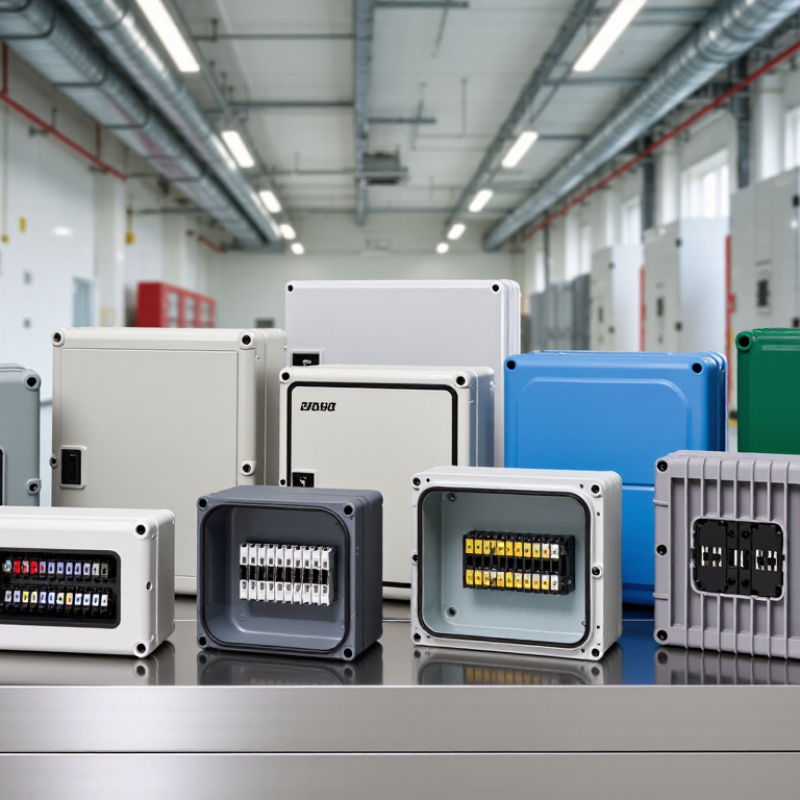
What Are Cable Branch Boxes and Why Are They Used?
Cable branch boxes are enclosed connection points that split one incoming cable into several outgoing circuits. They protect terminals from dust, moisture, impact, and accidental contact. Inside, installers may find busbars, lugs, fuses, or insulated connectors. The box also makes inspection and future circuit changes more manageable.
Their value becomes clearer in growing power networks. The International Energy Agency’s Electricity 2024 report forecasts average global electricity demand growth of about 4% annually from 2024 to 2026. More demand means more distribution points in factories, buildings, transport systems, and renewable projects. A properly selected branch box reduces cable congestion and shortens installation work. It can also support clearer fault isolation. However, the box is not a magic safety device. Incorrect torque, poor sealing, or an overloaded circuit can still create heat and failure. Where applicable, low-voltage assemblies should follow IEC 61439 requirements and documented testing practices.
Tips: Check voltage, current, conductor size, ingress protection, and short-circuit rating before purchasing. Inspect cable glands and terminal torque during commissioning. Leave practical working space inside. A tidy box may still conceal weak connections. Supplier comparisons should include test records, material data, installation instructions, and after-sales technical support. The cheapest enclosure can become expensive after repeated maintenance or water damage.

Evaluating cable branch box suppliers in China requires more than comparing quotations. Start with the box’s application: rated voltage, current, cable size, installation environment, and expected service life. Ask for drawings, material specifications, and a traceable bill of materials. A serious supplier should explain enclosure material, sealing method, terminal design, and thermal limits clearly. Request a production sample, not only polished photographs. Inspect casting edges, gasket compression, cable entry alignment, and screw torque. Small flaws matter. They can cause water ingress or loose connections during field installation. Check factory records for incoming inspection, process checks, and final electrical testing. Certificates are useful, but certificates alone prove little.
Compare suppliers through controlled evidence. Ask each candidate to test identical samples for insulation resistance, dielectric strength, temperature rise, ingress protection, and mechanical durability. Confirm which laboratory performed the tests and whether reports match the offered model. Review quality procedures, calibration dates, batch coding, and corrective-action records. A factory visit can reveal whether testing equipment is actually used or simply displayed. Speak with the technical team, not only the sales contact. Their answers should cover tolerances, replacement parts, packaging, and complaint response times. Verify export experience for your destination’s technical requirements, while obtaining independent compliance advice when needed. Price still matters, but unusually low pricing may hide thinner materials or weaker controls. No method is perfect. Recheck assumptions after the first shipment, because supplier performance can change over time.
China’s top 10 cable branch box suppliers show clear differences in design, testing, and service capability. Some focus on compact low-voltage boxes for urban projects. Others produce reinforced enclosures for industrial substations and outdoor networks. In practical evaluations, enclosure sealing, copper terminal quality, and heat control deserve close attention. These details affect maintenance work after installation.
Supplier comparisons should include material traceability, factory testing, and documented quality procedures. Reliable manufacturers usually provide drawings, test reports, installation guidance, and replacement-part support. Experience also matters. A supplier may offer attractive pricing but struggle with customized cable entries or urgent delivery. Another may charge more while providing better inspection records and technical communication. Do not treat catalog data as field performance. Site conditions can expose weaknesses that samples hide. This is where many buyers misjudge.
Tips: Request one complete sample before placing a large order. Check gasket compression, terminal spacing, cable bending room, and grounding points. Ask how each unit is tested before shipment. Compare warranty terms in writing. Keep photos of the installed box for future maintenance. A small detail, such as a difficult-to-open cover, can slow repairs during rain. The comparison is not perfect, because supplier data may use different testing methods. Independent verification remains useful, especially for high-load or harsh outdoor applications.
China’s top 10 cable branch box suppliers typically serve low-voltage, medium-voltage, and renewable-energy projects. Their main products include waterproof junction boxes, modular branch boxes, prefabricated cable distribution units, and fire-resistant enclosures. Some suppliers also offer monitoring-ready boxes for solar farms and data centers. Product quality depends on more than enclosure appearance. Engineers should check terminal temperature rise, cable-entry sealing, short-circuit withstand, and maintenance access.
Standards shape supplier selection. IEC 60529 supports IP protection ratings, while IEC 61439 applies to low-voltage assemblies. Medium-voltage projects may require IEC 62271-related testing. Export orders can also need destination-specific certification and documented factory inspections. The IEA Electricity 2024 report expects global electricity demand to grow by about 3.4% annually from 2024 to 2026. That growth increases demand for reliable distribution equipment in factories, buildings, charging networks, and renewable installations.
Solar and wind projects often prioritize UV resistance, drainage, and quick installation. Rail and infrastructure projects require vibration control, flame performance, and traceable materials. Data centers focus on heat management and uninterrupted maintenance. In practical audits, clear torque markings and sealed cable glands matter greatly. Small details prevent large failures. Still, supplier comparisons remain imperfect. Not every manufacturer publishes field-failure rates, thermal-cycle results, or independent test reports. Buyers should request these records, inspect sample boxes, and confirm whether testing covers the actual cable size, load, and installation environment.
Choosing among China’s top 10 cable branch box suppliers requires more than comparing prices. Your project needs proven electrical performance, traceable materials, and responsive engineering support. MarketsandMarkets estimated the global cable accessories market at about USD 56.3 billion in 2023, with continued growth toward 2028. This expansion increases supplier choices, but it also makes verification harder.
Ask each supplier for test reports, drawings, material certificates, and production photographs. Check compliance with IEC 61439 where applicable, and confirm the enclosure’s IP rating under IEC 60529. A box installed outdoors may need stronger sealing than one used inside a dry control room. Review copper or aluminum connector quality, temperature-rise data, short-circuit withstand capability, and cable entry design. Factory audits matter. A clean assembly line is useful evidence, though it does not replace laboratory testing. That is an easy mistake.
Tips: Compare three suppliers using one technical checklist. Request samples before approving bulk production. Confirm lead times in writing, including mold changes and inspection delays. Ask who handles field failures. Low prices can hide thin gaskets, inconsistent torque control, or weak documentation. During my supplier evaluations, small drawing differences often caused installation problems. I would not trust attractive product photos alone. An independent inspection before shipment is worth considering, especially for high-current or outdoor projects. Supplier selection should also consider spare parts, warranty terms, communication speed, and the ability to customize cable layouts without weakening the enclosure.
| Supplier Profile | Typical Product Scope | Rated Voltage | Typical Current Range | Enclosure Protection | Enclosure Materials | Applicable Standards | Customization Capability | Typical Production Lead Time | Typical MOQ | Best Project Fit |
|---|---|---|---|---|---|---|---|---|---|---|
| Supplier Profile 01 | Low-voltage cable branch boxes for building distribution and utility connections | Up to 0.4 kV | 100–400 A | IP54–IP65 | Powder-coated steel or glass-fiber-reinforced polyester | IEC 60529; IEC 61439-1/-2 where applicable | Terminal layout, cable entry direction, enclosure dimensions and labeling | 15–25 working days | 5–10 units | Commercial buildings and standard distribution cabinets |
| Supplier Profile 02 | Outdoor feeder branch boxes with weather-resistant cable termination compartments | Up to 0.4 kV | 160–630 A | IP65–IP66 | UV-resistant GRP or stainless steel | IEC 60529; IEC 61439-1/-2 where applicable | Anti-condensation accessories, mounting plates, gland plates and drainage features | 20–30 working days | 5 units | Outdoor infrastructure and harsh-weather installations |
| Supplier Profile 03 | Compact cable branch boxes for street lighting and small power circuits | Up to 0.4 kV | 40–250 A | IP54–IP65 | Engineering polymer or powder-coated galvanized steel | IEC 60529; IEC 60670 series where applicable | Compact dimensions, fuse holders, DIN-rail components and cable glands | 12–20 working days | 10 units | Street lighting, parking areas and small commercial projects |
| Supplier Profile 04 | High-current branch boxes for industrial power distribution | Up to 0.69 kV | 400–1,600 A | IP54–IP65 | Painted steel, stainless steel or aluminum alloy | IEC 61439-1/-2; IEC 60529 | Busbar configuration, short-circuit withstand design and multiple cable entries | 25–40 working days | 1–3 units | Factories, workshops and high-load industrial feeders |
| Supplier Profile 05 | Resin-sealed and insulated cable branch boxes for moisture-prone locations | Up to 0.4 kV | 63–315 A | IP67–IP68 | Polycarbonate, GRP or resin-filled enclosure systems | IEC 60529; relevant low-voltage component requirements | Resin type, cable size, branch count and sealing configuration | 20–35 working days | 10–20 units | Underground, coastal, wet-area and flood-exposed applications |
| Supplier Profile 06 | Modular branch boxes integrated with protective and switching devices | Up to 0.4 kV | 100–630 A | IP54–IP65 | Powder-coated steel with insulated internal supports | IEC 61439-1/-2; IEC 60529 | Breaker, fuse, isolator, metering and surge-protection integration | 20–35 working days | 3–5 units | Projects requiring protection, isolation and monitoring in one enclosure |
| Supplier Profile 07 | Flame-retardant non-metallic branch boxes for general electrical distribution | Up to 0.4 kV | 63–400 A | IP55–IP66 | Halogen-reduced or flame-retardant engineering polymer | IEC 60529; material flammability documentation as specified | Color, transparent cover, mounting method and terminal arrangement | 15–25 working days | 10 units | Residential, commercial and light-industrial installations |
| Supplier Profile 08 | Stainless-steel branch boxes for corrosive or hygienic environments | Up to 0.4 kV | 100–500 A | IP65–IP66 | 304 or 316 stainless steel | IEC 60529; IEC 61439-1/-2 where applicable | Surface finish, sloped roof, sanitary fittings and custom gland plates | 25–40 working days | 1–5 units | Food processing, chemical, marine and coastal facilities |
| Supplier Profile 09 | Pre-assembled branch boxes for export construction and infrastructure projects | Up to 0.4 kV | 100–800 A | IP54–IP66 | Steel, aluminum, GRP or polycarbonate according to specification | IEC 60529; IEC 61439-1/-2 where applicable | Multilingual labels, drawings, packing lists and project documentation | 25–45 working days | 5–20 units | Overseas EPC projects and multi-site construction programs |
| Supplier Profile 10 | Engineering-to-order cable branch boxes for specialized power systems | Up to 1.0 kV, subject to design verification | 250–2,000 A | IP55–IP66 | Steel, stainless steel, aluminum or hybrid enclosure construction | IEC 61439-1/-2; IEC 60529; project-specific requirements | Detailed drawings, thermal design, busbar systems, testing and site-specific interfaces | 35–60 working days | 1 unit | Power plants, transport systems and technically complex installations |
Note: The profiles are anonymized capability categories rather than company or brand listings. Voltage, current, IP rating, standards compliance, lead time and MOQ must be confirmed against the supplier’s current technical datasheet, test reports, drawings and quotation before purchase.

Cepex is the brand for the fluid handling market belonging to the Fluidra group. One of the leading european manufacturer of valves and fittings in thermoplastic materials.
Dedicated to the swimming pool, irrigation and industrial markets, we distribute our products worldwide with the Fluidra commercial network and presence in 46 countries with 136 sales branches.


