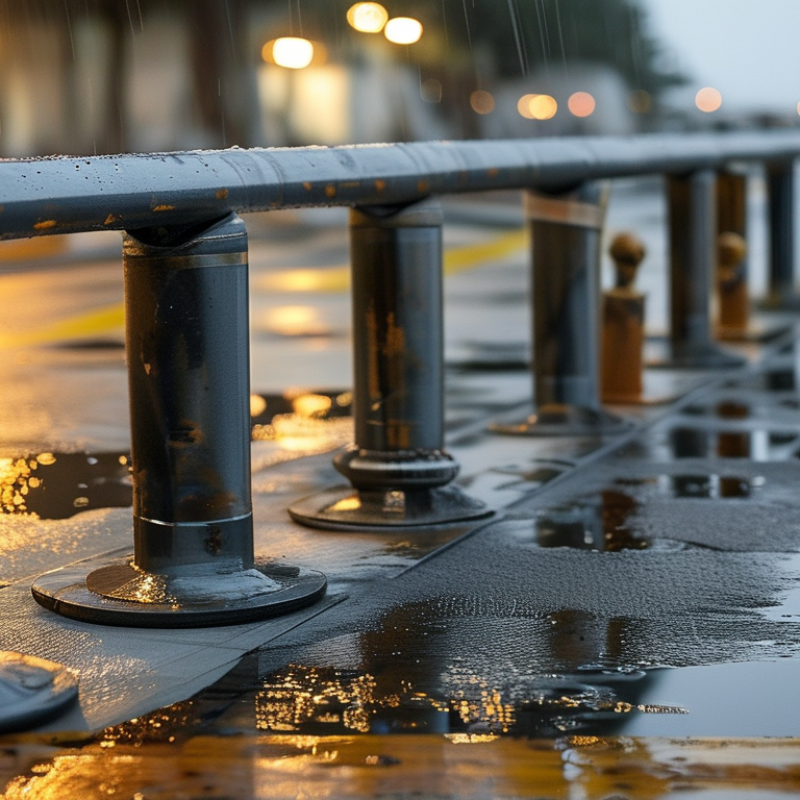
Selecting the right supplier is crucial when public safety depends on durable street infrastructure. A traffic bollard may face rain, salt, vehicle impact, dust, and repeated cleaning. In coastal cities, corrosion can begin around hidden welds and drainage points. This guide introduces the Top 10 Anti-corrosion Traffic Bollard Suppliers for practical evaluation.
The selection considers material quality, surface treatment, manufacturing experience, testing practices, customization, and after-sales support. Stainless steel grades, galvanized finishes, powder coatings, and protective sealants can influence service life. However, a polished appearance does not always prove reliable protection. Site conditions matter. A supplier experienced with parking entrances may not understand heavy industrial access roads. Buyers should request product drawings, coating details, load information, maintenance guidance, and project references. Clear documentation often reveals more than attractive catalogs.
Details matter greatly. Look for smooth welds, sealed joints, stable bases, and visible drainage design. Ask how the supplier checks coating thickness and impact resistance. Independent testing can strengthen confidence, but test results need proper context. One weakness in this comparison is that supplier performance may change across models and production batches. A factory can deliver excellent fixed bollards yet provide weaker automatic systems. Readers should verify current certifications, inspection records, warranty terms, and installation requirements before ordering. No ranking can replace a site assessment. The best Anti-corrosion Traffic Bollard should match local weather, traffic intensity, security needs, and maintenance capacity. A careful decision protects budgets and pedestrians. Small details often decide long-term value.
Traffic Bollards: Purpose, Types, and Anti-Corrosion Features
Top 10 Anti-corrosion Traffic Bollard Suppliers
Traffic bollards control vehicles, protect entrances, and guide pedestrians around vulnerable spaces. Fixed bollards suit permanent protection, while removable and retractable models support changing access needs. Flexible polymer bollards absorb minor impacts. Steel security bollards resist stronger forces.
Corrosion deserves equal attention. The NACE IMPACT study estimated global corrosion costs at approximately 3.4% of worldwide gross domestic product. That figure explains why material selection matters beyond appearance. Top suppliers should specify stainless steel grades, hot-dip galvanizing, or marine-grade powder coatings. ASTM A123 covers zinc coating requirements for fabricated iron and steel products. ISO 12944 helps evaluate protective paint systems in different corrosive environments.
Small details matter. Look for sealed caps, sloped surfaces, drainage paths, and protected welds. These features reduce trapped water around joints and anchor plates. In coastal areas, chloride exposure can attack unprotected steel quickly. Field inspections should check coating damage, rust creep, loose anchors, and blocked drainage. A thicker coating is not automatically better. Poor surface preparation can still cause early failure.
Supplier comparisons should include salt-spray evidence, coating thickness records, impact testing, warranty conditions, and replacement-part availability. The best specification matches traffic risk, soil moisture, cleaning chemicals, and maintenance access. That judgment can fail when buyers compare prices alone. Even stainless steel needs suitable detailing and regular inspection. Performance depends on installation, not only the bollard.
Anti-Corrosion Performance of Common Traffic Bollard Materials
Stainless steel 316 generally provides the strongest resistance in coastal and chloride-rich environments because of its molybdenum content. Stainless steel 304 and hot-dip galvanized steel offer strong outdoor protection, while powder-coated steel depends heavily on coating quality and damage repair. The scores are comparative material-based ratings on a 1–5 scale, not supplier certifications or laboratory test results.
How to Evaluate Anti-Corrosion Traffic Bollard Suppliers
Evaluating anti-corrosion traffic bollard suppliers requires more than comparing catalog prices. In field projects, exposed steel can show rust around welds, drain holes, and damaged coatings. A reliable supplier should explain the material grade, coating system, and expected service environment. Ask whether the bollards use galvanized steel, stainless steel, or a tested layered finish. Request coating thickness records and salt-spray or cyclic-corrosion test reports. Independent laboratory evidence is more useful than vague claims such as “weatherproof.”
Inspect manufacturing controls as carefully as the product. Does the supplier document weld inspection, surface preparation, curing temperature, and batch traceability? Samples should reveal even coating coverage, clean threads, sealed joints, and stable anchoring plates. Ask for installation drawings and maintenance guidance suited to coastal roads, winter salts, or industrial dust. A knowledgeable technical team will discuss failure modes, not only strengths. It should also explain how impact damage is repaired without hiding corrosion beneath a patch.
Warranty terms deserve close reading. Coverage should identify coating failure, structural defects, exclusions, inspection duties, and response times. Speak with project references, then verify whether supplied models match the tested models. Low prices can reflect thinner coatings or weaker steel; they are not always savings. I have seen evaluations overvalue appearance and undervalue drainage details. That mistake is easy to repeat. A supplier may provide excellent reports but weak after-sales support. Check both before approval. Credible evaluation combines documents, physical samples, site conditions, and practical conversations with installers.
Top 10 Anti-Corrosion Traffic Bollard Suppliers
Top 10 Anti-Corrosion Traffic Bollard Suppliers
Choosing among the top 10 anti-corrosion traffic bollard suppliers requires more than comparing catalog prices. Field experience shows that coastal air, winter salt, and standing water attack weak finishes quickly. Reliable suppliers should explain their steel grade, coating system, weld quality, and drainage design. They should also provide clear inspection records and practical installation guidance.
Look for bollards with hot-dip galvanizing, durable powder coating, or layered corrosion protection. Stainless steel can perform well, but its grade must match the environment. Ask whether coating thickness is tested after production. Check anchor details, impact performance, replacement parts, and expected maintenance intervals. A serious supplier will discuss failures, not only present polished product photos. Small details matter.
Installation support matters too. A strong supplier can recommend foundations, spacing, reflective elements, and cleaning methods for different sites. Request samples when possible. Examine corners, welds, caps, and concealed surfaces. These areas often reveal manufacturing weaknesses. Pricing alone can mislead buyers. A cheaper bollard may create higher replacement costs later.
No ranking remains perfect across every climate or traffic condition. That is worth admitting. Supplier performance also depends on communication, documentation, and after-sales response. Compare verified test reports with real project references. Speak with installers, because their experience may expose problems missed during office reviews. A dependable choice combines corrosion resistance, structural performance, consistent quality, and honest technical support.
Supplier Comparison: Materials, Standards, Customization, and Support
When comparing the top 10 anti-corrosion traffic bollard suppliers, examine materials before reviewing prices. Stainless steel offers strong resistance in coastal areas, while hot-dip galvanized steel suits heavy-duty streets and loading zones. Powder-coated finishes add color and another protective layer, but damaged coatings can expose the substrate. Ask suppliers for salt-spray results, coating thickness, and maintenance guidance. These details reveal more than polished catalog images.
Standards also deserve careful checking. Reliable suppliers should provide documentation for impact ratings, visibility requirements, anchoring systems, and material traceability. Requirements vary by road authority and installation site. Do not accept “compliant” without a test report or certificate. Customization may include fixed, removable, retractable, or flexible designs, plus reflective bands, drainage holes, and non-standard heights. However, every modification can affect strength, delivery time, or warranty coverage. I have found that small design changes are often underestimated.
Tips: Request physical samples. Compare finish thickness, weld quality, edge smoothness, and base-plate alignment. Ask how scratches are repaired in the field. Support matters after delivery. A capable supplier should offer installation drawings, replacement components, response times, and clear warranty exclusions. Keep records. One overlooked issue is local cleaning practice; harsh chemicals can shorten coating life, even when the original specification appears excellent.
How to Choose the Right Traffic Bollard Supplier for Your Project
Choosing a traffic bollard supplier starts with the project environment, not a glossy product photo. A coastal road, underground car park, and logistics yard create different corrosion risks. The NACE IMPACT study estimated global corrosion costs at about US$2.5 trillion, or 3.4% of global GDP. That figure makes coating quality a procurement issue, not a decoration choice.
For a top-10 supplier shortlist, request coating specifications, test records, and installation guidance. ISO 12944 classifies corrosive environments and helps match protection systems to exposure. Ask whether steel is hot-dip galvanized, powder coated, or duplex protected. Then check coating thickness, surface preparation, drainage, and weld treatment. Salt-spray results under ISO 9227 can support comparison, but they cannot fully predict outdoor service life. Real conditions are messier.
Experience matters at the loading bay. Ask for photographs from similar sites, replacement rates, impact-test evidence, and maintenance schedules. A reliable supplier should explain what happens after a vehicle strike.
Can the post be repaired without breaking surrounding paving? Are anchors accessible with ordinary tools?
The U.S. Federal Highway Administration has repeatedly identified corrosion management as a lifecycle cost concern for transport infrastructure. I would also verify manufacturing traceability and batch documentation. Cheap hardware may pass an initial inspection. It may still fail at the base. That is an uncomfortable gap worth challenging.
Cepex is the brand for the fluid handling market belonging to the Fluidra group. One of the leading european manufacturer of valves and fittings in thermoplastic materials.
Dedicated to the swimming pool, irrigation and industrial markets, we distribute our products worldwide with the Fluidra commercial network and presence in 46 countries with 136 sales branches.
Your data will be processed by CEPEX S.A., with address at C. Lluís Companys, 51-53, 08400, Granollers (Barcelona), and C.I.F. nº A-08928707, to send you communications about our products based on your interests. You can consult more information about the processing of your data and how to exercise your rights as described in the Privacy Policy.
Technical cookies are strictly necessary for our website to work and you can navigate through it. These types of cookies are those that, for example, allow us to identify you, give you access to certain restricted parts of the page if necessary, or remember different options or services already selected by you, such as your privacy preferences. Therefore, they are activated by default, your authorization not being necessary in this regard. Through the configuration of your browser, you can block or alert the presence of this type of cookies, although such blocking will affect the proper functioning of the different functionalities of our website.
The analysis cookies allow us to study the navigation of the users of our website in general (for example, which sections of the page are the most visited, which services are used most and if they work correctly, etc.). From the statistical information on navigation on our website, we can improve both the operation of the page itself and the different services it offers. Therefore, these cookies do not have an advertising purpose, but only serve to make our website work better, adapting to our users in general. By activating them you will contribute to this continuous improvement. You can enable or disable these cookies by checking the corresponding box, being disabled by default.
Functionality cookies allow us to remember your preferences, to personalize certain characteristics and general options of our website, every time you access it (for example, the language in which the information is presented to you, the sections marked as favorites, your browser type, etc.) Therefore, this type of cookies does not have an advertising purpose, but by activating them you will improve the functionality of the website (for example, adapting to your type of browser) and the customization of it based on your preferences (for example, by presenting the information in the language that you have chosen in previous occasions), which will contribute to the ease, usability and comfort of our page during your navigation. You can enable or disable these cookies by checking the corresponding box, being disabled by default.
Advertising cookies allow us to manage the advertising spaces included in our website based on criteria such as the content shown or the frequency in which the ads are displayed. For example, if you have been shown the same ad several times on our website, and you have not shown a personal interest by clicking on it, it will not appear again. In summary, by activating this type of cookies, the advertising shown on our website will be more useful and diverse, and less repetitive. You can enable or disable these cookies by checking the corresponding box, being disabled by default.
Behavioral advertising cookies allow us to obtain information based on the observation of your browsing habits and behaviors on the web, in order to show you advertising content that best suits your personal tastes and interests. To understand it in a very simple way, we will give you a fictitious example: if your last searches on the web were related to suspense literature, we would show you advertising about suspense books. Therefore, activating this type of cookies, the advertising that we show you on our website will not be generic, but will be oriented to your searches, tastes and interests, therefore adjusting exclusively to you. You can enable or disable these cookies by checking the corresponding box, being disabled by default. To understand it in a very simple way, we will give you a fictitious example: if your last searches on the web were related to suspense literature, we would show you advertising about suspense books. Therefore, activating this type of cookies, the advertising that we show you on our website will not be generic, but will be oriented to your searches, tastes and interests, therefore adjusting exclusively to you. You can enable or disable these cookies by checking the corresponding box, being disabled by default.
We use our own and third-party cookies to ensure the proper functioning of the website and to analyse our services, improve your experience on our website and show you advertisements related to your interests according to profiling based on your browsing habits (e.g. websites visited). You can accept all cookies by clicking "ACCEPT" or set or reject them by clicking here. If you would like to know more about the use of cookies, please see our COOKIE POLICY.