
Top 10 Air Conditioning Pump Types for Global Buyers
FLUID HANDLING EXPERTS

Blog, all our news

Top 10 Air Conditioning Pump Types for Global Buyers

Air conditioning is becoming a larger part of the world’s energy story. The International Energy Agency’s The Future of Cooling reports that space cooling used about 2,000 TWh of electricity in 2016, roughly 10% of global electricity consumption. Under its stated outlook, that demand could rise to around 6,200 TWh by 2050. These figures do not describe pump demand alone, but they show why component selection matters. Small design choices can affect operating costs, comfort, and maintenance over years of service.

The term Air Condition Pump can refer to several different components, not one universal product. A condensate pump moves collected water; a chilled-water pump circulates water through a building system; other designs serve specialized refrigeration or heat-pump applications. The right choice depends on the equipment layout, required flow and head, fluid, temperature, installation space, and duty cycle. Details matter. A pump that suits a compact room unit may be unsuitable for a large commercial plant. This guide compares ten common pump types for global buyers, with attention to their typical uses, practical strengths, and selection limits. Specifications and terminology vary between manufacturers, so buyers should verify performance curves and installation requirements rather than rely on a product label alone. That extra check can feel tedious, but it prevents avoidable mismatches.
Top 10 Air Conditioning Pump Types for Global Buyers

How Air Conditioning Pumps Support Cooling Systems

Air conditioning pumps do not make cold air; they move water or remove condensate so cooling equipment can work reliably. In chilled-water systems, circulation pumps carry cooled water through pipes to indoor coils. The coils absorb heat from room air, and the warmed water returns for cooling. Steady flow matters. Too little flow can reduce heat transfer, while excessive flow may waste energy and increase noise.

Condensate pumps serve a different purpose. They lift water from a drain pan when gravity drainage is not practical, such as in a basement or a ceiling-mounted unit. A blocked float switch or kinked tube can cause overflow. Small details matter. Regularly checking the pan, discharge line, and pump operation can prevent avoidable water damage.

For global buyers, pump selection should reflect the system’s required flow, total head, fluid, and site conditions. Head includes the lift and resistance from pipes and fittings, not just vertical height. Choosing by motor power alone is a common shortcut, and it can disappoint. Verify voltage and frequency, connection sizes, noise limits, and available service parts before purchase. Installation also deserves attention: a poorly supported line may vibrate, and a pump mounted out of level may not drain as intended. Some specifications still leave room for judgment, so confirm them against the actual system design.

Key Categories Used to Classify Air Conditioning Pumps

Air-conditioning pumps are best classified by what they move, how they create flow, and where they sit in the system. Chilled-water pumps circulate water between chillers and air-handling coils; condensate pumps remove collected moisture. These serve different duties, even when their housings look similar.

That distinction matters.

Hydraulic design gives another useful category: end-suction and inline pumps suit many building loops, while split-case and multistage designs address higher flow or pressure needs. Classification also includes fixed-speed versus variable-speed drives, and wet-rotor versus dry-rotor construction. In a plant room, check the pump curve against required flow and head—not just the pipe diameter. A mismatch can cause noise, excess energy use, or poor coil performance.

Real installations are rarely textbook-perfect.

The International Energy Agency’s 2022 report, The Future of Heat Pumps, recorded nearly 15% global heat-pump sales growth in 2021. That figure describes heat pumps, not air-conditioning pump shipments, but it signals expanding equipment variety. For buyers, compare fluid type, temperature range, control method, service access, and operating profile before selecting a category. ASHRAE’s HVAC Systems and Equipment Handbook provides further guidance on system arrangements and pump applications; local design conditions still matter.

A label alone is not enough.

Ten Common Air Conditioning Pump Types and Their Functions

Top 10 Air Conditioning Pump Types for Global Buyers

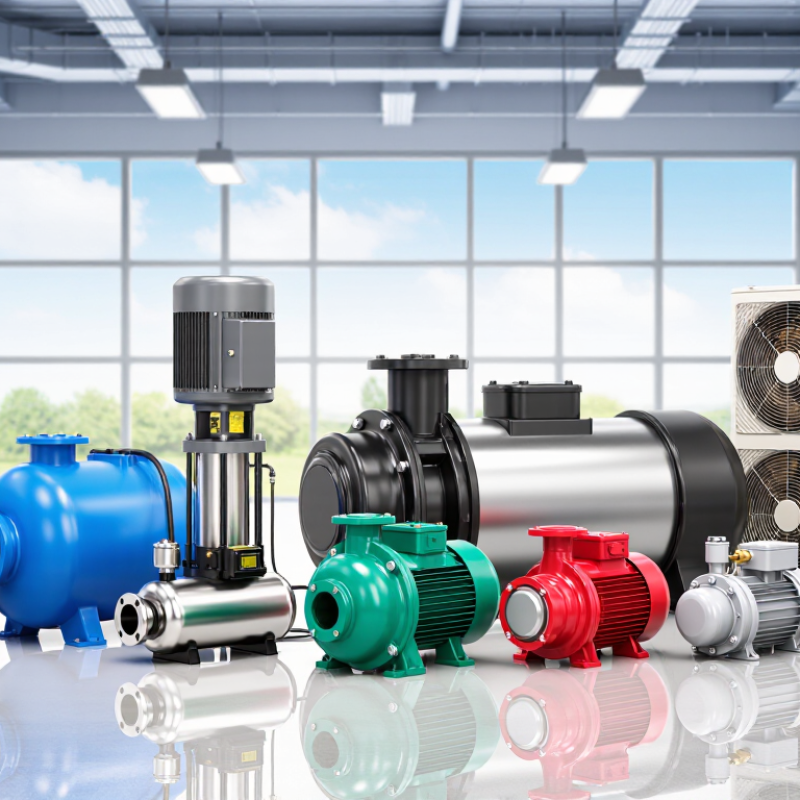
Air conditioning pumps handle different jobs, from removing water to moving chilled fluid. A condensate drain pump removes water collected beneath an indoor coil. Mini-split condensate pumps lift drain water when gravity drainage is impractical. Peristaltic condensate pumps use rollers and flexible tubing to move small amounts of water. Chilled-water centrifugal pumps circulate cold water through building coils. Inline circulators fit directly into compact piping loops.

End-suction centrifugal pumps transfer water in many HVAC systems. Vertical in-line pumps save floor space in mechanical rooms. Split-case pumps suit central plants that need substantial water flow. Condenser-water pumps move water between a chiller and cooling tower. Refrigerant pumps circulate liquid refrigerant in systems designed for pumped operation. The categories can overlap; names may describe design, location, or duty.

Tips: Check fluid type, required flow, lift, and operating temperature before choosing a pump. Compare the system’s actual duty point with the pump curve. Measure the available pipe space, too. A small mismatch can cause noise or poor circulation, and specifications alone may not reveal every site condition.

How Pump Designs Differ by System and Application

Pump designs differ because air-conditioning systems move different fluids, at different pressures and temperatures. Chilled-water plants commonly use centrifugal pumps to circulate water between chillers and air-handling coils. Condenser-water pumps serve the separate loop between chillers and cooling towers. Smaller buildings may need compact inline pumps, while condensate pumps lift drain water when gravity drainage is unavailable. Refrigerant pumps suit specific flooded-system designs; they are not substitutes for ordinary water pumps. Fit matters.

The International Energy Agency’s The Future of Cooling reports that global air-conditioner stock could grow from 1.6 billion units in 2018 to 5.6 billion by 2050. It also projects cooling electricity demand to more than triple. UNEP’s 2023 Global Cooling Watch report likewise warns that cooling capacity could more than triple by 2050 under current trends. These projections make correct pump sizing and control increasingly important. Bigger is not always better.

For a chilled-water loop, engineers compare required flow and total head, then assess variable-speed control against changing coil demand. Condenser-water selection must also account for tower conditions, water temperature, and fouling risk. Condensate units need enough lift for the drain route, plus practical access for cleaning. A pump chosen only by its flow rating may run noisily, waste energy, or fail to keep up at peak load. I’d check the actual operating point, not just the catalogue maximum.

What Global Buyers Should Compare Before Choosing a Pump

Choosing an air conditioning pump starts with the system, not the product label. Compare required flow rate and total head at the same operating point; a high maximum flow figure alone can mislead. Check fluid temperature, viscosity, and glycol concentration, since these affect performance and material compatibility. Then confirm voltage, frequency, connection size, and available installation space. Small mismatches matter. A pump that fits a catalog may still struggle with long pipe runs, elevation changes, or frequent starts. Ask for a performance curve and review the expected duty cycle, efficiency, noise, and maintenance access.

Tips: Compare quotes using identical conditions. Request the performance curve, wetted-material details, and warranty terms in writing. Consider whether local technicians can source service parts quickly.

For global purchasing, confirm the required documentation and electrical configuration for the destination market with the supplier and installer. Do not assume a familiar connection or voltage applies everywhere. Also compare total operating cost, not purchase price alone; energy use over many hours can change the decision. Leave room for uncertainty: real systems may differ from the design estimate. A commissioning check can reveal unstable flow, unexpected vibration, or heat buildup before routine operation.

Top 10 Air Conditioning Pump Types for Global Buyers — What to Compare Before Choosing

Pump Type Typical HVAC Application Fluid Handled Common Characteristics What Buyers Should Compare
Chilled Water Circulation Pump Moves chilled water through air-handling units, fan-coil units, and other cooling coils. Chilled water, often treated with corrosion inhibitors; glycol mixtures may be used where freeze protection is required. Usually a centrifugal pump in a closed hydronic loop. It may be selected for constant or variable flow. Design flow and total dynamic head; fluid temperature and glycol concentration; efficiency at the expected operating point; compatibility with variable-speed control.
Condenser Water Pump Circulates water between a water-cooled chiller condenser and a cooling tower or other heat-rejection equipment. Condenser water, which may be exposed to treatment chemicals and outdoor contaminants in an open tower loop. Typically a centrifugal pump sized for the system flow and pressure losses. Water quality and maintenance conditions can affect materials and service life. Required flow and head; water temperature; corrosion and scale conditions; seal and material suitability; motor efficiency and local electrical requirements.
End-Suction Centrifugal Pump General-purpose circulation or transfer duties in HVAC water systems. Water or a compatible water-glycol mixture. A common horizontal centrifugal configuration with suction at the end of the casing. It is available in multiple sizes and installation arrangements. Duty-point match; footprint and pipe layout; service access; efficiency; seal arrangement; noise and vibration; availability of replacement parts.
In-Line Centrifugal Pump Chilled-water or condenser-water circulation where a compact, straight-through pipe arrangement is useful. Water or a compatible water-glycol mixture. Suction and discharge connections are generally arranged in line with the piping. Depending on the design, the pump may be supported by the pipework or mounted on a base. Pipe size and connection standard; allowable pipe loads; required head and flow; motor access; installation orientation; maintenance clearance.
Split-Case Centrifugal Pump Higher-flow building or plant-room duties, including some chilled-water and condenser-water systems. Water or a compatible water-glycol mixture. The casing separates to provide access to internal components. Many designs use a double-suction impeller, which can support high flow and help balance hydraulic forces. Flow and head at the actual duty point; floor-space and foundation needs; casing pressure rating; service access; efficiency across the expected operating range.
Vertical In-Line Multistage Pump Higher-head water circulation or pressure boosting in HVAC and building services. Clean water or a compatible water-glycol mixture, within the pump’s specified limits. Multiple impellers provide higher pressure in a compact vertical arrangement. Suitability depends on fluid temperature, pressure, and system configuration. Required head and flow; inlet pressure; temperature and fluid compatibility; pressure rating; motor control; access for seal and motor maintenance.
Vertical Turbine Pump Water withdrawal from a wet pit, sump, or similar source; used in some cooling-water installations where the source is below the pump discharge point. Water, subject to the specified limits for solids, temperature, and chemistry. Vertical shaft and submerged bowl assembly allow the pump to draw from a sump or wet well. Installation depth and source conditions are important. Required submergence and lift; sump geometry; water level variation; solids and corrosion conditions; shaft length; installation and maintenance access.
Condensate Removal Pump Lifts condensate from air-conditioning or refrigeration equipment when gravity drainage is not practical. Condensate water; the liquid may be warm and can contain debris from the drain pan. Typically a small collection reservoir with a float or level switch that starts and stops the pump. It is intended for condensate drainage, not system circulation. Required lift and drainage rate; reservoir capacity; alarm or overflow protection; discharge connection; operating temperature; cleaning and maintenance access.
Mini-Split Condensate Pump Removes condensate from ductless indoor units when a gravity drain route is unavailable. Condensate water. Compact designs may use a small reservoir or a sensor-based arrangement. Installation space and routing of the discharge line are often key constraints. Available mounting space; lift and flow requirements; noise; sensor or reservoir design; discharge routing; service access; overflow protection.
Refrigerant Circulation Pump Specialized pumped-refrigerant systems, commonly found in selected industrial or large-scale cooling applications rather than ordinary direct-expansion room air conditioners. Refrigerant specified for the system and pump design. Must be designed for refrigerant properties and operating pressures. It is not interchangeable with a water-circulation pump. Refrigerant compatibility; pressure and temperature range; required circulation rate; materials and seals; system safety requirements; applicable local codes.

Selection note: Pump configuration and pump duty are different ways of classifying equipment, and some categories can overlap. Confirm the system design flow, total dynamic head, fluid properties, operating conditions, electrical supply, and applicable local standards before comparing quotations.

Copyright 2025 Fluidra S.A. | Created by BCM Marketing Agencia Privacy Policy Legal note | Cookie policy |

Technical cookies are strictly necessary for our website to work and you can navigate through it. These types of cookies are those that, for example, allow us to identify you, give you access to certain restricted parts of the page if necessary, or remember different options or services already selected by you, such as your privacy preferences. Therefore, they are activated by default, your authorization not being necessary in this regard. Through the configuration of your browser, you can block or alert the presence of this type of cookies, although such blocking will affect the proper functioning of the different functionalities of our website.


The analysis cookies allow us to study the navigation of the users of our website in general (for example, which sections of the page are the most visited, which services are used most and if they work correctly, etc.). From the statistical information on navigation on our website, we can improve both the operation of the page itself and the different services it offers. Therefore, these cookies do not have an advertising purpose, but only serve to make our website work better, adapting to our users in general. By activating them you will contribute to this continuous improvement. You can enable or disable these cookies by checking the corresponding box, being disabled by default.


Functionality cookies allow us to remember your preferences, to personalize certain characteristics and general options of our website, every time you access it (for example, the language in which the information is presented to you, the sections marked as favorites, your browser type, etc.) Therefore, this type of cookies does not have an advertising purpose, but by activating them you will improve the functionality of the website (for example, adapting to your type of browser) and the customization of it based on your preferences (for example, by presenting the information in the language that you have chosen in previous occasions), which will contribute to the ease, usability and comfort of our page during your navigation. You can enable or disable these cookies by checking the corresponding box, being disabled by default.


Advertising cookies allow us to manage the advertising spaces included in our website based on criteria such as the content shown or the frequency in which the ads are displayed. For example, if you have been shown the same ad several times on our website, and you have not shown a personal interest by clicking on it, it will not appear again. In summary, by activating this type of cookies, the advertising shown on our website will be more useful and diverse, and less repetitive. You can enable or disable these cookies by checking the corresponding box, being disabled by default.


Behavioral advertising cookies allow us to obtain information based on the observation of your browsing habits and behaviors on the web, in order to show you advertising content that best suits your personal tastes and interests. To understand it in a very simple way, we will give you a fictitious example: if your last searches on the web were related to suspense literature, we would show you advertising about suspense books. Therefore, activating this type of cookies, the advertising that we show you on our website will not be generic, but will be oriented to your searches, tastes and interests, therefore adjusting exclusively to you. You can enable or disable these cookies by checking the corresponding box, being disabled by default.
To understand it in a very simple way, we will give you a fictitious example: if your last searches on the web were related to suspense literature, we would show you advertising about suspense books. Therefore, activating this type of cookies, the advertising that we show you on our website will not be generic, but will be oriented to your searches, tastes and interests, therefore adjusting exclusively to you. You can enable or disable these cookies by checking the corresponding box, being disabled by default.

SAVE

We use our own and third-party cookies to ensure the proper functioning of the website and to analyse our services, improve your experience on our website and show you advertisements related to your interests according to profiling based on your browsing habits (e.g. websites visited). You can accept all cookies by clicking "ACCEPT" or set or reject them by clicking here. If you would like to know more about the use of cookies, please see our COOKIE POLICY.


ACCEPT ALL
Reject no essentials


