
Top 10 Types of 125 Amp MCCBs for Global Buyers
FLUID HANDLING EXPERTS

Blog, all our news

Top 10 Types of 125 Amp MCCBs for Global Buyers

Choosing the right 125amp Mccb is not simply a matter of matching one current rating. Global buyers must examine protection technology, pole configuration, breaking capacity, installation method, and certification requirements. This introduction presents ten practical types used across commercial buildings, factories, renewable energy systems, and distribution panels.

The selection includes thermal-magnetic and electronic-trip designs, fixed and adjustable versions, two-, three-, and four-pole models, and breakers with different short-circuit capacities. Some units suit compact panels with limited space. Others support demanding motor feeders, long cable runs, or generator applications. Small details matter. Terminal access matters. Buyers should compare rated insulation voltage, service breaking capacity, trip settings, operating temperature, and accessory options. A 125amp Mccb may look suitable on paper, yet its actual performance depends on system voltage, fault level, enclosure conditions, and coordination with upstream devices.

Reliable purchasing requires more than a product photograph. Experienced engineers normally review manufacturer datasheets, routine test reports, wiring diagrams, and certification records before approval. IEC 60947-2 and UL 489 references may help, but local project requirements still need verification. Supplier traceability is important. So is after-sales technical support. I have seen specifications that appeared complete but omitted terminal capacity or derating information. That weakness can create costly revisions later. This guide therefore compares each type through practical criteria, while acknowledging that no single MCCB fits every market or installation. Check the details twice. Safety depends on them.
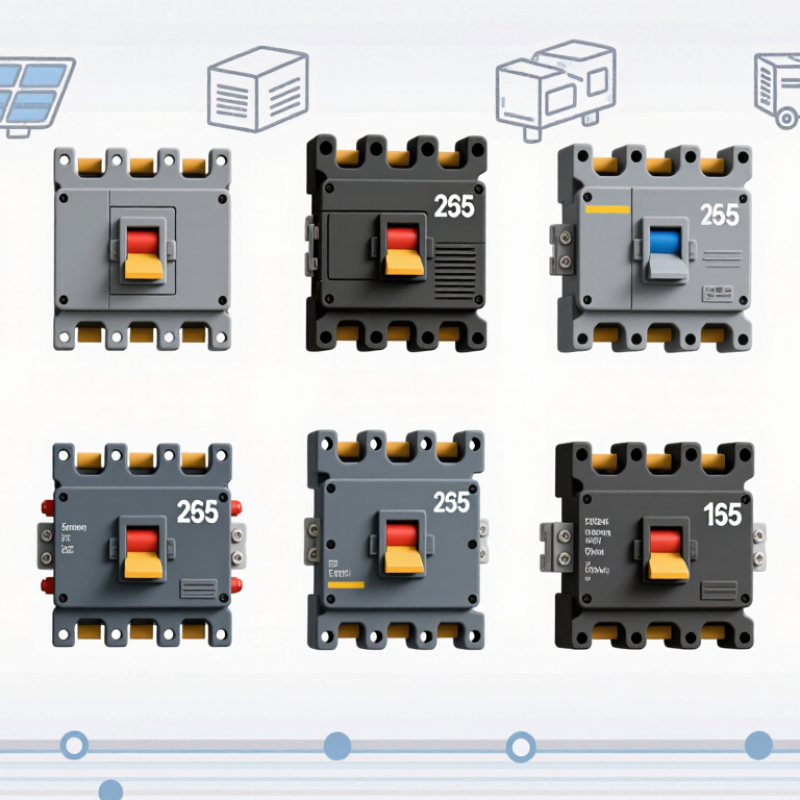
Top 10 Types of 125 Amp MCCBs for Global Buyers

How 125 Amp MCCBs Are Classified by Design and Protection Function

Top 10 Types of 125 Amp MCCBs for Global Buyers

A 125 amp MCCB is classified by its construction, pole arrangement, installation method, and trip technology. Common designs include one-pole, two-pole, three-pole, and four-pole versions. Three-pole models suit many industrial three-phase panels, while four-pole units can switch the neutral conductor. Fixed MCCBs mount directly on busbars or panels. Plug-in and draw-out designs allow faster replacement, but they require compatible panel hardware. Compact frames save space. Larger frames may offer better heat dissipation and accessory capacity.

Protection functions create another useful classification. Thermal-magnetic MCCBs respond to overload heat and short-circuit current. Adjustable thermal-magnetic models let technicians set protection closer to the cable rating. Electronic-trip versions measure current electronically and can provide long-time, short-time, instantaneous, and ground-fault protection. Current-limiting models reduce let-through energy during severe faults. Magnetic-only versions are less common for general feeders but can support circuits needing separate overload protection. Motor-protection MCCBs may coordinate with contactors and overload relays. MCCBs with shunt-trip or undervoltage-release accessories support remote or emergency disconnection.

Field experience shows that “125 amp” alone is not enough. A buyer should check interrupting capacity, terminal temperature rating, pole configuration, trip curve, and ambient derating. It is easy to select the correct current and miss the fault level. That mistake can be expensive. Installation conditions also vary between regions, so certified testing and local electrical requirements must be verified before procurement. Some specifications remain unclear until the panel layout is reviewed.

Top 10 Types of 125 Amp MCCBs for Different Electrical Applications

Top 10 Types of 125 Amp MCCBs for Different Electrical Applications

A 125 amp MCCB can protect feeders, motors, generators, and distribution panels. Selection depends on fault level, voltage, load behavior, and installation conditions. In practical panel inspections, engineers commonly compare these ten types: fixed thermal-magnetic, adjustable thermal-magnetic, electronic-trip, current-limiting, high-breaking-capacity, motor-protection, generator-protection, earth-leakage, DC-rated, and weather-resistant MCCBs.

Fixed thermal-magnetic MCCBs suit ordinary lighting and power feeders with predictable loads. Adjustable thermal-magnetic models help match protection to cable capacity and operating current. Electronic-trip versions provide more accurate long-delay, short-delay, and instantaneous settings. Current-limiting types reduce let-through energy during severe faults.

High-breaking-capacity models fit industrial panels with strong available short-circuit current. Motor-protection MCCBs tolerate starting surges more effectively. Generator-protection types support sensitive source equipment and selective coordination. Earth-leakage models add residual-current protection where insulation faults create personnel or fire risks.

DC-rated MCCBs serve battery systems, solar storage, and control circuits, but polarity and arc distance require careful verification. Weather-resistant versions work better in humid, dusty, or outdoor enclosures. Small details matter. Check the rated operational voltage, Icu and Ics values, pole arrangement, terminal temperature, and ambient derating.

A 125 amp label does not guarantee suitability for every 125 amp load. A frequent mistake is selecting by current alone. Cable size, inrush current, enclosure ventilation, and coordination with upstream devices can change the correct choice. Some applications still need a specialist review, especially where nuisance tripping has already occurred.

Key Ratings and Technical Features Global Buyers Should Compare

Top 10 Types of 125 Amp MCCBs for Global Buyers

Key Ratings and Technical Features Global Buyers Should Compare

A 125 amp MCCB is not defined by current rating alone. Buyers should compare rated operational voltage, insulation voltage, and short-circuit breaking capacity. The Icu rating shows the maximum fault current the breaker can interrupt. The Ics rating reflects its service performance after interruption. These values must match the installation’s measured fault level. A high rating is not automatically better.

Thermal-magnetic models suit many distribution panels and offer simple protection. Electronic-trip types provide more precise overload and short-circuit adjustments. Buyers may also compare fixed, adjustable, current-limiting, motor-protection, and earth-fault versions. Two-pole, three-pole, and four-pole designs serve different system arrangements. Check whether the neutral pole switches fully. Small details matter.

Trip settings deserve careful attention. Adjustable long-time, short-time, instantaneous, and ground-fault functions can improve coordination between upstream and downstream devices. Accessories may include auxiliary contacts, alarm contacts, undervoltage releases, and shunt trips. Verify terminal size, mounting method, enclosure compatibility, and operating temperature. Derating may apply inside a hot cabinet. A neat datasheet can still hide installation limits. Compare test standards, certification scope, and local acceptance requirements before ordering. Field teams sometimes focus on breaking capacity and overlook cable temperature, which can create an avoidable mismatch.

Top 10 Types of 125 Amp MCCBs for Global Buyers - Key Ratings and Technical Features Global Buyers Should Compare
No. MCCB Type Poles Rated Current Typical Voltage Rating Typical Interrupting Capacity Trip Technology Standards and Certifications Key Features and Suitable Applications
1 Standard Two-Pole AC MCCB 2P 125 A fixed or adjustable 240 V AC 10 kA to 25 kA at 240 V AC Thermal-magnetic; fixed or adjustable thermal trip UL 489 or IEC 60947-2, depending on market Suitable for single-phase feeders, small distribution boards, HVAC circuits, and general commercial loads. Provides overload and short-circuit protection.
2 High-Voltage Two-Pole AC MCCB 2P 125 A fixed or adjustable 415–480 V AC 18 kA to 35 kA at 415–480 V AC Thermal-magnetic with adjustable magnetic pickup IEC 60947-2 or UL 489, subject to the selected voltage class Designed for two-pole protection in higher-voltage AC distribution. Buyers should verify pole-to-pole voltage and tested interrupting capacity at the intended system voltage.
3 Standard Three-Pole AC MCCB 3P 125 A fixed or adjustable 400–480 V AC 18 kA to 25 kA at 400–480 V AC Thermal-magnetic; adjustable magnetic trip on selected models IEC 60947-2, UL 489, or equivalent national adoption A common choice for three-phase feeders, pumps, compressors, and commercial panels. Offers compact construction and coordinated phase protection.
4 High-Breaking-Capacity Three-Pole MCCB 3P 125 A fixed or adjustable 480–600 V AC 35 kA to 50 kA at 480 V AC; typically lower at 600 V AC Thermal-magnetic with high magnetic withstand capability UL 489 or IEC 60947-2 with voltage-specific test data Recommended for installations with higher prospective short-circuit current, such as industrial switchboards and transformer secondary feeders.
5 Electronic Trip Three-Pole MCCB 3P 125 A frame rating with adjustable long-time pickup 400–600 V AC 25 kA to 65 kA, depending on voltage and frame design Electronic LSI or LSIG trip unit: long-time, short-time, instantaneous, and optional ground-fault functions IEC 60947-2 or UL 489; electronic trip settings must be documented Provides precise coordination, adjustable protection settings, current measurement, and improved selectivity for critical industrial and data-center distribution.
6 Four-Pole Neutral-Switching MCCB 4P 125 A fixed or adjustable 400–415 V AC 18 kA to 36 kA at 400–415 V AC Thermal-magnetic or electronic; neutral pole may be switched with or without protection IEC 60947-2; verify neutral-pole configuration and test arrangement Used where complete isolation of three phases and the neutral is required, including commercial buildings, generator changeover systems, and IT supplies.
7 Four-Pole Solid-Neutral MCCB 4P 125 A phase rating; neutral may be solid or switched 400–415 V AC 18 kA to 36 kA at 400–415 V AC Three-pole overload and short-circuit protection with a solid or non-protected neutral pole IEC 60947-2 or applicable local installation rules Suitable for balanced and unbalanced three-phase systems where the neutral must remain continuously connected. Confirm whether the neutral pole is full-rated and switched.
8 Two-Pole DC MCCB 2P 125 A DC 125–250 V DC 5 kA to 15 kA DC, depending on pole wiring and voltage Thermal-magnetic DC trip unit with DC-rated arc interruption IEC 60947-2 DC utilization category or UL 489 DC rating Used for battery banks, photovoltaic combiner outputs, telecom power, and DC distribution. Both the DC voltage rating and the required series or parallel pole connection must be checked.
9 Three-Pole Series-Connected DC MCCB 3P 125 A DC 250–500 V DC, subject to the approved wiring method 5 kA to 15 kA DC, depending on voltage and connection arrangement Thermal-magnetic DC trip unit with magnetic arc suppression design IEC 60947-2 or UL 489 with a specific DC rating Suitable for higher-voltage battery and solar DC systems when multiple poles are connected in series. The manufacturer’s approved polarity and wiring diagram are essential for safe operation.
10 Motor-Protection Three-Pole MCCB 3P Adjustable up to 125 A 400–600 V AC 25 kA to 50 kA at the specified voltage Adjustable thermal-magnetic or electronic trip; instantaneous setting may be adjustable for motor starting current IEC 60947-2 and coordination requirements under IEC 60947-4-1 or equivalent Designed for motor feeders and starters. Compare motor starting withstand, adjustable overload range, short-circuit coordination type, and compatibility with contactors or soft starters.

Note: The ratings shown are typical specification ranges for 125 A MCCB configurations. Actual voltage, interrupting capacity, temperature derating, terminal size, enclosure suitability, and DC performance must be confirmed from the applicable product test certificate and installation requirements.

International Standards, Certifications, and Regional Compatibility

For global buyers, the ten most useful 125 amp MCCB configurations include thermal-magnetic, electronic, fixed, adjustable, two-pole, three-pole, four-pole, current-limiting, motor-protection, and high-interrupting-capacity types. The correct choice depends on local voltage, frequency, earthing system, and fault level. IEC 60947-2 remains a key reference for low-voltage circuit breakers, while UL 489 and CSA C22.2 No. 5 support North American applications. These standards are not interchangeable.

Certification matters at the installation site. A breaker marked only for IEC use may not satisfy a project requiring UL compliance. Buyers should verify the rated operational voltage, Icu and Ics values, temperature derating, terminal design, and enclosure suitability. Small details matter. A 125 amp rating can change under heat.

The IEA Electricity 2024 report expects global electricity demand to grow by more than 3% annually through 2026, increasing pressure on distribution upgrades. This trend supports demand for compliant MCCBs in factories, commercial buildings, renewable-energy systems, and transport infrastructure. Regional compatibility still requires caution. IEC-oriented markets often specify metric terminals and 400 or 415 V systems, while North American projects commonly use 480 V networks and different certification practices. Some product listings appear globally compatible, but their accessories may not be. That is an easy mistake to miss. Independent test reports, certificate numbers, and local inspection requirements deserve review before purchase.

Top 10 Types of 125 Amp MCCBs for Global Buyers

Regional compatibility depends on the local nominal voltage system and the product standard used for certification. The chart compares common low-voltage systems associated with 125 A molded-case circuit breaker selection.

Selection note: IEC 60947-2 is widely used internationally; UL 489 and CSA C22.2 No. 5 are common in North America; GB/T 14048.2 applies in China; JIS C 8201-2-1 is used in Japan; and AS/NZS 60947.2 is used in Australia and New Zealand. Actual interrupting capacity, pole configuration, trip unit, ambient-temperature derating, and certification must be verified for the installation.

A Step-by-Step Guide to Selecting the Right 125 Amp MCCB

Selecting a 125 amp MCCB starts with the installation, not the product label.
Confirm system voltage, frequency, pole count, and available short-circuit current. IEC 60947-2 requires the breaker’s ultimate and service short-circuit ratings to match the application. A 125 amp frame may still need a lower trip setting.

Choose the trip technology carefully. Thermal-magnetic MCCBs suit ordinary feeders and resistive loads. Electronic-trip versions provide adjustable long-time, short-time, instantaneous, and ground-fault protection.

They are useful for motors, transformers, and selective coordination. Fixed-trip models reduce adjustment errors, while adjustable models support changing loads. I often prefer adjustable protection, but only when commissioning records are maintained.

Check interrupting capacity before comparing prices. A breaker with insufficient kA performance can fail dangerously during a fault.

NFPA’s report on electrical distribution equipment recorded about 32,620 U.S. home fires annually from 2015–2019, showing why connection quality and protection settings matter.

For industrial panels, compare Icu and Ics, terminal temperature limits, enclosure conditions, and cable ampacity. Then select two-, three-, or four-pole construction according to the supply system. Current-limiting types can reduce let-through energy, but their coordination claims need verification.

One overlooked detail: ambient temperature. Continuous loading near 125 amps may require derating, even when calculations look acceptable. Check the manufacturer’s test documents, although those documents are not always easy to interpret.

Article Source:

Copyright 2025 Fluidra S.A. | Created by BCM Marketing Agencia Privacy Policy Legal note | Cookie policy |

Technical cookies are strictly necessary for our website to work and you can navigate through it. These types of cookies are those that, for example, allow us to identify you, give you access to certain restricted parts of the page if necessary, or remember different options or services already selected by you, such as your privacy preferences. Therefore, they are activated by default, your authorization not being necessary in this regard. Through the configuration of your browser, you can block or alert the presence of this type of cookies, although such blocking will affect the proper functioning of the different functionalities of our website.


The analysis cookies allow us to study the navigation of the users of our website in general (for example, which sections of the page are the most visited, which services are used most and if they work correctly, etc.). From the statistical information on navigation on our website, we can improve both the operation of the page itself and the different services it offers. Therefore, these cookies do not have an advertising purpose, but only serve to make our website work better, adapting to our users in general. By activating them you will contribute to this continuous improvement. You can enable or disable these cookies by checking the corresponding box, being disabled by default.


Functionality cookies allow us to remember your preferences, to personalize certain characteristics and general options of our website, every time you access it (for example, the language in which the information is presented to you, the sections marked as favorites, your browser type, etc.) Therefore, this type of cookies does not have an advertising purpose, but by activating them you will improve the functionality of the website (for example, adapting to your type of browser) and the customization of it based on your preferences (for example, by presenting the information in the language that you have chosen in previous occasions), which will contribute to the ease, usability and comfort of our page during your navigation. You can enable or disable these cookies by checking the corresponding box, being disabled by default.


Advertising cookies allow us to manage the advertising spaces included in our website based on criteria such as the content shown or the frequency in which the ads are displayed. For example, if you have been shown the same ad several times on our website, and you have not shown a personal interest by clicking on it, it will not appear again. In summary, by activating this type of cookies, the advertising shown on our website will be more useful and diverse, and less repetitive. You can enable or disable these cookies by checking the corresponding box, being disabled by default.


Behavioral advertising cookies allow us to obtain information based on the observation of your browsing habits and behaviors on the web, in order to show you advertising content that best suits your personal tastes and interests. To understand it in a very simple way, we will give you a fictitious example: if your last searches on the web were related to suspense literature, we would show you advertising about suspense books. Therefore, activating this type of cookies, the advertising that we show you on our website will not be generic, but will be oriented to your searches, tastes and interests, therefore adjusting exclusively to you. You can enable or disable these cookies by checking the corresponding box, being disabled by default.
To understand it in a very simple way, we will give you a fictitious example: if your last searches on the web were related to suspense literature, we would show you advertising about suspense books. Therefore, activating this type of cookies, the advertising that we show you on our website will not be generic, but will be oriented to your searches, tastes and interests, therefore adjusting exclusively to you. You can enable or disable these cookies by checking the corresponding box, being disabled by default.

SAVE

We use our own and third-party cookies to ensure the proper functioning of the website and to analyse our services, improve your experience on our website and show you advertisements related to your interests according to profiling based on your browsing habits (e.g. websites visited). You can accept all cookies by clicking "ACCEPT" or set or reject them by clicking here. If you would like to know more about the use of cookies, please see our COOKIE POLICY.


ACCEPT ALL
Reject no essentials


