
7 Tips for Choosing a Profile Wrapping Machine
FLUID HANDLING EXPERTS

Blog, all our news

7 Tips for Choosing a Profile Wrapping Machine

Choosing the right Profile Wrapping Machine affects product quality, production speed, and long-term operating costs. A suitable machine should match the profile material, dimensions, surface finish, and wrapping film used in daily production. Wood, aluminum, PVC, and composite profiles can behave differently under heat, pressure, and adhesive tension.

Small details matter.

A machine that looks efficient in a demonstration may struggle with narrow edges, curved sections, or frequent profile changes. This guide, “7 Tips for Choosing a Profile Wrapping Machine,” examines practical factors that experienced buyers should verify before making a decision. These include wrapping speed, film control, glue application, temperature stability, adjustment range, safety features, and after-sales support. Reliable manufacturers should provide clear specifications, test results, installation guidance, and access to replacement parts.

However, no checklist is perfect. Production conditions often reveal problems that brochures do not mention. A trial using real profiles can expose wrinkles, uneven bonding, wasted film, or difficult cleaning points. Ask suppliers to demonstrate these details, not only the machine’s highest speed. Compare energy use, maintenance requirements, operator training, and expected output under normal conditions. Independent technical advice can also prevent an expensive mismatch.

A careful decision takes time.

The best equipment is not always the largest or fastest model. It is the machine that delivers consistent wrapping quality with manageable adjustments and dependable support. These seven tips provide a practical starting point, while leaving room for honest testing and thoughtful reconsideration.
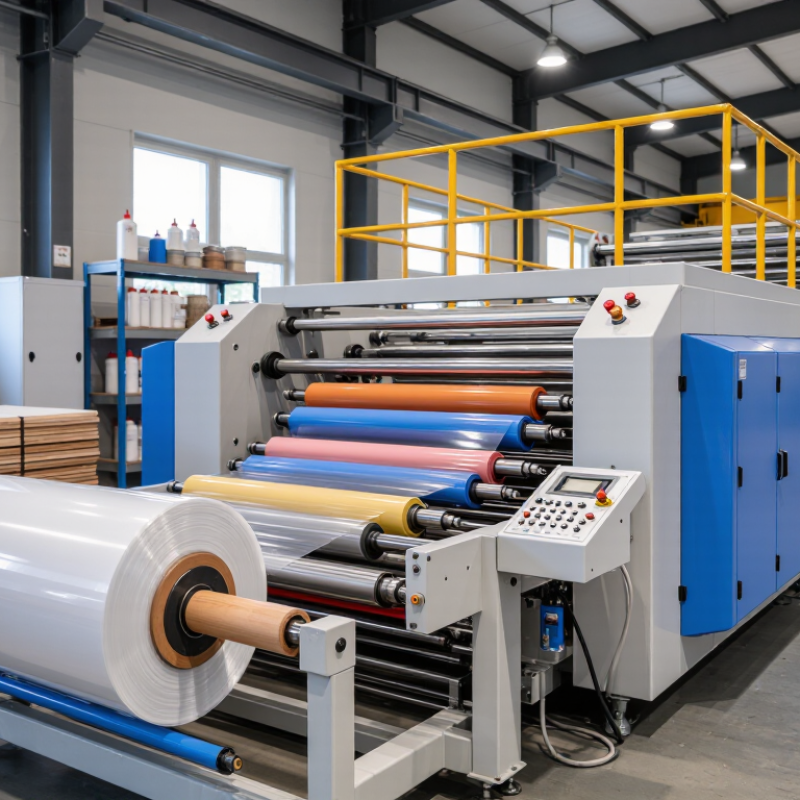
7 Tips for Choosing a Profile Wrapping Machine

Define Your Profile Wrapping Requirements and Production Goals

Define Your Profile Wrapping Requirements and Production Goals

Choosing a profile wrapping machine starts with the material, not the machine catalogue. Record profile length, width, surface texture, coating type, and acceptable finish tolerance. A 2.4-meter decorative profile may need different feeding control than a short, rigid trim. Measure actual production, including changeovers, rejects, and cleaning time. Those details often expose unrealistic targets.

Your production goal should include daily output, labour availability, and future product variation. PMMI’s 2024 State of the Industry report identifies labour availability and automation as continuing packaging priorities. Meanwhile, the International Federation of Robotics reported 541,302 industrial robot installations worldwide in 2023. These figures do not prove that full automation suits every profile line. They do show why repeatable feeding and tension control deserve serious attention. Start with required pieces per hour, then calculate the speed needed after downtime and material loss.

Do not select a machine from nominal speed alone. Ask for a trial using your actual profile, adhesive, film, and most difficult surface. Check edge alignment under bright inspection lighting. Test narrow and wide profiles. Review tooling change time with the operators who will perform it. My practical mistake was trusting a clean sample run too quickly. It hid the slower setup between product sizes. A useful specification should include verified output, changeover time, scrap rate, safety controls, and service access. Leave room for uncertainty. Production data becomes more reliable after several shifts, not one impressive demonstration.

Compare Machine Types, Wrapping Materials, and Profile Compatibility

7 Tips for Choosing a Profile Wrapping Machine

Choosing a profile wrapping machine starts with the material, not the machine price. Grand View Research estimates the global packaging machinery market reached about $52.83 billion in 2023. That growth increases equipment choices, but it also creates confusion. Compare roller-feed, flat-bed, and customized wrapping systems. Roller-feed machines suit continuous profiles, while flat-bed systems may handle short or irregular sections better. A practical sample test is essential. Tiny surface defects can change the result.

Check compatibility with PVC film, paper, veneer, PET, CPL, and other laminates. Each material needs suitable tension, adhesive temperature, and pressing force. PUR adhesive can support demanding finishes, but it requires accurate heating and maintenance. Water-based adhesives may reduce heat exposure, yet drying time can slow production. Profile geometry matters too. Measure width, height, corners, grooves, and radius before requesting quotations.

PMMI’s packaging machinery industry reports identify labor availability and automation as continuing investment factors. Ask whether operators can load reels, adjust guides, and clean glue units without long training. According to the 2024 Global Packaging Trends analysis from a leading market research firm, sustainability is also pushing converters toward recyclable and lighter materials. That does not guarantee easy processing. Some thin films wrinkle unexpectedly. I would not trust a perfect spreadsheet alone. Run a real profile through the machine, inspect adhesion after cooling, and test several speeds. The cheapest option may become expensive when changeovers remain slow.

Evaluate Speed, Precision, Automation, and Operating Flexibility

Choosing a profile wrapping machine starts with the production rhythm on your floor. Measure actual output, not the number printed in a brochure. A machine rated at 30 meters per minute may slow near corners, joints, or irregular profiles. Ask for a live trial using your material, adhesive, and longest standard length. Watch the operator change a roll. This reveals hidden downtime. Fast is useful only when quality survives.

Precision appears in overlap consistency, tension control, and clean edge alignment. Inspect ten wrapped pieces from one trial batch. Measure width variation with a caliper, then check corners under bright side lighting. Small defects become expensive after installation. Servo controls, automatic feeding, and fault alerts can reduce repetitive work. Yet automation is not magic. Sensors need cleaning, recipes need protection, and staff need training. A complicated interface may create errors during a rushed shift.

Operating flexibility matters when orders change weekly. Look for adjustable guides, quick-change tooling, and settings for different profile sizes. Test manual override and low-speed jogging before purchase. Those controls help during setup and recovery. Request maintenance access around rollers, heaters, and tension assemblies. I once underestimated changeover time because the test used one profile only. That mistake would not survive a mixed-order schedule. Leave room for future materials, but avoid paying for functions nobody can operate reliably.

7 Tips for Choosing a Profile Wrapping Machine - Evaluate Speed, Precision, Automation, and Operating Flexibility
Tip Evaluation Dimension What to Check Practical Reference Data Recommended Verification Method Potential Warning Signs
1 Match the Line Speed to Actual Production Demand Confirm the required output, profile length, wrapping material, product spacing, and planned operating hours. Distinguish rated speed from sustained production speed. Many profile-wrapping lines operate in the approximate range of 5–30 m/min, while the usable speed is normally lower than the nameplate maximum after setup, inspection, and material changes. Run a representative profile and record continuous output for at least one production shift. Calculate output using accepted pieces, not only machine cycles. The supplier provides only a maximum speed without explaining product conditions, film type, overlap, or expected uptime.
2 Evaluate Wrapping Precision and Material Control Review film tension control, overlap consistency, edge alignment, sealing quality, and protection of corners or delicate surfaces. For a stable process, film overlap and tension should remain consistent across the specified profile range. Actual tolerances must be defined by the product, film, and packaging specification rather than by speed alone. Inspect wrapped samples at the beginning, middle, and end of a run. Measure overlap, check wrinkles and exposed areas, and perform a handling or transport simulation. Visible wrinkles, telescoping film rolls, uneven overlap, frequent film breaks, or quality that depends heavily on operator adjustment.
3 Select the Right Level of Automation Assess automatic feeding, film-roll loading, product detection, recipe control, fault alarms, end-of-roll detection, and integration with upstream or downstream equipment. A basic line may require manual film loading and adjustment; an automated line can use sensors, programmable recipes, automatic tension control, and coordinated conveyors to reduce repetitive intervention. List every manual task during a normal shift and record its frequency. Estimate labor savings only after including loading, inspection, cleaning, and troubleshooting time. Automation is described generally but there is no defined sequence of operation, alarm list, sensor specification, or interface description.
4 Verify Operating Flexibility Check the allowable profile width, height, length, weight, cross-sectional shape, surface condition, and compatible wrapping materials. A flexible machine should clearly state its minimum and maximum product dimensions and identify which changes require software settings, hand tools, or mechanical replacement parts. Test the smallest, largest, lightest, heaviest, and most irregular products expected in production. Confirm stable wrapping throughout the full product range. The machine works well only with one standard profile, or the usable range is not documented with tested samples.
5 Measure Changeover Time and Recipe Repeatability Evaluate how quickly operators can change profile dimensions, wrapping parameters, film specifications, and conveyor settings. A well-configured recipe system can reduce repeated setup work, but actual changeover time depends on tooling, product variation, operator skill, cleaning requirements, and film replacement. Perform at least three changeovers between commonly produced profiles. Record time from the last accepted product to the first consistently accepted product. Settings are undocumented, recipes cannot be locked or recalled, or operators must rely on trial-and-error adjustments.
6 Check Safety, Maintenance, and Total Operating Cost Review guarding, emergency stops, access doors, electrical safety, moving-film hazards, cleaning access, wear parts, energy use, and maintenance intervals. A suitable machine should provide documented safety functions, clear maintenance points, accessible wear parts, and a defined preventive-maintenance schedule. Total cost includes film waste, labor, downtime, utilities, and spare parts. Request the risk assessment, maintenance schedule, spare-parts list, utility requirements, and estimated consumables usage. Confirm that safety functions are tested during acceptance. Frequent manual access to moving parts, unclear emergency-stop behavior, difficult cleaning access, or no documented maintenance and spare-parts plan.
7 Validate the Machine Through a Factory Acceptance Test Use your actual profiles, wrapping material, target speed, quality limits, and production sequence before making the final purchase decision. A meaningful acceptance test should confirm output rate, wrapping quality, changeover performance, alarm handling, safety functions, and stable operation over a defined continuous run. Prepare written acceptance criteria, test multiple product sizes, record downtime and rejected pieces, and obtain sample results and machine documentation before shipment. The demonstration uses substitute products, short test runs, unusually skilled operators, or excludes difficult profiles and material changes.

Check Build Quality, Maintenance Needs, Safety, and Technical Support

7 Tips for Choosing a Profile Wrapping Machine

A strong frame should resist vibration during long production runs. Inspect welds, roller alignment, guards, and the film-tension assembly. Ask for load ratings and test records, not only polished photographs.

I once underestimated a loose guide roller. The uneven wrap appeared after several hours, not during a short demonstration. That experience changed how I judge build quality.

Maintenance details often determine the real operating cost. Choose accessible panels, clearly labeled adjustment points, and replaceable wear parts. Check how quickly operators can clean rollers and remove film residue. Review the maintenance schedule before signing an order.

A manual filled with vague instructions is a warning sign. Still, even a detailed schedule can fail if daily checks take too long.

Safety should be visible in the machine’s physical design. Look for guarded moving areas, emergency stops, stable access points, and controlled restart procedures. Ask how operators are trained and how safety checks are documented.

Technical support matters just as much. Confirm response times, remote troubleshooting options, spare-parts availability, and technician training. Do not accept promises alone. Request written service terms and practical training for your maintenance team.

I would also ask difficult questions about downtime, because reliable support is often tested after installation, not during the sales meeting.

Calculate Total Costs, Return on Investment, and Future Expansion Needs

7 Tips for Choosing a Profile Wrapping Machine

Calculate Total Costs, Return on Investment, and Future Expansion Needs

A profile wrapping machine should be judged by total ownership cost, not its purchase price. Include tooling, installation, operator training, electricity, film, maintenance, and spare parts. Floor space also matters. A machine that blocks material flow may create hidden labor costs. Ask for a written estimate covering at least five years.

Measure your current output carefully. Record profiles wrapped per hour, changeover time, film waste, rejected pieces, and operator hours. These figures create a practical baseline. Then compare them with tested machine data, not optimistic estimates. Request sample trials using your actual profile shapes and materials. Small details matter.

Use this simple ROI calculation: annual savings minus annual operating costs, divided by the installed investment. Include reduced labor and waste, but consider downtime and financing charges. Payback may look attractive until maintenance is included. I have seen production teams underestimate changeover losses. That mistake is common.

Future expansion deserves equal attention. Check the machine’s maximum profile size, wrapping speed, tooling range, control options, and data connectivity. Modular upgrades can protect your investment when product lines grow. Confirm whether additional stations can be added without replacing the main frame. Ask about service response times and parts availability.

Plan for real production.

A machine running at full capacity today may become a bottleneck next year. Leave reasonable capacity, but avoid paying for unused performance. Your forecast may be wrong. That is normal. Review it honestly before signing, and keep a contingency budget for integration problems, training delays, and unexpected material changes.

7 Tips for Choosing a Profile Wrapping Machine

Five-year total cost, estimated return on investment, and expansion readiness by machine configuration

The comparison uses realistic planning assumptions for industrial profile wrapping equipment: purchase and installation costs, five-year energy and maintenance costs, and estimated five-year production value. Actual results depend on machine speed, operating hours, material usage, labor rates, energy prices, product mix, and future capacity requirements.

Copyright 2025 Fluidra S.A. | Created by BCM Marketing Agencia Privacy Policy Legal note | Cookie policy |

Technical cookies are strictly necessary for our website to work and you can navigate through it. These types of cookies are those that, for example, allow us to identify you, give you access to certain restricted parts of the page if necessary, or remember different options or services already selected by you, such as your privacy preferences. Therefore, they are activated by default, your authorization not being necessary in this regard. Through the configuration of your browser, you can block or alert the presence of this type of cookies, although such blocking will affect the proper functioning of the different functionalities of our website.


The analysis cookies allow us to study the navigation of the users of our website in general (for example, which sections of the page are the most visited, which services are used most and if they work correctly, etc.). From the statistical information on navigation on our website, we can improve both the operation of the page itself and the different services it offers. Therefore, these cookies do not have an advertising purpose, but only serve to make our website work better, adapting to our users in general. By activating them you will contribute to this continuous improvement. You can enable or disable these cookies by checking the corresponding box, being disabled by default.


Functionality cookies allow us to remember your preferences, to personalize certain characteristics and general options of our website, every time you access it (for example, the language in which the information is presented to you, the sections marked as favorites, your browser type, etc.) Therefore, this type of cookies does not have an advertising purpose, but by activating them you will improve the functionality of the website (for example, adapting to your type of browser) and the customization of it based on your preferences (for example, by presenting the information in the language that you have chosen in previous occasions), which will contribute to the ease, usability and comfort of our page during your navigation. You can enable or disable these cookies by checking the corresponding box, being disabled by default.


Advertising cookies allow us to manage the advertising spaces included in our website based on criteria such as the content shown or the frequency in which the ads are displayed. For example, if you have been shown the same ad several times on our website, and you have not shown a personal interest by clicking on it, it will not appear again. In summary, by activating this type of cookies, the advertising shown on our website will be more useful and diverse, and less repetitive. You can enable or disable these cookies by checking the corresponding box, being disabled by default.


Behavioral advertising cookies allow us to obtain information based on the observation of your browsing habits and behaviors on the web, in order to show you advertising content that best suits your personal tastes and interests. To understand it in a very simple way, we will give you a fictitious example: if your last searches on the web were related to suspense literature, we would show you advertising about suspense books. Therefore, activating this type of cookies, the advertising that we show you on our website will not be generic, but will be oriented to your searches, tastes and interests, therefore adjusting exclusively to you. You can enable or disable these cookies by checking the corresponding box, being disabled by default.
To understand it in a very simple way, we will give you a fictitious example: if your last searches on the web were related to suspense literature, we would show you advertising about suspense books. Therefore, activating this type of cookies, the advertising that we show you on our website will not be generic, but will be oriented to your searches, tastes and interests, therefore adjusting exclusively to you. You can enable or disable these cookies by checking the corresponding box, being disabled by default.

SAVE

We use our own and third-party cookies to ensure the proper functioning of the website and to analyse our services, improve your experience on our website and show you advertisements related to your interests according to profiling based on your browsing habits (e.g. websites visited). You can accept all cookies by clicking "ACCEPT" or set or reject them by clicking here. If you would like to know more about the use of cookies, please see our COOKIE POLICY.


ACCEPT ALL
Reject no essentials


