
7 Tips for Choosing the Right Plastic Pall Ring?
FLUID HANDLING EXPERTS

Blog, all our news

7 Tips for Choosing the Right Plastic Pall Ring?

Choosing the right Plastic Pall Ring can influence tower efficiency, pressure drop, operating stability, and maintenance costs. The choice often looks simple. It is not.

In practical packing evaluations, small design differences can create noticeable process changes. Ring diameter, voidage, surface area, wall thickness, and material grade all deserve careful attention. A polypropylene ring may suit one absorber, while PVDF or another engineered plastic may perform better under harsher temperatures or chemical exposure. The correct decision depends on more than catalogue figures.

This guide presents seven practical tips for selecting a Plastic Pall Ring with greater confidence. It considers gas and liquid loads, tower diameter, packing size, wetting behavior, pressure drop, chemical compatibility, and supplier quality. These factors should be checked against real operating conditions, not copied from a general specification sheet.

Details matter.

Experienced engineers often compare performance data with site observations. Fouling, uneven liquid distribution, damaged packing, or unexpected temperature changes can alter results. A ring that performs well in a laboratory may behave differently inside an operating tower. That limitation deserves honest attention.

Material certificates, dimensional checks, and sample testing can reduce uncertainty. Reliable manufacturers should explain their resin grade, production tolerances, testing methods, and application experience. However, no supplier statement should replace independent technical review.

The following tips are designed to support a more disciplined selection process. They may not solve every design problem. They can help identify weak assumptions before purchasing thousands of packing pieces.
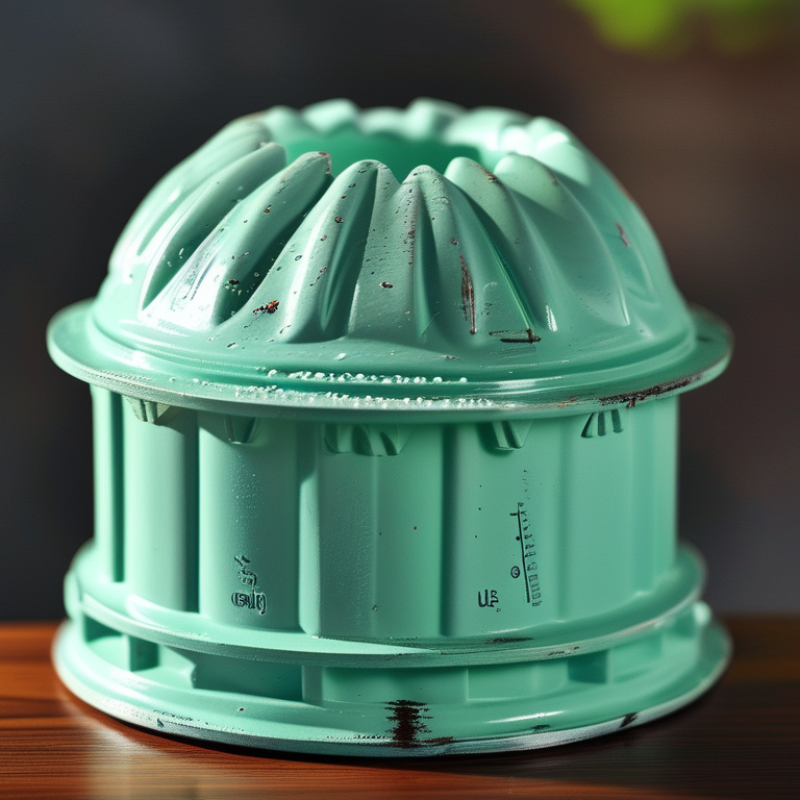
7 Tips for Choosing the Right Plastic Pall Ring?

Define Design Conditions: Gas Velocity, F-F Ratio, and 90–96% Voidage

Tip 1: Define the gas velocity before selecting a plastic Pall ring. Calculate superficial velocity from actual temperature, pressure, and gas flow. Do not use standard flow alone. Perry’s Chemical Engineers’ Handbook, 9th edition, links packing capacity to gas density, liquid loading, and pressure drop. A small density error can shift the tower toward flooding.

Tip 2: Check the F-factor and F-F ratio together. The F-factor is F = uG√ρG, where uG is superficial gas velocity. Compare the operating F-factor with the predicted flooding value. Guidance summarized in the GPSA Engineering Data Book commonly places packed-tower operation near 60–80% of flood, depending on service and control needs. Higher loading may improve capacity, but it reduces operating margin. That trade-off deserves a second calculation.

Tip 3: Confirm the expected 90–96% voidage with the selected ring geometry. High voidage usually lowers pressure drop, yet it does not guarantee good mass transfer. Liquid distribution, wetting, fouling, and wall effects still matter. Published packed-column studies in Chemical Engineering Research and Design show that maldistribution can reduce real performance, even when laboratory voidage appears excellent. Measure the liquid rate carefully. I would not trust a catalog value alone. Allow space for redistributors, inspection, and a little uncertainty.

7 Tips for Choosing the Right Plastic Pall Ring? - Define Design Conditions: Gas Velocity, F-F Ratio, and 90–96% Voidage

Tip Design Variable Typical Starting Range How It Affects Pall Ring Selection Engineering Check
1 Superficial gas velocity Approximately 1.5–3.0 m/s for many low-pressure-drop air/water services Higher gas velocity increases capacity but also raises pressure drop, entrainment, and flooding risk. Larger rings may reduce pressure drop when the column diameter permits. Calculate velocity from actual gas volumetric flow at operating temperature and pressure, not from standard flow alone.
2 F-factor, F = uG√ρG Often begin at approximately 60–80% of the predicted flooding F-factor; about 1.0–2.5 Pa0.5 is a common preliminary range for air-like gas service A lower operating F-factor favors capacity margin and low pressure drop. A higher value may reduce equipment size but increases hydraulic risk. Use packing-specific flooding correlations or supplier test data. Confirm that gas density is based on operating conditions.
3 Voidage, ε Approximately 90–96% for common plastic Pall Ring geometries Higher voidage generally lowers dry pressure drop and provides more open gas passages. It does not automatically guarantee higher mass-transfer efficiency. Check voidage under random packing conditions and verify that the value applies to the selected ring size and material.
4 Pall Ring size Common nominal sizes: 16, 25, 38, 50, and 76 mm Smaller rings provide more geometric surface area but usually create greater pressure drop and are more sensitive to fouling. Larger rings reduce pressure drop but may lower interfacial area. Maintain a practical column-to-packing diameter ratio, commonly at least about 8:1–10:1, to reduce wall effects and poor distribution.
5 Liquid irrigation rate Approximately 10–60 m³/m²·h for many absorber and scrubber services; the actual range is process-specific Insufficient liquid flow can cause dry areas and poor wetting. Excessive liquid flow increases pressure drop and may promote flooding. Confirm minimum wetting rate, liquid viscosity, surface tension, solids content, and distributor turndown.
6 Pressure-drop target A preliminary target of approximately 1–3 mbar/m of packed height is often used for low-pressure-drop gas absorption A strict pressure-drop limit may require larger rings, higher voidage, lower gas velocity, or a greater column diameter. Evaluate dry and irrigated pressure drop separately, then include demister, distributor, support grid, and fouling allowances.
7 Material and operating temperature Polypropylene is commonly used near ambient and moderately elevated temperatures; allowable temperature depends on chemical exposure, stress, and design practice Chemical compatibility, temperature, ultraviolet exposure, and mechanical loading determine whether PP, PVC, CPVC, PVDF, or another plastic is suitable. Check the resin compatibility chart, continuous-use temperature, softening behavior, oxidation resistance, and expected service life.
Reference note: The ranges shown are preliminary engineering values, not guaranteed operating limits. Final selection should use actual gas and liquid properties, packing-specific hydraulic data, flooding correlations, mass-transfer requirements, and distributor design.

Compare Surface Area: Choose 50–250 m²/m³ for Mass-Transfer Needs

When choosing a plastic Pall ring, compare surface area before counting pieces per cubic meter. A practical range is 50–250 m²/m³.

Lower-area packing, around 50–100 m²/m³, often suits high liquid rates and pressure-sensitive columns.

Higher-area packing, near 150–250 m²/m³, can support absorption or stripping with limited tower height.

More area is not automatically better.

Check the effective area, not only the catalog value. Poor liquid distribution can leave dry plastic surfaces unused.

The European Commission’s 2023 Best Available Techniques reference document links packing performance with irrigation, pressure drop, and fouling control. Perry’s Chemical Engineers’ Handbook, 9th edition, also treats surface area, void fraction, and wetting as connected design variables.

In field work, I would inspect the distributor first. A sophisticated ring cannot repair uneven spray.

Plastic packing may reduce weight and resist many chemicals, but temperature and solvent compatibility still need verification. Use hydraulic calculations for flooding, pressure drop, and liquid loading.

A 250 m²/m³ option may look efficient, yet it can increase fouling risk in dirty gas service.

That shortcut is tempting. It is also imperfect.

Ask for measured wet surface area, testing conditions, and tolerance data before approving the final size.

Evaluate Pressure Drop: Target About 0.2–0.5 in. H₂O per Foot

Choosing a plastic Pall ring starts with hydraulic performance, not appearance. In packed columns, pressure drop shows how hard gas must push through the packing. A practical design target is about 0.2–0.5 inches of water per foot of packed height. Measure it. This range often supports efficient contact without imposing excessive fan or compressor demand. Yet it is not a universal guarantee. Actual results change with ring size, void fraction, liquid loading, gas velocity, and installation quality.

During commissioning, record pressure at the packing inlet and outlet after flow stabilizes. Use the same instrument and reference conditions for every reading. A sudden rise may indicate flooding, poor liquid distribution, blocked passages, or fouling. A very low reading is not automatically good. It can signal insufficient gas velocity or weak liquid spreading, reducing mass transfer. I have seen calculations look safe until a distributor sprayed unevenly across the bed. Small dry zones mattered more than expected.

Compare measured pressure drop with tested data, but inspect the assumptions behind it. Test data may use clean water, air, and a specific ring diameter. Your process may be warmer, dirtier, or more viscous. Leave operating margin rather than selecting a ring only because it has the lowest pressure drop. Recheck performance after startup. The first estimate may be wrong. A short field trial can expose that mistake before it becomes an expensive column problem.

Match Polymer Selection to Temperature: PP ~100°C, PVDF ~140°C

Choosing a plastic pall ring begins with the operating temperature, not the catalogue photo. Polypropylene, or PP, is commonly suitable around 100°C. PVDF can support applications near 140°C. These figures are practical guides, not guarantees. Actual performance changes with pressure, chemical concentration, wetting, and continuous exposure time.

Check seven details before selection. Confirm the normal temperature. Record the highest short-term spike. Identify every chemical in the gas and liquid streams. Compare ring size with tower diameter and liquid load.

Review pressure drop data. Inspect wall thickness and mechanical strength. Request test data for unusual mixtures. In field service, a PP ring may look sound after months, yet become brittle near its limit. That detail is easy to miss.

Temperature margin matters. If your process runs at 96°C, PP may offer too little reserve for cleaning cycles or control errors. PVDF may provide a safer margin, but its higher cost and different stiffness require review.

Do not judge only by the polymer’s melting point. Packing operates under compression, flow, and repeated thermal changes. Small laboratory tests can reveal wetting problems before installation. A simple rule helps, but it is imperfect. Recheck the choice when the process changes.

Verify Ring Size, Wetting, and Installation: Use 25–90 mm Pall Rings

Choosing the right plastic Pall ring starts with measurable specifications, not a catalog photograph. Confirm the nominal size against process drawings and support-grid openings. Common options include 25, 38, 50, 76, and 90 mm. Measure several pieces with a caliper because molded dimensions can vary. Check height, diameter, wall thickness, and visible deformation. One sample is not enough.

Wetting deserves equal attention. Ask whether the process liquid spreads across the plastic surface or forms narrow streams. A compatibility check should consider temperature, viscosity, contamination, and surface tension. Smaller rings provide more contact points but may increase pressure drop. Larger rings reduce resistance, yet poor liquid distribution can create dry zones. This trade-off is easy to underestimate. Use operating data, not guesswork.

Installation can determine whether good packing performs properly. Inspect the support grid, hold-down screen, and liquid distributor before loading. Pour the rings gently from a low height to prevent damaged edges. Fill the column evenly, then check for bridges, large voids, or nested clusters. Keep the bed level. Rushing this step often causes problems later. Record the batch, measured size, and loading depth. Recheck the bed after startup, because vibration and temperature changes may alter it. Field conditions sometimes disagree with the spreadsheet.

Copyright 2025 Fluidra S.A. | Created by BCM Marketing Agencia Privacy Policy Legal note | Cookie policy |

Technical cookies are strictly necessary for our website to work and you can navigate through it. These types of cookies are those that, for example, allow us to identify you, give you access to certain restricted parts of the page if necessary, or remember different options or services already selected by you, such as your privacy preferences. Therefore, they are activated by default, your authorization not being necessary in this regard. Through the configuration of your browser, you can block or alert the presence of this type of cookies, although such blocking will affect the proper functioning of the different functionalities of our website.


The analysis cookies allow us to study the navigation of the users of our website in general (for example, which sections of the page are the most visited, which services are used most and if they work correctly, etc.). From the statistical information on navigation on our website, we can improve both the operation of the page itself and the different services it offers. Therefore, these cookies do not have an advertising purpose, but only serve to make our website work better, adapting to our users in general. By activating them you will contribute to this continuous improvement. You can enable or disable these cookies by checking the corresponding box, being disabled by default.


Functionality cookies allow us to remember your preferences, to personalize certain characteristics and general options of our website, every time you access it (for example, the language in which the information is presented to you, the sections marked as favorites, your browser type, etc.) Therefore, this type of cookies does not have an advertising purpose, but by activating them you will improve the functionality of the website (for example, adapting to your type of browser) and the customization of it based on your preferences (for example, by presenting the information in the language that you have chosen in previous occasions), which will contribute to the ease, usability and comfort of our page during your navigation. You can enable or disable these cookies by checking the corresponding box, being disabled by default.


Advertising cookies allow us to manage the advertising spaces included in our website based on criteria such as the content shown or the frequency in which the ads are displayed. For example, if you have been shown the same ad several times on our website, and you have not shown a personal interest by clicking on it, it will not appear again. In summary, by activating this type of cookies, the advertising shown on our website will be more useful and diverse, and less repetitive. You can enable or disable these cookies by checking the corresponding box, being disabled by default.


Behavioral advertising cookies allow us to obtain information based on the observation of your browsing habits and behaviors on the web, in order to show you advertising content that best suits your personal tastes and interests. To understand it in a very simple way, we will give you a fictitious example: if your last searches on the web were related to suspense literature, we would show you advertising about suspense books. Therefore, activating this type of cookies, the advertising that we show you on our website will not be generic, but will be oriented to your searches, tastes and interests, therefore adjusting exclusively to you. You can enable or disable these cookies by checking the corresponding box, being disabled by default.
To understand it in a very simple way, we will give you a fictitious example: if your last searches on the web were related to suspense literature, we would show you advertising about suspense books. Therefore, activating this type of cookies, the advertising that we show you on our website will not be generic, but will be oriented to your searches, tastes and interests, therefore adjusting exclusively to you. You can enable or disable these cookies by checking the corresponding box, being disabled by default.

SAVE

We use our own and third-party cookies to ensure the proper functioning of the website and to analyse our services, improve your experience on our website and show you advertisements related to your interests according to profiling based on your browsing habits (e.g. websites visited). You can accept all cookies by clicking "ACCEPT" or set or reject them by clicking here. If you would like to know more about the use of cookies, please see our COOKIE POLICY.


ACCEPT ALL
Reject no essentials



