
7 Tips for Choosing the Right Dismantling Joint?
FLUID HANDLING EXPERTS

Blog, all our news

7 Tips for Choosing the Right Dismantling Joint?

Selecting the right dismantling joint is a practical decision, not a catalogue exercise. It affects installation time, maintenance access, pipeline alignment, and long-term sealing performance. On a busy water-treatment site, even a few millimetres of poor adjustment can complicate flange connection. That detail is easy to overlook.

Pipeline engineer David Butler often reminds project teams, “A reliable joint must make future maintenance easier, not merely complete today’s installation.” This principle captures the real purpose of a dismantling joint. It should provide controlled axial adjustment, dependable restraint, and safe disassembly when valves, pumps, or meters require replacement. The correct design also needs to match the pipe material, pressure class, flange standard, temperature range, and surrounding soil conditions.

Small choices matter. A coated steel joint may suit one installation. A ductile iron or stainless-steel option may serve another. Bolt quality matters too. So does gasket compatibility. A joint that looks robust may still fail when its movement range is insufficient. That is an uncomfortable possibility, but it deserves honest attention.

The seven tips in this guide focus on field-based selection rather than marketing claims. They examine pressure ratings, materials, tolerances, corrosion protection, installation space, and maintenance demands. They also encourage careful review of drawings and manufacturer data. Specifications can be incomplete. Human assumptions can be worse.

Experience helps. Verification matters more. By comparing the dismantling joint with actual operating conditions, engineers and contractors can reduce installation delays and prevent avoidable leakage. The best choice is rarely the cheapest component. It is the one that remains accessible, compatible, and dependable years after commissioning.
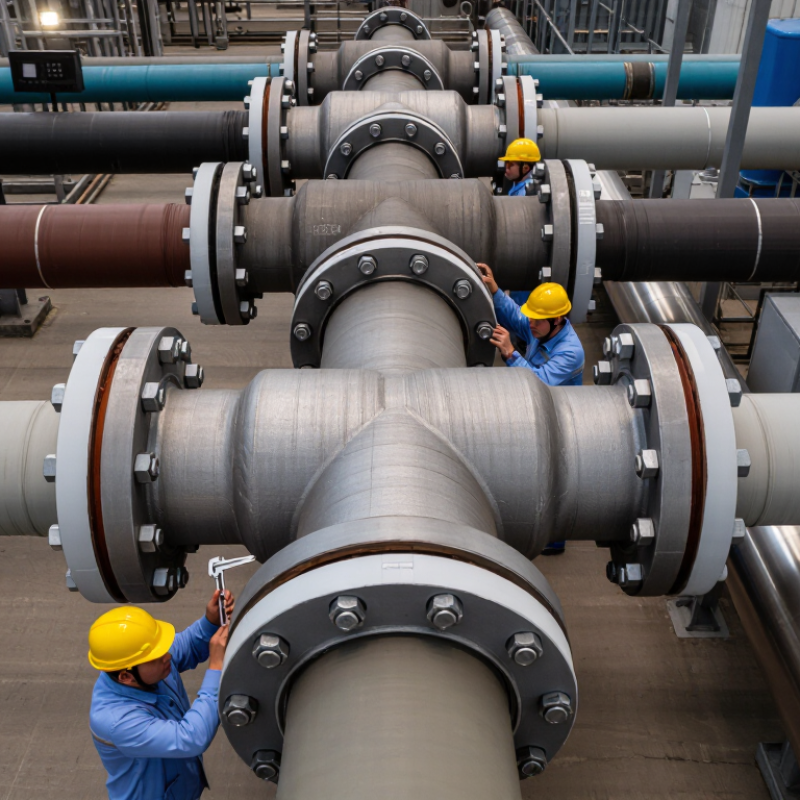
7 Tips for Choosing the Right Dismantling Joint?

What Is a Dismantling Joint and Why Does Selection Matter?

A dismantling joint is a mechanical pipe fitting that allows controlled movement between connected sections. It helps installers remove valves, pumps, and other equipment without cutting the pipeline. This access can save hours during maintenance. Selection matters because the wrong joint may leak, shift under pressure, or create difficult repair conditions. In field inspections, small alignment errors often become expensive problems. I have also seen specifications that looked complete but ignored actual site movement.

Tip 1: Check pipe diameter and flange dimensions carefully. A few millimeters can affect sealing.

Tip 2: Confirm the pressure, temperature, and fluid conditions.

Tip 3: Choose materials that match the pipe and operating environment.

Tip 4: Review the expected axial movement. The joint must provide enough adjustment without losing stability.

Tip 5: Examine tie rods, bolts, gaskets, and coatings as one system. Weak accessories can undermine a strong body.

Tip 6: Consider installation space around the valve or pump. A joint may fit on paper but remain impossible to assemble.

Tip 7: Verify testing requirements and maintenance access before approval. Ask for dimensional drawings and clear installation instructions. Do not rely on appearance alone. A heavier joint is not automatically better. My own preference has changed after observing corrosion beneath apparently sound coatings. Site records, inspection history, and qualified engineering review should guide the final choice.

How to Match the Joint to Pipe Size and Connection Requirements

7 Tips for Choosing the Right Dismantling Joint

Choosing a dismantling joint begins with accurate pipe information, not a guess based on nominal size. Measure the actual outside diameter, wall thickness, and flange dimensions. Then confirm the pipe’s nominal diameter and connection standard. Pipe size can look simple. Record the working pressure, test pressure, and temperature range before selecting materials. Temperature affects gasket performance and bolt behavior. Select a joint with compatible flanges, gaskets, bolts, and pipe materials. Check the connection type carefully. For flanged systems, compare bolt-hole patterns, flange faces, and pressure ratings. Small drilling errors create serious installation problems. Do not rely on old drawings alone.

Movement and maintenance needs also influence the match. Confirm the required axial adjustment, installation gap, and available removal space. A joint that is too short may not release the valve safely. One that is too long may overload nearby supports. Consider corrosion, fluid chemistry, and outdoor exposure. These details often decide whether coated steel, stainless components, or another material is suitable. Review tie-rod requirements when pressure thrust could move the pipeline. Ask for certified dimensional drawings and pressure data before ordering. I have learned that a quick site measurement can prevent an expensive correction. Still, measurements may be imperfect. Recheck them against the latest inspection record. During installation, tighten bolts in a cross pattern and verify alignment before final testing.

How to Evaluate Pressure, Temperature, and Material Compatibility

7 Tips for Choosing the Right Dismantling Joint

Pressure, temperature, and material compatibility should guide every dismantling joint selection. Never choose by nominal diameter alone. Check the pipeline’s design pressure, test pressure, operating temperature, and flange rating together. ASME B16.5 pressure-temperature tables show that allowable pressure can decrease as temperature rises. This detail is often overlooked.

Confirm the joint’s axial restraint and tie-rod capacity. Internal pressure creates thrust at every disconnected section. A joint may fit perfectly but still fail under hydraulic loading. Review test certificates, dimensional drawings, and applicable EN or ASME requirements. During inspections, look for damaged threads, uneven gaps, and gasket compression. Small installation errors can become serious leakage paths.

Material compatibility needs equal attention. Compare the joint body, bolts, coating, and gasket with the fluid, pH, chloride level, and temperature. The NACE IMPACT study estimated global corrosion costs at about 2.5 trillion dollars annually, equal to roughly 3.4% of global GDP. That figure makes material selection more than a maintenance concern. Stainless steel may resist some chemicals, but it can still suffer chloride stress corrosion. Rubber gaskets also lose elasticity under heat, ozone, or incompatible fluids. I once treated temperature as a secondary detail. That was a poor assumption. Check the actual medium, not only the pipe material. Ask for compatibility evidence when operating conditions are uncertain.

How to Compare Adjustability, Installation, and Maintenance Features

Choosing the right dismantling joint starts with adjustability, not appearance. Check the permitted installation gap against the pipeline drawing. A wider adjustment range can simplify valve removal and future repairs. However, excessive movement may increase alignment risks. Review flange size, pressure rating, temperature limits, and material compatibility before ordering. Ask for test data and clear dimensional tolerances. Small details matter.

During installation, confirm that the joint matches the pipe’s actual position. Do not force a poor alignment with uneven bolt tightening. Use the specified gasket, support heavy valves, and tighten bolts in a controlled cross pattern. Record torque values. In field inspections, I have seen leakage begin beside one under-tightened bolt. The problem looked minor. It was not.

Maintenance features deserve equal attention. Choose accessible tie rods, corrosion-resistant surfaces, and replaceable sealing components. Leave enough clearance for a wrench and inspection camera. Check bolts, flanges, coating damage, and seepage during scheduled shutdowns. A joint that is adjustable but difficult to inspect may create future labor costs. I once underestimated access space on a crowded line. That mistake delayed maintenance. Compare the installation time, adjustment method, spare-part availability, and inspection requirements before making the final selection.

How to Verify Standards, Quality, and Supplier Reliability

7 Tips for Choosing the Right Dismantling Joint

How to Verify Standards, Quality, and Supplier Reliability

A dismantling joint must match the pipe material, pressure class, flange drilling, and installation environment. Check whether the product follows ISO 2531, EN 14525, or AWWA C219, where applicable. Do not accept a standard number alone. Ask for the exact edition, scope, and test requirements. The joint should also show rated pressure, temperature limits, coating details, and gasket material. Small details matter.

Request material certificates, dimensional inspection records, and pressure-test reports for the actual production batch. Look for traceable heat numbers on flanges, sleeves, bolts, and restrained components. Independent laboratory testing is useful, but factory records still reveal daily control. ISO’s Survey 2022 recorded 1,265,216 ISO 9001 certificates worldwide. This figure shows broad adoption, not automatic product quality. A certified management system cannot replace product evidence.

Supplier reliability needs practical verification. Review references from comparable water, wastewater, or industrial pipeline projects. Ask how nonconforming parts are handled, documented, and replaced. Visit the factory if project value allows it. Check machining accuracy, coating thickness, gasket storage, and bolt protection. I once treated a polished certificate package as sufficient evidence; that was too optimistic. A missing inspection plan can create more risk than a visible surface defect. Require clear drawings, installation instructions, warranty terms, and responsive technical support before approving the joint.

Article Source:

Copyright 2025 Fluidra S.A. | Created by BCM Marketing Agencia Privacy Policy Legal note | Cookie policy |

Technical cookies are strictly necessary for our website to work and you can navigate through it. These types of cookies are those that, for example, allow us to identify you, give you access to certain restricted parts of the page if necessary, or remember different options or services already selected by you, such as your privacy preferences. Therefore, they are activated by default, your authorization not being necessary in this regard. Through the configuration of your browser, you can block or alert the presence of this type of cookies, although such blocking will affect the proper functioning of the different functionalities of our website.


The analysis cookies allow us to study the navigation of the users of our website in general (for example, which sections of the page are the most visited, which services are used most and if they work correctly, etc.). From the statistical information on navigation on our website, we can improve both the operation of the page itself and the different services it offers. Therefore, these cookies do not have an advertising purpose, but only serve to make our website work better, adapting to our users in general. By activating them you will contribute to this continuous improvement. You can enable or disable these cookies by checking the corresponding box, being disabled by default.


Functionality cookies allow us to remember your preferences, to personalize certain characteristics and general options of our website, every time you access it (for example, the language in which the information is presented to you, the sections marked as favorites, your browser type, etc.) Therefore, this type of cookies does not have an advertising purpose, but by activating them you will improve the functionality of the website (for example, adapting to your type of browser) and the customization of it based on your preferences (for example, by presenting the information in the language that you have chosen in previous occasions), which will contribute to the ease, usability and comfort of our page during your navigation. You can enable or disable these cookies by checking the corresponding box, being disabled by default.


Advertising cookies allow us to manage the advertising spaces included in our website based on criteria such as the content shown or the frequency in which the ads are displayed. For example, if you have been shown the same ad several times on our website, and you have not shown a personal interest by clicking on it, it will not appear again. In summary, by activating this type of cookies, the advertising shown on our website will be more useful and diverse, and less repetitive. You can enable or disable these cookies by checking the corresponding box, being disabled by default.


Behavioral advertising cookies allow us to obtain information based on the observation of your browsing habits and behaviors on the web, in order to show you advertising content that best suits your personal tastes and interests. To understand it in a very simple way, we will give you a fictitious example: if your last searches on the web were related to suspense literature, we would show you advertising about suspense books. Therefore, activating this type of cookies, the advertising that we show you on our website will not be generic, but will be oriented to your searches, tastes and interests, therefore adjusting exclusively to you. You can enable or disable these cookies by checking the corresponding box, being disabled by default.
To understand it in a very simple way, we will give you a fictitious example: if your last searches on the web were related to suspense literature, we would show you advertising about suspense books. Therefore, activating this type of cookies, the advertising that we show you on our website will not be generic, but will be oriented to your searches, tastes and interests, therefore adjusting exclusively to you. You can enable or disable these cookies by checking the corresponding box, being disabled by default.

SAVE

We use our own and third-party cookies to ensure the proper functioning of the website and to analyse our services, improve your experience on our website and show you advertisements related to your interests according to profiling based on your browsing habits (e.g. websites visited). You can accept all cookies by clicking "ACCEPT" or set or reject them by clicking here. If you would like to know more about the use of cookies, please see our COOKIE POLICY.


ACCEPT ALL
Reject no essentials


