
Top 5 Tips for Choosing Sintered Porous Metal Filters?
FLUID HANDLING EXPERTS

Blog, all our news

Top 5 Tips for Choosing Sintered Porous Metal Filters?

When selecting Sintered Porous Metal Filters, understanding your specific needs is crucial. These filters provide unique advantages in various applications, such as industrial processes and water treatment. Their design allows for excellent permeability and durability, making them a preferred choice for many engineers.

However, choosing the right filter can be complex. Factors like pore size, material composition, and intended use must be considered. Some users overlook these aspects, leading to performance issues. It is essential to evaluate which characteristics align with your requirements to avoid costly mistakes.

Engaging with experienced suppliers can provide valuable insights. Their expertise can guide you in making informed decisions. Keep in mind that not every sintered porous metal filter will meet your expectations. Enhancing your knowledge can empower you to make the best choice for your specific application.
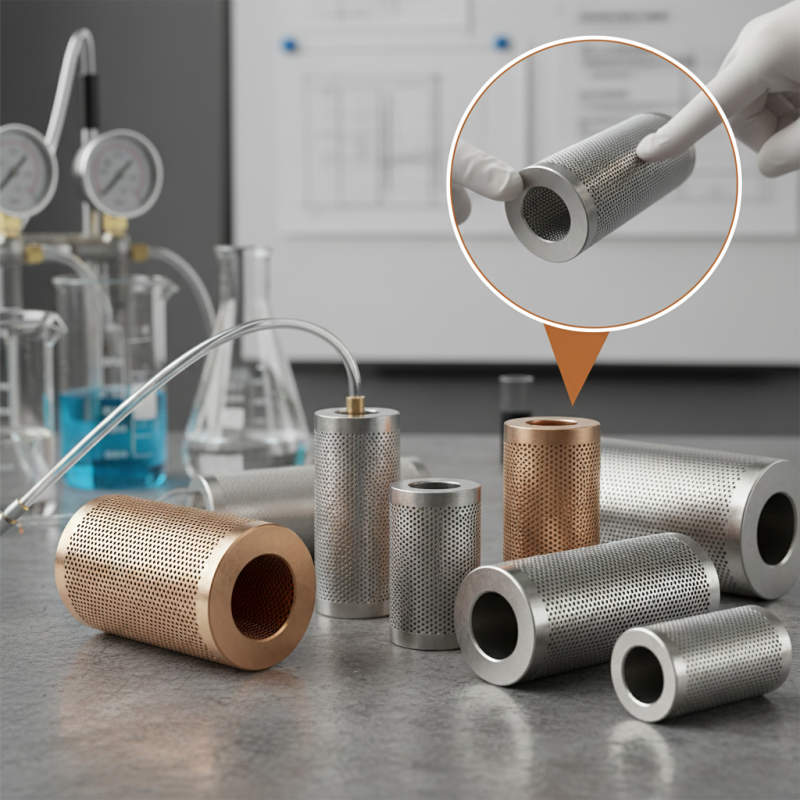
Top 5 Tips for Choosing Sintered Porous Metal Filters?

Understanding Sintered Porous Metal Filters: Material Composition and Types

Sintered porous metal filters are engineered to manage various applications efficiently. Understanding their material composition is crucial. Typically, these filters use metals like stainless steel, bronze, or nickel. Each material presents unique benefits. Stainless steel offers high corrosion resistance. Bronze, on the other hand, provides superior thermal conductivity.

When diving into types, you’ll find several options available. Porous metal filters can be categorized into sintered mesh, powder, and hybrid filters. Sintered mesh is often preferred for its straightforward design and durability. Powder filters excel in fine filtration, providing high surface area. Hybrid filters combine properties of both types, allowing for versatility in various environments.

Selecting the right filter requires more than just knowing types. Consider the operating conditions and specific filtration needs. Proper analysis can prevent costly mistakes. A filter that works well in one scenario may fail in another. Understanding composition and types ensures informed decisions. Factors such as filtration efficiency, flow rate, and pressure drop are important to assess. Investing time in this understanding can lead to better outcomes.

Key Factors Influencing Pore Size Selection for Optimal Filtration Efficiency

When selecting sintered porous metal filters, pore size is a critical factor. Industry studies indicate that pore size directly influences filtration efficiency and flow rates. For instance, a report by the Filtration Society highlights that filters with a pore diameter of 10-50 micrometers are optimal for capturing aerosols and fine particles in various applications.

Understanding the specific requirements of your filtration process is essential. The choice of pore size can significantly impact contaminant retention. Smaller pores offer higher particle capture rates but may lead to increased pressure drops. According to a 2022 study from the International Journal of Filtration, filters with the smallest pore sizes experienced a 30% reduction in flow capacity, posing a challenge in high-demand scenarios.

Balancing filtration efficiency with practical flow rates is paramount. Users often underestimate the impact of pore size on overall system performance. For example, in liquid filtration, selecting a filter with a pore size that is too small can result in clogging and increased maintenance. It’s vital to understand the specific context of use. Each application may have distinct needs that require careful consideration of pore size.

Top 5 Factors Influencing Pore Size Selection for Optimal Filtration Efficiency

Assessing Durability and Temperature Resistance in Filter Application Scenarios

When selecting sintered porous metal filters, assessing durability and temperature resistance is critical. Filters endure harsh environments. In industrial applications, temperature fluctuations can reach extremes of 200°C or more. A study from the Filtration Society indicates that filters exposed to high temperatures can deteriorate in performance if not properly assessed for thermal stability.

Material composition plays a significant role in durability. Sintered metal filters often utilize stainless steel or bronze. These materials exhibit corrosion resistance and can handle high-pressure scenarios. Reports suggest filters made from stainless steel retain structural integrity despite encountering temperatures above 600°C. However, not all filters maintain their filtration efficiency under extreme conditions. Regular inspections are necessary to ensure long-term performance and reliability.

In applications like automotive or aerospace, durability is non-negotiable. A failure can lead to catastrophic results. The filtration system must withstand not just temperature but also mechanical stresses. Some reports indicate a 30% failure rate in filters that do not match application requirements. Thus, it’s imperative to conduct detailed assessments. Balancing these factors is crucial for ensuring that the selected filter meets specific operational demands while minimizing the risk of failure.

Evaluating Pressure Drop and Flow Rate: Maximizing Performance Metrics

When selecting sintered porous metal filters, evaluating pressure drop and flow rate is crucial. A significant pressure drop can diminish system efficiency and increase energy costs. Studies have shown that a pressure drop exceeding 5 psi often leads to inefficient filtration. This can affect the overall productivity in industrial applications.

Analyzing flow rate alongside pressure drop is essential for optimizing filter performance. For instance, a filter that allows a flow rate of 20 liters per minute while maintaining a low pressure drop can be a game-changer. An ideal filter should balance these metrics to achieve desired performance levels without compromising system integrity.

While many filters boast impressive specifications, it's essential to assess real-world performance data. Some filters may perform well initially but show a marked deterioration over time. Regular testing against industry benchmarks can help ensure reliability and functionality, highlighting the need for ongoing evaluation in filter selection. Reflecting on these factors can drive more informed decisions in choosing appropriate filtration solutions.

Cost-Benefit Analysis: Investment Returns with Sintered Metal Filters

Choosing the right sintered metal filter involves assessing its cost-effectiveness. These filters offer stability and durability, making them a significant investment. The initial costs may seem high, but the long-term benefits can offset these expenses. Sintered filters often reduce maintenance costs and extend the life of equipment. This is an important consideration in industries that rely on consistent performance.

A thorough cost-benefit analysis reveals that sintered filters can lead to significant savings. Their ability to handle extreme conditions ensures reduced downtime. When comparing traditional filters, the advantage of sintered options becomes clear. They operate efficiently, even in harsh environments. This reliability supports a stronger return on investment over time.

However, some users may find the upfront investment daunting. There are cheaper alternatives on the market. But, these alternatives often compromise quality. The long-term costs associated with frequent replacements and inefficiencies should not be overlooked. It's crucial to consider both initial prices and long-term savings when making a decision.

Copyright 2025 Fluidra S.A. | Created by BCM Marketing Agencia Privacy Policy Legal note | Cookie policy |

Technical cookies are strictly necessary for our website to work and you can navigate through it. These types of cookies are those that, for example, allow us to identify you, give you access to certain restricted parts of the page if necessary, or remember different options or services already selected by you, such as your privacy preferences. Therefore, they are activated by default, your authorization not being necessary in this regard. Through the configuration of your browser, you can block or alert the presence of this type of cookies, although such blocking will affect the proper functioning of the different functionalities of our website.


The analysis cookies allow us to study the navigation of the users of our website in general (for example, which sections of the page are the most visited, which services are used most and if they work correctly, etc.). From the statistical information on navigation on our website, we can improve both the operation of the page itself and the different services it offers. Therefore, these cookies do not have an advertising purpose, but only serve to make our website work better, adapting to our users in general. By activating them you will contribute to this continuous improvement. You can enable or disable these cookies by checking the corresponding box, being disabled by default.


Functionality cookies allow us to remember your preferences, to personalize certain characteristics and general options of our website, every time you access it (for example, the language in which the information is presented to you, the sections marked as favorites, your browser type, etc.) Therefore, this type of cookies does not have an advertising purpose, but by activating them you will improve the functionality of the website (for example, adapting to your type of browser) and the customization of it based on your preferences (for example, by presenting the information in the language that you have chosen in previous occasions), which will contribute to the ease, usability and comfort of our page during your navigation. You can enable or disable these cookies by checking the corresponding box, being disabled by default.


Advertising cookies allow us to manage the advertising spaces included in our website based on criteria such as the content shown or the frequency in which the ads are displayed. For example, if you have been shown the same ad several times on our website, and you have not shown a personal interest by clicking on it, it will not appear again. In summary, by activating this type of cookies, the advertising shown on our website will be more useful and diverse, and less repetitive. You can enable or disable these cookies by checking the corresponding box, being disabled by default.


Behavioral advertising cookies allow us to obtain information based on the observation of your browsing habits and behaviors on the web, in order to show you advertising content that best suits your personal tastes and interests. To understand it in a very simple way, we will give you a fictitious example: if your last searches on the web were related to suspense literature, we would show you advertising about suspense books. Therefore, activating this type of cookies, the advertising that we show you on our website will not be generic, but will be oriented to your searches, tastes and interests, therefore adjusting exclusively to you. You can enable or disable these cookies by checking the corresponding box, being disabled by default.
To understand it in a very simple way, we will give you a fictitious example: if your last searches on the web were related to suspense literature, we would show you advertising about suspense books. Therefore, activating this type of cookies, the advertising that we show you on our website will not be generic, but will be oriented to your searches, tastes and interests, therefore adjusting exclusively to you. You can enable or disable these cookies by checking the corresponding box, being disabled by default.

SAVE

We use our own and third-party cookies to ensure the proper functioning of the website and to analyse our services, improve your experience on our website and show you advertisements related to your interests according to profiling based on your browsing habits (e.g. websites visited). You can accept all cookies by clicking "ACCEPT" or set or reject them by clicking here. If you would like to know more about the use of cookies, please see our COOKIE POLICY.


ACCEPT ALL
Reject no essentials


