
Essential Tips for Choosing the Right Fuse Box Circuit Breaker?
FLUID HANDLING EXPERTS

Blog, all our news

Essential Tips for Choosing the Right Fuse Box Circuit Breaker?

Choosing the right Fuse Box Circuit Breaker is crucial for your home's safety and electrical efficiency. A fuse box circuit breaker acts as the first line of defense against electrical faults. Selecting the appropriate type can prevent electrical fires and damage to appliances.

Many are overwhelmed by the variety of options available. Different styles and ratings make the decision challenging. It's essential to know your specific needs and household requirements. Understanding the electrical load is vital. A professional electrician can help assess this accurately.

Reflect on your previous choices regarding fuse box circuit breakers. Were they effective? Did you experience any issues? These reflections can guide you toward making better decisions in the future. Prioritizing quality and reliability in your selection is paramount. A poorly chosen circuit breaker can have lasting consequences. Balancing cost and performance is another critical consideration. Take the time to weigh your options carefully.
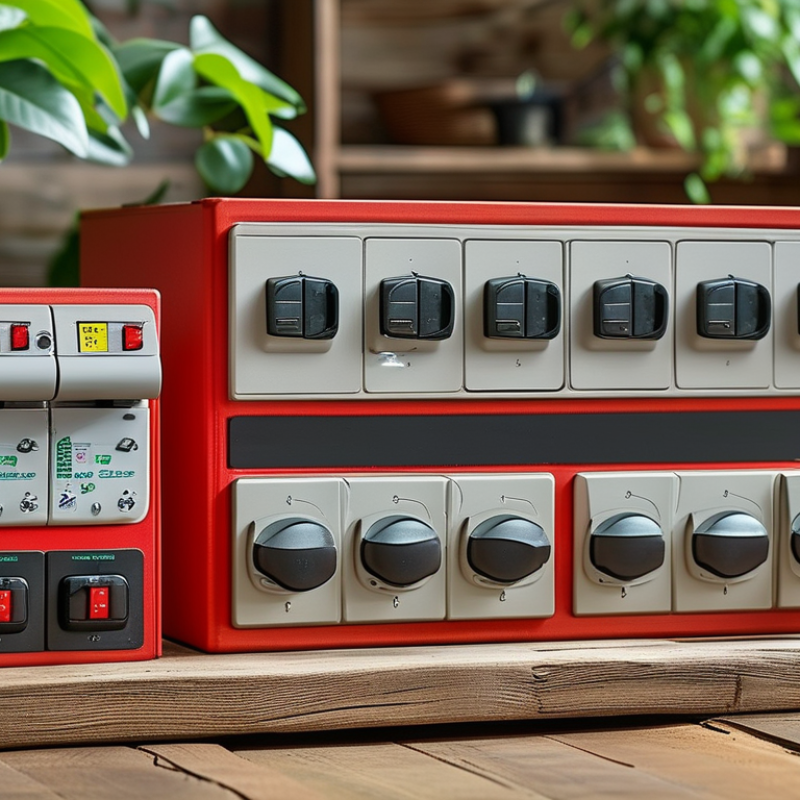
Essential Tips for Choosing the Right Fuse Box Circuit Breaker?

Understanding the Basics of Fuse Box Circuit Breakers

When understanding fuse box circuit breakers, it's crucial to grasp their role in electrical safety. These devices protect your circuits from overloads and short circuits, preventing potential fire hazards. Selecting the right circuit breaker involves knowing your power requirements and understanding the specifications of your electrical system.

Many people overlook the importance of amperage ratings. An appropriate rating ensures your breaker can handle the load without tripping frequently. Conversely, a breaker rated too high may not protect your wiring effectively. Additionally, consider the type of breaker—standard, GFCI, or AFCI—as each has specific applications for safety.

Not all homes have the same needs. New appliances may draw more current than older models. This shift can lead to circuit breakers tripping, indicating the need for reevaluation. It's worth reflecting on your home’s needs over time. Always consult an expert for complex situations, as they can provide insights tailored to your specific requirements.

Identifying the Different Types of Circuit Breakers

When selecting a circuit breaker, it's crucial to understand the types available. Circuit breakers fall mainly into three categories: thermal, magnetic, and dual-function breakers. Thermal breakers are designed to trip in response to overheating. They offer protection against overload but can be slow to react to short circuits. Magnetic breakers react quickly to instantaneous overload, which is vital for preventing electrical fires.

Industry reports indicate that magnetic circuit breakers are becoming increasingly favored. About 55% of electrical professionals prefer them due to their reliability and fast response time. This preference may stem from the growing concern over electrical fires, which account for nearly 20% of residential fire incidents annually, according to the National Fire Protection Association.

Choosing the right type can be daunting. Each type serves distinct functions and has specific applications. Understanding nuances, like the difference in trip curves, is essential. A poorly chosen breaker can lead to inadequate protection, resulting in costly damages. Knowledge of the various mechanisms and their applications is critical for ensuring safety in electrical systems.

Assessing Your Electrical Needs and Load Requirements

When selecting a fuse box circuit breaker, assessing your electrical needs is critical. Many homes today require more power due to increased electrical usage. Studies indicate that homes built after 2000 often need at least 200 amps to handle modern appliances and technology. If your home does not meet these standards, you may experience frequent breaker trips, which can pose safety hazards.

It is essential to evaluate your load requirements. Each circuit should support the devices that use it. For example, large appliances like refrigerators or air conditioners demand higher amperage. The National Electrical Code (NEC) provides guidelines on load calculations, recommending a minimum of 3 watts per square foot for general purpose circuits. Homeowners should consider future growth as well. Electrical loads may expand, making it crucial to prepare for additional circuits.

Many overlook the significance of load management. A well-balanced system not only improves efficiency but also enhances safety. Insufficient load distribution can lead to overheating and potential fire risks. Therefore, investing time in load assessment is foundational. A professional consultation can help clarify needs and reduce uncertainties in your electrical setup.

Essential Tips for Choosing the Right Fuse Box Circuit Breaker

Evaluating Safety Features and Standards for Circuit Breakers

Choosing the right circuit breaker for your fuse box involves understanding essential safety features. Safety standards vary, making it vital to assess each breaker carefully. A well-designed circuit breaker can prevent electrical fires and equipment damage. Check for certifications from recognized organizations. These marks indicate compliance with essential safety regulations.

Consider features like ground fault protection and surge protection. Ground fault circuit interrupters (GFCIs) are crucial in wet areas. They cut power quickly to prevent shocks. Surge protection devices (SPDs) shield against voltage spikes. Such features can significantly enhance safety. However, not all circuit breakers come with these functionalities. You may find that some lack adequate protection options.

Reflect on your specific needs. Have you experienced frequent trips? This could signify an issue with the breaker or your electrical system. An underperforming breaker can pose risks. Balancing cost and safety is essential. Cheap options may tempt you, but they might compromise safety. Investing in quality pays off in the long run. Take your time to evaluate each option thoroughly.

Tips for Installation and Maintenance of Circuit Breakers

When it comes to installing circuit breakers, attention to detail matters. According to a report from the National Electrical Manufacturers Association, improper installation can lead to system failures in 30% of cases. Ensuring your breaker is correctly installed can prevent costly repairs and enhance safety.


One key tip is to consider the amperage. Each circuit should match the amperage rating of the appliances it supports. Installing a breaker that's too high can cause overheating, posing a fire risk. Conversely, using a breaker rated too low can lead to nuisance tripping. Always consult with a qualified electrician if you're uncertain.


Regular maintenance is crucial for circuit breakers. Inspect them at least once a year to check for signs of wear. Look for discoloration or any unusual noise. Incorrectly functioning breakers could signal a deeper issue. The Electrical Safety Foundation International recommends replacing any faulty breakers promptly to avoid electrical hazards. Keeping your circuit breakers in optimal condition is a proactive measure that can save time and money in the long run.

Copyright 2025 Fluidra S.A. | Created by BCM Marketing Agencia Privacy Policy Legal note | Cookie policy |

Technical cookies are strictly necessary for our website to work and you can navigate through it. These types of cookies are those that, for example, allow us to identify you, give you access to certain restricted parts of the page if necessary, or remember different options or services already selected by you, such as your privacy preferences. Therefore, they are activated by default, your authorization not being necessary in this regard. Through the configuration of your browser, you can block or alert the presence of this type of cookies, although such blocking will affect the proper functioning of the different functionalities of our website.


The analysis cookies allow us to study the navigation of the users of our website in general (for example, which sections of the page are the most visited, which services are used most and if they work correctly, etc.). From the statistical information on navigation on our website, we can improve both the operation of the page itself and the different services it offers. Therefore, these cookies do not have an advertising purpose, but only serve to make our website work better, adapting to our users in general. By activating them you will contribute to this continuous improvement. You can enable or disable these cookies by checking the corresponding box, being disabled by default.


Functionality cookies allow us to remember your preferences, to personalize certain characteristics and general options of our website, every time you access it (for example, the language in which the information is presented to you, the sections marked as favorites, your browser type, etc.) Therefore, this type of cookies does not have an advertising purpose, but by activating them you will improve the functionality of the website (for example, adapting to your type of browser) and the customization of it based on your preferences (for example, by presenting the information in the language that you have chosen in previous occasions), which will contribute to the ease, usability and comfort of our page during your navigation. You can enable or disable these cookies by checking the corresponding box, being disabled by default.


Advertising cookies allow us to manage the advertising spaces included in our website based on criteria such as the content shown or the frequency in which the ads are displayed. For example, if you have been shown the same ad several times on our website, and you have not shown a personal interest by clicking on it, it will not appear again. In summary, by activating this type of cookies, the advertising shown on our website will be more useful and diverse, and less repetitive. You can enable or disable these cookies by checking the corresponding box, being disabled by default.


Behavioral advertising cookies allow us to obtain information based on the observation of your browsing habits and behaviors on the web, in order to show you advertising content that best suits your personal tastes and interests. To understand it in a very simple way, we will give you a fictitious example: if your last searches on the web were related to suspense literature, we would show you advertising about suspense books. Therefore, activating this type of cookies, the advertising that we show you on our website will not be generic, but will be oriented to your searches, tastes and interests, therefore adjusting exclusively to you. You can enable or disable these cookies by checking the corresponding box, being disabled by default.
To understand it in a very simple way, we will give you a fictitious example: if your last searches on the web were related to suspense literature, we would show you advertising about suspense books. Therefore, activating this type of cookies, the advertising that we show you on our website will not be generic, but will be oriented to your searches, tastes and interests, therefore adjusting exclusively to you. You can enable or disable these cookies by checking the corresponding box, being disabled by default.

SAVE

We use our own and third-party cookies to ensure the proper functioning of the website and to analyse our services, improve your experience on our website and show you advertisements related to your interests according to profiling based on your browsing habits (e.g. websites visited). You can accept all cookies by clicking "ACCEPT" or set or reject them by clicking here. If you would like to know more about the use of cookies, please see our COOKIE POLICY.


ACCEPT ALL
Reject no essentials


