
What Is Ti-6Al-4V Grade 5 Titanium Bar?
FLUID HANDLING EXPERTS

Blog, all our news

What Is Ti-6Al-4V Grade 5 Titanium Bar?

Ti-6Al-4V (Grade 5) Titanium Bar is a widely used titanium alloy product, valued for its combination of strength, low weight, and corrosion resistance. Grade 5 contains aluminum and vanadium, which help give the alloy its characteristic strength and heat-treatable α+β structure. The bar form is supplied for machining, fabrication, and parts used in demanding environments. But “titanium” alone does not tell the whole story.

Materials author Matthew J. Donachie’s technical work supports a practical principle: performance depends on processing and material condition, not chemistry alone. This is a paraphrase, not a verbatim quotation. For buyers and engineers, that distinction matters. A bar’s dimensions, applicable specification, heat treatment, and inspection records can all affect whether it suits a particular job. A bright surface is not proof of internal quality. Nor does a familiar grade name guarantee identical properties from every supplier.

This guide explains what Grade 5 titanium bar is, how its composition relates to its behavior, and where it is commonly selected. It also considers machining and purchasing details, including documentation worth checking before material enters production. There are trade-offs. The alloy can be difficult to machine compared with many steels, and the right choice depends on service conditions, design, and budget. Those details are easy to overlook. The goal is a clear, practical understanding—not the claim that one alloy fits every application.
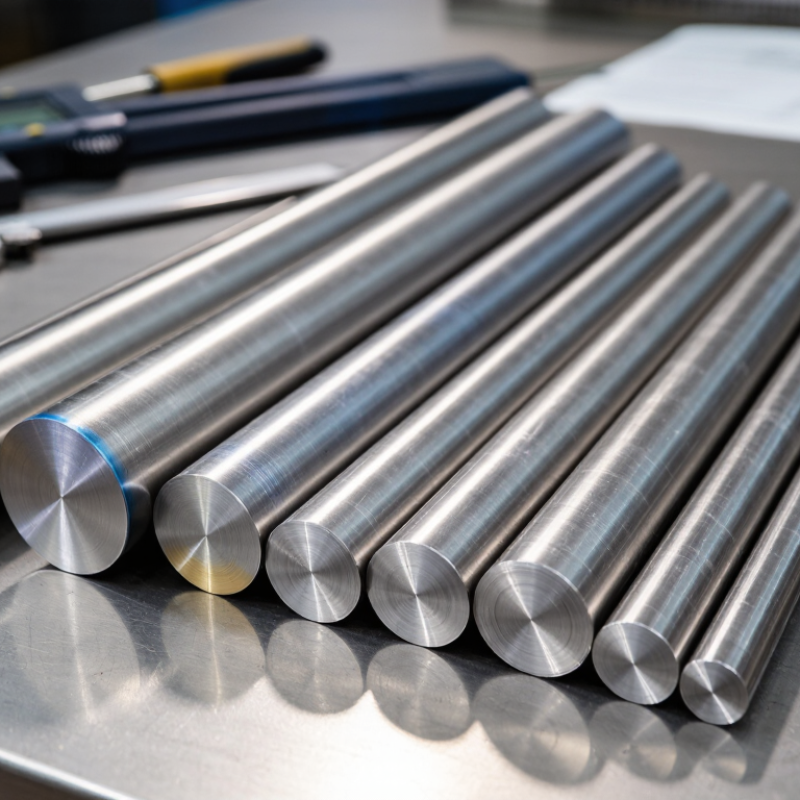
What Is Ti-6Al-4V Grade 5 Titanium Bar?

What Is Ti-6Al-4V Grade 5 Bar? Its 6% Aluminum–4% Vanadium Composition

Ti-6Al-4V Grade 5 bar is a titanium alloy containing aluminum and vanadium. The name is literal. ASTM B348/B348M specifies 5.5–6.75% aluminum and 3.5–4.5% vanadium by mass for Grade 5, with titanium making up most of the remainder. The specification also limits elements such as oxygen and iron, because small chemistry changes can affect performance. These ranges matter: the alloy is not always exactly 6% aluminum and 4% vanadium.

Aluminum stabilizes the alpha phase, while vanadium stabilizes the beta phase. Together, they create an alpha-beta alloy valued for strength and moderate weight. The ASM Handbook, Volume 2, reports a density of about 4.43 g/cm³ for Ti-6Al-4V. That is roughly 60% of steel’s density, though the comparison does not tell the whole story.

A bar’s properties also depend on its processing and heat treatment. A useful caution: composition alone cannot predict how a finished bar will machine or perform. Check the material test report against the applicable ASTM requirements.

Which Standards Specify Grade 5 Titanium Bar, Including ASTM B348?

Ti-6Al-4V Grade 5 is a titanium alloy, not commercially pure titanium. Aluminum and vanadium help provide strength while keeping the material relatively light. For bar stock, though, the alloy name alone does not define every requirement. The product standard matters.

ASTM B348 specifies requirements for titanium and titanium-alloy bars and billets, including Grade 5. Its applicable edition addresses chemical composition, mechanical properties, testing, and certification. Buyers should confirm the product form, dimensions, material condition, and required tests in the purchase specification. Details matter. “Grade 5” alone is not a complete acceptance criterion.

Other standards cover different product forms or uses. ASTM B381 addresses forgings, while ASTM B265 covers plate, sheet, and strip; neither replaces a bar specification. Aerospace or medical applications may also call for additional standards and tighter verification requirements. Check the exact standard revision and any supplemental requirements on the order. A mill certificate helps, but the heat number and test results should match the delivered lot. Still worth checking.

What Are Its Key Properties? Density: 4.43 g/cm³; Tensile Strength: ≥895 MPa

What Is Ti-6Al-4V Grade 5 Titanium Bar?

Ti-6Al-4V Grade 5 is a widely used titanium alloy containing aluminum and vanadium. In bar form, it can be supplied for machining into components such as shafts, fasteners, and structural parts. Its density is 4.43 g/cm³, so a liter of solid alloy weighs about 4.43 kg. That lower mass can matter when a design must balance strength and weight. It is not weightless, of course.

The stated tensile strength is ≥895 MPa. This figure describes resistance to pulling forces, but it should be read alongside the applicable material standard and product condition. Heat treatment, bar size, and testing requirements can affect reported results. Check the mill test certificate rather than assuming every bar has identical properties. Small details matter here.

Grade 5 also offers useful corrosion resistance and strength across many engineering applications. Machining needs care: the alloy can generate heat at the cutting edge, so tool condition, feed, and cooling deserve attention. A bar that looks sound on the rack still needs dimensional and surface checks before use. Specifications guide selection; actual inspection confirms the material in hand.

How Is Grade 5 Bar Made, Heat-Treated, and Tested?

Ti-6Al-4V Grade 5 bar begins with a titanium alloy melt containing aluminum and vanadium. The alloy is commonly remelted under controlled conditions to limit contamination and improve consistency. After solidification, a billet is heated and worked by forging or rolling into bar. It may then be straightened, machined, and surface-conditioned. The hot metal can discolor quickly, so temperature and atmosphere control matter.

Heat treatment depends on the required properties and product specification. Many bars are supplied in an annealed condition. A solution treatment followed by aging can raise strength, but it may also reduce ductility. Time, temperature, and cooling rate must suit the bar’s dimensions and intended use. Small process changes matter.

Testing checks whether the bar meets stated requirements. Chemical analysis confirms alloy composition; tensile tests measure strength and elongation, while hardness tests provide another useful check. Some orders also require ultrasonic inspection to detect internal flaws. Results should be linked to the material’s heat or batch number. Paperwork matters. A test certificate is useful, but it does not replace clear acceptance criteria or careful review of the actual test scope.

Where Are Grade 5 Titanium Bars Used in Aerospace and Medical Engineering?

Ti-6Al-4V Grade 5 titanium bars are used in aerospace when a component needs high strength without excessive weight. Engineers machine bar stock into items such as brackets, fasteners, fittings, and selected landing-gear parts. A lighter component can help reduce aircraft mass, but design teams still need to consider fatigue, operating temperature, and the loads each part will face. Small details matter.

The bar’s chemistry and heat treatment influence its mechanical properties, so buyers and machinists check material certificates and production records. During machining, titanium can retain heat near the cutting edge. That makes tool choice, cooling, and cutting conditions important for consistent dimensions and surface finish.

Medical engineers use Grade 5 titanium in certain implants, surgical instruments, and device components. Its strength and corrosion resistance can suit demanding applications, while its biocompatibility depends on the finished material, surface, and intended use. Not every medical part needs Grade 5; lower-strength commercially pure titanium may be more suitable in some cases. That trade-off deserves careful review. For implant applications, designers also assess fatigue performance, surface treatment, and applicable quality requirements. The alloy is useful, but it does not remove the need for testing and traceability.

Copyright 2025 Fluidra S.A. | Created by BCM Marketing Agencia Privacy Policy Legal note | Cookie policy |

Technical cookies are strictly necessary for our website to work and you can navigate through it. These types of cookies are those that, for example, allow us to identify you, give you access to certain restricted parts of the page if necessary, or remember different options or services already selected by you, such as your privacy preferences. Therefore, they are activated by default, your authorization not being necessary in this regard. Through the configuration of your browser, you can block or alert the presence of this type of cookies, although such blocking will affect the proper functioning of the different functionalities of our website.


The analysis cookies allow us to study the navigation of the users of our website in general (for example, which sections of the page are the most visited, which services are used most and if they work correctly, etc.). From the statistical information on navigation on our website, we can improve both the operation of the page itself and the different services it offers. Therefore, these cookies do not have an advertising purpose, but only serve to make our website work better, adapting to our users in general. By activating them you will contribute to this continuous improvement. You can enable or disable these cookies by checking the corresponding box, being disabled by default.


Functionality cookies allow us to remember your preferences, to personalize certain characteristics and general options of our website, every time you access it (for example, the language in which the information is presented to you, the sections marked as favorites, your browser type, etc.) Therefore, this type of cookies does not have an advertising purpose, but by activating them you will improve the functionality of the website (for example, adapting to your type of browser) and the customization of it based on your preferences (for example, by presenting the information in the language that you have chosen in previous occasions), which will contribute to the ease, usability and comfort of our page during your navigation. You can enable or disable these cookies by checking the corresponding box, being disabled by default.


Advertising cookies allow us to manage the advertising spaces included in our website based on criteria such as the content shown or the frequency in which the ads are displayed. For example, if you have been shown the same ad several times on our website, and you have not shown a personal interest by clicking on it, it will not appear again. In summary, by activating this type of cookies, the advertising shown on our website will be more useful and diverse, and less repetitive. You can enable or disable these cookies by checking the corresponding box, being disabled by default.


Behavioral advertising cookies allow us to obtain information based on the observation of your browsing habits and behaviors on the web, in order to show you advertising content that best suits your personal tastes and interests. To understand it in a very simple way, we will give you a fictitious example: if your last searches on the web were related to suspense literature, we would show you advertising about suspense books. Therefore, activating this type of cookies, the advertising that we show you on our website will not be generic, but will be oriented to your searches, tastes and interests, therefore adjusting exclusively to you. You can enable or disable these cookies by checking the corresponding box, being disabled by default.
To understand it in a very simple way, we will give you a fictitious example: if your last searches on the web were related to suspense literature, we would show you advertising about suspense books. Therefore, activating this type of cookies, the advertising that we show you on our website will not be generic, but will be oriented to your searches, tastes and interests, therefore adjusting exclusively to you. You can enable or disable these cookies by checking the corresponding box, being disabled by default.

SAVE

We use our own and third-party cookies to ensure the proper functioning of the website and to analyse our services, improve your experience on our website and show you advertisements related to your interests according to profiling based on your browsing habits (e.g. websites visited). You can accept all cookies by clicking "ACCEPT" or set or reject them by clicking here. If you would like to know more about the use of cookies, please see our COOKIE POLICY.


ACCEPT ALL
Reject no essentials


