
What Is the Best Thermoforming Machine in 2026?
FLUID HANDLING EXPERTS

Blog, all our news

What Is the Best Thermoforming Machine in 2026?

What Is the Best Thermoforming Machine in 2026? The answer is not determined by price alone. A capable Thermoforming Machine must match the material, sheet size, cycle speed, tooling, and production volume. A compact unit may suit a packaging workshop, while an industrial line needs stable heating and repeatable vacuum control. Those differences matter.

This guide compares machine types through practical criteria used on real production floors. It examines heating zones, forming accuracy, cooling performance, automation, energy use, maintenance access, and after-sales support. Manufacturer datasheets provide a starting point, but they do not reveal every operating cost. A machine that appears efficient may consume more power during warm-up or frequent changeovers. Small details count.

Operator experience also deserves attention. Can one person load sheets safely? Are temperature readings clear beside a noisy press? Does the supplier provide training, spare parts, and verifiable service records? These questions separate marketing claims from dependable equipment. The best choice may not be the fastest model. It may be the machine that produces consistent trays, panels, or technical parts after months of daily use. Evidence matters. Still, no comparison can replace a sample run with your material and mold. That limitation deserves attention. Before choosing, readers should request test results, inspect finished samples, and calculate total ownership cost. This approach supports a more reliable decision for 2026.
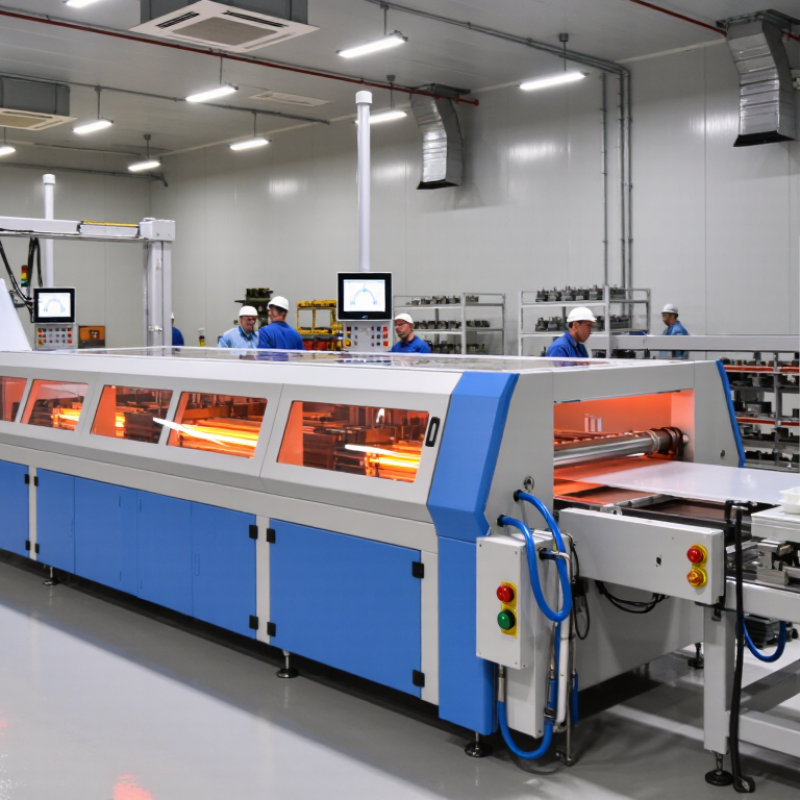
What Is the Best Thermoforming Machine in 2026?

Thermoforming Machine Types and Their 2026 Industrial Applications

Choosing the best thermoforming machine in 2026 starts with the part, not the machine name. Vacuum forming suits large, shallow housings and protective liners. It uses atmospheric pressure to pull heated sheet against a mold. Pressure forming adds compressed air, producing sharper ribs, textures, and lettering. Production reviews show better detail, but tighter temperature control is necessary. Small errors matter.

Plug-assist forming supports deep food trays, medical packaging, and container bodies by pre-stretching the sheet. Twin-sheet machines join two formed halves, creating hollow ducts, pallets, and lightweight covers. They require accurate registration and dependable edge sealing.

Continuous roll-fed systems favor high-volume packaging. Shuttle or sheet-fed systems handle thicker industrial panels. The right choice depends on cycle rate, material thickness, mold changes, and trimming equipment.

Heavy-gauge machines fit vehicle interiors, equipment enclosures, and refrigerator liners.
They often need stronger clamping, longer heating zones, and precise cooling. Recycled and multilayer sheets can improve resource efficiency, yet they may heat unevenly. I would test the actual production resin before approving a machine. Measure corner wall thickness, energy per part, scrap rate, and ten-cycle repeatability. A supplier brochure cannot replace shop-floor trials. Even a well-designed line may need manual adjustments during seasonal temperature changes.

Key Selection Metrics: 0.8–0.95 bar Vacuum and 10–60 Second Cycles

What Is the Best Thermoforming Machine in 2026?

In 2026, the best thermoforming machine is not simply the fastest model. It must hold stable vacuum and repeatable cycle times. A practical selection range is 0.8–0.95 bar below atmospheric pressure, or 80–95 kPa. This range supports sharper corners, cleaner wall thickness, and better detail transfer. Measure pressure near the mold, not only at the pump. A gauge can look impressive while the tool still leaks.

Cycle time deserves equal attention. Thin trays may run within 10–20 seconds, while thicker technical parts often need 30–60 seconds. Heating, forming, cooling, and demolding all affect the result.

The 2024 Grand View Research market assessment valued global thermoforming plastics at approximately US$15.7 billion in 2023, with growth projected near 6% annually. That expansion increases pressure for measurable productivity, not vague speed claims.

During testing, record vacuum stability, sheet temperature, scrap rate, and actual output per hour. Industry technical papers from the SPE Thermoforming Division repeatedly emphasize process control and tooling balance.

I would still question any machine promising a universal 10-second cycle. Material thickness changes everything. A better trial uses the buyer’s own sheet, mold, and cooling conditions.

Small leaks matter. A little imperfection can become a costly reject.

Material Compatibility: ABS, PET, PP, PVC, and 0.2–12 mm Sheet Thickness

The best thermoforming machine in 2026 should process ABS, PET, PP, and PVC without unstable heating. It must also handle sheets from 0.2 to 12 mm. That range is deceptive. Thin sheet punishes shortcuts.

For 0.2–1 mm PET and PVC, look for accurate infrared zones, rapid temperature feedback, and controlled vacuum timing. Thin material can wrinkle, stretch unevenly, or lose detail around corners.

For 3–12 mm ABS and PP, strong preheating capacity, plug assistance, and reliable cooling become more important. PP usually needs tighter forming control because its shrinkage can distort dimensions. PVC also demands careful temperature management, since overheating can damage the sheet and create unpleasant fumes.

Material choice should reflect actual production, not only a sales specification. PlasticsEurope’s Plastics—The Fast Facts 2023 reports that packaging represented 39.1% of European plastics demand in 2022. This supports the continuing need for accurate PET and PP forming. The OECD Global Plastics Outlook reports 353 million tonnes of plastic waste globally in 2019, with only 9% recycled. Scrap reduction therefore matters. A machine with repeatable heating may save more material than a faster machine. In practice, I would test every resin at its real thickness, because laboratory samples often look better than factory output. Some manufacturers also underestimate changeover time between PVC and PET. That mistake can become expensive.

2026 Machine Comparison by Output, Automation, Energy Use, and Forming Area

What Is the Best Thermoforming Machine in 2026?

The best thermoforming machine depends on output, automation, energy use, and forming area. PMMI’s 2024 Packaging Trends research highlights labor shortages and flexible production as major equipment priorities. That makes automatic sheet loading, servo-driven plugs, and robotic stacking valuable for high-volume lines. A machine producing 40 cycles per minute may outperform a slower unit, but only when the mold has enough cavities and rejects remain low. Speed alone misleads.

Forming area affects product range and material efficiency. A wider bed can handle larger trays, yet it may consume more heat during every cycle. The International Energy Agency reported that industry uses about 37% of global final energy, so heating control deserves close testing. Compare installed power, actual kilowatt-hours per kilogram, warm-up time, and heat recovery. Ask for production data, not brochure estimates. Small details matter.

Automation is not always the cheapest answer. A highly automated line can reduce labor and improve repeatability, but maintenance skills and spare-part access become critical. Energy savings may also shrink with thin materials, frequent changeovers, or poor insulation. I would test the machine with your real polymer, mold, and cycle settings. One overlooked issue is cooling capacity. Faster forming means little if the parts leave the mold soft. 马会

Total Cost Analysis: Tooling, Maintenance, Labor, and Cost per Formed Part

What Is the Best Thermoforming Machine in 2026?

The best thermoforming machine is not always the fastest model. Total cost per formed part matters more. Grand View Research’s 2024 market analysis projects steady global growth for thermoformed plastics through 2030. That growth increases pressure on margins, energy use, and uptime.

Start with tooling. Aluminum molds cost more than composite molds, but they usually provide better cooling and longer service life. A mold costing $18,000 may produce 500,000 parts, adding only $0.036 per part before maintenance. Maintenance must include heaters, vacuum pumps, trimming tools, sensors, and unplanned stoppages. PMMI industry reports repeatedly identify uptime and labor availability as major packaging automation concerns. A machine saving one operator per shift may recover its premium faster than a machine with a higher output rate.

Energy and labor deserve careful measurement. The U.S. Energy Information Administration reports that industrial electricity prices vary widely by region, so a quoted kilowatt-hour saving may not apply to every factory. Measure actual heating cycles, compressed-air demand, and scrap. BLS manufacturing wage data can help estimate labor, but local overtime changes the result. Do not trust optimistic supplier spreadsheets blindly.

Tip: Build a five-year model. Include tooling replacement, preventive maintenance, training, downtime, scrap, energy, labor, and financing. Test low-volume and high-volume scenarios. The cheapest machine can become expensive when changeovers are slow. I have seen estimates fail because cleaning time was ignored. That detail matters.

What Is the Best Thermoforming Machine in 2026? - Total Cost Analysis: Tooling, Maintenance, Labor, and Cost per Formed Part

The following comparison uses realistic 2026 planning benchmarks for common thermoforming machine categories. Values are shown in U.S. dollars and are intended for preliminary capital-budgeting and production-planning decisions.

Machine Category Capital and Tooling Production Assumptions Annual Operating Cost Estimated Total Cost per Good Formed Part Typical Best-Fit Application
Machine Cost Typical Mold Cost Expected Mold Life Annualized Machine Cost Rated Output Utilization Scrap Rate Good Parts per Year Operators per Shift Labor Cost Maintenance Cost Energy Cost Tooling Cost per Part Machine Cost per Part Cost per Part
Single-Station Vacuum Former $45,000 $2,500 100,000 parts $6,429/year 120 parts/hour 70% 8% 309,120 1 $0.25 $0.01 $0.01 $0.03 $0.02 $0.32 Prototypes, short runs, simple trays, and low-volume custom parts
Semi-Automatic Pressure Former $180,000 $8,000 250,000 parts $25,714/year 450 parts/hour 75% 5% 1,710,000 1 $0.07 $0.01 $0.01 $0.03 $0.02 $0.13 Medium-volume packaging, food containers, and repeat production
Inline Roll-Fed Thermoformer $650,000 $25,000 500,000 parts $92,857/year 1,800 parts/hour 80% 3% 6,984,000 2 $0.03 $0.01 $0.01 $0.05 $0.01 $0.11 High-volume thin-wall packaging with stable product demand
High-Speed Plug-Assist Thermoformer $1,200,000 $40,000 500,000 parts $171,429/year 2,400 parts/hour 80% 3% 7,449,600 2 $0.03 $0.01 $0.01 $0.08 $0.02 $0.15 Large-scale production requiring high speed, precise wall thickness, and automation
Heavy-Gauge Twin-Sheet Former $900,000 $30,000 300,000 parts $128,571/year 300 parts/hour 75% 5% 855,000 1 $0.13 $0.05 $0.04 $0.10 $0.15 $0.47 Automotive interiors, equipment housings, pallets, and structural twin-sheet components

Calculation basis: Annualized machine cost assumes a seven-year straight-line life with no residual value. Labor uses a fully loaded rate of $28 per hour. Electricity is calculated at $0.12 per kWh. Maintenance is estimated at approximately 4%–6% of machine purchase cost per year. Cost per good formed part includes annualized machine cost, tooling amortization, maintenance, direct labor, and electricity, but excludes raw material, plant overhead, financing, taxes, packaging, freight, and installation.

Copyright 2025 Fluidra S.A. | Created by BCM Marketing Agencia Privacy Policy Legal note | Cookie policy |

Technical cookies are strictly necessary for our website to work and you can navigate through it. These types of cookies are those that, for example, allow us to identify you, give you access to certain restricted parts of the page if necessary, or remember different options or services already selected by you, such as your privacy preferences. Therefore, they are activated by default, your authorization not being necessary in this regard. Through the configuration of your browser, you can block or alert the presence of this type of cookies, although such blocking will affect the proper functioning of the different functionalities of our website.


The analysis cookies allow us to study the navigation of the users of our website in general (for example, which sections of the page are the most visited, which services are used most and if they work correctly, etc.). From the statistical information on navigation on our website, we can improve both the operation of the page itself and the different services it offers. Therefore, these cookies do not have an advertising purpose, but only serve to make our website work better, adapting to our users in general. By activating them you will contribute to this continuous improvement. You can enable or disable these cookies by checking the corresponding box, being disabled by default.


Functionality cookies allow us to remember your preferences, to personalize certain characteristics and general options of our website, every time you access it (for example, the language in which the information is presented to you, the sections marked as favorites, your browser type, etc.) Therefore, this type of cookies does not have an advertising purpose, but by activating them you will improve the functionality of the website (for example, adapting to your type of browser) and the customization of it based on your preferences (for example, by presenting the information in the language that you have chosen in previous occasions), which will contribute to the ease, usability and comfort of our page during your navigation. You can enable or disable these cookies by checking the corresponding box, being disabled by default.


Advertising cookies allow us to manage the advertising spaces included in our website based on criteria such as the content shown or the frequency in which the ads are displayed. For example, if you have been shown the same ad several times on our website, and you have not shown a personal interest by clicking on it, it will not appear again. In summary, by activating this type of cookies, the advertising shown on our website will be more useful and diverse, and less repetitive. You can enable or disable these cookies by checking the corresponding box, being disabled by default.


Behavioral advertising cookies allow us to obtain information based on the observation of your browsing habits and behaviors on the web, in order to show you advertising content that best suits your personal tastes and interests. To understand it in a very simple way, we will give you a fictitious example: if your last searches on the web were related to suspense literature, we would show you advertising about suspense books. Therefore, activating this type of cookies, the advertising that we show you on our website will not be generic, but will be oriented to your searches, tastes and interests, therefore adjusting exclusively to you. You can enable or disable these cookies by checking the corresponding box, being disabled by default.
To understand it in a very simple way, we will give you a fictitious example: if your last searches on the web were related to suspense literature, we would show you advertising about suspense books. Therefore, activating this type of cookies, the advertising that we show you on our website will not be generic, but will be oriented to your searches, tastes and interests, therefore adjusting exclusively to you. You can enable or disable these cookies by checking the corresponding box, being disabled by default.

SAVE

We use our own and third-party cookies to ensure the proper functioning of the website and to analyse our services, improve your experience on our website and show you advertisements related to your interests according to profiling based on your browsing habits (e.g. websites visited). You can accept all cookies by clicking "ACCEPT" or set or reject them by clicking here. If you would like to know more about the use of cookies, please see our COOKIE POLICY.


ACCEPT ALL
Reject no essentials


